
Table of Contents >> Show >> Hide
- Why a Showhouse Girls’ Bedroom Hits Different
- Start With a Story, Not a Stereotype
- The Palette: Pick Three Anchors (and Let Them Do the Heavy Lifting)
- Wallpaper, Murals, and the Art of the Instant Wow
- Layout: The “Zones” That Make a Bedroom Actually Work
- Beds That Feel Special (Without Becoming a One-Season Costume)
- Storage: The Part Showhouses Make Look Easy (Because Styling Is a Magic Trick)
- Lighting: Make It Pretty, Make It Practical, Make It Not Blinding
- Safety: The Unsexy Detail That Makes a Room Truly “Designed”
- How to Get the Showhouse Look Without the Showhouse Budget
- Common Mistakes to Avoid (Even If You’re Feeling Bold)
- Conclusion: The Real Magic of a Showhouse Girls’ Bedroom
- Experiences: What It’s Like to Live With a “Showhouse-Style” Girls’ Bedroom
A designer showhouse is where interior design goes to wear sequins in daylight. The rooms are bold, camera-ready,
and built to make you stop mid-tour and whisper, “Okay… who lives like this?” And yet, the best showhouse rooms
aren’t just prettythey’re persuasive. They convince you that a space can be playful and practical,
polished and kid-friendly, whimsical and not a pastel avalanche.
Of all the spaces in a showhouse, the girls’ bedroom is the one with the biggest job description. It has to feel magical,
but not babyish. It has to look editorial, but still make sense for a real kid with real stuff. It needs storage, a sleep zone,
a hangout spot, and often a study nookwithout turning into a furniture showroom that forgot the child.
This guide breaks down how designers pull it offand how you can steal the best ideas without needing a sponsor wall of 22 brand partners.
Why a Showhouse Girls’ Bedroom Hits Different
Showhouses aren’t regular home tours. They’re curated exhibitions where multiple designers transform a property room-by-room to raise money,
show off craftsmanship, and spark new ideas. The pressure is real: short timelines, public foot traffic, lots of photos, and the unspoken rule
that your room should be the one people text their friends about before they even reach the kitchen.
That “public gallery” vibe changes how a girls’ bedroom is designed. The space has to read instantly: a strong concept, a clear palette,
and at least one “wow” momentlike a dramatic wallpaper, a painted ceiling, or built-ins that look custom because they are.
But it also needs the warmth and comfort that makes a bedroom feel like a retreat, not a museum exhibit with a bedtime policy.
The smartest showhouse kids’ rooms tend to balance two goals: a story that feels imaginative, and a layout that would still work
if you swapped the styling props for backpacks, books, and the occasional plush-toy population boom.
Start With a Story, Not a Stereotype
“Girls’ bedroom” doesn’t have to mean pink, ruffles, and a chandelier that looks like it’s auditioning for a period drama.
In showhouses, designers often aim for themes that feel personal and flexible: a nature explorer room, a mini art studio vibe,
a modern “clubhouse” hideaway, or a cozy hotel-inspired suite for a tween who’s basically a tiny CEO.
A strong showhouse concept usually answers three questions:
- Who is this room for? (A curious reader? A sporty kid? A budding artist?)
- What does she do here? (Sleep, study, create, play, host sleepovers, decompress.)
- What’s the signature moment? (Wallpaper, ceiling color, canopy, built-ins, or a statement light.)
If you can describe the room in one sentence“a dreamy botanical hideout with grown-up structure”you’ve got a showhouse-worthy foundation.
Design trick: build a “grown-up base” and layer the fun
A showhouse bedroom often uses adult-sized furniture and timeless finishes as the backbone, then adds personality through color, textiles,
art, and lighting. That way, the room can evolve. Swap bedding, change art, rotate accessoriesand you’re not repainting every time a new favorite color appears.
The Palette: Pick Three Anchors (and Let Them Do the Heavy Lifting)
Showhouse rooms look cohesive because the palette is disciplinedeven when the patterns are not. A helpful formula is:
- One main color (the “this is the vibe” shade)
- One supporting neutral (the “calm down, we live here” shade)
- One accent (the “surprise me” shade)
For a girls’ bedroom, the main color doesn’t have to be pastel. Deep greens, inky blues, warm terracotta, buttery cream,
or soft lilac can all feel youthful without feeling childish. The showhouse goal is contrast and clarity:
the eye should know where to land, then where to wander.
Designers also treat ceilings as a secret weaponthe “fifth wall.” A color-washed ceiling can make the room feel like a jewel box,
while a lighter ceiling can keep bold wallpaper from becoming visually loud. Either way, the ceiling is where showhouse bedrooms quietly flex.
Wallpaper, Murals, and the Art of the Instant Wow
If showhouses had a national flag, it would be wallpaper. In a girls’ bedroom, wallpaper does three jobs at once:
it sets the theme, adds texture, and makes the room photograph like it has a professional publicist.
The best showhouse approach isn’t “wallpaper everything always.” It’s strategic placement:
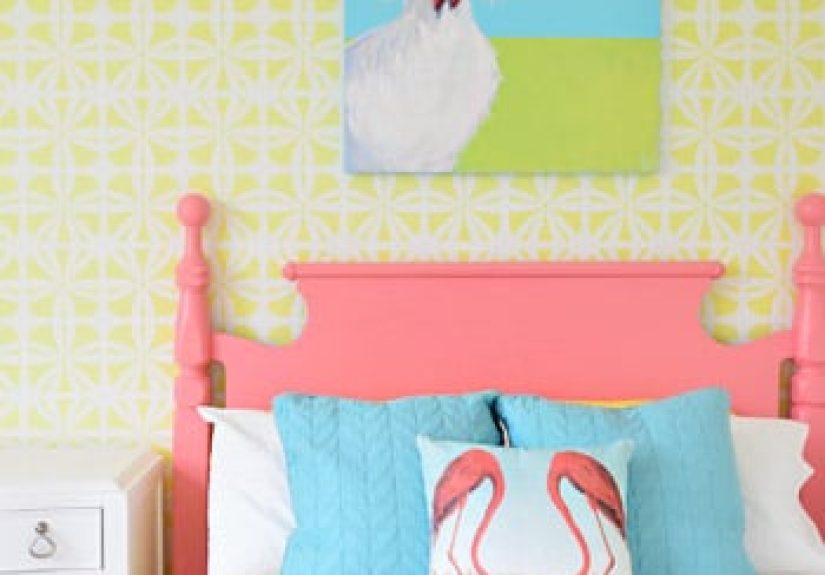
- One feature wall behind the bed for maximum impact.
- Upper-wall paneling + wallpaper to feel custom and architectural.
- Ceiling paper when you want drama without shrinking the floor space.
For real homes, removable wallpaper can mimic the look without the commitment. And if you’re decorating for a kid who changes preferences
faster than a streaming platform updates its “Top 10,” temporary options are your budget’s best friend.
Pattern mixing that doesn’t look like an argument
Showhouse bedrooms often mix stripes, florals, geometrics, and solids by controlling scale:
one large pattern, one medium pattern, one small pattern, and a few solids to let everyone breathe.
If you keep colors consistent, the patterns can be wild without becoming chaotic.
Layout: The “Zones” That Make a Bedroom Actually Work
In a showhouse, you’ll often see a bedroom staged like a tiny studio apartmentbecause kids’ rooms do a lot.
The simplest way to plan is by zones:
- Sleep zone: bed, nightstand, reading light, calming textures.
- Study zone: desk or wall-mounted surface, task lighting, pinboard or shelving.
- Play/lounge zone: a chair, a small sofa, floor cushions, or a window seat.
- Storage zone: dresser, closet system, bins, under-bed drawers, bookcases.
In smaller rooms, showhouse designers cheat the footprint by using vertical space: tall shelves, wall sconces,
floating nightstands, and built-ins that tuck into corners. In larger rooms, they create a lounge momentbecause nothing says “showhouse”
like a bedroom that looks ready for a mocktail and a book club.
Beds That Feel Special (Without Becoming a One-Season Costume)
The bed is the lead actor. In showhouse girls’ rooms, designers often use one of these “hero bed” strategies:
- Canopy or four-poster: instant architecture, cozy, and dramatic.
- Upholstered headboard: soft, comfortable, and great for reading.
- Daybed: doubles as a sofa for hangouts.
- Bunks or built-in bunks: the ultimate sleepover-friendly flex when space allows.
The secret is proportion. A too-small bed looks temporary; an adult-sized bed feels like a long-term plan.
Many designers recommend thinking aheadbecause the room should grow with the child, not require a total redo every two years.
Bedding is where showhouses layer like pros: crisp base sheets, a textured quilt, a duvet, throw blankets, and pillows in varied shapes.
The result reads “luxury” even if the pieces aren’t all expensive. The trick is mixing textureslinen, cotton, velvet, boucleso it looks collected, not packaged.
Storage: The Part Showhouses Make Look Easy (Because Styling Is a Magic Trick)
A showhouse bedroom looks serene because it’s staged. Real life is… less staged. If you want the showhouse calm to survive in a real home,
storage has to be part of the design, not an afterthought.
Practical, showhouse-inspired storage ideas that still look good:
- Under-bed drawers: for extra bedding, seasonal clothes, or the plush-toy overflow situation.
- Cube storage with bins: easy for kids to use and visually tidy.
- Wall shelves + baskets: keeps surfaces clean while adding texture.
- Over-the-door organizers: for accessories, crafts, or smaller items.
- Display hammocks or nets: playful storage for stuffed animals that doubles as decor.
For a showhouse look, keep the “visible storage” curated: books grouped by height, baskets that match, and a limited number of display items.
The goal is not “nothing exists,” but “everything has a home.”
Lighting: Make It Pretty, Make It Practical, Make It Not Blinding
Showhouse bedrooms rarely rely on one overhead light. They build a lighting “stack”:
- Ambient lighting: ceiling fixture or flush mount for general light.
- Task lighting: desk lamp or adjustable sconce for homework.
- Reading lighting: bedside sconce or lamp placed at the right height.
- Accent lighting: picture light, LED in shelves, or a cozy floor lamp.
In girls’ bedrooms, the sweet spot is lighting that feels warm at night and bright enough for daytime function.
Dimmer switches are an underrated luxurylike a tiny volume knob for mood.
Safety: The Unsexy Detail That Makes a Room Truly “Designed”
Showhouse rooms are beautiful, but real bedrooms need to be safeespecially when they include tall dressers, bookcases,
or TVs. A major safety priority is preventing tip-overs by anchoring furniture to the wall using appropriate hardware.
If you take only one practical idea from this article, let it be this: anchor the heavy stuff.
Also consider:
- Stable furniture placement: avoid wobbly pieces and keep climbing temptations away from tall units.
- Cord management: keep cords tidy and out of the way.
- Age-appropriate materials: washable textiles, durable finishes, and low-VOC paints where possible.
A showhouse may be a design playground, but a child’s bedroom is a daily-use space. The best design is the one that stays beautiful
and doesn’t create avoidable risks.
How to Get the Showhouse Look Without the Showhouse Budget
Showhouse rooms are often built with premium materials and donated pieces, which is fantastic for inspiration and less fantastic for normal wallets.
Here’s how to translate the vibe into real life:
1) Do one “hero move” per room
Choose one big-impact element: wallpaper on one wall, a painted ceiling, a statement light, or a bold headboard.
Then keep the rest simpler. The room will still feel designedwithout feeling like it tried to win an award in every corner.
2) Mix high and low like a professional
Spend where it counts: a comfortable mattress, a sturdy bed frame, good curtains, and safe, stable storage.
Save on: throw pillows, art prints, decorative trays, and trend-forward accessories that you’ll probably change later anyway.
3) Use “upgradeable” decor
Think swap-friendly pieces: bedding, rugs, removable wallpaper, posters, and plug-in sconces.
These give you the showhouse refresh effect without renovation-level commitment.
4) Make storage look intentional
Matching bins and baskets instantly elevate a room. If the storage system looks cohesive, the room looks calmereven when life is not.
Common Mistakes to Avoid (Even If You’re Feeling Bold)
- Designing “for Instagram” only: if the desk is decorative, homework will migrate to the bed. Every time.
- Too many competing patterns: pick a palette, vary scale, and add solids.
- No soft landing spots: kids need a cozy chair, cushions, or a reading nooknot just a bed.
- Skipping storage planning: clutter will win if you don’t give it assigned seating.
- Ignoring safety basics: anchor tall furniture and keep the room easy to navigate.
Conclusion: The Real Magic of a Showhouse Girls’ Bedroom
The showhouse version of a girls’ bedroom isn’t about copying a perfect staged photo. It’s about learning the design logic behind it:
a clear story, a disciplined palette, layered textures, functional zones, and smart storage that keeps the room calm even when life isn’t.
Add a memorable “wow” elementlike wallpaper, a painted ceiling, or a special bedand you get that showhouse sparkle without turning the room into a set.
The best part? A well-designed girls’ bedroom doesn’t just look good. It supports who she is right now and who she’s becoming next:
reader, artist, dreamer, athlete, scientist, pop-star-in-training, or all of the above before lunch.
Experiences: What It’s Like to Live With a “Showhouse-Style” Girls’ Bedroom
Here’s what families and designers often discover after the reveal photos are taken and the room becomes a real, daily-use space:
the showhouse look can survive real life, but it survives best when you treat “pretty” as a byproduct of “planned.”
In other words, the room stays gorgeous when it’s designed to be used, not just admired.
One common experience: kids gravitate toward the coziest spot, not the fanciest one. A sculptural chair that looks incredible
but feels stiff will be ignored in favor of a pile of floor cushions. That’s why showhouse-worthy rooms often include at least one soft “nest” area
a window seat, a reading corner, or a daybed that functions like a mini sofa. In real homes, that cozy zone becomes the emotional center of the room:
the place where stories are read, secrets are shared, and stuffed animals hold urgent late-night meetings.
Another lesson: surfaces collect stuff. Nightstands become mini-museums of water bottles, hair ties, books, and mysterious trinkets
with no known origin story. Desks collect art supplies and half-finished projects. Dressers collect everything that didn’t get put away “for now.”
Families who love the showhouse calm usually adopt one simple habit: give every category a container.
A small tray for daily items, a lidded bin for accessories, a drawer divider for tiny things, a basket for “current obsession” toys.
The room doesn’t need to be empty; it needs to be assignable.
Wallpaper is another real-world test. People worry it’ll feel too bold over time, but many families report the opposite:
the wallpaper becomes the room’s identity, and everything else can rotate around it. The key experience-based tip is to choose a pattern you can live with:
botanical prints, soft geometrics, stripes, and painterly murals tend to age well. Ultra-trendy motifs can be fun, but they’re best used as accents
(a feature wall, closet interior, or ceiling) so you can change course later without a full redo.
Lighting also changes once the room is lived in. A stunning overhead fixture is great, but bedtime routines reveal the truth:
you need warm, low light that doesn’t feel like an interrogation lamp. Families who keep the showhouse vibe usually add a dimmer or a second light source
near the bedsomething that makes winding down feel cozy and intentional. That small change can make the room feel calmer, more “retreat-like,” and more grown-up.
Storage is the biggest difference between a showhouse room and a real one. Showhouse styling hides the mess; real life produces it.
The experience-based solution is to build “invisible storage” into the room: under-bed drawers, closet systems, and dressers that actually fit the child’s wardrobe.
Then you add “visible storage” that looks good: baskets on shelves, cube units with matching bins, a cute hamper, and maybe a plush-toy hammock that turns chaos into decor.
When storage is easy to use, kids are more likely to use it. When it’s complicated, the floor becomes the backup plan.
Finally, families often find that the most successful showhouse-inspired bedrooms are the ones that leave room for the kid’s personality.
That means a spot for art, a shelf for favorite books, a pinboard for photos, and enough blank space that the room can grow with her.
A showhouse room tells a story, but a real bedroom is also a diaryupdated daily, sometimes loudly, occasionally with glitter.
Design the structure, then let the kid write the rest.






 Close
Close