
Table of Contents >> Show >> Hide
- Quick Picks: Best Camping Coolers of 2024 (At a Glance)
- What Actually Matters When Buying a Camping Cooler
- The 7 Best Coolers for Camping in 2024
- 1) YETI Tundra 45 Best Overall Hard Cooler
- 2) RTIC Ultra-Light Best Value for “Premium” Performance
- 3) RovR RollR 60 Best Wheeled Cooler for Rough Campsites
- 4) Coleman Xtreme 5-Day Wheeled (50-Quart Class) Best Budget Family Cooler
- 5) Igloo BMX (25-Quart Class) Best Compact Hard Cooler for Day Trips
- 6) YETI Hopper Flip 12 Best Soft Cooler for Grab-and-Go Camping Days
- 7) Dometic CFX3 45 Best Electric Cooler (Portable Fridge) for Car Camping
- Cooler Packing Tricks That Buy You More Cold (Without Buying a New Cooler)
- Choosing the Right Cooler Size (A No-Stress Cheat Sheet)
- FAQ: Fast Answers Campers Actually Want
- of Camping Cooler “Experience” (So You Don’t Learn the Hard Way)
- Conclusion
Camping is basically a beautiful agreement with nature: you get fresh air, starry skies, and the faint thrill of
“Is that a raccoon… or a tiny bear with career goals?” In return, nature asks one small favor: it would like your ice
to melt. Immediately. Relentlessly. With enthusiasm.
The right cooler is how you negotiate that deal. Whether you’re car camping with the family, overlanding for a week,
or just trying to keep burgers from becoming a science project, this guide breaks down the best camping coolers of
2024across budgets and camping styleswithout turning into a spreadsheet you never asked for.
Quick Picks: Best Camping Coolers of 2024 (At a Glance)
- Best overall hard cooler: YETI Tundra 45
- Best value “premium-style” cooler: RTIC Ultra-Light (45/52 class)
- Best wheeled cooler for rough ground: RovR RollR 60
- Best budget family cooler: Coleman Xtreme 5-Day Wheeled (50-quart class)
- Best compact hard cooler for day trips: Igloo BMX (25-quart class)
- Best soft cooler for grab-and-go camping days: YETI Hopper Flip 12
- Best electric cooler (portable fridge) for car camping: Dometic CFX3 45
What Actually Matters When Buying a Camping Cooler
Cooler marketing loves big promises. “Keeps ice for five days!” “Arctic-grade insulation!” “Basically a cryogenic
vault!” Real life is a little messier. Ice performance depends on how you use the cooler: how often you open it,
whether it starts cold, the outside temperature, and whether you pack it like a pro or like you’re speed-running a
grocery unload.
Three cooler types you’ll see everywhere
-
Hard coolers (traditional or premium): Best for longer trips, hot weather, and heavier-duty use.
Premium hard coolers are often rotomolded (tough, thick-walled, typically excellent insulation). -
Soft coolers: Lighter, easier to carry, better for day trips and “I can walk this to the picnic
table” moments. Ice time is usually shorter than a hard cooler, but convenience is the whole point. -
Electric coolers (portable fridges): No ice needed. You get steady temps, more usable space, and
fewer soggy sandwichesif you can power it (car outlet, battery, solar, etc.).
The 7 Best Coolers for Camping in 2024
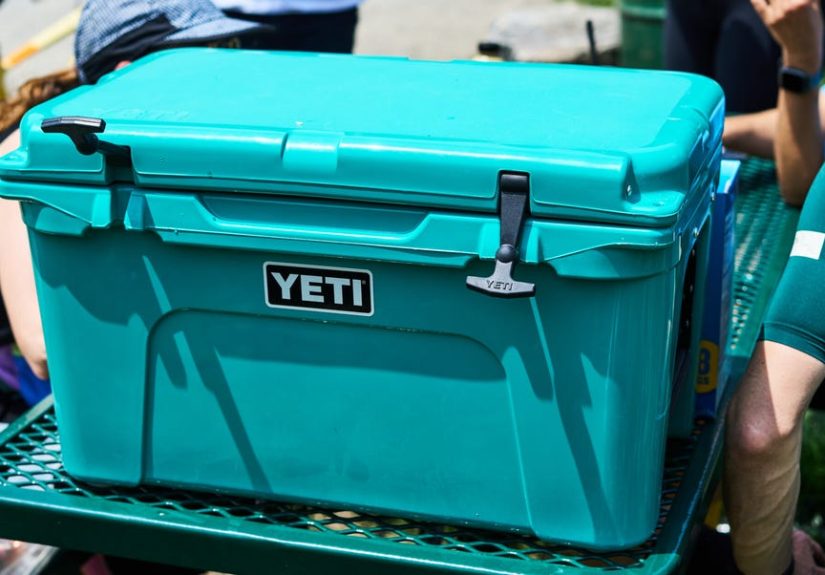
1) YETI Tundra 45 Best Overall Hard Cooler
If camping coolers had a “classic movie” category, the Tundra 45 would be in it. It’s a dependable, premium
hard-sided cooler that’s built for real outdoors use: thick insulation, tough construction, strong sealing, and
the kind of durability that makes you less worried about tossing it in the truck next to firewood.
Why it wins: It’s the “buy once, camp forever” pick. It’s also widely supported by accessories
(baskets, dividers, tie-downs), which matters more than you think once your cooler becomes the unofficial camp
kitchen pantry.
Watch-outs: It’s not cheap, and it’s not light. If you move camp daily or carry your cooler any real
distance, weight becomes a personality trait.
Best for: Weekend-to-multi-day car camping, hot climates, and anyone who wants one cooler that can
handle years of trips.
2) RTIC Ultra-Light Best Value for “Premium” Performance
RTIC has earned a reputation for offering impressive performance for less money than the most famous premium brands.
The Ultra-Light line is especially appealing for campers who want strong insulation and durability, but who also
recognize that “lighter” is a feature when you’re loading gear at midnight or wrestling a cooler out of a trunk.
Why it wins: Great value, solid insulation, and a practical size range that fits most camping
setupsespecially long weekends where you want cold drinks, safe food temps, and fewer ice runs.
Watch-outs: Value coolers can vary in little details (latches, hinges, fit-and-finish). It’s still a
beast compared to basic big-box coolers, but you’re not paying for “luxury touches.”
Best for: Campers who want a serious cooler without paying “premium tax.”
3) RovR RollR 60 Best Wheeled Cooler for Rough Campsites
Many wheeled coolers roll beautifully… on perfectly smooth pavement. Then you hit dirt, gravel, or a campsite that
apparently was designed by a committee of tree roots. That’s where the RovR RollR 60 shines: it’s known for being
unusually capable on uneven terrain thanks to its big, air-filled wheels.
Why it wins: If you’re hauling a cooler across grass, sand, gravel, or lumpy campground roads, wheels
that actually work are life-changing. The RollR also has a deep accessory ecosystem (bins, boards, add-ons) for those
who like their gear modular and borderline spaceship-ready.
Watch-outs: It’s large and can be heavy before you even add ice, food, and the entire beverage
section of a convenience store.
Best for: Car camping with longer walks to the site, beach camping, festivals, and group basecamps.
4) Coleman Xtreme 5-Day Wheeled (50-Quart Class) Best Budget Family Cooler
Coleman’s wheeled Xtreme-style coolers remain popular for a reason: they’re affordable, roomy, easy to find, and
genuinely useful for weekend camping. You’re not paying for rotomolded bragging rightsyou’re paying for capacity,
wheels, and “this will do the job” practicality.
Why it wins: For family camping, tailgates that turn into campouts, and budget-minded trips, this is
a sensible workhorse. It’s especially good if you accept a key truth: the “best” cooler is sometimes the one you can
afford and won’t cry over when it gets scratched.
Watch-outs: Ice retention is typically shorter than premium rotomolded coolers in harsh conditions.
You can improve results a lot by pre-chilling and using block ice (more on that below).
Best for: Weekend trips, moderate weather, and campers who want maximum space per dollar.
5) Igloo BMX (25-Quart Class) Best Compact Hard Cooler for Day Trips
Sometimes you don’t need a cooler the size of a small bathtub. You need something you can carry one-handed, stash in
the car, and open without doing a whole production. Igloo’s BMX line is widely seen as a tough, compact option that
offers impressive performance for the priceespecially in smaller sizes.
Why it wins: Great “grab-and-go” energy. It’s a smart choice for quick overnights, fishing mornings,
scenic drives, and day-use camping situations where a giant cooler is overkill.
Watch-outs: Smaller capacity means you’ll need to be intentional about what goes in (and how much
ice you can spare).
Best for: Day trips, solo/duo camping, and anyone building a two-cooler system (food stays in the big
one, drinks live in the small one).
6) YETI Hopper Flip 12 Best Soft Cooler for Grab-and-Go Camping Days
Soft coolers are the “I don’t want to lug a hard chest to the picnic table” solution. The Hopper Flip 12 is a favorite
style for campers because it’s compact, durable, and easy to carryideal for day hikes from basecamp, river days, or
keeping lunch cold while the main cooler stays mostly closed.
Why it wins: A good soft cooler keeps cold items cold, doesn’t leak all over your car, and survives
being dragged around like it’s part of your gear’s job description. The Flip-style form factor also packs well in a
trunk next to all the other “we might need this” items.
Watch-outs: Soft coolers rarely match hard coolers for multi-day ice retention. They’re best as a
complementary cooler, not your only cold storage for longer trips. Also, always check product safety notices and
model details when buying any cooler lineespecially if you’re shopping older inventory.
Best for: Day trips, side adventures from camp, and separating “frequent access” items from your main
food cooler.
7) Dometic CFX3 45 Best Electric Cooler (Portable Fridge) for Car Camping
If you’re tired of buying ice, draining meltwater, and playing “is this chicken still safe?” on day three, an electric
cooler can feel like cheatingin the best way. The Dometic CFX3 series is a go-to example of a portable compressor
fridge that can hold steady temperatures and even freeze if you want it to.
Why it wins: No ice means more space for actual food and drinks. Precise temperature control means
fewer soggy packages and more predictable meal planning. It’s especially helpful for overlanding, van camping, or any
trip where you’re in and out of camp for days.
Watch-outs: You need power. That can be easy (car outlet while driving) or a whole system (battery
pack, solar, power management). It’s also a bigger upfront cost, but frequent campers often find it pays back in
convenience.
Best for: Car camping, road trips, overlanding, and long stays where ice runs are a buzzkill.
Cooler Packing Tricks That Buy You More Cold (Without Buying a New Cooler)
- Pre-chill the cooler: Even 30–60 minutes with sacrificial ice helps. Starting warm is the fastest way to lose ice time.
- Use block ice: Blocks melt slower than cubes. Many campers do a “block + cubes” combo for long trips.
- Separate drinks from food: Your main cooler should be opened as little as possible. Drinks cause constant lid flips.
- Pack like a temperature strategist: Put the most perishable items low and toward the center. Keep snacks and “quick grabs” up top.
- Keep it out of the sun: Shade matters. A towel, reflective blanket, or even moving the cooler under a table helps.
- Don’t drain too early: Cold meltwater can help keep temps stable. Drain only when it becomes a mess risk.
Choosing the Right Cooler Size (A No-Stress Cheat Sheet)
Cooler size is where many people overbuy. Bigger isn’t always betteran oversized cooler can be harder to keep cold
if it’s half-empty (air warms up faster than tightly packed cold mass).
- 20–30 quarts: Solo or duo weekend trips, day use, or “drink cooler” duty.
- 40–55 quarts: The sweet spot for most 2–4 person weekend camping.
- 60–75+ quarts: Groups, longer trips, hot weather, or campers who pack like they’re feeding a small army.
- Electric fridge (25–55 liters): Great for steady storage, especially when you want reliable temps over multiple days.
FAQ: Fast Answers Campers Actually Want
Rotomolded vs. injection-molded: which is better for camping?
Rotomolded coolers are typically tougher and better insulated, which is great for multi-day camping and high heat.
Injection-molded coolers can be lighter and often cheaper, making them appealing for shorter trips and easier
carrying. The “best” choice depends on how long you’re out and how much you hate buying ice.
Do electric coolers replace ice coolers?
For car campers and frequent road-trippers, yesoften completely. For backpacking or anywhere you can’t reliably power
a fridge, traditional coolers still win. Many people end up with both: electric for the vehicle and a small soft
cooler for day adventures.
Should I buy one cooler or two?
Two coolers is a pro move: one for food (opened rarely), one for drinks/snacks (opened constantly). Even budget
coolers perform better when you stop treating the main cooler like a vending machine.
of Camping Cooler “Experience” (So You Don’t Learn the Hard Way)
Here’s the part nobody tells you at the store: the cooler isn’t the only thing that determines whether your ice lasts.
Your habits do. The cooler is the stage; you are the actor who keeps sprinting on and off it yelling, “Where are the
sodas?” every twelve minutes.
The most common camping-cooler lesson happens on Day 1. You arrive hungry, you open the cooler, and you realize you
packed it like a junk drawer. You dig for condiments, shift bags, lift a watermelon you definitely didn’t need, and
by the time you find the cheese, you’ve basically hosted a warm-air house party inside the lid. The fix is simple:
pack in layers. Put “Day 3 food” on the bottom. Put “Day 1 lunch” on top. Your future self will feel seen and
supported.
Next lesson: ice is not a vibe. It’s a system. Cubes are great for filling gaps, but they melt faster. Blocks melt
slower, but they don’t hug your food. The “camping sweet spot” is often a block (or two) plus cubes around the edges.
If you’ve ever wondered why your friend’s cooler keeps ice longer, it’s not wizardryit’s usually just block ice and
fewer unnecessary openings.
Then there’s the “I brought one cooler for everything” trap. Drinks cause constant lid opening. Food wants stability.
If you only do one upgrade this year, consider a small secondary coolerhard or softfor drinks and snack duty. It
doesn’t have to be fancy; it just has to be the cooler people are allowed to open without filing a request with the
camp manager (you).
Electric coolers create a different kind of learning curve. The first time you run a portable fridge, you feel
invincibleuntil you realize power planning matters. A compressor fridge is amazing for keeping food safe and drinks
perfectly cold, but you need to know your setup: car outlet while driving, a battery for overnight, and a plan if
you’re staying put for days. The “experience” here is not about sufferingit’s about dialing in a routine that keeps
the fridge happy and your breakfast un-frozen.
Finally, the best cooler experience tip is the least glamorous: put the cooler in the shade. Move it when the sun
shifts. Cover it with something reflective if you have to. Heat is your real enemy, not time. A great cooler in full
sun can struggle; a decent cooler in steady shade can surprise you. Camping is full of small winsthis is one of the
easiest.
Conclusion
The best cooler for camping in 2024 isn’t just “the one with the longest ice claim.” It’s the one that fits your trip.
If you want a lifetime-style hard cooler, the YETI Tundra 45 is a classic. If you want value without giving up
serious performance, RTIC Ultra-Light is hard to ignore. If you’re hauling across rough ground, the RovR RollR 60
earns its keep. If your budget is tight, Coleman still makes camping easier. If you need portability, a soft cooler
like the Hopper Flip keeps day trips simple. And if you’re ready to stop buying ice altogether, Dometic’s CFX3 45 is
the “welcome to the future” option.






 Close
Close