
Table of Contents >> Show >> Hide
- What Fresh Scallops Actually Are
- Sea Scallops vs. Bay Scallops
- The Single Most Important Choice: Dry vs. Wet Scallops
- How to Tell if Scallops Are Truly Fresh
- What Scallop Sizes Mean
- Fresh vs. Frozen: Yes, Frozen Can Win
- Where to Buy the Best Scallops
- How to Buy for Sustainability Too
- How Much to Buy
- How to Store Scallops at Home
- Common Scallop Buying Mistakes
- Real-World Buying Experiences That Make You Better at It
- Conclusion
- SEO Tags
Buying fresh scallops can feel weirdly intimidating for something that looks so elegant on a dinner plate. At the fish counter, they sit there like tiny edible hockey pucks with a luxury price tag, silently daring you to make a bad decision. And because scallops are expensive, nobody wants to get home with a pound of watery, pale, sad little disappointments that steam instead of sear.
The good news is that buying great scallops is not some mystical seafood superpower. Once you know what to look for, the whole process becomes much easier. You do not need to be a chef. You do not need to dramatically sniff shellfish like you are starring in a detective show. You just need a few practical rules, a little label-reading confidence, and the willingness to ask one or two smart questions.
This guide breaks down exactly how to buy fresh scallops, how to spot quality, what “dry” scallops really mean, when frozen scallops are actually the better choice, and how to avoid the most common fish-counter mistakes. By the end, you will be able to walk up to the seafood case like a calm, informed adult instead of someone whispering, “Uh… which scallops are less suspicious?”
What Fresh Scallops Actually Are
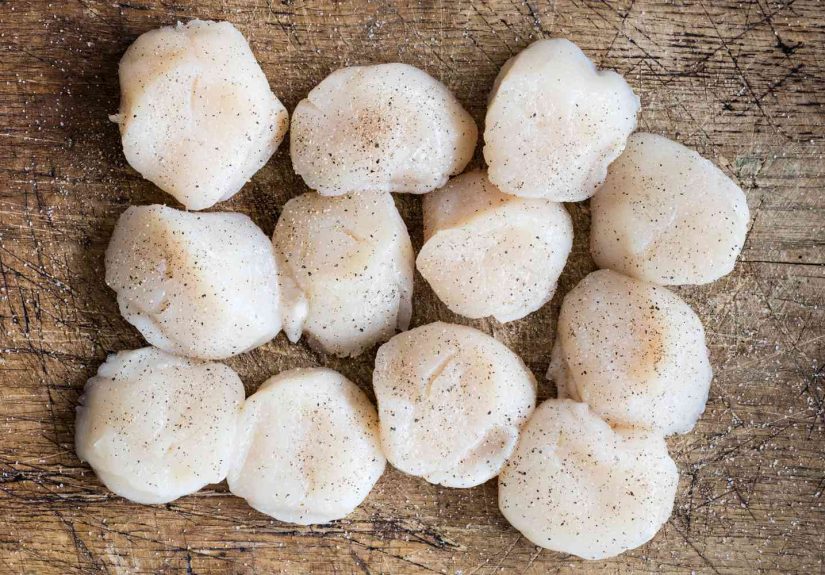
When Americans buy scallops, they are usually buying the adductor muscle, the round piece that opens and closes the shell. That is why most scallops at the seafood case look like neat white or cream-colored medallions instead of shell-on shellfish. In many U.S. markets, this is the standard retail form.
Fresh scallops should smell mild, sweet, and ocean-clean, not fishy, sour, or ammonia-like. Texture matters too. Good scallops feel firm, not mushy, and they should not be swimming in a puddle of mystery liquid. Color can vary more than many shoppers realize. Top-quality scallops may be ivory, cream, light tan, slightly pink, or even faintly orange depending on species and handling. In other words, “not perfectly paper white” is often a good sign, not a problem.
Sea Scallops vs. Bay Scallops
Before you buy, know which type you want. This alone can save you from a lot of cooking regret.
Sea scallops
These are the large ones most people picture when they imagine a restaurant-style scallop dinner. They are meaty, rich, and ideal for pan-searing, grilling, roasting, or serving as the centerpiece of a plate. If you want that golden crust with a tender middle, sea scallops are your best friend.
Bay scallops
Bay scallops are smaller, sweeter, and more delicate. They cook very quickly and work beautifully in pasta, chowder, risotto, sautés, seafood salads, and quick brothy dishes. They are not usually the first choice for a thick steak-like sear because they are simply too petite for that dramatic crusty-outside, tender-inside moment.
A useful shopping shortcut is this: buy sea scallops for searing, buy bay scallops for fast-cooking dishes. Your dinner will immediately start making better life choices.
The Single Most Important Choice: Dry vs. Wet Scallops
If you remember only one part of this guide, make it this one. The best scallops for most home cooks are dry-packed scallops.
Dry scallops have not been soaked in a chemical solution to make them hold extra water. Wet scallops, on the other hand, are often treated so they absorb moisture and appear plumper and brighter. That extra liquid may make the price seem more attractive, but it also makes the scallops cook badly. Instead of browning properly, they release water into the pan and start poaching themselves like they have given up on excellence.
Dry scallops usually have a more natural color and a cleaner, sweeter flavor. They also caramelize better, which is the whole point if you are chasing that golden restaurant-style crust.
Look for labels such as:
- Dry-packed scallops
- Dry scallops
- Chemical-free scallops
- Untreated scallops
If the seafood case does not clearly label them, ask the fishmonger directly: “Are these dry-packed or treated?” That one sentence can save dinner.
How to Tell if Scallops Are Truly Fresh
Here is your practical fish-counter checklist.
1. They smell sweet and mild
Fresh scallops should smell clean, light, and slightly sweet. They should not smell aggressively fishy. They should definitely not smell sour, metallic, or like a chemistry lab with ocean ambitions.
2. They are not sitting in a pool of liquid
Excess liquid is one of the biggest warning signs. A little moisture is normal. A milky puddle is not. If the tray looks like the scallops are marinating in sadness, move along.
3. The color looks natural
Natural scallops may be cream, ivory, light beige, slightly pink, or faintly orange. A super-bright, ghostly white look can suggest treated scallops. Natural variation is normal. Uniform perfection is suspicious.
4. The flesh looks firm
Fresh scallops should hold their shape. They should not look shredded, ragged, mushy, or slimy. Think plump and resilient, not collapsing under emotional pressure.
5. They are properly chilled
The seafood display should look cold and well maintained. Scallops should be kept very cold from store to home. Once purchased, they should go straight into the refrigerator or freezer, not on a long sightseeing trip in your car.
6. The seller can answer basic questions
A good seafood counter should be able to tell you whether the scallops are fresh or previously frozen, whether they are dry-packed, what size they are, and where they came from. If every answer sounds vague, that is information too.
What Scallop Sizes Mean
Scallops are often sold by count per pound. That is why you may see terms like 10/20 or U10. The smaller the number, the bigger each scallop.
- U10 means under 10 scallops per pound, so they are very large.
- 10/20 means about 10 to 20 scallops per pound.
- Smaller bay scallops are usually sold in much higher counts per pound.
If you want a dramatic sear for date night or a dinner party, choose larger sea scallops. If you are making pasta, stuffing, or a seafood sauté, smaller scallops are often easier to portion and cook evenly.
Fresh vs. Frozen: Yes, Frozen Can Win
Many shoppers assume fresh is always better. That sounds classy, but it is not always true. In plenty of inland markets, a well-frozen scallop can beat a “fresh” scallop that has already spent too long in transit or sitting in a display case.
That means the smartest question is not just “Are these fresh?” It is “Are these high-quality and well handled?”
If you live far from the coast, do not treat frozen scallops like a culinary compromise. Individually quick frozen dry-packed scallops can be excellent. In fact, they are often the best choice because freezing can lock in quality earlier in the supply chain. The real losers are not frozen scallops. The real losers are poorly handled scallops pretending to be premium because they are sitting on crushed ice under flattering lighting.
Where to Buy the Best Scallops
Your best options are usually:
- A reputable fish market
- A grocery store with a strong seafood program
- A seafood co-op or trusted online seafood seller
- A market known for local or seasonal catch
When possible, ask these questions:
- Are these dry-packed?
- Were they previously frozen?
- When did they arrive?
- What size are they?
- Where were they harvested?
- Do you recommend these for searing or for pasta?
Labels such as “day boat” or “diver” can sound appealing, and sometimes they do point to a more premium product or harvest method. But labels are only helpful if the seller can explain what they mean in that specific case. Ask for details rather than buying the romance of the wording alone.
How to Buy for Sustainability Too
If sustainability matters to you, take an extra moment to check where the scallops came from and how they were harvested or farmed. Scallop sustainability can vary by species, region, and method. Some farmed scallops and some certified fisheries are considered strong choices, while other options are less ideal.
You do not have to become a marine policy expert in aisle seven. Just look for credible third-party guidance, ask the seller where the scallops are from, and avoid the mindset that “seafood is seafood.” A more informed purchase helps both dinner and the ocean.
How Much to Buy
For a main course, plan on roughly 4 to 6 large sea scallops per person, depending on the size and what else is on the plate. For bay scallops in pasta or risotto, the portion is more flexible, but about 4 to 6 ounces per person is a useful starting point.
If the scallops are expensive, remember that you do not need a mountain of them to make dinner feel luxurious. A few excellent scallops beat a heap of wet, rubbery ones every time.
How to Store Scallops at Home
Once you get home, the clock starts ticking. Fresh scallops are perishable and should be handled like they mean it.
- Store them in the coldest part of the refrigerator.
- Keep them in a sealed container or zip-top bag set over ice if possible.
- Use them within 1 to 2 days for best quality.
- If you will not cook them soon, freeze them promptly.
Do not leave scallops hanging out on the counter while you answer emails, reorganize your spice rack, or begin a totally unrelated life project. Seafood loves a plan. Give it one.
Common Scallop Buying Mistakes
Buying the whitest scallops in the case
That bright white look can be a sign of treated scallops, not superior quality.
Ignoring excess liquid
If you want a good sear, too much liquid is your enemy.
Assuming fresh is always better than frozen
Sometimes frozen dry-packed scallops are a better buy than mediocre “fresh” ones.
Choosing the wrong size for the recipe
Huge sea scallops for chowder or tiny bay scallops for steak-style searing can both lead to disappointment.
Waiting too long to cook them
Scallops are not a “maybe this weekend” ingredient. Buy with a plan.
Real-World Buying Experiences That Make You Better at It
The funny thing about buying fresh scallops is that most people do not really learn from a recipe. They learn from one excellent purchase and one terrible one. The excellent batch makes you think, “Wow, I am a genius.” The terrible batch makes you stand over a skillet watching expensive shellfish leak water into the pan while your confidence quietly leaves the room.
One of the most useful experiences I had was buying scallops from two different counters on the same weekend. The first set looked almost too perfect: bright white, glossy, and suspiciously polished, like they had a publicist. The second set looked more natural, slightly cream-colored, firmer, and not drenched in liquid. Guess which ones cooked better. The first batch steamed and turned rubbery around the edges. The second batch browned in minutes and tasted sweet, clean, and rich. That was the moment the “dry-packed” lesson stopped being theory and became law.
Another helpful lesson came from asking a fishmonger one simple question: “Which scallops would you buy for searing tonight?” That question changed everything. Instead of trying to decode every sign in the case by myself, I got a direct answer from someone who handled seafood all day. Good sellers usually do not mind that question. In fact, the best ones light up a little because now they get to talk about quality instead of just ringing up a pound of shellfish and sending you on your way.
I have also learned that a little humility saves money. There was a time when I assumed “fresh” automatically meant “best.” Then I bought frozen dry-packed scallops from a trusted source and realized they were better than some so-called fresh scallops I had bought in regular grocery stores. That experience made me less snobbish and more practical. When seafood is handled well, frozen is not a downgrade. Sometimes it is the smarter, cleaner, less risky option.
And then there is the portion-size lesson. Many people, including me, tend to overbuy scallops because they look small in the case. But once they are paired with risotto, vegetables, pasta, or crusty bread, a moderate amount feels elegant rather than skimpy. Scallops are rich. They do not need to be piled like breakfast pancakes.
Most of all, experience teaches you that confidence at the fish counter comes from noticing patterns. Sweet smell. Firm texture. Natural color. No milky puddle. Clear answers from the seller. Once you have seen those signs a few times, buying fresh scallops stops feeling fancy and starts feeling easy. That is the goal. Not becoming a seafood snob. Just becoming the person who knows what to buy before the skillet gets involved.
Conclusion
A guide to buying fresh scallops really comes down to a handful of smart habits: choose the right type for your recipe, look for dry-packed scallops, avoid excess liquid, trust natural color over ghostly whiteness, and do not be afraid to buy frozen if the quality is better. Great scallops are not about luck. They are about paying attention.
Once you know the signs, you will spend less money on disappointing seafood and more time eating scallops that actually taste sweet, tender, and worth the splurge. Which, frankly, is the entire point of scallops in the first place.






 Close
Close