
Table of Contents >> Show >> Hide
- What Is a Sign Language Sensor Glove?
- How the Technology Works
- Real Research Behind Sign Language Translation Gloves
- Why Translating Sign Language Is Harder Than It Looks
- Potential Benefits of Sensor Gloves
- Major Limitations and Ethical Questions
- Where Sensor Glove Technology Is Going
- Practical Examples of Use
- What Buyers and Developers Should Look For
- Experiences and Real-World Reflections: What It Feels Like to Use a Sign Language Sensor Glove
- Conclusion: A Smart Glove Can Help, But People Still Matter Most
Imagine ordering coffee, checking into a hotel, or asking for directions with a wave of your handand having a small wearable device speak the words out loud. No frantic pointing. No awkward guessing game. No “I’m sorry, can you write that down?” The idea behind a sensor glove that translates sign language is wonderfully futuristic: a glove packed with flexible sensors reads hand movements, sends the data to a processor or smartphone, and converts signs into text or speech.
That sounds like something a superhero would wear between saving the city and replying to emails. But the technology is real, and it has been explored for decades by university labs, engineers, accessibility researchers, and student inventors. In recent years, advances in stretchable electronics, machine learning, Bluetooth communication, mobile apps, and wearable sensors have made sign language translation gloves more lightweight, affordable, and accurate than older prototypes.
Still, the story is more complicated than “glove goes on, language comes out.” American Sign Language, or ASL, is not English performed with hands. It is a complete natural language with its own grammar, facial expressions, body movement, timing, space, and cultural meaning. A sensor glove can recognize some handshapes and gestures, but real human communication is richer than any gadget demo. The best way to understand this technology is to celebrate its promise while keeping both feetpreferably wearing comfortable shoesfirmly planted in reality.
What Is a Sign Language Sensor Glove?
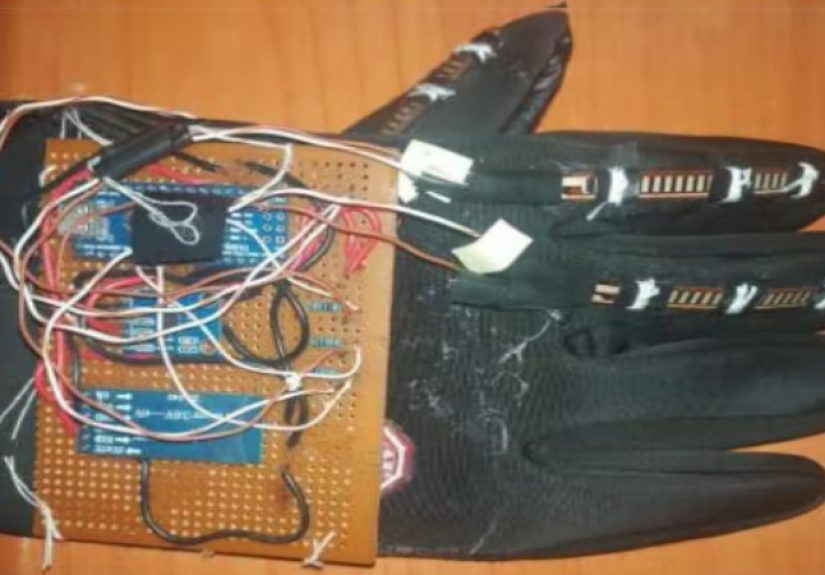
A sign language sensor glove is a wearable device designed to detect hand and finger movements associated with signed communication. The glove usually contains sensors along the fingers, palm, wrist, or knuckles. These sensors collect movement data and send it to a microcontroller, circuit board, computer, or smartphone app. Software then analyzes the data and matches the gesture with a stored sign, letter, number, word, or phrase.
Some gloves translate signs into written text. Others convert recognized signs into synthesized speech. A few experimental systems combine glove sensors with facial sensors, motion tracking, inertial measurement units, or cameras to improve recognition. The goal is simple to describe but difficult to execute: help signers communicate with people who do not know sign language.
The main keyword here is sensor glove translates sign language, but related phrases matter too: smart glove for ASL, sign language translation technology, wearable assistive technology, gesture recognition glove, and AI sign language translator. These terms all point to the same fast-growing field: technology that attempts to bridge communication gaps through wearable computing.
How the Technology Works
1. Sensors Capture Finger and Hand Movement
Most smart gloves begin with flex sensors or stretchable strain sensors. These tiny components respond when fingers bend, straighten, or move. In a basic setup, each finger may have one or more sensors that detect how much the knuckle bends. More advanced gloves use soft, stretchable materials, conductive yarns, pressure sensors, accelerometers, and gyroscopes to capture both static handshapes and dynamic movement.
For example, a glove may detect whether the thumb is straight, the index finger is curled, or the wrist is rotating. That information is converted into electrical signals. The glove does not “understand” the sign the way a person does. Instead, it records patterns, much like a fitness tracker records steps. The magicor at least the very hardworking engineeringhappens when software interprets those patterns.
2. A Processor Converts Signals Into Data
Once the glove captures movement, a small circuit board or microcontroller processes the sensor readings. Some systems attach this board to the wrist. Others place it on the back of the hand or connect it wirelessly to a smartphone. The hardware organizes the raw electrical signals into structured data that a machine learning model can classify.
In simpler gloves, each finger position may correspond to a binary code. For example, a bent knuckle may be treated as “1,” while a straight knuckle may be treated as “0.” The system then compares the combined code against a database of known letters or signs. More advanced systems use machine learning algorithms trained on many examples of signed gestures.
3. Machine Learning Recognizes the Sign
Machine learning is what allows a smart glove to move beyond rigid, one-size-fits-all rules. Since people sign with different hand sizes, speeds, habits, and ranges of motion, the software must learn patterns instead of relying only on fixed measurements. A signer may perform the same sign slightly differently on Monday morning than on Friday afternoon after three coffees and a long meeting. The glove must handle that variation.
Researchers train recognition systems by collecting repeated samples of signs from users. The algorithm studies those samples and learns which sensor patterns correspond to which letters, numbers, or words. In a well-designed system, the output may appear as text on a phone screen or play as spoken English through an app.
Real Research Behind Sign Language Translation Gloves
One of the most widely discussed examples came from UCLA bioengineers, who developed a glove-like wearable system that translated American Sign Language into English speech through a smartphone app. The UCLA device used thin, stretchable sensors running along the fingers to capture hand movements. Those movements were converted into electrical signals, sent to a wrist-mounted circuit board, and transmitted wirelessly to a smartphone.
In testing, the system recognized hundreds of signs, including letters, numbers, words, and phrases. The research showed how flexible wearable electronics and machine learning can work together to create a real-time sign-to-speech system. The team also experimented with adhesive facial sensors because facial expressions are essential in ASL. That detail matters. A glove that ignores the face is like a movie with the subtitles removed and the actors wearing paper bags. Technically something is happening, but you are missing a lot.
Another important example is UC San Diego’s “Language of Glove,” a low-cost smart glove that translated the ASL alphabet into text. It used stretchable and printable electronics, detected knuckle positions, and transmitted letters wirelessly to a smartphone or computer. The project showed that smart glove technology does not necessarily have to be bulky, expensive, or trapped in a science lab where only people in white coats are allowed to touch it.
Earlier prototypes also shaped the field. Devices such as the AcceleGlove explored sensor-based translation of ASL words and phrases years before today’s AI boom. Student projects and university research have continued to test gloves that recognize alphabets, daily-use words, emergency phrases, and sentence patterns. Each generation improves the hardware, software, comfort, and speedbut each also runs into the same central challenge: sign language is not just finger spelling.
Why Translating Sign Language Is Harder Than It Looks
To a non-signer, sign language may look like a sequence of hand gestures. That misunderstanding is exactly why glove technology can be overhyped. ASL uses handshape, palm orientation, movement, location, facial expression, posture, eye gaze, timing, and spatial grammar. A change in eyebrow position can transform a statement into a question. A shift in body position can indicate different speakers in a story. A sign’s meaning may depend on where it is placed in signing space.
A glove is very good at measuring fingers. It is less good at understanding context, grammar, emotion, and the full visual-spatial nature of signed language. This is why many Deaf scholars, advocates, and signers have criticized sign language gloves when they are marketed as if they can “solve” communication for Deaf people. Communication is not a technical bug waiting for a firmware update. It is a relationship between people.
The most respectful approach is to view sensor gloves as assistive tools with specific use cases, not replacements for ASL fluency, interpreters, captioning, Deaf culture, or accessible public services. A glove may help in a narrow situation, such as translating common phrases in a clinic, classroom, airport, or customer service desk. It may also help students learn basic signs. But it should not become an excuse for hearing people to avoid learning ASL or for institutions to skip accessibility responsibilities.
Potential Benefits of Sensor Gloves
Faster Communication With Non-Signers
The most obvious benefit is communication between signers and people who do not know sign language. A sensor glove could convert common ASL signs into spoken words or text in real time. In short interactionsordering food, asking for help, confirming an appointmentthe technology could reduce friction and save time.
Portable Learning Tool
Smart gloves could also help ASL learners practice handshapes and movement accuracy. A learning app could give feedback when a user signs a letter incorrectly, almost like a patient music teacher, except less likely to say, “Again from the top.” For beginners, that kind of immediate correction can be valuable.
Affordable Assistive Technology
As flexible sensors and microcontrollers become cheaper, low-cost sign language gloves may become more accessible. Some research prototypes have been built with inexpensive materials, Bluetooth modules, and open-source platforms. That matters because assistive technology must be affordable to be useful. A glove that costs as much as a used car is less “inclusive innovation” and more “fancy museum exhibit.”
Applications Beyond Sign Language
The same sensor glove technology can be used in virtual reality, robotics, rehabilitation, remote training, gaming, and telesurgery research. A glove that understands finger movement can control a virtual hand, guide a robotic arm, or track therapy exercises after injury. Sign language translation is one compelling use case within a much broader wearable technology landscape.
Major Limitations and Ethical Questions
Accuracy Is Not the Same as Understanding
A lab system may achieve impressive accuracy on a controlled set of signs, but real-world signing is messy. People sign at different speeds. Lighting, sweat, sensor placement, glove fit, and hand size can affect performance. A model trained on a few users may struggle with new users. A glove that recognizes “I need help” in a demo may not understand a nuanced conversation about insurance, parenting, poetry, or why the printer has betrayed everyone again.
ASL Is Not Universal
There is no universal sign language. ASL is different from British Sign Language, which is different from many other signed languages around the world. Even within the United States, signers may use regional variations, home signs, Black ASL, or community-specific vocabulary. A glove trained on one dataset cannot automatically translate every signing style.
Two-Way Communication Matters
Many glove systems translate from signer to non-signer, but communication goes both directions. If a Deaf signer uses a glove to speak to a hearing person, how does the hearing person respond accessibly? Speech recognition, captioning, text display, or sign output would be needed for a true two-way system. Otherwise, the glove risks becoming a one-way bridge with a “good luck getting back” sign at the end.
Deaf Community Involvement Is Essential
The most important design principle is simple: build with Deaf people, not just for Deaf people. Deaf signers should be part of research design, data collection, product testing, privacy review, language evaluation, and commercialization decisions. Without that collaboration, even technically impressive tools can miss what users actually need.
Where Sensor Glove Technology Is Going
The future of sign language translation technology is likely to combine several approaches. Sensor gloves may work alongside cameras, smartphone apps, facial expression recognition, motion capture, and AI language models. A hybrid system could track hand movement through wearable sensors while using a camera to understand facial expressions and body posture. This would give software a more complete picture of signed communication.
Machine learning models will also improve as datasets become larger, more diverse, and more ethically collected. Better training data could help systems adapt to individual signing styles and recognize longer phrases. Edge computing may allow processing directly on wearable devices, reducing delay and protecting privacy. Battery life, washability, comfort, and durability will also matter. Nobody wants an accessibility device that panics at the first drop of rain or feels like wearing a spaghetti monster on each hand.
The most successful products will probably be modest in their promises. Instead of claiming to translate all ASL perfectly, they may focus on specific environments: emergency communication, medical intake, classroom learning, museum guides, workplace safety, or customer service. Narrow tools can still be powerful when designed honestly.
Practical Examples of Use
In a hospital reception area, a smart glove could help a Deaf patient communicate basic needs while waiting for a qualified interpreter or video relay service. It might translate signs such as “pain,” “medicine,” “allergy,” “appointment,” or “family.” In a school setting, a glove-based learning system could help hearing students practice the ASL alphabet and common greetings. In a museum, a visitor could use a wearable system to interact with an exhibit that responds to signed commands.
In public service environments, sensor gloves might support quick interactions where full interpretation is not available. However, they should be considered supplementary tools. For legal, medical, educational, or complex conversations, professional interpreting and accessible communication services remain essential.
What Buyers and Developers Should Look For
Anyone evaluating a sensor glove for sign language translation should ask practical questions. What language does it recognize? ASL? Fingerspelling only? A custom gesture set? How many signs are supported? Was the system tested with Deaf native signers? Does it recognize facial expressions or only hand movement? Can it adapt to different hand sizes? What happens when it makes a mistake? Where is the data stored? Can users delete recordings or sensor logs?
Comfort is just as important as accuracy. A wearable device must be light, flexible, breathable, and easy to put on. It should not interfere with natural signing. If users must slow down dramatically, exaggerate every sign, or wear a glove that looks like it was assembled by a nervous robot in a thunderstorm, adoption will suffer.
Developers should also avoid marketing that treats Deaf people as problems to be fixed. Stronger messaging would frame the technology as a communication aid, learning tool, or optional interface. Respectful design recognizes ASL as a language and Deaf culture as a community, not a malfunction.
Experiences and Real-World Reflections: What It Feels Like to Use a Sign Language Sensor Glove
Testing a sensor glove that translates sign language can feel both exciting and slightly strange. The first impression is usually curiosity. You slide your hand into the glove, notice the sensors along the fingers, and immediately become aware of movements you normally make without thinking. Suddenly, bending your index finger feels like sending a message to Mission Control. The glove is not heavy, but the awareness is. You start signing more carefully because you know the system is watching every bend, curl, and wrist shift.
When the first sign appears correctly as text or speech, there is a small “wow” moment. It is similar to watching speech recognition work for the first time, except your hands are doing the talking. A simple phrase like “hello” or “thank you” becomes a tiny technological performance. The phone speaks, the room reacts, and for a second everyone smiles. That moment explains why researchers and journalists get excited about this technology. It feels like a door opening.
Then the practical lessons arrive. The glove may recognize a sign perfectly when performed slowly, but stumble when the user signs naturally. A finger that is not bent enough may confuse the system. A sensor may shift slightly on the knuckle. A repeated sign may produce different readings because human bodies are not factory-calibrated machines. The user may start adjusting to the glove instead of the glove adjusting to the user. That is when the excitement becomes more thoughtful.
For beginners learning ASL, the glove can feel like a helpful coach. If the system is designed for education, it may show whether the handshape is close to the target sign. That feedback can build confidence. A student practicing the alphabet might enjoy seeing letters appear on screen. The experience can turn memorization into a game, which is useful because learning any language requires repetition, and repetition is easier when the technology gives you a little digital applause.
For fluent signers, the experience may be more mixed. A fluent signer does not think in isolated finger positions. They use rhythm, expression, space, and grammar. Wearing a glove that recognizes only a limited vocabulary can feel like being asked to speak in refrigerator magnets. Useful? Sometimes. Natural? Not really. If the glove requires slower signing or simplified phrases, it may interrupt the flow of conversation.
The best experience happens when expectations are clear. A sensor glove is impressive when used for what it does well: recognizing controlled gestures, translating common signs, assisting learners, or demonstrating wearable technology. It becomes frustrating when presented as a universal ASL translator. Users quickly learn that the device is not a magic interpreter; it is a tool with boundaries.
In real life, the most promising scenario is collaboration. Picture a Deaf signer, engineers, ASL linguists, interpreters, educators, and accessibility specialists testing the glove together. The signer explains what feels natural. The linguist explains grammar. The engineer adjusts the model. The designer improves comfort. The result is not just better technology; it is better respect. That is the experience the field needs more of: not a gadget speaking over Deaf people, but a tool shaped by the people it claims to serve.
Conclusion: A Smart Glove Can Help, But People Still Matter Most
A sensor glove that translates sign language is one of the most fascinating examples of wearable assistive technology. It blends flexible sensors, machine learning, mobile computing, and human-centered design into a device that can turn hand movement into text or speech. Research prototypes from universities such as UCLA and UC San Diego show real progress, from recognizing ASL alphabets to translating hundreds of signs in real time.
But the future of this technology depends on humility. ASL is a full language, not a code to crack. Deaf culture is not a technical challenge waiting in a help-desk queue. Sensor gloves may become useful tools for education, quick communication, emergency support, and human-computer interaction, but they should never replace language access, professional interpreters, captions, or the simple human effort of learning to communicate better.
The smartest glove will not be the one that merely speaks the loudest. It will be the one designed with Deaf communities, tested in real situations, honest about its limits, and flexible enough to support communication without flattening the beauty of sign language. In other words, the future is not just wearable. It is collaborative.






 Close
Close