
Table of Contents >> Show >> Hide
- Quick answer: Does Medicare cover stair lifts?
- Why Original Medicare usually does not cover stair lifts
- Can Medicare Advantage cover stair lifts?
- What about Medicaid coverage for stair lifts?
- Do VA benefits cover stair lifts?
- How much do stair lifts cost?
- Ways to pay for a stair lift when Medicare won’t
- 1) Medicare Advantage supplemental benefits
- 2) Medicaid HCBS waivers
- 3) Tax deductions for medical home modifications (IRS rules)
- 4) USDA Section 504 Home Repair program (for eligible rural homeowners)
- 5) Local aging services and home modification programs
- 6) Used, refurbished, or rental stair lifts
- How to check stair lift coverage the smart way
- Final thoughts
- Experience-based insights: what families often learn the hard way (extra 500+ words)
If you’ve ever looked at a staircase and thought, “We had a good run, but this relationship is getting toxic,” you’re not alone. Stair lifts can be a life-changing solution for older adults and people with mobility limitations who want to stay in their homes safely. The catch? They can be expensive, and the first question most families ask is: Does Medicare cover a stair lift?
Here’s the short version: Original Medicare (Part A and Part B) usually does not cover stair lifts. In Medicare’s world, stair lifts are generally treated more like a home modification than covered durable medical equipment (DME). That said, there are important exceptions, workarounds, and funding paths worth knowing aboutincluding Medicare Advantage plans, Medicaid HCBS programs, veterans’ benefits, tax deductions, and local assistance programs.
This guide breaks it all down in plain English, with real-world examples, practical next steps, and a few sanity-saving tips for comparing options without getting buried in brochures and fine print.
Quick answer: Does Medicare cover stair lifts?
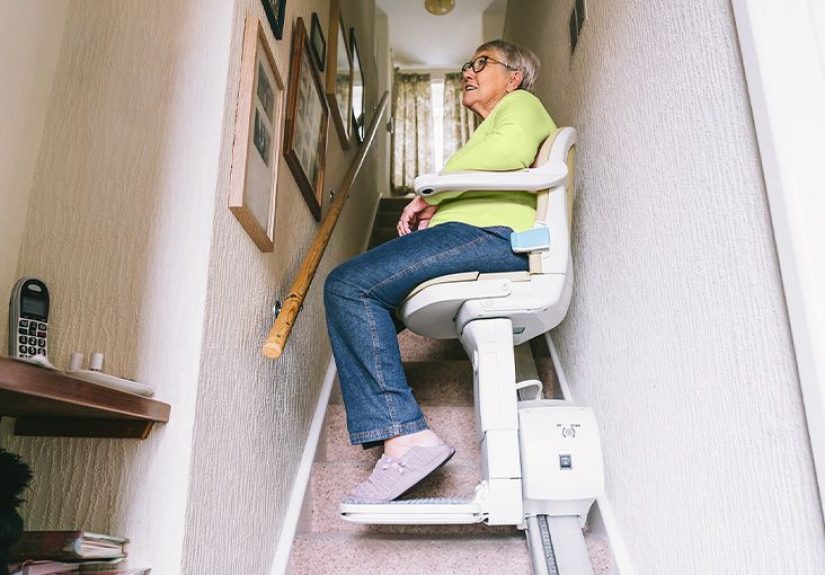
Usually no. Original Medicare does not typically pay for stair lifts. The main reason is classification: stair lifts are commonly treated as home accessibility modifications, not standard DME under Medicare Part B.
However, don’t close the laptop just yet. You may still have options if you have:
- A Medicare Advantage (Part C) plan with supplemental benefits
- Medicaid through a Home- and Community-Based Services (HCBS) waiver or similar program
- Veterans benefits (with important rules and exclusions)
- Tax-deductible medical home modifications under IRS rules (if eligible)
- Local, nonprofit, or rural home repair assistance
Why Original Medicare usually does not cover stair lifts
1) Medicare Part B covers DME, but stair lifts usually don’t fit the category Medicare uses
Medicare Part B does cover many types of durable medical equipment used in the homethings like walkers, wheelchairs, hospital beds, and certain patient lifts. Medicare also has strict provider and supplier rules, and for covered DME, beneficiaries typically pay 20% coinsurance after the Part B deductible (assuming assignment is accepted).
So why not stair lifts? Because a stair lift is attached to the structure of your home and is generally viewed as an accessibility modification, not a standard DME item under Part B. In other words, Medicare may pay for equipment that helps move your body, but not usually for equipment that changes your house.
It’s a frustrating distinction, especially if a stair lift is exactly what keeps someone safe and independent. But in Medicare language, “medically helpful” and “covered” are not always the same thing.
2) The “lift” naming confusion is real
This part trips up a lot of people (pun absolutely intended). Medicare may cover some items with “lift” in the name, but those are not the same as a stair lift:
- Patient lifts: These are transfer devices used to move a person, for example from a bed to a chair. Medicare Part B may cover these when medically necessary.
- Seat lift mechanisms: Medicare has separate DME policy rules for certain seat lift mechanisms (the lifting component used to help someone rise from a chair), which is not the same thing as a stair chair lift mounted to stairs.
So if someone tells you, “Medicare covers lifts,” the follow-up question should be: “Which kind of lift?” That one question can save a lot of confusion and a few blood pressure spikes.
Can Medicare Advantage cover stair lifts?
Sometimesbut it depends on the plan
Medicare Advantage (Part C) plans are run by private insurers and often include supplemental benefits beyond Original Medicare. Some plans offer benefits tied to safety, function, or chronic-condition support, and in certain cases that may include home modifications or allowances that can help with accessibility upgrades.
That does not mean every Medicare Advantage plan covers stair lifts. In fact, it’s still not commonand when available, it may be limited to:
- Specific conditions or eligibility categories (especially chronic illness criteria)
- A capped dollar allowance
- Approved vendors only
- Prior authorization or clinical documentation
- Certain types of modifications (for example, some plans may cover grab bars but not a full stair lift)
Here’s the practical move: check your plan’s Evidence of Coverage (EOC) and look specifically for terms like:
- “Home modifications”
- “Home safety devices”
- “Supplemental benefits for the chronically ill”
- “SSBCI”
- “Fall prevention”
Consumer legal-aid guidance for Medicare Advantage members also notes that home modifications may appear as supplemental benefits and that the plan ultimately decides eligibility and documentation requirements. Translation: even if your neighbor got help from their plan, your plan may say noor may say yes, but only after a detailed review.
A useful 2025 Medicare Advantage tip
CMS finalized rules requiring Medicare Advantage plans to send a mid-year notification of unused supplemental benefits. If your plan has extra benefits you haven’t used, this notice can be a good reminder to review what’s available before the year ends. It won’t magically create stair lift coverage, but it may help you spot a home-safety allowance you forgot existed.
Also worth noting: Medicare Advantage is a huge part of Medicare now, with more than half of eligible beneficiaries enrolled. That makes plan-by-plan checking especially important, because the benefit landscape is broad and constantly evolving.
What about Medicaid coverage for stair lifts?
Medicaid is often the strongest public-program path for stair lift assistance, especially for people who qualify for long-term services and supports. Medicaid’s Home and Community-Based Services (HCBS) programs are designed to help people receive care in their homes or communities rather than institutions.
Many states use HCBS waiver programs (often under 1915(c) waivers) to provide a mix of medical and non-medical supports. States have flexibility to offer “other” services that help people avoid institutional care or transition back home. That flexibility is where home accessibility modificationslike ramps, bathroom changes, and sometimes stair liftsmay come into play.
The important word is state-specific. Medicaid rules vary widely by state, and coverage may depend on:
- Your diagnosis and level-of-care assessment
- Income and asset limits
- Whether the modification is considered essential for safe home living
- Whether a less expensive alternative is available
- Prior authorization requirements
Example: A person who can no longer safely use stairs and would otherwise need nursing facility placement may have a stronger case for a stair lift under a state HCBS program than someone seeking a convenience upgrade.
If you think Medicaid might be an option, start with your state Medicaid office and ask specifically about HCBS waivers, home modifications, environmental accessibility adaptations, or assistive technology.
Do VA benefits cover stair lifts?
Veterans and their families often hear about the VA’s Home Improvements and Structural Alterations (HISA) benefitand for good reason. HISA can help pay for medically necessary home changes such as ramps, roll-in showers, and accessibility improvements in kitchens and bathrooms.
But here’s the nuance that matters: the VA’s current HISA guidance explicitly lists some exclusions, including porch lifts and stair glides. Since stair glides are essentially stair lifts, that means HISA may not be the stair-lift solution many people expect.
That said, veterans should still ask about other VA housing programs, such as:
- SAH (Specially Adapted Housing)
- SHA (Special Home Adaptation)
- Other disability-related housing supports, depending on service connection and eligibility
Bottom line: VA benefits may help with home accessibility, but don’t assume HISA covers stair lifts. Ask your VA prosthetics or housing benefits contact for program-specific guidance before you sign a contract.
How much do stair lifts cost?
Stair lift prices vary a lot, and the staircase itself is a huge part of the story. A straight indoor staircase is the “easy mode” version. A curved staircase with landings and turns? That’s where the price climbs faster than the user won’t need to.
Typical stair lift cost ranges
Current consumer-aging guidance puts many stair lift projects in roughly these ranges:
- Straight stair lift: about $2,500–$5,000 total
- Curved stair lift: about $8,000–$12,000 total
- Outdoor stair lift: about $4,000–$8,000 total
Those estimates often include both equipment and installation. For many families, the surprise isn’t just the base priceit’s the add-ons and site conditions.
What drives the cost up?
- Stair shape: Curves, landings, and multiple turns usually require custom rails.
- Indoor vs. outdoor: Outdoor lifts need weather-resistant components.
- Weight capacity: Heavy-duty models cost more.
- Power features: Swivel seats, folding rails, powered footrests, and remote controls can increase the price.
- Electrical work: Sometimes an outlet or minor electrical work is needed.
- Installation complexity: Older homes can hide surprises.
You may also face ongoing costs like battery replacement, service plans, and maintenance visits. It’s not usually outrageous, but it’s worth asking about before you buyespecially if the sales pitch sounds like a magical one-time expense.
Ways to pay for a stair lift when Medicare won’t
If Original Medicare won’t cover the stair lift, the next best strategy is to build a funding stacksmall pieces from multiple sources that make the project affordable.
1) Medicare Advantage supplemental benefits
Check your plan documents and call member services. Ask for a case manager if needed. Be specific: “Do I have any home modification or home safety supplemental benefit that could apply to a stair lift or stairway safety adaptation?”
2) Medicaid HCBS waivers
This is often the best public route if you qualify. Ask your state Medicaid office about:
- HCBS waivers (1915(c))
- Environmental accessibility adaptations
- Home modifications
- Aging-in-place supports
3) Tax deductions for medical home modifications (IRS rules)
The IRS allows certain medically necessary home improvements and special equipment to count as medical expenses, subject to tax rules. IRS Publication 502 discusses capital expenses and specifically includes examples such as lifts and modifying stairways. In some cases, the deductible amount may be reduced by any increase in the home’s value caused by the improvement.
This is not “cash up front,” but it may reduce your tax burden. It’s worth discussing with a tax professional if the stair lift is part of a larger medically necessary accessibility project.
4) USDA Section 504 Home Repair program (for eligible rural homeowners)
If you live in an eligible rural area and meet income requirements, the USDA’s Section 504 program may help. It offers loans for very-low-income homeowners and grants for older homeowners (age 62+) to remove health and safety hazards. This is one of those programs many people have never heard ofuntil it saves the day.
5) Local aging services and home modification programs
The National Institute on Aging recommends checking local and state home modification resources and using the Eldercare Locator to connect with your local Area Agency on Aging. These agencies may know about county grants, nonprofit repair programs, or fall-prevention funding not advertised widely.
6) Used, refurbished, or rental stair lifts
If long-term coverage is not available, you may still cut costs significantly by:
- Buying a refurbished straight stair lift
- Renting a lift for short-term recovery needs
- Comparing multiple local dealers (not just the first TV ad you see)
- Asking for bundled pricing (equipment + installation + service)
For curved staircases, rentals are less common and custom rails can make used options trickybut it’s still worth asking.
How to check stair lift coverage the smart way
Here’s a practical step-by-step plan that works better than random Googling at midnight:
- Start with the medical need.
Ask the doctor for documentation of the mobility issue, fall risk, and why stair navigation is unsafe. - Confirm your insurance type.
Are you in Original Medicare, Medicare Advantage, Medicaid, or a combination (dual eligible)? The answer changes everything. - If you have Medicare Advantage, read the EOC.
Search for “supplemental benefits,” “home modifications,” and “fall prevention.” Call the plan and ask for written criteria. - If Medicaid may apply, ask about HCBS waivers.
Use your state Medicaid contact and ask about home accessibility modifications. - If you’re a veteran, ask the VA before buying.
HISA helps with many modifications, but stair glides may be excluded. Ask which program applies in your case. - Get 2–3 stair lift quotes.
Ask each dealer to separate equipment, installation, electrical work, warranty, and maintenance costs. - Ask about refurbished or rental options.
Especially for straight stairs or temporary use. - Check tax and local program options.
Talk to a tax pro and your Area Agency on Aging/Eldercare Locator for grants or local help.
Final thoughts
Medicare coverage for stair lifts is limited under Original Medicare, and that’s the truth most families eventually run into. But “not covered” does not mean “no options.” The best outcomes usually come from combining sources: a Medicare Advantage allowance, Medicaid HCBS support, a local grant, a refurbished unit, or a tax deduction strategy.
The biggest mistake people make is assuming the answer is simply yes or no. In reality, it’s often a funding puzzle. Once you know which pieces exist, the path gets a lot more manageableand a lot less stressful than carrying laundry up the stairs forever.
If you remember one thing, make it this: ask the right program the right question. “Do you cover stair lifts?” may get a quick no. “Do you cover home modifications, environmental accessibility adaptations, or fall-prevention equipment for someone who needs to remain safely at home?” often gets a much more useful conversation.
Experience-based insights: what families often learn the hard way (extra 500+ words)
Families dealing with stair lifts often describe the process as equal parts healthcare, home improvement, and detective work. The emotional side is bigger than most people expect. A stair lift isn’t just a piece of equipmentit can represent a major shift in independence, privacy, and daily routines. That’s why the “Medicare coverage for stair lifts” question usually shows up in the middle of a stressful season, not on a calm Tuesday afternoon with coffee and spreadsheets.
One common experience is that the first phone call feels discouraging. A person calls Medicare or a plan line, hears “not covered,” and assumes the conversation is over. But people who keep goingespecially those who ask about home modifications instead of only “stair lifts”often find better leads. They may discover a Medicare Advantage supplemental benefit, a state Medicaid pathway, or a local aging agency that knows which nonprofit helps fund safety upgrades in the county. It’s not that the first answer was wrong; it’s that it was incomplete.
Another frequent lesson: dealers vary a lot. Some are excellent at explaining options and safety needs. Others move straight into a sales pitch that sounds like a luxury car ad but for your staircase. Families who have better experiences usually get multiple quotes and ask detailed questions about installation, warranty, battery replacement, service calls, and what happens if the user’s needs change. They also ask whether the quote is for a new or refurbished unit and whether the track is custom. A quote that looks cheaper at first can become more expensive once “optional” features and installation details appear.
There’s also the timing issue. Many people start shopping for a stair lift after a fall, a hospitalization, or a sudden decline in mobility. In those moments, urgency can make it tempting to pick the first available option. Families who’ve been through it often say they wish they had asked one more question before signing: “Is this the best long-term setup, or just the fastest install?” For example, a short-term rental may be smarter after surgery, while a permanent installation may make more sense for a progressive condition. The right answer depends on the situation, not just the price.
Caregivers often mention something else too: a stair lift can improve more than safety. It can restore routines people quietly grieve when mobility changes. Being able to sleep in your own bedroom again, take a shower on the second floor, or get to a favorite reading spot can have a real impact on mood and dignity. That’s one reason families push so hard to find funding even when Medicare says no. They’re not shopping for conveniencethey’re trying to preserve normal life.
On the financial side, people are often surprised by how helpful a “stacked” approach can be. Instead of waiting for one program to pay the whole bill, they combine smaller sources: a local grant, a rural repair program, a tax deduction, family contributions, and a lower-cost refurbished model. It may not feel elegant, but it works. The process gets easier when one person keeps a simple folder with doctor notes, quotes, benefit calls, and receipts. That folder becomes gold if a plan asks for documentation or a tax preparer needs details later.
Finally, many families say the best decision they made was starting the conversation early. Even if you’re not ready to install a stair lift today, learning your options now can reduce panic later. Knowing whether your Medicare Advantage plan has any home-safety benefits, whether your area has aging-in-place programs, and what a straight vs. curved lift costs puts you in a much stronger position. Think of it as future-proofing your homeand your peace of mindbefore the stairs become the boss of the household.






 Close
Close