
Table of Contents >> Show >> Hide
Some aircraft are valuable because they are fast. Others are valuable because they are rare. And then there is the North American XP-82 Twin Mustang, which seems to have looked at those two categories and said, “Why not both?” The world’s only flying Twin Mustang is back on the market, and in warbird terms, that is the aviation equivalent of spotting a unicorn with afterburners. Except, of course, this unicorn has two fuselages, two cockpits, two Packard-built Merlin engines, and enough historical importance to make collectors, historians, and airshow fans collectively forget how to blink.
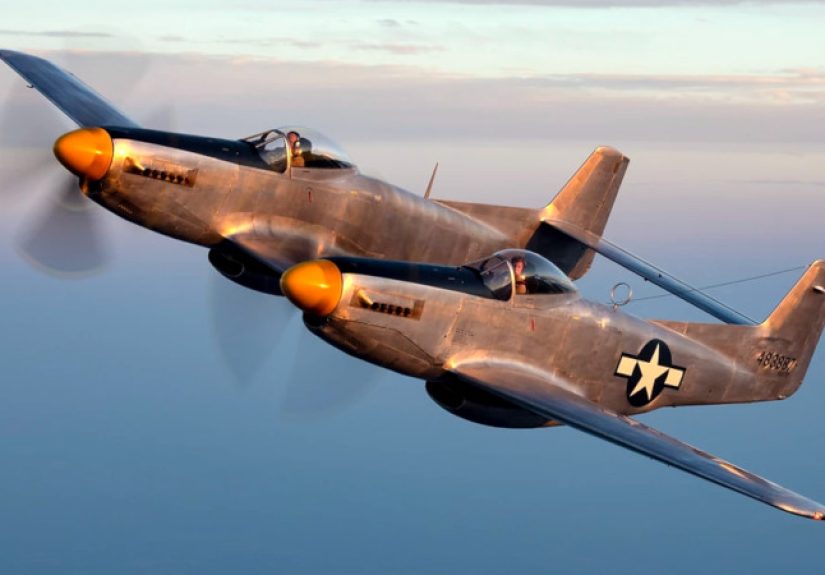
The aircraft currently being marketed is the restored XP-82 prototype, serial number 44-83887, widely described as the only flyable P-82/Twin Mustang in existence. That alone makes the sale newsworthy. But what turns this from a niche aviation listing into a headline-worthy event is everything wrapped around it: its unusual design, its postwar mission, its Korean War legacy, and the epic restoration that brought it back from wreckage to runway. In a world where many collectible aircraft are rare, this one is almost absurdly singular.
For buyers with extraordinarily deep pockets and very large hangars, the airplane is technically a piece of inventory. For everyone else, it is a reminder that aviation history occasionally refuses to stay parked in a museum. It starts, taxis, growls, flies, andat least for nowwaits for its next owner.
Why This Sale Matters in the Warbird World
The Twin Mustang is not just another restored classic with polished aluminum and a dramatic backstory. It is a machine that occupies a tiny, strange, fascinating corner of aviation history. The type was designed late in World War II as an ultra-long-range escort fighter, created to accompany bombers over enormous distances while reducing pilot fatigue. The solution was radical but logical: link two Mustang-style fuselages with a common center wing and tailplane, giving the aircraft two crew stations and enormous range.
That mission made sense at the time. Strategic bombing required endurance, and endurance required either superhuman pilots or smarter engineering. The Twin Mustang chose the second option. It could carry a pilot and copilot or, in later variants, a pilot and radar operator. It looked like two P-51 Mustangs had made a very serious commitment to each other, but it was not simply a pair of P-51s bolted together. In reality, it was a substantially new aircraft, purpose-built around a demanding mission profile.
Unfortunately for the Twin Mustang, history moves fast. Production deliveries began too late for World War II, and the jet age was already warming up in the wings. The result was an airplane that was highly capable, visually unforgettable, and just slightly late to the party. That timing kept it from becoming a mass-culture icon like the P-51, but it also made it one of aviation history’s most intriguing “what if” machines.
What Exactly Is a Twin Mustang?
It Looks Like Two Mustangs, but It Was More Than That
The easiest mistake to make is assuming the Twin Mustang was just a doubled-up P-51. It certainly encourages that assumption. From a distance, it looks like a mirrored pair of Mustang fuselages joined by a center wing section, with a shared tailplane stretched across the back. It is one of those aircraft that seems to have been dreamed up on a napkin by someone who said, “The Mustang is great. What if we had two?”
But restoration experts and historians have long noted that the Twin Mustang shared fewer parts with wartime Mustangs than casual observers tend to think. Structurally and mechanically, it was its own beast. That matters because it helps explain why restoring one became such a herculean challenge. It also helps explain why so few examples survive, and why the surviving aircraft are so important to historians and collectors alike.
Designed for Range, Relief, and Real-World Fatigue
The Twin Mustang’s defining feature was not just twin fuselages. It was endurance. The aircraft was conceived to escort bombers across vast distances, giving crews the ability to alternate duties and reduce fatigue on marathon missions. That may sound less glamorous than discussing top speed and gun packages, but for military planners, crew fatigue was not a footnote. It was a real operational problem. The Twin Mustang was built as an answer.
Later versions also found use as night fighters and all-weather interceptors. That versatility helped the type remain relevant even after its original escort mission was overtaken by the end of World War II and the rise of jets.
Why This Airplane Is So Rare
Only a Handful Survived
North American built 272 Twin Mustangs, yet only five are generally cited as surviving today. Of those, this restored XP-82 is widely recognized as the only one in flying condition and the only surviving prototype. In collector terms, that is not merely rare. That is “you are not comparing it to anything because there is nothing comparable” rare.
The aircraft now for sale, 44-83887, survived while its sister prototype did not. That survival alone makes it historically significant. Add in the fact that it flies, and the airplane crosses the line from artifact to living aviation history.
The Restoration Was a Marathon, Not a Tune-Up
Calling the XP-82 restoration “extensive” feels a bit like calling the Grand Canyon “a nice ditch.” Multiple aviation publications have described the effort as one of the most ambitious warbird restorations in recent memory. Tom Reilly and his team spent more than a decade bringing the aircraft back, with accounts describing hundreds of thousands of labor hours and seemingly endless engineering problem-solving.
This was not a case of finding a dusty but intact airframe, changing fluids, and hoping for the best. The airplane had to be painstakingly reconstructed, often with parts that were difficult or nearly impossible to source. One of the biggest headaches involved the Twin Mustang’s specialized counter-rotating engine setup. The right-side engine and associated components were unique, rare, and historically hard to replace. That kind of scarcity turns every missing component into a quest.
In other words, the restoration itself became part of the airplane’s legend. Buyers are not just paying for an airframe. They are paying for the years of expertise, labor, and obsession it took to return the aircraft to the sky.
From Late-War Concept to Korean War Legacy
The Twin Mustang missed the main action of World War II, but it was not condemned to irrelevance. In the early years of the U.S. Air Force, the F-82 found work as an interceptor and long-range fighter. It also earned a place in Korean War history. F-82s were among the first USAF aircraft to operate in the conflict, and the type is credited with scoring the first U.S. aerial victories of the war on June 27, 1950.
That detail matters because it gives the Twin Mustang more than rarity. It gives it operational prestige. Plenty of rare aircraft are historically interesting because they were unusual. The Twin Mustang is interesting because it was unusual and it mattered. It helped bridge the gap between the piston-fighter era and the jet age, serving at a moment when military aviation was changing fast enough to make even advanced propeller aircraft feel like transitional technology.
That transitional status is part of the appeal. The Twin Mustang represents the final, extravagant flowering of piston-powered fighter design before jets took over the conversation. It is elegant, slightly eccentric, and built around a set of wartime needs that would soon be rewritten by new technology. In hindsight, it feels like the grand last chapter of one era and the opening paragraph of another.
What the Current Listing Says
The current public sales material presents the aircraft as a 1944 North American XP-82 with the registration N877XP. It is listed at $8.5 million, a notable figure in its own right and also an interesting contrast with earlier public coverage from 2020, when the airplane was associated with a $12 million asking price. Whether that reflects market realities, a relaunch of the sale, or a strategic adjustment, it makes the latest listing even more compelling to watch.
The listing also notes that the aircraft has only 25 hours since restoration. That number is eyebrow-raising in the best possible way. In ordinary aircraft sales, low hours can be a simple selling point. In this case, low hours underline how fresh and precious the restoration remains. This is not just a rare airplane. It is a rare airplane that has barely begun its second life in the air.
Other details add to the appeal: custom MT four-blade propellers, a pair of Packard Merlin variants, and major recognition at EAA AirVenture Oshkosh 2019, including Grand Champion Warbird in the postwar category. That award matters because Oshkosh is not in the business of casually handing out trophies to aircraft that are merely “pretty neat.” Winning there is a stamp of quality from one of the most respected gatherings in aviation.
Why Collectors and Museums Would Care
An aircraft like this attracts attention from more than just pilots. It sits at the intersection of collecting, preservation, engineering, and public spectacle. A private collector may see it as the crown jewel of a warbird fleet. A museum-minded buyer may see it as a once-in-a-generation stewardship opportunity. An event operator may see it as a guaranteed crowd magnet that can turn an airshow ramp into a traffic jam of camera phones and open mouths.
There is also the status factor, and there is no point pretending otherwise. Owning the only flying Twin Mustang on Earth is not subtle. This is not the aviation version of buying a nice watch and hoping someone notices. This is the aviation version of arriving at the party in a machine that looks like two legends fused into one impossible silhouette.
Still, the deeper appeal goes beyond bragging rights. Aircraft like this preserve something museums alone cannot fully capture: motion, sound, vibration, smell, and the unmistakable emotional impact of a historic machine doing what it was built to do. A static display can teach. A flying aircraft can teach and astonish at the same time.
The Experience of Encountering the Twin Mustang
Even if you never plan to buy a warbird worth millions, the Twin Mustang taps into something almost universal: the thrill of encountering a machine that looks improbable even while it is sitting still. The first experience is visual. You see one nose, then another. One cockpit, then another. One Mustang shape multiplied into something both familiar and deeply strange. It is one of the rare aircraft that forces your brain to do a quick double take and then a second one for good measure.
Then the engines come alive, and the airplane stops being an unusual outline and becomes an event. Reports from enthusiasts and airshow coverage often highlight the sound, and for good reason. Twin Merlin power does not merely hum in the background. It occupies the air. There is a layered, mechanical richness to it, a rolling thunder with a polished edge, like an orchestra made entirely of pistons, propeller tips, and intent. At night, observers have described the blue exhaust flames as part of the spectacle, which sounds dramatic until you realize dramatic is exactly the correct word.
Watching the XP-82 taxi is its own kind of theater. Most historic fighters look compact and purposeful on the ground. The Twin Mustang looks purposeful too, but in a more theatrical way, as if someone took the standard fighter formula and stretched it into an alternate-reality answer key. It seems both elegant and a little outrageous. That tension is part of the magic. It should not look this graceful, and yet it does.
Takeoff is where the airplane becomes unforgettable. Because the design is so visually unusual, your eyes keep expecting the motion to feel awkward. Instead, it accelerates with surprising coherence. Once airborne, the two fuselages stop looking like a novelty and start looking like the clean expression of a very serious engineering idea. From some angles, especially in flight footage, the aircraft almost gives the illusion of a Mustang flying in impossibly tight formation with itself. It is surreal in the best way.
There is also the experience of what the airplane represents emotionally. For aviation fans, the XP-82 is not just a rare type. It is proof that restoration can border on resurrection. So much of modern life is disposable, optimized, and forgettable. The Twin Mustang stands for the exact opposite. It exists because people refused to let a masterpiece vanish, even when the work was expensive, technically maddening, and absurdly time-consuming. You do not have to know every production figure or engineering detail to feel the significance of that.
If you imagine being the eventual buyer, the experience becomes even more layered. Ownership would not just mean storing the airplane. It would mean becoming the caretaker of an irreplaceable piece of flying history. Every engine start would feel ceremonial. Every taxi would feel public, even in private. Every flight would carry the tension of responsibility and the joy of seeing the impossible continue. Owning the only flying Twin Mustang would be thrilling, yes, but it would also be a kind of guardianship.
And perhaps that is the deepest experience tied to this sale. The Twin Mustang invites awe not only because of what it is, but because of what it survived. It survived obsolescence, scrapyards, missing parts, and the slow erosion that normally claims aircraft of its generation. Now it flies again, not as a replica of memory, but as memory with horsepower. That gives the sale a dramatic edge. Someone is not merely buying an airplane. Someone is being offered the chance to keep a nearly vanished chapter of aviation history alive, loud, and airborne.
Final Thoughts
The sale of the world’s only flying Twin Mustang is more than a niche warbird story. It is a reminder of how aviation history can still surprise us. The XP-82 was born from a specific military need, arrived too late for the war that inspired it, proved itself in the early jet age, nearly disappeared, and then returned through one of the most ambitious restorations in the warbird world. Now it is for sale again, carrying with it equal parts rarity, beauty, and historical gravity.
At $8.5 million, this is not an impulse purchase unless your idea of a casual Tuesday includes buying one-of-one prototype warbirds. But value in the collector world is not just about horsepower, metal, or maintenance logs. It is about significance. By that measure, the Twin Mustang sits in elite company. It is visually unforgettable, mechanically fascinating, historically important, and publicly beloved. Few aircraft can claim all four.
So yes, the world’s only flying Twin Mustang is on sale. Somewhere, a very serious buyer may be studying the listing. Meanwhile, the rest of us can simply appreciate the fact that this improbable, beautiful machine is still out there doing what history almost prevented it from doing: flying.







 Close
Close