
Table of Contents >> Show >> Hide
- GPS Clocks Are Right… But Not “Right-Right”
- Meet OpenPPS: A Project That Picks a Fight With Microseconds
- Why a Microcontroller-Only GPS Clock Hits a Wall
- Enter the FPGA: Determinism, Served Cold
- The Sneaky Physics Tax: Antennas, Cables, and Propagation Delay
- So… How Accurate Can OpenPPS Really Be?
- Practical Uses: Where Nanoseconds Actually Pay Rent
- What’s More Accurate Than a GPS Clock?
- If You Need Even Better: The “Next Levels” Above GPS
- Conclusion: OpenPPS Is a Clock, a Lesson, and a Personality Test
- Bench Notes: of Real-World “Experience” You’ll Recognize (Even If You Pretend You Won’t)
GPS clocks are the ultimate nerd-flex: “My clock talks to satellites.” And honestly, that’s cool. But if you’ve ever built a DIY GPS clock (or even just stared at a 1PPS signal on an oscilloscope like it’s a fireplace), you eventually learn an inconvenient truth: a GPS clock can be “right” while your electronics are still… very wrong.
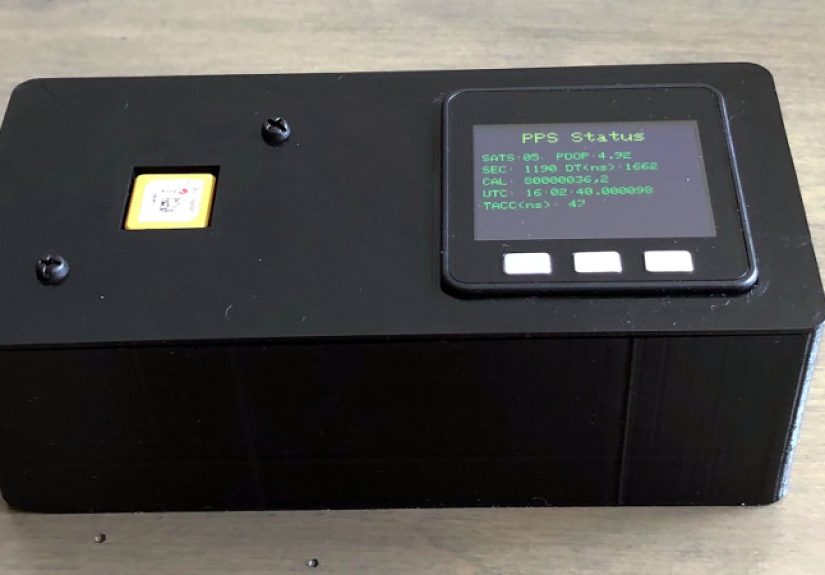
That’s where the OpenPPS GPS Clock comes in. It’s a project that takes the same “GPS gives time” magic and then asks, “Okay, but how do we make it really right?” Not just “it displays 12:34 correctly,” but “the timing edge is clean, repeatable, and worthy of being a reference.”
In this deep dive, we’ll unpack what OpenPPS is, why microcontrollers can sabotage beautiful GPS timing, how an FPGA changes the game, and what “better than a GPS clock” actually means in practice (spoiler: it’s mostly about fighting jitter, delay, and driftlike a tiny time-warrior).
GPS Clocks Are Right… But Not “Right-Right”
GPS isn’t just a positioning systemit’s a timing system wearing a navigation costume. The satellites broadcast timing information so precise that your receiver can compare signal arrival times and compute distance. In other words: GPS needs accurate time to do its day job, so time accuracy becomes a built-in feature you get for free.
The U.S. government distributes UTC as maintained by the U.S. Naval Observatory via the GPS signal, with a published time transfer performance on the order of tens of nanoseconds under the right assumptions. That’s not marketing glitterthat’s the official expectation for timing in the signal-in-space when using specialized gear in a fixed setup.
Accuracy, Precision, and the Villain Called “Jitter”
People love saying “accuracy” when they really mean “precision.” Here’s the quick sanity check:
- Accuracy: how close you are to true UTC (the “correct time”).
- Precision: how consistent your timing is from second to second.
- Jitter: the short-term wiggle in when an edge happens (the “why is my pulse dancing?” problem).
- Drift: how much your local oscillator wanders when left alone (the “I was fine yesterday” problem).
A typical DIY GPS clock might decode NMEA time strings and update a display once a second. It’ll “tell the time.” But if the microcontroller handles the 1PPS pulse via an interrupt, then the exact moment you latch that edge can shift by microseconds. Microseconds! That’s a thousand nanosecondsaka an entire galaxy away in timekeeping terms.
So yes: your display reads the right second. But the underlying timing edge may not be stable enough to serve as a reference for measurements, frequency counting, lab synchronization, or precision timestamping.
Meet OpenPPS: A Project That Picks a Fight With Microseconds
OpenPPS is an open, maker-friendly effort to build a GPS time and frequency reference with minimized jitter, delay, and drift. It starts with a common realitylow-cost GNSS modules can output a PPS signal that’s surprisingly goodand then focuses on the less glamorous part: everything after that PPS pin.
The project’s core idea is simple: don’t let sloppy digital plumbing ruin a great timing source. OpenPPS explores which GPS modules behave well, what kinds of errors appear in real builds, and how to reduce them using techniques like FPGA-based timing logic and temperature-compensated oscillators.
The “Wait, GPS Modules Are That Good?” Moment
One of the most delightful OpenPPS moments is the early “wow” test: comparing PPS outputs from two separate receivers and seeing the leading edges stay within a tight window. If you’ve only ever trusted time from the internet, it feels borderline unfair that two little modules can agree so closelylike they’re gossiping behind your back about your laptop’s clock.
The takeaway isn’t “all cheap GPS modules are perfect.” It’s that the raw PPS signal can be remarkably preciseand that your job as a builder is to avoid wrecking it.
Why a Microcontroller-Only GPS Clock Hits a Wall
Microcontrollers are incredible. They also have feelings. And those feelings are expressed through interrupt latency.
In OpenPPS development notes, an ESP32-based approach ran into a classic problem: the interrupt response time and jitter were on the order of microseconds, with observed variability that made it hard to generate a clean, repeatable output pulse. Even if the GPS PPS edge is crisp, the moment your firmware responds to it can slide around.
That’s not the ESP32 being “bad.” It’s just the reality of a modern MCU running frameworks, background tasks, and complex interrupt handling. If you’re trying to time-stamp a pulse with nanosecond ambition, “pretty fast” doesn’t cut it.
The Timing Chain Is Only as Strong as Its Weakest Edge
Timing projects often fail in the boring middle:
- Interrupt fires later than you expected.
- GPIO toggles aren’t deterministic enough.
- Software jitter turns a clean PPS into a fuzzy “kinda-per-second.”
- Your beautiful timing becomes “approximately adequate.”
For “normal” clocks, that’s fine. For a reference clock, it’s heartbreak in waveform form.
Enter the FPGA: Determinism, Served Cold
OpenPPS leans into FPGA-based logic because FPGAs do something microcontrollers hate: they behave the same way every time.
Instead of “an interrupt happened and the CPU eventually noticed,” FPGA logic can measure, gate, and generate pulses using predictable hardware paths. The result is the possibility of dramatically lower timing jitter, because you’re no longer depending on software to react at the exact right moment.
Coasting and Holdover: Timekeeping When GPS Isn’t Available
Another practical OpenPPS concept is “coasting” (also called holdover): continuing to output stable timing even when the GPS signal drops. This matters because GPS reception can be fickleindoors, near windows, in bad weather, in urban canyons, or whenever you accidentally move the antenna two inches and anger the RF gods.
In OpenPPS work, a temperature-compensated oscillator (TCXO) plus disciplined logic is used to keep time “good enough” over periods when GPS isn’t actively steering the system. Think of GPS as the long-term truth source, and the oscillator as the short-term muscle memory.
This is also the central idea behind commercial GPS disciplined oscillators (GPSDOs): GPS provides long-term accuracy; a high-quality oscillator provides short-term stability; the control loop blends them.
The Sneaky Physics Tax: Antennas, Cables, and Propagation Delay
Let’s talk about the part nobody puts on the front of the project page: cables.
Some timing receivers document how 1PPS performance can be limited by antenna cable length and propagation delay. Even if your receiver can resolve timing at tens of nanoseconds, the physical path can introduce measurable delays. A rough rule of thumb often cited in receiver documentation is that each meter of antenna cable adds a small delay on the order of a couple nanoseconds.
For most humans, that’s “who cares.” For timing nerds, it’s “please hand me the calipers and a notebook.” The punchline is simple: precision timing isn’t just codeit’s geometry and signal travel time.
Multipath: When Your Signal Bounces Like a Pinball
Timing accuracy also depends on conditions you can’t fully control: satellite geometry, atmospheric effects, signal blockage, receiver quality, and multipath (signals reflecting off buildings or surfaces). A GPS timing setup in a clean rooftop environment behaves differently than one perched heroically on a windowsill.
OpenPPS is compelling because it doesn’t pretend these issues don’t exist. It’s about measuring them, minimizing the errors you can control, and building a system that stays stable even when conditions aren’t perfect.
So… How Accurate Can OpenPPS Really Be?
Here’s the honest answer: it depends on what part of the chain you’re measuring.
The GPS signal-in-space timing performance can be on the order of tens of nanoseconds relative to official UTC under specialized assumptions. Individual modules can output PPS signals that are tight enough to impress you on the scope. But your system’s real-world usefulness depends on:
- How you time-stamp PPS edges (hardware vs firmware).
- How you generate output pulses (deterministic logic vs CPU toggles).
- Your oscillator quality (TCXO vs OCXO vs something fancier).
- Your antenna placement and RF environment.
- How you distribute time afterward (direct pulses vs network protocols).
OpenPPS aims to keep the “electronics penalty” smallso the performance you get is much closer to what the GPS module can deliver, instead of what your interrupt latency feels like delivering.
Practical Uses: Where Nanoseconds Actually Pay Rent
A precision PPS/time reference is not just a toy for people who alphabetize their resistors (no judgment). It has real applications:
1) A Stratum-1 NTP Server That Doesn’t Need the Internet
If you feed a Linux box a GPS time-of-day source (like NMEA) plus a PPS signal, you can build a local time server that hands out highly accurate time on your LAN. NTP implementations support using PPS with kernel discipline, which helps lock the system clock to the PPS edge far better than “poll a time string once a second.”
The fun part: once you have a stable source, every device on your network benefitsservers, lab machines, logging systems, cameras, SDR rigs, and anything else that suddenly starts caring about timestamp integrity.
2) Measurement Tools That Don’t Cost “Lab Budget” Money
With a stable timing reference, you can build (or upgrade) tools like:
- Frequency counters with better long-term accuracy
- Pulse measurement tools with trustworthy time bases
- Data acquisition timestamping that doesn’t drift during long runs
- RF experiments that benefit from disciplined oscillators
The OpenPPS philosophy is basically: “Stop paying professional instrument prices just to borrow their clock.”
3) Distributed Systems and Synchronization Experiments
Once you’ve tasted stable timing, you start seeing time as infrastructure. Power systems, telecom networks, broadcast synchronization, and industrial control all rely on consistent time. Even hobby projectslike multi-sensor robotics or home lab setupsbenefit when everything agrees on “what second it is” and “when it started.”
What’s More Accurate Than a GPS Clock?
Here’s the twist: the phrase “more accurate than a GPS clock” is often really asking for “more accurate than my implementation of a GPS clock.”
If you compare:
- GPS module PPS edge (often very good)
- MCU-handled PPS edge (can be microseconds messy)
- FPGA-timed PPS edge (can be far more deterministic)
…then OpenPPS is “more accurate” in the sense that it preserves timing quality instead of smearing it with software uncertainty. It’s not replacing GPS. It’s refusing to let your microcontroller ruin GPS.
If You Need Even Better: The “Next Levels” Above GPS
GPS timing is excellent. But if you truly need tighter synchronizationsub-nanosecond at scaleother systems exist. Official national labs maintain time using ensembles of atomic clocks. The U.S. Naval Observatory describes keeping UTC(USNO) very close to UTC, and NIST operates advanced atomic clock systems (including cesium fountain clocks) that push fractional frequency accuracy to staggering levels.
And in the “distributed systems with scary requirements” category, technologies like White Rabbit (an extension of Ethernet timing) aim for sub-nanosecond synchronization in large installations. That’s the realm where the timing budget gets treated like a holy text.
For most makers and labs, though, the real win is simpler: get GPS-level timing and don’t break it. That’s exactly the lane OpenPPS is driving in.
Conclusion: OpenPPS Is a Clock, a Lesson, and a Personality Test
OpenPPS isn’t just a GPS clock. It’s a reality check about timekeeping: the satellite part is impressive, but the engineering part is where accuracy lives or dies.
If you want a clock that “tells the time,” you have a thousand options. If you want a clock that can function as a time and frequency referencewith minimized jitter, managed drift, and a serious attitude about pulse edgesOpenPPS is a blueprint for how to think about it.
Also, fair warning: once you start caring about nanoseconds, you will begin saying sentences like “I moved the antenna three inches and my life improved.” This is normal. Probably.
Bench Notes: of Real-World “Experience” You’ll Recognize (Even If You Pretend You Won’t)
The first “experience” most people have with precision timing is emotional, not technical: you plug in a GPS module, see that tidy PPS LED blink, and think, “I have conquered time.” Then you put the PPS on a scope and realize you’ve merely met time. Conquering it requires paperwork, discipline, and at least one moment of existential doubt.
Next comes the classic bench ritual: “I’ll just timestamp the PPS interrupt.” You wire PPS to a GPIO, write an ISR, and print a number. It looks stable for a few seconds. You celebrate. Then you turn on Wi-Fi, open a serial monitor, or do literally anything that makes the system busyand your timing starts wandering like it’s late for a meeting. That’s the moment you learn the difference between “fast CPU” and “deterministic timing.” Your microcontroller is fast. Your microcontroller is also easily distracted. Welcome to modern embedded life.
Then you fall into the measurement spiral. You don’t just want the timeyou want the edge. You start talking about leading edges like they’re a personality type. You begin noticing cable lengths the way photographers notice lighting. Someone says “just use a longer coax” and you visibly flinch. Suddenly you’re labeling cables, writing down delays, and explaining to a friend (who did not ask) that signals take time to travel and that a meter can matter. They nod politely and back away slowly.
This is where OpenPPS feels like a friend who has already walked into the trap and left signs on the trail. The project doesn’t shame you for trying it in firmware firstit shows why firmware timing has limits, then offers a more hardware- honest path. When you move timing capture and pulse generation into FPGA logic, something magical happens: the system stops “reacting” and starts “behaving.” The waveform doesn’t become perfectphysics still existsbut it becomes explainable. And explainable is the first step toward accurate.
Another recognizable moment: you discover holdover. GPS is great until it isn’tmaybe the receiver loses lock, maybe your workshop window gets moody, maybe the antenna shifts, maybe the sky has opinions. Without holdover, your “reference” becomes “a reference when conditions are nice.” With a disciplined oscillator and a sane design, you can keep output timing stable during gaps, then gently pull it back when GPS returns. It feels less like you’re building a clock and more like you’re coaching a very stubborn musician to stay on beat.
Finally, the best experience: you connect your new time source to something elsean NTP server, a frequency counter, a data loggerand you see your whole setup become calmer. Logs line up. Measurements stop drifting. Devices agree on what “now” means. It’s not flashy, but it’s deeply satisfyinglike cleaning your garage and discovering you own a floor. That’s the real payoff of OpenPPS: not just bragging rights, but a home lab that suddenly has time integrity.






 Close
Close