
Table of Contents >> Show >> Hide
- Why the Original Monty Python Sketch Is So “Classic”
- So What Did Trey Parker and Matt Stone Actually Remake?
- The Gilliam Twist: When the Tribute Becomes a Crossover
- Where This Tribute Fits in the 1999 Monty Python Anniversary Moment
- How Parker and Stone’s Monty Python Fandom Shows Up in South Park
- Why the “Dead Friend Sketch” Still Hits Today
- Comedy Craft Breakdown: What Writers Can Steal (Legally and Spiritually)
- FAQ
- Experiences Related to “Trey Parker and Matt Stone Remade a Classic Monty Python Sketch Using ‘South Park’ Characters” (Extended)
- Conclusion
Every fandom has its “deep cut” momentthe thing you stumble across at 1:00 a.m. and immediately text a friend like, “How did we not know this existed?” For South Park fans and Monty Python devotees, that moment often comes with a short, wonderfully weird tribute created by Trey Parker and Matt Stone: a remake of Monty Python’s legendary “Dead Parrot” sketch performed with South Park characters.
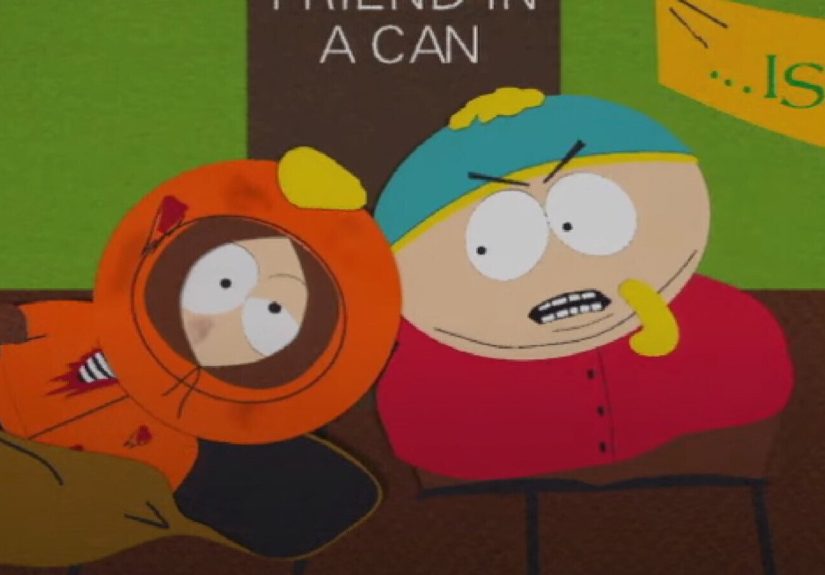
It’s not a full episode. It’s not a Paramount+ event. It’s not even the kind of thing Comedy Central promoted with billboards the size of a Costco. It’s a compact comedy crossover that feels like a love letter written in construction paper… then stamped with a giant foot for good measure. The short is commonly referred to as “The Dead Friend Sketch”, and it was made as part of a Monty Python anniversary TV event in 1999.
The premise is simple: take a famously quotable Monty Python argument about a bird that is definitely not alive, swap the bird for Kenny (because of course), and let Cartman do what Cartman does bestcomplain loudly, escalate instantly, and refuse to accept reality even when reality is lying face-down on the counter.
Why the Original Monty Python Sketch Is So “Classic”
To understand why Parker and Stone chose this sketch, it helps to remember what makes the original “Dead Parrot” routine such a heavyweight. At its core, it’s a comedy masterpiece built on a universally frustrating situation: a customer tries to return something obviously defective, while the seller insists nothing is wrong. The argument becomes funnier the more it refuses to endlike watching someone try to politely exit a conversation with a neighbor who has unlimited time and zero shame.
The “Dead Parrot” sketch is iconic because it uses a basic structurecomplaint, denial, rising evidence, bigger denialand then turns the dial to absurd. A pet shop transaction becomes a theatrical trial. Logic breaks. Language becomes a sport. And the customer’s increasingly creative descriptions of “dead” become a comedic drumroll.
Even broad overviews of Monty Python tend to highlight “Dead Parrot” as one of the group’s defining bits. It’s shorthand for the troupe’s whole vibe: intelligent nonsense performed with straight-faced conviction.
So What Did Trey Parker and Matt Stone Actually Remake?
Parker and Stone’s remake is best understood as a structural tribute, not just a reference. They didn’t simply wink at the original; they recreated the engine of it, beat by beat, using South Park’s character dynamics as fuel.
The Cast Swap: Cartman, Kyle, and Kenny Step Into Python Roles
The mapping is almost too perfect:
- Cartman becomes the furious customer (the John Cleese role), arriving with a “product” that isn’t working.
- Kyle becomes the stubborn shopkeeper (the Michael Palin role), committed to denial like it’s a religion.
- Kenny becomes the “dead parrot” equivalentbecause Kenny’s career path has always been “deceased, but make it recurring.”
Instead of a pet shop, the setting is re-themed into a South Park-ish retail joke (a “Friend Store”), which is funny on its own: even the concept of purchasing a friend feels like a prequel to every episode where Cartman tries to buy love with cash, snacks, or emotional terrorism.
The Comedy Mechanics: Why This Works Even If You’ve Never Seen Monty Python
The remake lands because it keeps the original’s core mechanics:
- Denial as performance: Kyle doesn’t just disagree; he performs disagreement like he’s auditioning for a job titled “Reality Intern.”
- Escalation with receipts: Cartman’s frustration grows in clear steps, each one “proving” the obvious while being ignored.
- Language as weaponry: The fun is in the argument itselfdefinitions, excuses, semantics, and the sheer stubbornness of the human ego.
That’s the shared DNA between Monty Python and South Park: both love the moment when logic collapses, but everyone keeps talking as if the rules still apply. It’s absurdity played with the confidence of someone reading a grocery list like Shakespeare.
The Gilliam Twist: When the Tribute Becomes a Crossover
Here’s where the short stops being a straight parody and becomes something more: it gets interrupted by Terry Gilliam-style animationand, in the process, acknowledges the influence pipeline from Monty Python to South Park.
Gilliam’s cut-and-paste animation sensibility has long been cited as a key inspiration for the show’s early “construction paper” look and feel. In other words, Parker and Stone weren’t just paying tribute to the writers and performers; they were tipping the hat to the visual language that helped shape their own.
In the tribute, Cartman’s rant doesn’t simply end. It gets interrupted in a way that feels extremely Python: the animation itself breaks the “scene,” and the logic of the sketch becomes physically negotiable. The format becomes part of the joke.
The Live-Action Bookends: The “Kidnapping” Bit
The short also reportedly included live-action segments with Parker and Stone, leaning into a ridiculous premise: they want Gilliam to come work with them, and they decide the best recruitment strategy is… a hostage situation involving Gilliam’s mother. It’s an absurd meta-gag that fits both worlds: Monty Python loved breaking reality, and South Park loves taking the worst possible idea and committing to it with full confidence.
The result is a tribute that’s affectionate and chaotic at the same timelike leaving a thank-you card that also somehow sets off confetti cannons in your living room.
Where This Tribute Fits in the 1999 Monty Python Anniversary Moment
The tribute is tied to a Monty Python anniversary TV event in 1999 that celebrated decades of Flying Circus influence. Coverage of that period notes that there were documentaries, new material, and various contributionssome better received than others. In that bigger context, the South Park short often stands out as one of the most memorable pieces people still talk about.
That makes sense. Comedy anniversaries can be tricky: you want nostalgia without feeling like a museum tour. Parker and Stone solved that by doing what they always domaking something that feels alive, rude, and oddly respectful all at once.
How Parker and Stone’s Monty Python Fandom Shows Up in South Park
The “Dead Friend Sketch” isn’t a random one-off. It’s a concentrated dose of an influence Parker and Stone have acknowledged for years. They’ve described themselves as intense Monty Python fans, bonding early over the troupe’s work and admiring how the Pythons operated in their own weird universe.
You can see that influence in South Park’s habits:
- Sudden tonal left turns: A scene can jump from sincere to absurd to musical to horrifying in under 30 seconds.
- Meta-structure jokes: The show frequently plays with the “rules” of storytelling and the audience’s expectations.
- Commitment to the bit: Like Monty Python, South Park often plays ridiculous premises straightbecause that’s what makes them funnier.
- Animation as punchline: Visual style isn’t decoration; it’s part of the joke delivery system.
Even when South Park isn’t explicitly referencing Monty Python, it often uses a Python-like method: build a reality, puncture it, then keep walking forward as if nothing happened.
Why the “Dead Friend Sketch” Still Hits Today
What’s wild is how modern the tribute feels. Not because the animation looks cutting-edge (it’s proudly of its era), but because the concept feels like the internet before the internet became the internet: take a beloved classic, remix it with a newer cultural language, and make something that’s simultaneously homage and parody.
That’s basically meme cultureexcept executed by two professional comedy writers who understand timing, structure, and the sacred power of an argument that refuses to die (unlike Kenny).
Meanwhile, the “Dead Parrot” sketch itself keeps cycling back into public view. It’s been revisited in interviews and late-night conversations over the years, and its legacy remains strong partly because it’s so adaptable: the core frustration is timeless, and the rhythm of the argument is evergreen.
Comedy Craft Breakdown: What Writers Can Steal (Legally and Spiritually)
If you’re a comedy writer, animator, or just the friend who always says “I could write a better episode than that” (and then never does), the “Dead Friend Sketch” is a helpful case study. Here are a few takeaways:
1) Pick a Sketch With a Strong “Engine”
Parker and Stone didn’t remake something that relies on one punchline. They remade a sketch with a repeatable mechanism: argument + denial + escalation. That’s why it can survive a character swap.
2) Match Characters to the Conflict
Cartman as the furious customer is obvious, but “obvious” isn’t bad when it’s right. Kyle as the smug, stubborn counter-force is equally perfect. Kenny as the “product” adds a South Park-specific layer of dark humor without changing the structure.
3) Add One New Move That Only You Can Do
The Gilliam animation interruption and the live-action meta bits take the tribute beyond reenactment. It becomes a crossover event inside a sketch. That’s the difference between a cover band and a remix that becomes its own track.
FAQ
What Monty Python sketch did Parker and Stone remake?
The tribute is a remake of Monty Python’s famous “Dead Parrot” sketch, reimagined with South Park characters and typically referred to as the “Dead Friend Sketch.”
Which South Park characters are used in the tribute?
The short features Cartman in the angry-customer role, Kyle as the defensive shopkeeper, and Kenny as the “dead” purchase being disputed.
Why is Terry Gilliam associated with the tribute?
Gilliam is a key Monty Python figure known for his distinctive animation style. The tribute leans into that visual tradition, and it also plays with Gilliam’s presence as part of the meta-comedy framing.
Was this an official South Park episode?
It’s typically cataloged as a special/short rather than a standard episode. It was created as an external tribute piece tied to a Monty Python anniversary broadcast, and it’s often listed in “specials” or “shorts” guides.
Experiences Related to “Trey Parker and Matt Stone Remade a Classic Monty Python Sketch Using ‘South Park’ Characters” (Extended)
Watching the “Dead Friend Sketch” today is a very specific kind of entertainment experiencepart comedy archaeology, part fandom dopamine, and part reminder that creative influence is rarely subtle when people are truly obsessed. If you’re a longtime South Park viewer, the first “experience” is usually disbelief: this feels like something that should’ve been referenced constantly, the way fans reference the movie or the early seasons. Instead, it lives in that semi-hidden category of “shorts,” which makes discovering it feel like you found a secret menu item that’s somehow better than the regular meal.
The second experience is recognizing how the humor lands in layers. On one layer, it’s funny even if you only know South Park: Cartman is mad, Kyle refuses to admit fault, Kenny is… Kenny. The scene has a natural tug-of-war that’s immediately readable. On another layer, if you know Monty Python, you start feeling the structure like music. You can sense the “beats” the sketch is built onsetup, denial, escalation, doubling down. It becomes satisfying in a way that’s almost mechanical, like watching a perfectly designed Rube Goldberg machine that ends by throwing a pie at your face.
There’s also an odd warmth to it, which is not a word people usually associate with South Park. The warmth comes from craft and respect. Parody can be cruel when it’s done from a distance. This doesn’t feel distant. It feels like two creators who love a thing so much they want to inhabit it, rebuild it, and show you exactly why it workswithout giving up their own comedic identity. That’s a rare trick: honoring the original while still sounding like yourself. The experience, as a viewer, is realizing you’re not watching South Park “make fun of” Monty Python. You’re watching South Park say, “This is part of our DNA.”
If you watch it with other people, the experience gets even better, because it creates a fun split-screen reaction in the room. The Monty Python fans will laugh earlysometimes at the structure itself, because they know where the argument is going. The South Park fans might laugh harder at character choices, because Cartman’s temperament makes the situation feel instantly more explosive. Then, at some point, the reactions sync up. Everyone’s laughing at the same moment, but for slightly different reasons, and that’s one of the best kinds of comedy: shared laughter powered by different entry points.
Another experience is noticing how modern the remix idea feels. The internet is full of remakes, lip-syncs, mashups, and “what if this character was in that scene?” edits. Parker and Stone did a version of that concept decades ago, except with professional writing and a deep understanding of why the original was built the way it was. It’s like seeing an early prototype of a format that later became a whole ecosystem. You come away thinking, “Ohthis is what it looks like when remix culture is guided by actual comedy structure.”
Finally, there’s a creative experience that hits if you’re the kind of person who makes thingswrites, edits, animates, or just collects ideas. The “Dead Friend Sketch” is a reminder that influences don’t have to stay abstract. You don’t have to say “I love Monty Python” and leave it there. You can translate that love into a specific experiment: remake something, test what survives the translation, and add one new move that only you would think to add. That’s essentially what Parker and Stone did here. And the experience, when the short ends, is the urge to revisit both originals: rewatch classic Python, revisit early South Park, and pay closer attention to how comedic DNA passes from one era to the nextsometimes disguised as a dead friend in a bag being returned to a store.
Conclusion
Trey Parker and Matt Stone’s Monty Python tribute works because it’s both a remake and a statement: the comedic systems that powered Flying Circus can power South Park, tooespecially when you cast the right characters, keep the structure intact, and then let animation itself crash the scene like an unexpected guest who refuses to leave.
It’s a reminder that great comedy travels. It mutates. It gets re-skinned. It gets yelled by Cartman. And sometimes, it gets flattened by a giant foot, which is honestly one of the more dignified endings a sketch can hope for.





 Close
Close