
Table of Contents >> Show >> Hide
- 1. They Turned Drinking Parties into Sexualized Social Theater
- 2. They Drew a Sharp Line Between Wives and Courtesans
- 3. They Celebrated the Naked Male Body in Public
- 4. They Put Phallic Symbols Out in Public
- 5. They Let Comedy Get Extremely Bawdy
- 6. They Put Erotic Images on Everyday Objects
- 7. They Marked the Shift from Girlhood to Marriage with Ritual Acts
- 8. They Used Love Magic
- 9. They Made Desire a Religious Matter
- 10. They Accepted a Structured World of Prostitution
- Why These Customs Still Fascinate Us
- Experiences of Encountering This Side of Ancient Greece Today
- Conclusion
Note: This article discusses ancient Greek sexuality as history and culture in a non-graphic, educational way. “Ancient Greeks” also did not all live alike, so many examples below refer especially to Classical Athens, the city that left us the most evidence.
Ancient Greece has a reputation for philosophy, marble statues, and people standing around in togas looking extremely judgmental. But once you get past the polished schoolbook version, Greek attitudes toward sex, desire, marriage, and the body can look downright strange to a modern reader. The surprise is not just that the Greeks were open about erotic life. It is that they built social rules, religious rituals, entertainment, art, and even public monuments around it.
That does not mean Greek society was carefree, equal, or progressive in any modern sense. In fact, it was heavily shaped by class, slavery, citizenship, and gender hierarchy. Respectable wives were expected to live very differently from courtesans. Public ideals about beauty centered largely on the male body. Desire could be treated as sacred, funny, political, commercial, or dangeroussometimes all before lunch.
So if you have ever wondered why ancient Greek culture still feels familiar and deeply alien at the same time, here are ten of the oddest sexual customs, beliefs, and habits associated with it. Think of this as a guided tour through one of history’s most influential civilizationsonly this time, we are not stopping at the Parthenon gift shop.
1. They Turned Drinking Parties into Sexualized Social Theater
One of the strangest Greek institutions was the symposium, an elite male drinking party that mixed wine, performance, flirtation, status display, and conversation. These gatherings were not just casual hangouts. They were carefully staged events held in a men’s room of the house, with couches for reclining guests, drinking games, music, and hired entertainment.
What makes this relevant to sexuality is that the symposium blurred the line between party, cultural salon, and erotic theater. Respectable citizen wives were usually absent, while entertainers, dancers, musicians, and courtesans might be present. In other words, the Greek upper class basically invented a highly ritualized version of “networking, but with wine and complicated gender rules.”
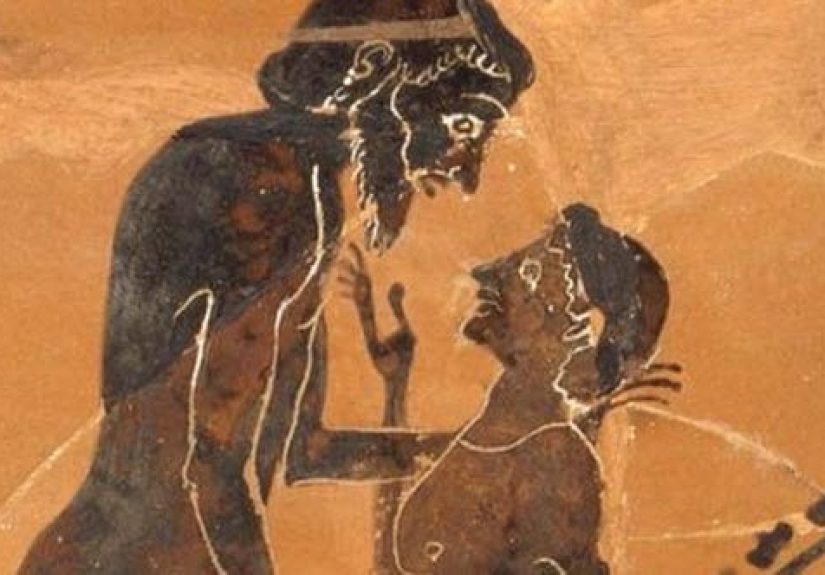
The symposium also shaped art. Many cups and vases used in these settings featured flirtation, revelry, and openly erotic imagery. The objects were not random decoration; they helped create the mood of the gathering itself.
2. They Drew a Sharp Line Between Wives and Courtesans
Ancient Greek men did not always expect the same woman to fill every emotional and social role. That sounds obvious today, but in Greek culture the split could be startlingly blunt. Respectable wives were tied to household management, childbearing, and family continuity. Courtesans, especially elite hetairai, could appear in male social spaces where wives generally could not.
This created a two-track system. The wife represented legitimacy, inheritance, and domestic order. The courtesan represented sociability, conversation, pleasure, and sometimes education or cultural polish. The result was a deeply unequal setup in which women were judged by radically different rules depending on their status.
Modern readers often find this one of the weirdest parts of Greek sexuality because it shows that sex and companionship were not always expected to belong to the same social category. It was less “soulmate marriage” and more “please report to your assigned historical function.”
3. They Celebrated the Naked Male Body in Public
If you walked into many Greek athletic settings, you would quickly notice something unusual: the athletes were often nude. Training and competition regularly involved naked bodies, oiled skin, and a culture of visual admiration focused especially on male physical form.
To the Greeks, nudity could signal excellence, discipline, citizenship, and beauty. The athletic body was not merely practical; it was moralized and idealized. Sculpture, vase painting, and festival culture all reinforced this idea. The body was not hidden from view. It was displayed, judged, praised, and turned into a symbol of what the Greeks believed was finest in human life.
That public comfort with nudity feels odd to many people today because modern societies tend to separate sports, civic virtue, and erotic admiration more sharply. The Greeks often let those categories overlap in a way that was socially meaningful, not accidental.
4. They Put Phallic Symbols Out in Public
Yes, really. Ancient Greek cities contained hermspillar-like markers associated with Hermesthat were often shown with prominent male genitals. These were not hidden away as naughty curiosities. They stood in public or semi-public spaces and served religious, protective, and boundary-marking purposes.
To modern eyes, this seems almost surreal: a civilization known for logic and geometry also scattered boldly phallic imagery around daily life. But for the Greeks, the symbol could be apotropaic, meaning it was thought to ward off harm, bad luck, or hostile forces. In other words, this was not just erotic display. It was spiritual security hardware with a very memorable design.
The point is important. Greek sexual symbolism was not always about private desire. Sometimes it was about power, fertility, protection, or sacred presence in the public world.
5. They Let Comedy Get Extremely Bawdy
Greek theater is often remembered for tragedy, noble suffering, and people making speeches about fate. But comedy could be wildly crude. In Old Comedy, sexual jokes, body jokes, and shameless mockery were all fair game. Public performance gave Athenians a place where sexual humor could be exaggerated for laughs and political commentary.
This matters because it shows how open Greek culture could be about the body in collective settings. Sexual humor was not always pushed into the private margins. It could be staged, costumed, cheered, and woven into festival life. The comic stage turned desire into public spectacle and social satire.
Put simply, the same civilization that gave the world high philosophy also gave festival crowds a lot of very physical jokes. Plato and punchlines were neighbors.
6. They Put Erotic Images on Everyday Objects
Modern people usually expect explicit or erotic material to be tucked into private corners, hidden files, or the internet’s less wholesome neighborhoods. The Greeks, by contrast, often placed erotic scenes on cups, mixing bowls, and other objects used in daily and social life.
These images appeared especially on pottery connected with the symposium. Some were playful, some mythological, and some surprisingly direct. They could reflect fantasy, humor, power, party culture, or status. But the larger point is clear: erotic imagery was not automatically separated from ordinary objects.
That can feel strange today because we often divide “fine art,” “domestic object,” and “sexual image” into separate categories. Greek material culture did not always respect those neat little boxes. A drinking cup could also be a conversation starter, a joke, a status symbol, and an erotic visual prompt all at once.
7. They Marked the Shift from Girlhood to Marriage with Ritual Acts
Greek ideas about sexuality were deeply tied to life stages. One striking example is the ritual transition from girlhood to marriage. In some contexts, girls dedicated dolls or childhood objects to a goddess when they reached puberty or prepared for marriage. That symbolic act marked the end of one social identity and the start of another.
Seen from today’s perspective, the custom feels both moving and unsettling. It recognized that sexuality and adulthood were social transitions, not just biological ones. But it also reflected a world in which a girl’s future role was tightly defined by marriage, household duty, and reproduction.
The ritual itself was not “sexual” in a graphic sense. Its importance lies in how openly Greek society linked the body, maturity, religion, and marriageable status. Sexuality was not treated as a purely private awakening. It was folded into public custom and family expectation.
8. They Used Love Magic
If Greek desire sounds dramatic in myth, that is because it could be dramatic in real life too. Ancient Greeks used love magicspells, charms, and ritual practices intended to attract, bind, or keep a lover. Scholars have found evidence that erotic magic was part of the ancient Mediterranean world, and Greek texts preserve a surprisingly vivid picture of it.
This is one of the weirdest items on the list because it shows the Greeks treating desire as something that could be manipulated through ritual force. Love was not always imagined as a gentle feeling or private preference. It could be an assault, an affliction, a curse, or a supernatural tug-of-war.
In that sense, Greek sexuality was not only social and artistic. It was magical. When ordinary persuasion failed, some people apparently decided to escalate the matter all the way to the gods, the underworld, or whatever ancient version of “extreme measures” was available.
9. They Made Desire a Religious Matter
In Greek culture, desire had divine administrators. Aphrodite was the goddess of love, beauty, and attraction, while Eros personified desire itself. These were not side characters in religion. They were major forces in myth, art, and ritual imagination.
That meant sexuality was not just a private appetite. It could be spoken of through temples, dedications, festivals, myths, jewelry, and images of gods. The Greeks often treated attraction as something larger than personal choiceas a force that could overwhelm mortals, disrupt households, inspire poetry, or ruin perfectly decent plans.
Modern culture often flips between treating sex as either private or commercial. Greek culture added another layer: sacred. Desire could be funny, risky, political, and divine at the same time. That complexity is one reason Greek love stories still feel strangely alive.
10. They Accepted a Structured World of Prostitution
Prostitution existed in many Greek cities, and in Athens it was treated as part of the urban social world. The category included people of very different status, from enslaved women in exploitative conditions to higher-status courtesans who could move in elite circles. There was no single Greek experience here, and romanticizing it would be a mistake.
Still, what feels unusual is how normalized the institution could become within male social life. Prostitution was not outside Greek culture; it was entangled with it. Law, money, class, social reputation, and the symposium all touched this world. Sexual access could be commercial, public, and stratified in ways the Greeks often treated as ordinary.
That “ordinary” quality is exactly what startles modern readers. Greek sexuality was not simply about romance or marriage. It was also tied to labor, slavery, citizenship, and economic exchange. Once again, the real story is less glamorous than pop culture suggestsand much more revealing.
Why These Customs Still Fascinate Us
The weirdness of ancient Greek sexuality is not just about odd customs. It is about how differently the Greeks organized the relationship between body, status, religion, and public life. They did not draw the same lines many modern societies draw. Public nudity could be honorable. Sexual jokes could belong to civic theater. Erotic symbols could stand in the street. Desire could be a matter for magic, mythology, and domestic economics all at once.
At the same time, Greek culture was not sexually “free” in a modern egalitarian sense. It was highly unequal. The freedoms of elite men often depended on the restricted lives of women, enslaved people, and non-citizens. That is why the subject needs both curiosity and caution. The Greeks were not simply liberated. They were organized according to a very differentand often very harshset of assumptions.
So the next time someone says ancient Greece invented Western civilization, you can nod politely and remember the full picture: philosophy, democracy, theater, geometry, and a civilization that looked at sex and said, “Let’s make this part of everything.”
Experiences of Encountering This Side of Ancient Greece Today
One of the most interesting experiences related to this topic is the moment a modern reader realizes that ancient Greece is far less buttoned-up than school textbooks make it seem. Many people first meet the Greeks through simplified stories about democracy, Socrates, the Olympics, and mythology. Then, usually in a museum, lecture, documentary, or university article, they discover the other layer: erotic pottery, party culture, public phallic symbols, gods of desire, and social rules around marriage and courtesans. The reaction is often a mix of amusement, disbelief, and intellectual whiplash. It feels like opening a very respectable history book and finding out it has been hiding gossip the entire time.
Another common experience is realizing how different a society can be without being random. At first, Greek customs can look chaotic or contradictory. Why celebrate nude athletes in one place and tightly restrict respectable women in another? Why treat desire as sacred in myth but heavily regulate social status in real life? The more you read, the more the pattern comes into focus. Ancient Greek sexuality was not a free-for-all. It was structured, coded, and deeply tied to hierarchy. That realization changes the experience of studying it. The topic becomes less about scandal and more about how a civilization organizes power through the body.
There is also the museum experience, which can be surprisingly memorable. You walk in expecting broken statues and elegant vases, and then suddenly a drinking cup, painted scene, or household object reveals how casually erotic themes could enter daily life. That moment often makes the ancient world feel less remote. The Greeks stop being marble abstractions and start looking like real peoplefunny, anxious, vain, ritualistic, and occasionally incapable of subtlety.
For students and general readers, this topic can also produce a useful discomfort. It forces people to question modern assumptions. We tend to imagine that our categoriesprivate versus public, sacred versus sexual, respectable versus eroticare natural and timeless. Ancient Greece shows they are not. Other societies have combined those categories very differently. That realization can be unsettling, but it is also one of the best reasons to study history in the first place.
Finally, there is the experience of coming away with a more mature view of the Greeks themselves. The strangest sexual customs are often the easiest to turn into clickbait, but the deeper experience is recognizing complexity. Ancient Greece was brilliant and brutal, artistic and unequal, playful and controlling. Its approach to sexuality reflected all of that. So the lasting impression is not just “wow, those people were weird.” It is something more interesting: they were human in ways we recognize immediately, and unfamiliar in ways that remind us history is never as tidy as the statues suggest.
Conclusion
The ancient Greeks did not treat sexuality as a side issue. They threaded it through parties, religion, public symbols, theater, art, marriage, and social rank. That is why their customs can still feel so strangeand so fascinating. The real lesson is not that Greece was simply permissive. It is that Greek culture made desire visible, symbolic, and social in ways that still surprise modern audiences.







 Close
Close