
Table of Contents >> Show >> Hide
- Dennis Reynolds: Turning Dating Into a Psychological Trap
- Dee Reynolds: Exploiting People for Attention and Validation
- Mac: Hiding Insecurity Behind Aggression and Offensive Schemes
- Charlie Kelly: Stalking the Waitress for Years
- Frank Reynolds: Exploiting Everyone Around Him for Money and Fun
- Rickety Cricket: Becoming a Menace After the Gang Ruins His Life
- The Waitress: Using Charlie When It Benefits Her
- Artemis: Treating Chaos Like a Lifestyle Brand
- The McPoyles: Turning Family Loyalty Into a Threat
- Gail the Snail: Refusing Every Boundary Ever Offered
- Uncle Jack: Making Everyone Deeply Uncomfortable
- So, Who Has Done the Absolute Worst Thing?
- Why We Still Watch These Terrible People
- Audience Experience: Watching the Gang at Their Worst
- Conclusion
Note: This article is written for web publication in standard American English, based on real episode events and publicly known series information, without source-link clutter or unnecessary reference tags.
In the grand moral swamp known as It’s Always Sunny in Philadelphia, asking which character has done the worst thing is like asking which raccoon in the dumpster looks the most suspicious. The answer is: all of them, and they are probably working together. Since 2005, Dennis, Dee, Mac, Charlie, and Frank have turned Paddy’s Pub into less of a business and more of a five-person ethics disaster with beer taps.
That is the genius of the show. The Gang is not designed to grow, learn, or become better people. They are a satirical machine built to expose selfishness, vanity, ignorance, greed, and the kind of confidence only truly terrible decision-makers seem to possess. Their schemes are funny because the show never asks us to admire them. It asks us to watch them crash into consequences with the grace of a shopping cart rolling down a hill.
So, what is the worst thing every It’s Always Sunny character has ever done? Some answers are obvious. Some are debatable. Some require a legal team, a therapist, and possibly a bird-law specialist. Let’s rank the darkest, dumbest, and most revealing moral low points from the major players in the Sunny universe.
Dennis Reynolds: Turning Dating Into a Psychological Trap
Dennis Reynolds has committed enough emotional crimes to fill a self-help section with caution tape. He is vain, controlling, manipulative, and somehow convinced that every room he enters becomes a runway. But the worst thing Dennis has ever done is best represented by “The D.E.N.N.I.S. System”, where he explains his step-by-step method for manipulating women into romantic dependence.
The episode is horrifying because Dennis presents the system like a productivity hack. He does not see relationships as human connection. He sees them as campaigns. Every step is calculated to create confusion, dependency, and emotional vulnerability. The joke is not that Dennis is smooth; the joke is that he thinks naming his awful behavior makes it brilliant.
Why This Is Dennis at His Worst
Dennis’s worst quality is not just narcissism. It is his ability to convert narcissism into strategy. Across the series, he lies, intimidates, stalks, gaslights, and performs sincerity like a man auditioning for the role of “normal person.” The D.E.N.N.I.S. System is the purest version of that darkness. It reveals that Dennis does not merely behave badly in moments of anger or panic. He plans it, brands it, and congratulates himself.
If every Sunny character is a cautionary tale, Dennis is the warning label on unchecked ego. He is what happens when charm, entitlement, and zero accountability walk into a bar and ask why everyone else is being so emotional.
Dee Reynolds: Exploiting People for Attention and Validation
Sweet Dee often gets treated as the Gang’s punching bag, but let’s not confuse suffering with innocence. Dee is not the moral center of Paddy’s Pub. She is just as selfish, status-hungry, and cruel as the men around her. Her worst behavior often comes from her desperate need to be seen as talented, desirable, or important.
One of Dee’s lowest points is her repeated willingness to exploit others when she thinks it will advance her entertainment career or social status. Whether she is manipulating vulnerable people, humiliating strangers for laughs, or participating in offensive schemes, Dee often treats human beings as props in the imaginary movie of her life.
The “Fame at Any Cost” Problem
Dee’s worst choices are especially sharp because she knows what it feels like to be mocked. The Gang constantly insults her appearance, talent, and ambition. Yet when Dee gets even a tiny bit of power, she usually uses it the same way they do: badly. Instead of breaking the cycle, she grabs the nearest microphone and tries to make the cycle about her.
In episodes like “The Gang Broke Dee”, the cruelty surrounding Dee becomes painfully clear. But Dee’s own worst acts show that she is not simply a victim of the Gang. She is also a proud contributor to the group’s emotional landfill. Her worst thing is not one single scam; it is her pattern of turning pain into permission to hurt other people.
Mac: Hiding Insecurity Behind Aggression and Offensive Schemes
Mac spends much of It’s Always Sunny in Philadelphia trying to convince everyone that he is strong, dangerous, devout, athletic, and spiritually impressive. Unfortunately, most of his identity is assembled from action movies, denial, protein dreams, and panic. When Mac feels insecure, he does not reflect. He performs.
His worst behavior appears in several episodes where he participates in offensive impersonations and racially insensitive schemes, including the Gang’s homemade movie projects. These moments became so controversial that several episodes featuring blackface or brownface were later removed from major streaming platforms. Within the show’s satirical framework, the point is that Mac and the Gang are ignorant, self-absorbed, and incapable of understanding why their choices are harmful.
Why Mac’s Worst Thing Matters
Mac’s moral failure is tied to his hunger for approval. He wants to be accepted as tough, cool, heroic, and righteous. But instead of becoming better, he copies whatever image makes him feel powerful. When the Gang makes offensive creative choices, Mac often commits fully because commitment is his entire personality. He rarely asks, “Is this right?” He asks, “Will this make me look awesome?”
That is what makes Mac’s worst behavior so revealing. He is not always the mastermind, but he is often the loudest volunteer. His insecurity does not excuse the harm. It explains why he keeps sprinting toward bad ideas like they are protein shakes with legs.
Charlie Kelly: Stalking the Waitress for Years
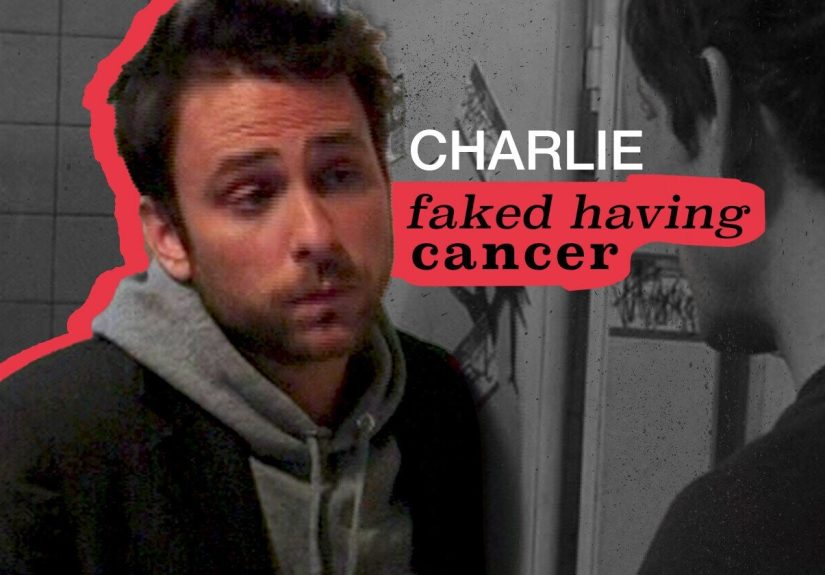
Charlie Kelly is often the easiest member of the Gang to root for. He is chaotic, musical, weirdly sweet, and committed to “Charlie Work,” the disgusting behind-the-scenes labor that keeps Paddy’s Pub functioning at the lowest possible legal standard. But Charlie’s long-running obsession with the Waitress is not cute. It is his worst pattern by far.
Throughout the series, Charlie ignores boundaries, follows the Waitress, invents romantic fantasies, and treats rejection like a puzzle he can solve if he just keeps being persistent. The show gets laughs from Charlie’s bizarre methods and wild misunderstandings, but the underlying behavior is clearly wrong. His fixation turns another person into an object of obsession rather than a person with her own choices.
The Dark Side of Charlie’s Innocence
Charlie’s worst thing works because it complicates his lovable underdog image. He is not Dennis, coldly designing emotional traps. He is not Frank, happily funding chaos. Charlie often seems childlike and lost. But his behavior toward the Waitress proves that being odd, lonely, or emotionally damaged does not make harmful behavior harmless.
The funniest Charlie moments usually come from his creativity: songs, rat-stick logic, legal confusion, and dramatic speeches about milk steak. His worst moments come when that creativity becomes tunnel vision. The Waitress is not a prize for Charlie’s persistence. The show understands that, even when Charlie does not.
Frank Reynolds: Exploiting Everyone Around Him for Money and Fun
Frank Reynolds entered the series and immediately made the Gang worse, which is an achievement similar to making a landfill smell more suspicious. Frank is rich, shameless, and almost magically immune to embarrassment. His worst thing is difficult to choose because Frank treats morality like a restaurant coupon: useful only if it saves him money.
Among his worst acts are exploiting vulnerable people, manipulating his children, endangering others for profit, and funding schemes that any reasonable adult would stop at the phrase “Here’s what we’re going to do.” Frank’s worst overall pattern is that he has the resources to help people and almost always chooses the opposite.
Frank’s Evil Superpower: No Shame
Frank’s shamelessness is what separates him from the rest of the Gang. Dennis wants admiration. Dee wants fame. Mac wants validation. Charlie wants love. Frank wants stimulation. If a scheme entertains him, makes money, or lets him behave like a goblin in designer shoes, he is in.
His treatment of Dee and Dennis is especially awful. As their legal father, Frank should be the grown-up in the room. Instead, he is often the person lighting the room on fire to see whether the insurance check clears. Frank’s worst thing is not just one outrageous act. It is the lifelong refusal to use power responsibly.
Rickety Cricket: Becoming a Menace After the Gang Ruins His Life
Matthew “Rickety Cricket” Mara may be the most tragic recurring character in It’s Always Sunny. He begins as a priest with a crush on Dee and slowly spirals into one of the show’s most damaged figures. The Gang absolutely helps destroy his life, but Cricket eventually becomes dangerous and manipulative in his own right.
His worst behavior is how he embraces the chaos and begins dragging others into his misery. Cricket is a reminder that being harmed does not automatically make someone noble. Over time, he becomes another warped citizen of the Sunny universe, shaped by cruelty but also responsible for his own choices.
The Tragedy of Cricket
Cricket’s arc is funny in the bleakest possible way because every appearance suggests life can somehow get worse. Still, the darkest joke is that the Gang barely registers the damage. They treat his decline like background weather. Cricket’s worst actions matter, but the true horror is how casually the Gang helped create him.
The Waitress: Using Charlie When It Benefits Her
The Waitress is often positioned as one of the few “normal” people near the Gang, mostly because the comparison group is a bar full of human warning signs. But she has her own low points. Her worst behavior usually involves using Charlie’s devotion when it benefits her, even though she knows his feelings are unhealthy and intense.
To be clear, Charlie’s behavior toward her is far worse as a long-running pattern. But the Waitress is not written as a perfect victim. She can be cruel, self-destructive, and opportunistic. The show gives her enough flaws to keep the dynamic uncomfortable rather than simple.
Why Her Worst Thing Is Complicated
The Waitress’s worst choices often come from loneliness, frustration, and poor judgment. That makes her more grounded than the Gang, but not morally spotless. In a show where nearly everyone uses everyone else, she sometimes plays the same gamejust with less money, less power, and fewer ridiculous speeches.
Artemis: Treating Chaos Like a Lifestyle Brand
Artemis is one of the great recurring wild cards of It’s Always Sunny in Philadelphia. She is confident, theatrical, and somehow always seems like she just arrived from a completely different party. Her worst thing is not as dark as Dennis’s manipulation or Frank’s exploitation, but she frequently enables the Gang’s worst instincts because chaos entertains her.
Artemis often acts like a spectator who wandered into the disaster and decided to bring snacks. She is not usually the architect of the Gang’s cruelty, but she enjoys the mess with alarming enthusiasm. Her moral flaw is not insecurity. It is appetite. She wants drama, attention, and a good story.
The Fun Enabler
In a healthier world, Artemis would be the friend who says, “Maybe don’t do that.” In Sunny, she is more likely to ask whether costumes are involved. Her worst trait is enabling madness because it makes life more interesting. That may not make her the worst person in Philadelphia, but it definitely makes her unsafe near a group chat.
The McPoyles: Turning Family Loyalty Into a Threat
The McPoyles are not just recurring characters; they are a whole atmosphere. Liam, Ryan, Margaret, and the broader McPoyle clan operate like a haunted family reunion that found legal loopholes. Their worst behavior includes intimidation, revenge plots, and a general willingness to escalate any conflict into something deeply uncomfortable.
Their worst thing is the way they weaponize family loyalty. The McPoyles do not simply support each other. They swarm. They turn personal grudges into clan business, and they seem to believe every slight deserves a response that makes the room colder.
Why the McPoyles Work So Well
The McPoyles are funny because they make the Gang look almost socially polished, which should be impossible. Their worst behavior adds a horror-comedy flavor to the series. Whenever they appear, the show feels like it has briefly changed genres and forgotten to warn the audience.
Gail the Snail: Refusing Every Boundary Ever Offered
Gail the Snail earns her nickname by being impossible to remove from any situation. Her worst thing is her relentless refusal to respect boundaries. She inserts herself into conversations, relationships, and physical spaces with the confidence of someone who has never heard the word “no” pronounced correctly.
Gail is not as grandly destructive as Frank or as psychologically alarming as Dennis. But she is exhausting in a very specific way. She turns social discomfort into a full-contact sport. Her worst behavior is the constant invasion of other people’s lives, then acting surprised when they reach for metaphorical salt.
Uncle Jack: Making Everyone Deeply Uncomfortable
Uncle Jack is one of the show’s most unsettling recurring characters, and the series wisely frames him as creepy rather than lovable. His worst behavior is his repeated boundary-crossing and inappropriate conduct, especially around family. The comedy comes from how obviously wrong he is and how desperately he tries to present himself as respectable.
Jack’s obsession with appearancesespecially his handsadds absurdity, but it does not soften the character’s darker implications. He represents a different kind of Sunny villain: not chaotic like Frank, not vain like Dennis, but quietly disturbing in a way that makes every scene feel like it needs more lighting and a responsible adult.
So, Who Has Done the Absolute Worst Thing?
If we are choosing one character whose worst act best defines the moral horror of It’s Always Sunny in Philadelphia, Dennis probably takes the crown. His manipulation is intentional, organized, and self-admiring. Frank may cause more widespread damage, and the Gang as a collective has ruined more lives than a cursed office printer, but Dennis brings a chilling level of self-awareness to his worst behavior.
Still, the real answer may be “the Gang as a unit.” They are at their worst when they collaborate. One bad person can do damage. Five bad people with a bar, free time, and no emotional maturity can create a civic emergency. The show’s funniest episodes often begin with a tiny selfish idea and end with everyone morally bankrupt, socially humiliated, or banned from something.
Why We Still Watch These Terrible People
The secret to Sunny’s longevity is that it never confuses bad behavior with heroism. The Gang is not cool. They are not aspirational. Their confidence is the punchline. The show lets viewers laugh at the gap between who these characters think they are and who they obviously are.
Dennis thinks he is a golden god. Dee thinks she is one break away from stardom. Mac thinks he is a warrior-philosopher-bodyguard. Charlie thinks he is a romantic genius and legal scholar. Frank thinks consequences are for people with less cash. Every episode takes those delusions and throws them into traffic.
That is why the worst things the Always Sunny characters have done remain so memorable. They are not random acts of shock comedy. They are character studies wearing fake mustaches. Each terrible choice reveals exactly what that person values, fears, or refuses to admit.
Audience Experience: Watching the Gang at Their Worst
Watching It’s Always Sunny in Philadelphia is a unique viewing experience because the show trains you to laugh and wince at the same time. You do not watch the Gang because you expect wisdom. You watch because their bad decisions create a weirdly satisfying moral physics: they lie, scheme, brag, betray, and usually end up worse than where they started.
For longtime fans, part of the fun is recognizing the pattern. Someone enters Paddy’s Pub with a simple problem. Maybe the bar needs money. Maybe someone wants respect. Maybe Dee wants attention, Dennis wants control, Mac wants validation, Charlie wants romance, or Frank wants to turn a profit from something no licensed professional would approve. Within minutes, the Gang has transformed a normal situation into a full-blown ethical tornado.
The experience is especially funny because the show rarely gives viewers a clean hero. Instead, it gives us a room full of people who are always wrong in different ways. That creates a strange kind of balance. If Dennis is being terrifyingly manipulative, Charlie might be misunderstanding the entire premise. If Frank is chasing money, Dee is chasing applause. If Mac is trying to look tough, everyone else is quietly making it worse. The comedy comes from the collision.
Another reason these “worst thing” debates are so popular is that Sunny fans remember episodes emotionally. People do not just say, “Dennis behaved badly.” They remember the D.E.N.N.I.S. System. They remember Dee being humiliated. They remember Charlie’s doomed devotion to the Waitress. They remember Frank crawling through life like a wealthy raccoon with business cards. The show creates unforgettable moral disasters because each one is tied to a clear character flaw.
There is also a social pleasure in ranking the Gang’s sins. It is like discussing sports stats, except the sport is poor judgment. Fans can argue whether Frank’s greed is worse than Dennis’s manipulation, whether Dee deserves more sympathy, or whether Charlie’s sweetness distracts from his behavior. These debates keep the show alive between seasons because the characters are consistent enough to analyze but chaotic enough to surprise us.
The best way to watch the Gang at their worst is not to ask, “Who should I root for?” The better question is, “What is this episode satirizing?” Sunny works when it exposes selfishness, prejudice, vanity, celebrity hunger, fake masculinity, performative activism, and the delusion that confidence equals competence. The Gang is funny because they are wrong, and the show is smart because it knows they are wrong.
In that sense, the worst things every It’s Always Sunny character has done are not just shocking plot points. They are the engine of the series. The Gang’s failures turn into satire. Their selfishness becomes structure. Their refusal to grow becomes the longest-running joke in the room. And somehow, after all these years, Paddy’s Pub is still openprobably because no inspector wants to go inside.
Conclusion
The worst thing every It’s Always Sunny in Philadelphia character has ever done says a lot about why the show still works. Dennis is terrifying because he turns manipulation into a method. Dee is tragic and awful because she wants validation so badly that she repeats the cruelty used against her. Mac hides insecurity behind performance. Charlie’s sweetness cannot erase his boundary issues. Frank proves that money without shame is basically a supervillain origin story.
Together, they form one of television’s most brilliantly awful ensembles. The Gang is not funny because they are good people. They are funny because they are terrible in specific, revealing, and endlessly creative ways. Their worst actions remind us that It’s Always Sunny is not just chaos for chaos’s sake. It is satire with a bar tab.





 Close
Close