
Table of Contents >> Show >> Hide
- Why Small-Space Christmas Decorating Works Best With a Plan
- 1. Choose a Mini Tree With Maximum Personality
- 2. Try a Wall-Mounted Christmas Tree
- 3. Decorate Vertically, Not Horizontally
- 4. Use Mirrors to Double the Glow
- 5. Swap Everyday Textiles for Festive Ones
- 6. Create One Strong Holiday Focal Point
- 7. Make the Entryway Work Harder
- 8. Decorate With Scent, Sound, and Soft Light
- 9. Bring Holiday Cheer Into Unexpected Rooms
- 10. Use Natural Greenery for Big Impact
- 11. Choose a Tight Color Palette
- 12. Style the Coffee Table Without Losing the Coffee Table
- 13. Let Your Existing Collections Become Christmas Decor
- 14. Think Small, Repeat Often
- 15. Keep Storage in Mind Before You Buy
- Designer-Inspired Small-Space Christmas Ideas by Room
- Real-Life Experience: What Actually Works in a Small Holiday Home
- Conclusion: Small Space, Big Christmas Spirit
- SEO Tags
Small home? Tiny apartment? Studio that becomes a living room, office, dining room, and emotional support snack station by 9 p.m.? Good news: Christmas cheer does not require cathedral ceilings or a staircase begging for garland.
The secret to small-space Christmas decorating is not doing less. It is decorating smarter. Interior designers often think in layers: light, texture, scale, vertical space, color, scent, and emotional impact. When square footage is limited, every bow, branch, candle, ribbon, and mini tree needs a job. The goal is simple: make your home feel festive without making it feel like Santa parked his sleigh in your hallway and forgot to reverse.
Below are designer-inspired small-space Christmas ideas that bring big holiday warmth to apartments, condos, dorm rooms, tiny homes, compact living rooms, narrow entryways, and any corner that currently says, “Please do not add one more thing.”
Why Small-Space Christmas Decorating Works Best With a Plan
In a large house, you can spread Christmas decor across rooms and still have breathing space. In a small home, one oversized tree, three competing color palettes, and a herd of ceramic reindeer can turn festive into frantic very quickly. Designers usually begin with a clear mood before bringing in decor: cozy cabin, classic red and green, metallic winter glow, Scandinavian minimalism, vintage nostalgia, candy-shop color, or natural woodland charm.
A small-space holiday plan should answer three questions: Where will the main focal point be? Which surfaces can handle decor without losing function? Which decorations can replace everyday items instead of adding clutter? Once those answers are clear, decorating becomes easier, cheaper, and much less likely to involve stepping on an ornament barefoot. Nobody needs that kind of Christmas memory.
1. Choose a Mini Tree With Maximum Personality
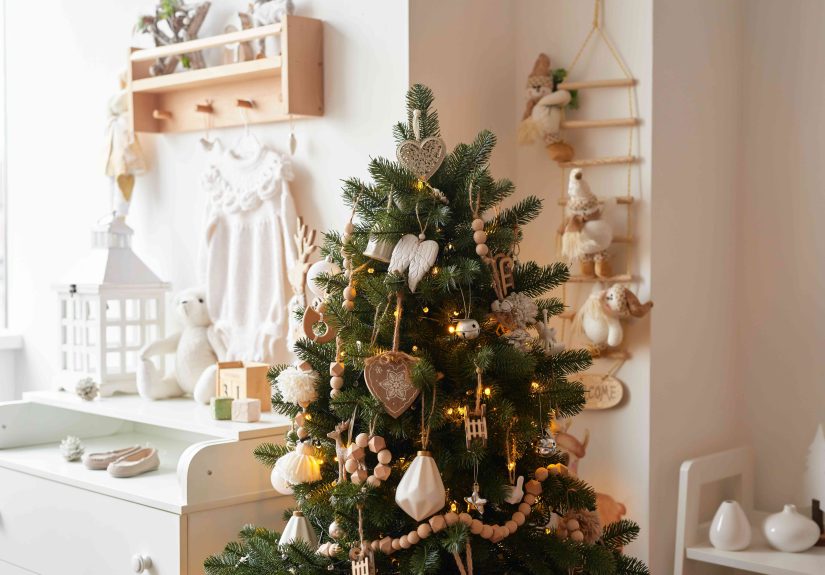
A full-size Christmas tree is wonderful, but it is not mandatory. A tabletop tree, slim pencil tree, potted evergreen, or two-foot faux fir can create the same emotional sparkle without eating your living room. Designers love small trees because they are flexible. Place one on a console table, nightstand, bar cart, plant stand, dresser, or even a sturdy stool to give it height.
For a polished look, set the tree inside a woven basket, ceramic planter, vintage crock, or simple metal bucket. This hides the base and adds texture. Keep ornaments proportional: mini baubles, velvet bows, paper stars, dried orange slices, tiny bells, and warm white lights work beautifully. If the tree is small, the topper can be bold. A dramatic bow or sculptural star gives it confidence. Think of it as a tiny tree with main-character energy.
Designer tip: raise it up
If your tree is short, place it on furniture rather than the floor. Height makes a small tree feel intentional, not like it lost a growth contest at the tree farm.
2. Try a Wall-Mounted Christmas Tree
When floor space is precious, use the wall. A wall-mounted Christmas tree can be made from garland, string lights, wooden dowels, branches, ribbon, felt, or even a collection of ornaments arranged in a triangle. This idea works especially well in studio apartments, dorm rooms, narrow hallways, and homes with curious pets who believe ornaments are seasonal chew toys.
Use removable hooks to outline the tree shape, then layer garland or fairy lights from top to bottom. Add lightweight ornaments with ribbon. Finish with a star, bow, or cluster of bells at the top. Underneath, place wrapped gifts, a basket of blankets, or a small holiday village to ground the display.
The beauty of a wall tree is that it delivers the shape and symbolism of Christmas without requiring a single inch of walking space. It is festive, clever, and wonderfully smug in the best possible way.
3. Decorate Vertically, Not Horizontally
Small homes often lack spare surfaces. Coffee tables are for drinks, remotes, books, and emergency cookie plates. Kitchen counters are for actual cooking, at least in theory. So designers look upward. Doorframes, windows, mirrors, shelves, cabinets, curtain rods, and wall hooks can all become holiday real estate.
Frame a window with greenery. Hang a wreath over a mirror. Tie velvet bows to cabinet handles. Drape a lightweight garland across a bookcase. Suspend ornaments from a chandelier or pendant light using ribbon. Add stockings to a floating shelf, wall hooks, or the side of a media console if there is no fireplace.
Vertical decorating makes a compact home feel festive without creating obstacle courses. It also draws the eye upward, which helps a small room feel taller and more layered.
4. Use Mirrors to Double the Glow
Mirrors are a designer’s favorite small-space trick all year, and they become even more useful during the holidays. A mirror reflects lights, greenery, candles, and ornaments, making your decor feel fuller without adding more objects.
Try draping a delicate garland across the top of a mirror, attaching a small wreath with ribbon, or placing flameless candles and glass ornaments nearby so the reflection creates sparkle. If your room has one mirror, let it become part of the holiday story. If it has two, congratulations, you are basically operating a Christmas light multiplication machine.
5. Swap Everyday Textiles for Festive Ones
One of the easiest small-space Christmas ideas is replacing what you already use. Instead of adding more decor, switch pillow covers, throw blankets, kitchen towels, bedding, bath towels, table runners, and napkins. This creates a seasonal feeling without stealing space.
Designers often recommend choosing textiles that nod to Christmas without screaming it through a megaphone. Tartan pillows, velvet cushions, chunky knit throws, faux fur accents, red-and-white dish towels, green linen napkins, or embroidered stockings can make a room feel warm and layered. In a bedroom, flannel sheets or a plaid throw at the foot of the bed can do more than five random tabletop decorations.
Small-space rule: replace, do not pile
If a holiday pillow comes in, an everyday pillow goes into storage. Your sofa should still have room for humans. This is important. Humans pay rent; pillows do not.
6. Create One Strong Holiday Focal Point
In compact rooms, scattered decor can feel messy. A bottlebrush tree here, a Santa mug there, a lonely ornament on the windowsillsuddenly the room looks less designed and more like Christmas sneezed. Designers solve this by creating one strong focal point.
Your focal point might be a mini tree, mantel, console table, entry shelf, bar cart, coffee table tray, or decorated mirror. Group items together in odd numbers and vary the height. For example, style a tray with a small vase of cedar branches, three brass candlesticks, a bowl of ornaments, and a tiny framed holiday print. The tray keeps everything contained, which helps the eye read it as one intentional arrangement instead of clutter.
7. Make the Entryway Work Harder
Even the smallest entryway can carry Christmas charm. A wreath on the door, a ribbon tied around a mirror, a bowl of pinecones, a tiny lamp with warm light, or a few wrapped “display gifts” under a bench can set the mood before guests take off their coats.
If you have a narrow hallway, use flat decor: paper snowflakes, hanging bells, framed holiday art, slim garland, or a vertical card holder. Avoid bulky floor pieces unless you enjoy greeting guests with the phrase, “Careful, don’t trip over the decorative moose.”
8. Decorate With Scent, Sound, and Soft Light
Holiday atmosphere is not only visual. In small spaces, scent and lighting can do a lot of work. A simmer pot with orange slices, cinnamon sticks, cloves, and cranberries can make a home smell like Christmas without adding decor. A pine candle, cedar sachet, or fresh eucalyptus bundle can also create a cozy winter feeling.
Lighting matters even more. Use warm white fairy lights, battery-operated candles, small lamps, and reflective accents to create glow. Avoid harsh overhead lighting when possible. Christmas should feel like a warm hug, not a dentist appointment.
For safety and convenience, flameless candles are a great choice for apartments, bedrooms, bookshelves, and homes with pets or children. Place them in lanterns, glass hurricanes, or on a tray with ornaments for easy ambiance.
9. Bring Holiday Cheer Into Unexpected Rooms
Small-space decorating works best when cheer is spread lightly instead of dumped heavily in one room. Add a tiny wreath to the bathroom mirror. Place a mini tree on a bedroom dresser. Switch kitchen towels to red stripe or green plaid. Hang a small ornament from a cabinet knob. Add a festive soap, a little vase of greenery, or a bowl of peppermint candies.
These tiny moments make the whole home feel decorated without requiring giant installations. Guests notice them, and so do you. There is something delightful about brushing your teeth next to a miniature wreath. It says, “Yes, even dental hygiene deserves holiday magic.”
10. Use Natural Greenery for Big Impact
Fresh greenery is a designer favorite because it instantly adds texture, fragrance, and movement. Cedar, pine, fir, eucalyptus, magnolia leaves, rosemary, and bay branches can be used in vases, garlands, wreaths, napkin ties, window displays, and tabletop arrangements.
If fresh greenery is not practical, high-quality faux branches work well and can be reused for years. The key is to fluff them, layer them, and avoid plastic-looking shine. Mix faux greenery with real pinecones, dried citrus, ribbon, or bells to make it feel more natural.
In a small space, one vase of evergreen branches with fairy lights can replace a traditional tree. Place it on a console table, kitchen counter, or dining table and hang a few lightweight ornaments from the branches.
11. Choose a Tight Color Palette
A limited color palette keeps small-space Christmas decor feeling calm and cohesive. This does not mean boring. It means every piece looks like it belongs at the same holiday party.
Classic red, green, and gold always works. Champagne, ivory, silver, and evergreen feel elegant. Burgundy, chocolate brown, brass, and pine look rich and modern. Blue, white, and mercury glass can feel crisp and wintry. Pink, teal, and vintage pastels offer retro sweetness.
Pick two main colors and one accent metal. Repeat them across the tree, pillows, ribbons, candles, and tabletop decor. The repetition helps a small room feel designed rather than crowded.
12. Style the Coffee Table Without Losing the Coffee Table
A coffee table can become a beautiful Christmas moment, but it still needs to function. Use a tray so decor can be moved quickly when snacks, games, or gift wrapping take over. Designers often combine one tall item, one medium item, and one low item: a vase of greenery, a candle, and a bowl of ornaments, for example.
Keep the arrangement low enough for conversation and compact enough that people can still put down a mug. If you live in a tiny apartment, a coffee table display should not require its own zip code.
13. Let Your Existing Collections Become Christmas Decor
Small-space decorating becomes easier when you decorate what you already own. A shelf of books can get a ribbon. A houseplant can wear fairy lights. A bar cart can hold ornaments in coupe glasses. A cake stand can display candles, pinecones, and miniature houses. A framed print can be temporarily replaced with vintage Christmas art.
This approach saves money and storage space. It also makes your holiday home feel personal. Designers often encourage using meaningful piecesfamily ornaments, travel souvenirs, heirloom dishes, old postcards, handmade decorationsbecause personality makes even a tiny room feel rich.
14. Think Small, Repeat Often
One tiny decoration may look accidental. Several tiny decorations repeated throughout a home look intentional. Try mini wreaths on cabinet doors, small bows on chair backs, little bells on doorknobs, or matching votives on shelves. Repetition creates rhythm, and rhythm makes a room feel professionally styled.
The trick is restraint. Choose one or two repeated elements, not twelve. Otherwise your apartment may begin to resemble a holiday craft store after an enthusiastic windstorm.
15. Keep Storage in Mind Before You Buy
Small-space Christmas decorating does not end on December 25. Everything has to go somewhere afterward. Before buying bulky decor, ask: Can it fold flat? Can it nest inside another item? Can it replace something I already own? Will I still like it next year?
Fabric stockings, ribbon, paper ornaments, collapsible trees, garlands, pillow covers, and small heirloom pieces are easier to store than oversized statues and giant novelty signs. Invest in pieces that are flexible and reusable. Your future self, standing in front of a closet in January, will be grateful.
Designer-Inspired Small-Space Christmas Ideas by Room
Living room
Choose a mini tree, add a cozy throw, style a tray, and frame the window or mirror with garland. Keep floor decor minimal so traffic flow stays comfortable.
Bedroom
Use flannel sheets, a plaid blanket, a tiny tabletop tree, and warm fairy lights. Add one festive pillow instead of turning the bed into a North Pole cushion convention.
Kitchen
Switch towels, add greenery above cabinets, place ornaments in a bowl, and tie ribbon around cabinet pulls. Keep counters clear enough for cooking.
Bathroom
Hang a mini wreath on the mirror, add a seasonal hand towel, use a pine-scented soap, and place a tiny vase of greenery on the sink.
Balcony or window
Use weather-safe string lights, a small wreath, a mini outdoor tree, or a simple garland. This makes the home feel festive from both inside and outside.
Real-Life Experience: What Actually Works in a Small Holiday Home
Here is the truth from real small-space decorating experience: the best Christmas setup is the one that still lets you live your life. A room can look magical in photos, but if you have to move three reindeer, two candles, and a glitter house every time you want to eat dinner, the magic fades faster than cheap tinsel.
In a compact apartment, the most successful holiday decor usually starts with editing. Clear one surface first. Do not decorate over clutter. A clean console table with one beautiful garland and a bowl of ornaments will look more festive than five crowded shelves full of competing decorations. Negative space is not empty space; it is breathing room. In small homes, breathing room is luxury.
Another lesson: lighting beats quantity. One year, a tiny living room with almost no decorations looked surprisingly festive because of warm string lights around the window, a few flameless candles on the coffee table, and a small potted tree on a stool. The room felt cozy, not crowded. Nobody walked in and said, “Where is the seven-foot tree?” They said, “This feels so warm.” That is the goal.
Textiles also work harder than people expect. A red plaid throw over a neutral sofa can change the entire mood of a room. Velvet pillow covers make everyday furniture feel dressed up. A holiday runner on a small dining table creates instant celebration, even if dinner is takeout noodles eaten while watching a Christmas movie. Festive does not have to mean formal. Sometimes it means your couch looks cute while you wear fuzzy socks and pretend gift wrapping is not a competitive sport.
Small-space decorating also teaches you to love multipurpose decor. A tray can hold candles in December and coffee supplies in January. A woven basket can hide a tree base during Christmas and store blankets later. Brass candlesticks work for Thanksgiving, Christmas, New Year’s Eve, and regular Tuesday evenings when you want dinner to feel less like a microwave negotiation.
The biggest challenge is knowing when to stop. In a small home, the difference between charming and chaotic can be one extra garland. After decorating, step outside the room and walk back in. If your eye does not know where to land, remove one thing. If your surfaces are still useful, your pathways are clear, and the room feels warm, you are done. Pour cocoa. Admire your work. Ignore the ribbon scraps on the floor for at least ten minutes.
The best small-space Christmas ideas are not about shrinking your joy. They are about focusing it. A tiny tree can feel grand when it is styled with care. A single wreath can feel welcoming. A few lights can change the mood of an entire room. When every detail is chosen with intention, a small home can feel not limited, but intimate, personal, and wonderfully merry.
Conclusion: Small Space, Big Christmas Spirit
You do not need a mansion, a grand staircase, or a living room large enough to host a snowman convention to create a beautiful Christmas home. Small-space Christmas decorating is about scale, creativity, and atmosphere. Use vertical space. Choose a compact tree. Swap textiles. Add warm lighting. Bring in greenery. Repeat a tight color palette. Create one strong focal point instead of scattering decorations everywhere.
Designers know that the most memorable rooms are not always the biggest. They are the ones that feel thoughtful, warm, and alive. With the right small-space Christmas ideas, even the tiniest apartment can glow with holiday cheer. And if your mini tree fits on a side table while still leaving room for cookies, congratulationsyou have mastered the season.







 Close
Close