
Table of Contents >> Show >> Hide
- Why Small-Space Dining Tables Require a Smarter Approach
- Start Here: Measure Before You Shop
- Dining Table Size Basics for Small Spaces
- The Best Dining Table Shapes for Small Spaces
- Base Style Matters More Than Most People Realize
- The Best Materials for Small Dining Tables
- Small-Space Dining Table Features Worth Paying For
- How to Choose the Best Dining Table for Your Small Space (By Lifestyle)
- Chairs, Benches, and Seating Tricks That Save Space
- Common Mistakes to Avoid When Buying a Small Dining Table
- Bonus: 500+ Words of Small-Space Dining Table Experiences (Real-World Style Scenarios)
- Conclusion
If your “dining room” is technically a corner of the kitchen, a slice of the living room, or that mysterious zone between the sofa and the fridgewelcome. You are not alone, and you are definitely not doomed to eating pasta over the sink forever.
The best dining tables for small spaces are not simply the tiniest tables you can find. They’re the ones that balance size, shape, seating, traffic flow, and flexibility. In other words: a table should help your home function better, not become a daily obstacle course that bruises your thighs and tests your patience.
In this guide, we’ll break down what actually works in compact apartments, condos, breakfast nooks, and multifunctional rooms. You’ll learn which table shapes save the most space, what dimensions to look for, and how to choose a small dining table that feels stylish instead of “temporary college furniture, but make it beige.”
Why Small-Space Dining Tables Require a Smarter Approach
In a larger home, you can sometimes “eyeball it” and get away with it. In a small home, every inch matters. A dining table affects:
- How easily people walk through the room
- Whether chairs can slide out without hitting walls
- How many guests you can host comfortably
- Whether the area feels open and airy or crowded and cranky
- How often you actually use the table (this matters more than people think)
A good small-space dining setup should support your real life: quick weekday breakfasts, work-from-home laptop sessions, occasional guests, and the random pile of mail you swear you’ll sort this weekend.
Start Here: Measure Before You Shop
Before looking at finishes, legs, or “Scandinavian-inspired modern farmhouse transitional” marketing language, measure your space.
1) Measure the room or dining zone
Measure the usable floor area, not just the entire room. If your table will sit in an open-concept area, define the actual footprint you can dedicate to dining.
2) Leave enough clearance around the table
A practical rule of thumb is to leave about 36 inches (3 feet) around the table so chairs can be pulled out and people can move around without performing side shuffles. If you have a super-tight layout, you can sometimes cheat slightly on one side (for example, against a wall or built-in bench), but don’t shrink circulation everywhere.
3) Measure chair clearance and legroom
Check more than tabletop dimensions. Make sure chairs fit under the table (especially if it has a thick apron) and that the table base doesn’t block knees. This is one of the most common small-space mistakes.
4) Measure your delivery path
Also measure doorways, stairwells, hallways, and entry turns. The perfect table is not perfect if it gets stuck in the stairwell and becomes an expensive hallway sculpture.
Dining Table Size Basics for Small Spaces
Knowing a few standard dimensions makes shopping much easier. These benchmarks help you compare options quickly and avoid guessing.
- Standard dining table height: about 28–30 inches
- Counter-height table: about 36 inches (good for casual dining zones)
- Per-person seating width: roughly 24 inches
- Per-person place setting depth: about 15 inches
- Minimum comfortable tabletop width: around 30 inches (tight but workable)
Those numbers sound boring, but they are the difference between “cozy dinner” and “why is my elbow in the salad?”
The Best Dining Table Shapes for Small Spaces
Shape matters just as much as sizesometimes more. Two tables with the same seating capacity can feel very different in a compact room.
1) Round Dining Tables (Best Overall for Small Rooms)
If you have a compact dining area, a round table is often the best first choice. No sharp corners means better flow, easier movement, and fewer hip-checks. Round tables also make conversation easier because everyone faces inward naturally.
Why round works so well in small spaces:
- Better circulation in tight pathways
- No corners jutting into walkways
- Often feels visually lighter than a rectangle
- Easy to squeeze in an extra chair for guests
Typical compact round sizes:
- 36–44 inches diameter: good for 2–4 people (great for apartments)
- 48 inches diameter: usually seats 4 comfortably and can sometimes stretch to 5–6 depending on chair size and base design
Best for: square-ish rooms, breakfast nooks, studio apartments, and open-plan corners.
2) Drop-Leaf or Gateleg Tables (Best for Ultra-Tight Spaces)
If your dining area has to multitask, a drop-leaf or gateleg table is a superstar. You can keep one or both leaves down for daily use, then expand when company shows up.
These tables are especially useful when your space serves as a dining area, workspace, and everything-else-space. Some models even include drawers or built-in storage, which is a huge bonus in small homes.
Best for: studios, narrow kitchens, multipurpose rooms, and households that rarely need full-size dining every day.
3) Rectangular Tables (Best for Narrow Rooms)
A rectangular table can be excellent in a long, narrow roomespecially if you choose a slimmer width. While rectangles can take up more visual space, they often fit walls and linear floor plans better than round tables.
Common small-space rectangular size: around 36 x 48 inches for four people (with compact chairs and a workable layout).
Tips for making a rectangular table work in a small space:
- Choose a narrow profile
- Use armless chairs or slim silhouettes
- Consider a bench on one side
- Push one side closer to a wall if needed (not ideal for daily 4-person dining, but practical)
4) Square Tables (Best for Two to Four in Compact Nooks)
Square tables are underrated. A compact square table can feel balanced and neat, especially in small square rooms. They’re great for households of one or two and can usually seat four in a pinch.
Typical compact square size: around 36–44 inches square.
Best for: small eat-in kitchens, cozy corners, and people who prefer symmetry.
5) Extendable Tables (Best for Hosts Who Live Small)
Love hosting but short on square footage? An extendable dining table is your best compromise. Many modern designs now include butterfly leaves, removable leaves, or hidden extension systems, so you can stay compact on regular days and expand for holidays or dinner parties.
This is one of the smartest investments for small homes because it solves the “I need a table for two… except when I need one for six” problem.
Best for: apartment dwellers who entertain occasionally, families in smaller homes, and anyone who refuses to choose between function and guests.
Base Style Matters More Than Most People Realize
When people shop for dining tables, they focus on the top. In small spaces, the base can make or break comfort.
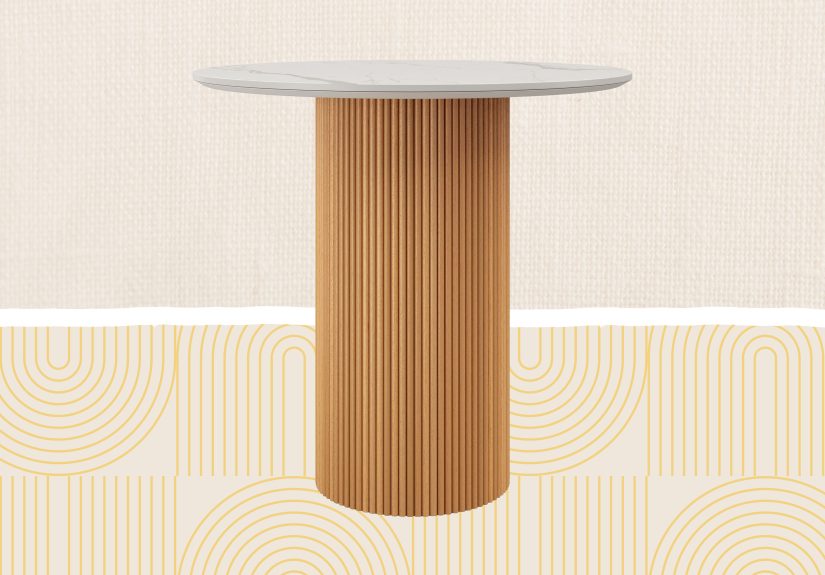
Pedestal Base
A pedestal base (one central support) often gives better legroom and flexibility, especially on round tables. It can make a small table feel easier to use because chairs can slide around without bumping into corner legs.
Four Legs
Four-legged tables are classic and often very stable, but check where the legs sit. On small tables, poorly placed legs can reduce usable seating and make corners awkward.
Trestle/Base Frames
Trestle or chunky frame designs can look beautiful but may eat into knee space. If you’re buying one for a small room, test or carefully review under-table clearance first.
The Best Materials for Small Dining Tables
Material affects not just style, but maintenance, durability, and how “heavy” a table feels visually.
Wood (Solid Wood or Veneered)
Wood is timeless, warm, and versatile. It works in nearly every stylefrom modern to farmhouse to traditional. For small spaces, look for a finish that hides minor scratches if the table will be used daily for meals, work, and crafts.
Glass
Glass tops can make a space feel more open because they visually disappear. They’re great in tiny dining areas where a solid wood slab might feel bulky. The tradeoff? Fingerprints and smudges become your new roommates.
Stone or Faux Stone Tops
These can look high-end and be easy to wipe clean, but weight matters. In small homes, heavy tables are harder to move when you need to reconfigure your room.
Metal + Mixed Materials
Metal bases paired with wood or stone tops can be durable and stylish. Just make sure the base footprint doesn’t steal too much legroom.
Small-Space Dining Table Features Worth Paying For
If you’re shopping on a budget, prioritize features that directly improve daily usability.
- Extendable leaves: Great for occasional guests
- Drop-leaf sides: Perfect for flexible daily footprint
- Storage drawers: Useful for napkins, placemats, cutlery, candles
- Pedestal base: Better legroom in tight seating layouts
- Lightweight or easy-to-move design: Helpful in multipurpose spaces
- Adjustable levelers: A nice bonus for uneven floors
How to Choose the Best Dining Table for Your Small Space (By Lifestyle)
Best for 1–2 People: Bistro or Compact Round Table
If it’s usually just you or two people, don’t oversize the table “just in case.” A compact round or bistro-style table saves space and keeps the room feeling breathable. You can always bring in folding chairs for occasional guests.
Best for Daily Family Use in a Small Home: Compact Rectangular or Round 48-Inch Table
If the table is your homework station, meal zone, and weekend puzzle headquarters, prioritize durability and comfort. A 48-inch round or a modest rectangular table with a sturdy base can handle everyday use better than an ultra-tiny decorative table.
Best for Frequent Entertaining: Extendable Table
If you host often, get the flexibility up front. An extendable table prevents the common mistake of buying a tiny table and then regretting it every holiday.
Best for Multi-Use Rooms: Gateleg/Drop-Leaf Table
When one room has to do everything, a transformable table wins. You can keep it compact during the day and open it only when needed.
Best for Awkward Layouts: Round Pedestal
If your space has tight walkways, odd angles, or traffic flowing around the dining area, a round pedestal table usually offers the smoothest movement.
Chairs, Benches, and Seating Tricks That Save Space
The table gets the attention, but seating is where small-space magic really happens.
- Armless chairs tuck in more easily and usually have a smaller footprint.
- Benches can slide fully under the table when not in use, which helps visually and physically open up the room.
- Stackable chairs are excellent for occasional guests.
- Backless stools can work well with compact or counter-height tables, especially for quick meals.
If your household includes kids, older adults, or anyone who prefers longer meals, comfort matters more than the “tiny but cute” look. The most space-saving chair in the world is still a bad choice if no one wants to sit in it for more than 12 minutes.
Common Mistakes to Avoid When Buying a Small Dining Table
1) Buying based only on seating capacity labels
“Seats 4” can mean very different things depending on the shape, base, and chair size.
2) Ignoring the base and apron
Legroom can disappear quickly with chunky supports.
3) Choosing oversized chairs for a compact table
Wide chairs can make a correctly sized table feel too small.
4) Forgetting delivery access
Measure doors, hallways, elevators, and stair turns before ordering.
5) Picking style over function (or function over style)
You use this table every day. It should work well and look like it belongs in your home.
Bonus: 500+ Words of Small-Space Dining Table Experiences (Real-World Style Scenarios)
Experience 1: The “Tiny Apartment, Big Hosting Dreams” Setup
A common small-space story goes like this: someone moves into a one-bedroom apartment, buys the cutest little table for two, and feels very prouduntil the first dinner with friends. Suddenly, the dining setup becomes a balancing act involving side tables, laps, and one person eating while standing near the kitchen counter “just for a minute.”
The fix in this kind of situation is usually not a giant table. It’s an extendable or gateleg model. In real apartment living, flexibility beats fixed size almost every time. Many people find that keeping the table compact for daily meals preserves walking space, while expandable leaves make entertaining feel intentional instead of improvised. The lesson: buy for your most common use case, but make room for your important occasional use case.
Experience 2: The Round Table That Made the Room Feel Bigger
Another typical experience comes from people who switch from a narrow rectangular table to a small round pedestal table. On paper, the footprint may look similar, but the room often feels noticeably better. Why? Fewer sharp corners, smoother traffic flow, and easier chair placement. People stop catching pockets and hips on table edges, and the whole dining corner feels less “blocked off.”
Many small-space homeowners say this change also improves how often they use the table. A round table can feel more inviting for quick coffee, reading, or chattingnot just formal meals. That emotional shift matters. Furniture that gets used regularly delivers more value than furniture that merely looks nice in photos.
Experience 3: The Bench Trick in a Multipurpose Room
In homes where the dining area is part of the living room, one of the most successful moves is replacing two side chairs with a bench on one side. The bench tucks under the table when not in use, which instantly makes the room feel less crowded. People often describe this as the moment their dining area stopped looking like “too much furniture in one place.”
The best part is versatility. A dining bench can often move into the living area for extra seating when guests come over. In small homes, furniture that can do double duty is a quiet superpower. The tradeoff, of course, is that some people prefer the back support of chairs for long meals. That’s why mixed seating (bench on one side, chairs on the other) is such a practical compromise.
Experience 4: The Beautiful Table That Failed the Daily-Life Test
This one happens a lot: a buyer chooses a gorgeous, heavy table with a dramatic base, then discovers it’s hard to move, hard to clean around, and awkward for knees. It looks amazing. It also becomes mildly annoying every single day. Over time, “mildly annoying” adds up.
People who are happiest with small-space dining tables usually prioritize daily ergonomics: easy wipe-down surfaces, enough room for place settings, chairs that slide in smoothly, and a base that doesn’t punish shins. Style still mattersbut function tends to determine long-term satisfaction.
Experience 5: The Table That Became the Home’s Hardest Worker
In many smaller homes, the dining table becomes the command center: breakfast spot, laptop desk, homework station, bill-paying zone, craft table, and occasional buffet during gatherings. The most successful setups reflect that reality. They include durable materials, placemat storage nearby, and a size that feels comfortable for both meals and non-meal tasks.
A practical takeaway from these real-world patterns is simple: the best dining table for a small space is rarely the most decorative one or the tiniest one. It’s the one that fits your layout, supports your routines, and adapts when life gets busy, social, messy, or all three on the same day.
Conclusion
The best dining tables for small spaces combine smart dimensions, the right shape, and everyday flexibility. For most compact homes, a round pedestal table, drop-leaf/gateleg table, or extendable compact table will give you the strongest mix of comfort and space efficiency. Measure carefully, prioritize circulation, and choose a design that matches how you actually live. Your dining area can absolutely be functional, stylish, and comfortableeven if it shares square footage with your kitchen, workspace, and your cat’s favorite sunbeam.







 Close
Close