
Table of Contents >> Show >> Hide
- What “semi-automated rotor winding” means (and what it doesn’t)
- Why spinning the rotor is the secret sauce
- The anatomy of a semi-automated winder
- How a semi-automated winder spins and winds a rotor: step-by-step
- Quality: where good rotors are made (or quietly ruined)
- Safety & ergonomics: OSHA doesn’t care that you were “almost done”
- How to choose a semi-automated rotor winder for your shop
- ROI and throughput: why semi-automation often beats both extremes
- Maintenance & uptime: keep the winder from becoming a very expensive coat rack
- Experience Section: what you learn after a few thousand rotors (about )
- Conclusion
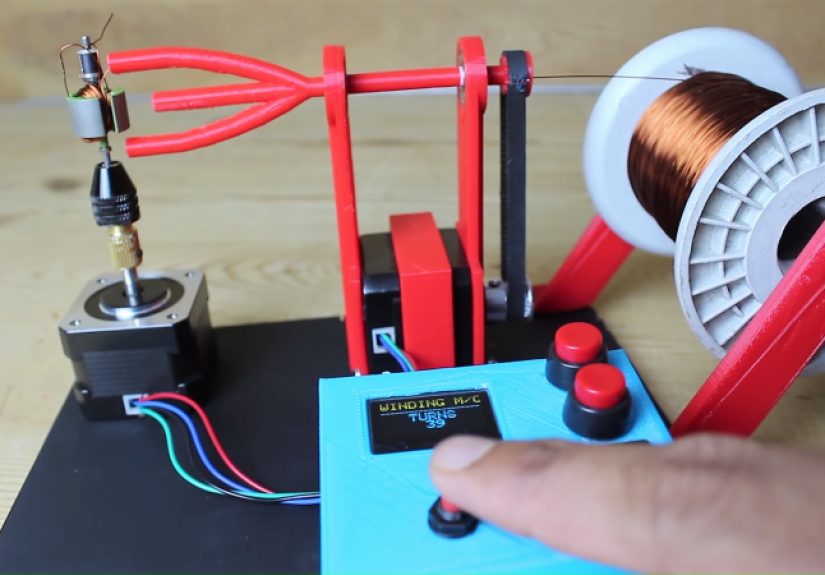
If you’ve ever watched a motor rotor get wound by hand, you know the vibe: one part craftsmanship, one part “please don’t sneeze while I’m counting turns.” Now imagine the same job with the rotor spinning smoothly, the wire feeding under consistent tension, and the machine politely refusing to let you “eyeball it.” That’s the promise of a semi-automated rotor windera practical middle ground that boosts throughput and consistency without demanding a lights-out factory and a PhD in “buttonology.”
In this guide, we’ll break down how semi-automated winders spin and wind rotors (and armatures), what makes a setup succeed or fail, how quality testing fits in, and what to look for if you’re shopping for equipment. Expect real-world tradeoffs, specific process steps, and a little humorbecause if you can’t laugh at a bird’s nest of magnet wire, what can you laugh at?
What “semi-automated rotor winding” means (and what it doesn’t)
“Semi-automated” isn’t a magic spell. It usually means the operator still loads/unloads parts and may handle certain prep steps, while the machine automates the repeatable, accuracy-sensitive work: rotor spinning, turn counting, indexing, controlled wire tension, and consistent motion paths.
A fully manual winding process depends heavily on operator skillgreat when you’ve got a veteran who can wind coils while explaining baseball stats. A fully automated cell can be amazing, but it’s also less forgiving when your product mix changes every other week. Semi-automation aims for the sweet spot: repeatability where it matters most, flexibility where the real world insists on it.
Why spinning the rotor is the secret sauce
Rotors and armatures are awkward customers. They’re cylindrical, slotty, and often packed with geometry that loves to snag wire at the worst possible moment. Spinning the rotor under controlled motion helps the wire lay consistently, reduces operator strain, and makes it easier to hit the same placement every cycle.
Semi-automated winders are commonly used for:
- DC armatures with commutators (classic “armature winding machine” territory)
- Wound-rotor induction motors and certain specialty rotors where windings are part of the design
- Rotor/field coils in repair or niche manufacturing environments
Even when the winding itself is straightforward, consistency matters because electrical machines don’t just fail loudlythey fail expensively, and often on a schedule you didn’t approve.
The anatomy of a semi-automated winder
1) Motion control that doesn’t “wander”
The heart of the machine is motion: controlled rotation, indexing, and synchronized movement of wire guides or winding heads. Many modern builds lean on industrial motion control conceptsservo drives, coordinated axes, and programmable controlsbecause winding is basically “precision movement that happens to make electromagnetism.” The better the motion system, the easier it is to repeat a recipe, change products, and keep quality stable across shifts.
2) Wire handling: tension, payoff, guidance, and the art of not kinking
A rotor winder is only as good as its wire management. The goals are simple: consistent tension, minimal wire damage, and a clean path that doesn’t introduce twists. In semi-automated setups, you’ll typically see a payoff system, tensioning, and a guide mechanism (traverse, flyer, or needle-style depending on the application).
Why obsess over tension? Because tension affects coil tightness, end-turn shape, slot fill, and even insulation damage risk. Too low and you get loose turns that shift under vibration. Too high and you nick enamel or distort the winding pack. Both end in the same place: the “why is this motor hot?” meeting.
3) Tooling: the “quiet” hero of repeatability
Fixtures, mandrels, guides, and part locating features are what keep semi-automation from becoming “semi-chaos.” Good tooling makes loading intuitive, locks the rotor/armature in a repeatable position, and supports wire placement so the machine can do its job without improvising.
4) Operator interface: recipes beat tribal knowledge
Semi-automated winding shines when operators can select a stored program (“recipe”), verify settings, and run a stable cycle. Recipe-driven setups also support quicker changeovers and better traceabilityespecially if you’re producing multiple rotor variants or doing repair work with different specs.
How a semi-automated winder spins and winds a rotor: step-by-step
Exact steps vary by rotor type, but most semi-automated processes follow a recognizable rhythm:
Step 1: Prep and insulation
Before wire ever moves, the rotor/armature must be clean, dimensionally sound, and properly insulated where required. Slot liners, phase insulation, separators, and turn insulation materials matter because they define the electrical boundary between “working motor” and “very expensive space heater.” Many shops use well-known insulation materials (for example, aramid papers and laminates) for slot liners and other motor insulation roles.
Step 2: Load and locate
The operator loads the rotor into a fixture, clamps it, and verifies alignment. This is where semi-automation stays semi: humans are great at handling variable parts and quick judgment calls, while machines excel at doing the same move 10,000 times without getting bored.
Step 3: Start lead placement and termination prep
For commutated armatures, leads must be positioned for commutator tang hooks or termination points. The machine may assist with indexing the commutator position so the operator (or an integrated mechanism) can place the start lead consistently.
Step 4: The winding cycle (a.k.a. the part where the machine earns its keep)
The rotor spins under controlled motion while the wire guide system lays turns into the correct slots or around the core geometry. Turn counting is automated, and indexing ensures the wire transitions to the correct next position at the correct time. This is where semi-automated winders typically reduce:
- Turn-count mistakes
- Inconsistent coil tightness
- Operator fatigue and repetitive strain
- Variation between shifts
Step 5: Cut, finish, and secure
The end of the cycle includes wire cutting, lead forming, and securing the windings (banding, lacing, or other retention methods depending on design). Some operations add taping or wrapping steps for insulation consistencyespecially where manual taping would introduce variability.
Step 6: Impregnation, curing, and moisture control (when applicable)
Not every rotor is treated the same way as a stator, but impregnation and varnish systems are common in many winding workflows. In higher-voltage or higher-reliability contexts, vacuum/pressure processes and controlled curing improve mechanical strength and dielectric performance. Moisture control is a major theme: insulation testing (impulse/hipot) is far more meaningful when windings are dry and properly processed.
Quality: where good rotors are made (or quietly ruined)
A semi-automated winder improves consistency, but it doesn’t magically grant immunity from physics. Quality comes from combining controlled winding with smart checksboth in-process and post-process.
Turn count, resistance, and sanity checks
Automated turn counting catches the obvious failures. Resistance checks help detect gross shorts, wrong gauge, or incorrect connections. These tests are quick and effective, but they don’t always reveal turn-to-turn weaknesses early.
Surge testing: catching turn-to-turn issues before the motor does
Surge testing is widely used as a quality control method to detect faults like turn shorts, incorrect connections, wrong number of turns, and misplacements. In practice, it compares a winding against a known-good reference and looks at waveform differences. It’s fast, powerful, and also unforgiving: interpretation and setup matter, and you need process knowledgenot just a button labeled “SURGE = YES.”
HiPot and insulation resistance: proving isolation
High-potential testing (“hipot”) is about verifying insulation integritychecking that current doesn’t leak where it shouldn’t under elevated voltage. It’s often paired with insulation resistance testing to confirm the winding system has the necessary dielectric separation for safe operation. In production environments, proper fixturing, safety interlocks, and disciplined test procedures are essential because the voltages involved are not “mildly spicy.”
Commutator finishing (armatures): details that prevent brush drama
For DC armatures, winding quality has a close relationship with commutator quality. Undercutting, chamfering, concentricity, and correct assembly pressure all influence brush behavior, arcing, noise, and long-term reliability. It’s the kind of work where a “small shortcut” can turn into a “big spark.”
Safety & ergonomics: OSHA doesn’t care that you were “almost done”
Semi-automated winders introduce rotating parts, ingoing nip points, and wire-handling hazardsall of which deserve respectful engineering controls. In plain terms: guard moving parts, use interlocks, and design the station so the operator doesn’t have to reach into a danger zone during a cycle.
Practical safety features in rotor winding cells often include:
- Barrier guards around rotating spindles and pinch points
- Interlocked doors or covers that stop motion when opened
- Two-hand controls for certain operations
- Light curtains or presence-sensing devices for test stations
- Clear wire paths and protected cutting mechanisms
How to choose a semi-automated rotor winder for your shop
Buying a winder is like buying a pickup truck: the one with the most features isn’t always the one that hauls your specific load. Focus on what you wind todayand what you’re realistically going to wind next year.
Key selection criteria
- Rotor/armature size range: OD/length, shaft features, slot geometry, commutator dimensions
- Wire gauge range: including insulation type and handling needs
- Speed and stability: spindle speed capability matters, but so does vibration control
- Changeover time: quick tooling swaps and recipe management reduce downtime
- Quality integration: ability to connect to testers and store results (traceability)
- Operator experience: the best machine is the one your team can run consistently
Don’t overlook the ecosystem: tooling support, spare parts availability, rebuild services, and long-term service responsiveness. A winder that’s down is not “saving labor”it’s inventing a new hobby for your maintenance team.
ROI and throughput: why semi-automation often beats both extremes
Manual winding can be cost-effective at very low volumes or highly variable repair work, but it struggles with consistency and scaling. Full automation can be ideal for stable, high-volume production, but changeovers and upfront cost can sting. Semi-automation often wins when you need:
- Higher throughput without fully rebuilding the line
- Better repeatability across operators and shifts
- Reduced scrap from turn-count errors and placement variation
- More predictable training time for new operators
- Flexibility for mixed models or frequent engineering updates
The “hidden ROI” is quality stability. A semi-automated rotor winder helps you move from “we hope it’s fine” to “we measured it, recorded it, and can prove it.” That’s a big deal when customers expect motors to run for years, not minutes.
Maintenance & uptime: keep the winder from becoming a very expensive coat rack
Coil winding equipment lives in a world of friction, dust, and wire debrisbasically the natural habitat of wear. Preventive maintenance is not optional if you care about consistent tension and clean wire paths.
- Inspect wire guides for grooves and burrs (they can damage enamel)
- Verify tensioners and payoff systems routinely
- Check spindle bearings and alignment for vibration drift
- Keep cutting mechanisms sharp and properly timed
- Calibrate sensors used for turn counting and position confirmation
Most quality problems blamed on “the wire” are actually caused by worn guides, sloppy tension control, or tooling that’s quietly drifting out of spec. (Wire gets blamed because it can’t defend itself in meetings.)
Experience Section: what you learn after a few thousand rotors (about )
The first time you run a semi-automated rotor winder, it feels like cheating. The rotor spins, the wire feeds neatly, and your braintrained by years of manual countingkeeps whispering, “We should be doing more.” Eventually you accept the truth: your job is no longer to be a human metronome. Your job is to run the process like a pro.
Here are a few shop-floor lessons that show up again and again:
1) The “perfect” recipe is only perfect for perfect parts
Semi-automation loves consistency. If your incoming rotors vary in slot burrs, laminations, or commutator geometry, the machine will reveal itloudly. The fix is rarely “slow the machine down forever.” It’s usually better incoming inspection, better deburring, or tooling that tolerates normal variation without chewing up wire.
2) Tension is a personality test
Two operators can run the same machine and swear they used the same settings, but one gets tight, stable coils and the other gets end-turns that look like a confused slinky. The difference is often how wire is threaded, how payoff is staged, or how frequently guides are cleaned. Standardizing setup steps (with a checklist that isn’t “just vibe with it”) is the fastest path to consistent results.
3) The fastest way to make scrap is to “save time” on fixturing
If the rotor isn’t clamped consistently, everything downstream sufferswire placement, indexing accuracy, and termination alignment. When someone says, “It’s fine, it’s close,” you’re one cycle away from a kink, a nick, or a lead that won’t reach its termination point. Good fixtures feel boring, and boring is exactly what you want in production.
4) Insulation damage is sneaky
A tiny enamel nick won’t show up in a casual visual check. It may not show up in resistance either. But under voltage stress, it can become a failure point. That’s why surge/hipot practices matterand why worn guides are such a menace. The best shops treat wire handling surfaces like cutting tools: they wear, they change performance, and they need scheduled attention.
5) Traceability is your best “argument ender”
When a motor fails, everyone has theories. If you have stored recipes, recorded test results, and can link a rotor to its process data, you move from “we think” to “we know.” That doesn’t just protect youit speeds corrective action and helps prevent repeat failures.
6) Don’t forget the human factor (semi-automated means semi-human)
Semi-automation works best when the station is built for people: comfortable load height, clear access, safe guarding, and an interface that makes mistakes hard. An operator fighting the machine will eventually win… by turning off the helpful features. Design the workflow so the easiest way is also the correct way.
In the end, a semi-automated winder doesn’t replace skillit amplifies it. It takes the repeatable, precision-heavy motions and makes them consistent, so your team can focus on setup, verification, and quality. And yes, it also reduces the number of times you hear, “Wait… was that 83 turns or 84?” which is objectively good for everyone’s blood pressure.
Conclusion
A semi-automated winder that spins rotors for motors is one of the most practical upgrades a winding operation can make. It improves repeatability, reduces operator fatigue, supports better quality testing, and stays flexible enough for mixed production or repair environments. The winning formula is simple: stable motion control, disciplined wire handling, solid tooling, and quality checks that verify insulation and connections before the motor sees real-world stress.
If you’re considering equipment, start by mapping your rotor types, wire ranges, changeover needs, and test requirementsthen choose a platform that supports the process you want, not just the specs you can screenshot.







 Close
Close