
Table of Contents >> Show >> Hide
- Quick Comparison: The 7 Best Space Heater Categories
- 1. Best Overall: Shark TurboBlade Cool + Heat Fan
- 2. Best Budget: Amazon Basics Small Space Personal Mini Heater
- 3. Best Small Room Heater: Vornado Velocity Cube 5S Whole Room Heater
- 4. Best Tower Heater: Lasko Duo Comfort Electric Ceramic Space Heater
- 5. Best Safety Features: Dreo Whole Room Heater 714
- 6. Best Fireplace-Style Heater: Duraflame 3D Infrared Electric Fireplace Stove
- 7. Best Quiet Supplemental Heat: Oil-Filled or Radiant-Style Heaters
- How to Choose the Best Space Heater for Your Room
- Space Heater Safety Tips You Should Not Ignore
- Real-World Experience: What Living With a Space Heater Teaches You
- Final Verdict
Note: Better Homes & Gardens’ current 2026 tested space heater roundup highlights five main winners. This article keeps those real BHG-tested picks intact and expands the conversation into seven practical buying categories using related BHG-tested coverage, independent testing insights, and safety guidance from reputable U.S. sources.
A great space heater is like a tiny weather negotiator: it cannot change winter, but it can convince your freezing home office to stop behaving like a walk-in freezer. The best space heaters are not just hot boxes with cords. They should warm the right area quickly, maintain steady comfort, offer smart safety features, and avoid sounding like a jet engine rehearsing for takeoff.
Based on BHG’s tested recommendations, real-world performance notes, and broader expert guidance, the standout models fall into clear categories: large-room heaters, budget personal heaters, compact whole-room heaters, tower fan-and-heater combos, safety-first heaters, cozy fireplace-style infrared heaters, and quiet supplemental heaters for people who want warmth without drama. In other words, there is no single best space heater for every human, every room, and every drafty corner. The best choice depends on where you use it, how much warmth you need, how much space you have, and whether your cat treats appliances like furniture.
Quick Comparison: The 7 Best Space Heater Categories
| Rank | Best For | Recommended Style or Model | Why It Stands Out |
|---|---|---|---|
| 1 | Best Overall | Shark TurboBlade Cool + Heat Fan | Strong room coverage, customizable airflow, heating and cooling functions |
| 2 | Best Budget | Amazon Basics Small Space Personal Mini Heater | Affordable, compact, fast personal warmth, low 500-watt draw |
| 3 | Best Small Room Heater | Vornado Velocity Cube 5S Whole Room Heater | Compact body, effective whole-room circulation, sturdy design |
| 4 | Best Tower Heater | Lasko Duo Comfort Electric Ceramic Space Heater | Heater and fan combination with slim tower design |
| 5 | Best Safety Features | Dreo Whole Room Heater 714 | Tip-over protection, overheat protection, alerts, remote control |
| 6 | Best Fireplace-Style Heater | Duraflame 3D Infrared Electric Fireplace Stove | Cozy flame effect, infrared warmth, attractive decor-friendly design |
| 7 | Best Quiet Supplemental Heat | Oil-filled or radiant-style heater | Gentle warmth, quieter operation, good for longer seated comfort |
1. Best Overall: Shark TurboBlade Cool + Heat Fan
The Shark TurboBlade Cool + Heat Fan earns the “best overall” crown because it does more than blow warm air in one sad little direction. BHG’s testing found that it distributed heat impressively across a larger area, with heat felt from about 10 feet away. That matters because many space heaters are great at warming your ankle while the rest of the room remains emotionally unavailable.
This model is especially useful for open-concept living rooms, large bedrooms, and family spaces where airflow matters as much as heat output. Its combination of heat settings, fan speeds, oscillation, remote control, and adjustable vent design gives users more control than a basic ceramic cube. It also works as a cooling fan, which helps justify the higher price because it does not have to spend half the year hiding in a closet like a seasonal goblin.
Who should buy it?
Choose this heater if you want one serious appliance for year-round comfort. It is best for people who need broad heat distribution, customizable airflow, and a heater that feels closer to a premium home comfort system than a basic plug-in box.
What to keep in mind
It is large. In tower mode, it takes up noticeable vertical space, and when positioned horizontally, it becomes wider. If your room is already losing a battle against clutter, measure first.
2. Best Budget: Amazon Basics Small Space Personal Mini Heater
The Amazon Basics Small Space Personal Mini Heater is the kind of product that knows exactly what it is: small, simple, cheap, and useful when your fingers are turning into frozen breadsticks at your desk. It is not designed to heat a whole room. Expecting it to warm a living room would be like asking a toaster to cater Thanksgiving dinner.
BHG’s testing found that this mini ceramic heater works best for targeted personal warmth. It has a low 500-watt power draw, heats quickly, and includes basic safety features such as tip-over protection and overheat protection. For students, home office workers, or anyone who needs a little warmth near their feet or hands, it is a practical option.
Who should buy it?
It is a smart pick for desk use, small workstations, and personal comfort. It is also helpful in older homes where running a 1,500-watt heater on a crowded circuit may not be ideal.
What to keep in mind
The heating range is very limited. Think “personal bubble of warmth,” not “instant cabin in the woods.” It should be placed on a stable, flat surface and used only while attended.
3. Best Small Room Heater: Vornado Velocity Cube 5S Whole Room Heater
The Vornado Velocity Cube 5S is small but surprisingly capable. Its biggest strength is circulation. Instead of blasting hot air at one unlucky chair, it is designed to move warmed air more evenly around a small to mid-sized room. BHG testers noted that it reached the set temperature in about 10 minutes in tested spaces and maintained confidence with a digital thermostat that aligned closely with the home thermostat.
This is the kind of heater that makes sense for bedrooms, home offices, reading corners, and smaller living rooms. It has a handle and cord organizer, which sounds boring until you have wrestled with a dangling cord while moving a heater from one room to another like you are relocating a tiny, warm octopus.
Who should buy it?
Buy this if you want compact whole-room heating without a giant tower. It is good for users who care about portability, stable design, and simple controls.
What to keep in mind
It does not include a remote, so you will need to adjust it manually. That is not tragic, but it does mean leaving your blanket nest. Be emotionally prepared.
4. Best Tower Heater: Lasko Duo Comfort Electric Ceramic Space Heater
The Lasko Duo Comfort Electric Ceramic Space Heater is a tower-style model that works as both a heater and fan. That hybrid design makes it especially useful during those confusing seasonal weeks when the morning feels like January and the afternoon feels like your house is auditioning for July.
BHG testers appreciated its heating and cooling flexibility, remote control, and slim profile. It fits neatly into corners, making it a good choice for bedrooms, offices, and medium-size rooms where floor space matters. The tower shape also helps distribute airflow more vertically than a tiny cube heater.
Who should buy it?
Choose this model if you want a space-saving tower that can help with both chilly and warm days. It is practical for people who prefer one appliance instead of separate fans and heaters.
What to keep in mind
According to BHG’s notes, its safety feature list is not as robust as some competitors. It has overheat protection, but buyers who prioritize tip-over shutoff should check the latest manufacturer specifications before purchasing.
5. Best Safety Features: Dreo Whole Room Heater 714
The Dreo Whole Room Heater 714 stands out for safety-focused design. BHG testers liked its quick warm-up time, strong targeted heat, remote control, and alert system. Its safety features include tip-over protection, overheat protection, temperature sensor alerts, and a 24-hour shutoff.
That alert system is particularly useful because it tells you more than “something is wrong, good luck.” Error codes can help identify issues and encourage safer troubleshooting. For homes with pets, kids, busy walkways, or furniture that always seems to migrate, safety features are not extras. They are the difference between a helpful heater and a bad idea with a plug.
Who should buy it?
This is a strong choice for people who want a compact heater with modern controls and stronger safety reassurance. It works well near desks, in chilly open areas, and in rooms where portability matters.
What to keep in mind
It may feel pricey for its size. However, the safety features, remote control, and consistent output help justify the cost for users who value peace of mind.
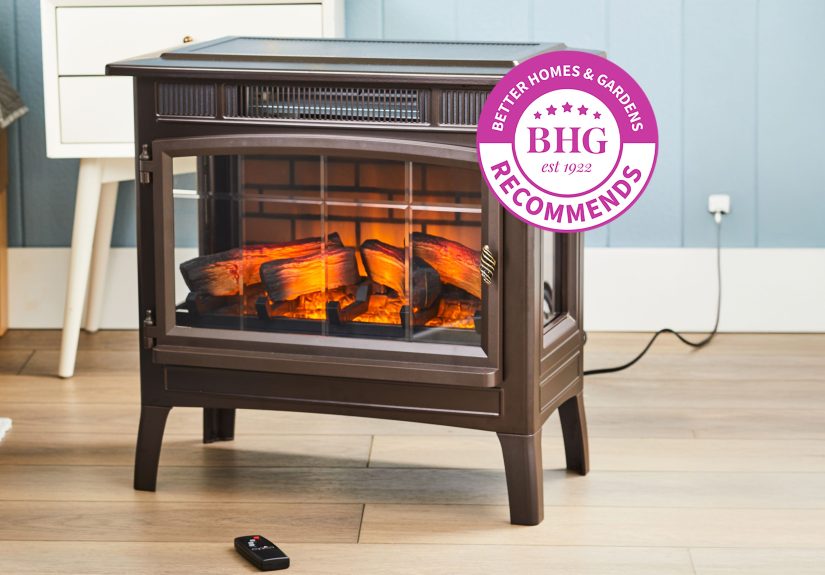
6. Best Fireplace-Style Heater: Duraflame 3D Infrared Electric Fireplace Stove
The Duraflame 3D Infrared Electric Fireplace Stove is for people who want warmth and atmosphere. Some heaters look like they escaped from a utility closet. This one looks like it belongs beside a reading chair, a stack of books, and a mug of something cozy enough to have cinnamon involved.
Related BHG coverage has highlighted this Duraflame model as a tested and approved fireplace-style heater, praised for its realistic flame effect, adjustable thermostat, auto shutoff, remote control, and decor-friendly look. Infrared heaters work differently from forced-air ceramic heaters because they warm people and objects more directly rather than relying only on air circulation. That can feel especially pleasant in sitting areas.
Who should buy it?
Pick this if you want supplemental heat that doubles as decor. It is ideal for living rooms, bedrooms, and cozy corners where ambience matters almost as much as temperature.
What to keep in mind
Fireplace-style heaters are usually larger and less portable than compact ceramic models. They are best treated as semi-permanent room accessories rather than grab-and-go appliances.
7. Best Quiet Supplemental Heat: Oil-Filled or Radiant-Style Heaters
For quiet, steady warmth, oil-filled radiator-style heaters and radiant models deserve attention. BHG’s heater type guide notes that oil-filled radiators take longer to warm up but can retain heat well and operate quietly. That makes them useful for longer seated activities, such as reading, studying, crafting, or working from home.
They are not always the fastest choice. If you want instant heat after walking into a cold room, a ceramic forced-air heater may feel more satisfying. But if you want gentle warmth without fan noise, an oil-filled model can be appealing. The trade-off is that some radiator-style heaters can become hot to the touch, so households with young children or pets should be especially cautious.
Who should buy it?
Choose a quiet radiant or oil-filled heater if sound bothers you, you stay in one room for long periods, and you prefer gradual comfort over instant blast heating.
What to keep in mind
Always look for modern safety features, including tip-over shutoff, overheat protection, and a third-party safety certification such as UL, ETL, or CSA. Quiet does not automatically mean safer.
How to Choose the Best Space Heater for Your Room
Match the heater to the room size
A small desk heater is excellent for personal warmth but weak for whole-room heating. A 1,500-watt heater is more appropriate for many small to medium rooms, but insulation, ceiling height, drafts, and room layout all affect performance. A drafty sunroom will laugh at weak heaters. A small bedroom with decent insulation may need much less power.
Prioritize safety features
The best space heater should include overheat protection and tip-over shutoff. Cool-touch housing, child locks, timers, and automatic shutoff are also valuable. Safety certifications from recognized testing organizations are important because they indicate the product has been evaluated against safety standards.
Use the right heater type
Ceramic heaters are common because they heat quickly and are usually portable. Infrared heaters are great for direct warmth and cozy seating areas. Tower heaters help distribute air vertically and often include oscillation. Oil-filled radiators are slower but quieter and steadier.
Think about noise
Fan-forced heaters can create white noise. Some people find that soothing; others find it annoying, especially during calls, sleep, or study sessions. If noise matters, check decibel ratings and look for oil-filled or radiant-style models.
Space Heater Safety Tips You Should Not Ignore
Space heaters are useful, but they deserve respect. The U.S. Consumer Product Safety Commission estimates that portable heaters are involved in many home fires each year, so safe use should never be optional.
- Keep the heater at least three feet away from curtains, bedding, furniture, papers, rugs, and anything else that can burn.
- Plug electric space heaters directly into a wall outlet, not into a power strip or extension cord.
- Turn the heater off before sleeping or leaving the room.
- Place the heater on a flat, stable surface where it will not be kicked, tipped, or blocked.
- Keep children and pets away, even if the heater has cool-touch housing.
- Do not use a space heater to dry clothes, warm bedding, thaw pipes, or perform any other creative experiment that sounds like it came from a bad sitcom.
- Check smoke alarms and carbon monoxide alarms regularly, especially during heating season.
Real-World Experience: What Living With a Space Heater Teaches You
After using space heaters in different rooms, you quickly learn that specs only tell half the story. The other half is your home’s personality, and some homes have very dramatic personalities. A heater that feels powerful in a small bedroom may seem underwhelming in an open living room with tall ceilings. A model that looks compact online may feel surprisingly bulky once it is sitting next to your desk, silently judging your cable management.
The first experience-related lesson is that placement matters more than people think. Put a heater near your feet while working, and even a small personal model can feel wonderfully effective. Put that same heater across the room behind a chair, and it becomes a tiny fan with ambition. For forced-air heaters, airflow needs a clear path. For infrared heaters, line of sight matters. If furniture blocks the heat, you are mostly warming the furniture, which is nice for the furniture but not very useful unless your sofa has been complaining.
The second lesson is that thermostats are not all equal. Some heaters maintain a room temperature smoothly. Others cycle on and off in a way that makes the room feel like it is arguing with itself. A good thermostat helps prevent overheating and wasted electricity, especially in a room where you only need a few extra degrees. In daily use, the best heater is often not the hottest one. It is the one that keeps the room comfortable without demanding constant attention.
The third lesson is that portability sounds simple until you actually move the heater. A handle matters. A cord wrap matters. Weight matters. A heater that travels easily from bedroom to office is more likely to be used properly. A heavy, awkward heater often ends up parked permanently in one spot, whether or not that spot is ideal. If you plan to move it often, choose a model with a cool-touch handle and a stable base.
The fourth lesson is about sound. A little fan noise can be pleasant during reading or sleeping, but during video calls it may turn into “Why does it sound like you are broadcasting from an airport?” Quiet models are better for bedrooms and offices. Tower heaters and fan-forced ceramic heaters vary widely, so noise should be part of the buying decision, not an afterthought.
The fifth lesson is safety discipline. The safest heater still needs safe habits. It is easy to think, “I will only leave it on for a minute,” and then suddenly you are in the kitchen making snacks, folding laundry, and having a philosophical debate with the dog. A heater should be turned off when unattended. That habit matters more than any fancy feature.
Finally, space heaters work best as supplemental heat, not as a full replacement for a home heating system. They are excellent for warming the room you are actually using, reducing the need to overheat the entire house. Used wisely, they can make cold mornings, drafty offices, and chilly evenings much more comfortable. Used carelessly, they become risky. The sweet spot is simple: choose the right heater, place it correctly, respect the cord, and let it make winter less rude.
Final Verdict
The best space heater for most people depends on the room and the purpose. For broad, customizable comfort, the Shark TurboBlade Cool + Heat Fan is the strongest overall choice from BHG’s current tested picks. For personal warmth on a budget, the Amazon Basics Mini Heater is hard to beat. For compact whole-room heating, the Vornado Velocity Cube 5S is a smart small-room option. The Lasko Duo Comfort is ideal if you want a tower heater that also works as a fan, while the Dreo Whole Room Heater 714 is the best fit for safety-focused shoppers.
If style matters, the Duraflame 3D Infrared Electric Fireplace Stove brings both warmth and cozy atmosphere. And if you prefer quiet, steady heat, an oil-filled or radiant-style heater may be the most comfortable long-session choice. Whatever you choose, remember this: the best space heater is not just the one that gets hot. It is the one that warms the right space safely, efficiently, and without turning your room into a tiny electrical rodeo.






 Close
Close