
Table of Contents >> Show >> Hide
- Why Your Dishwasher Needs Help Drying in the First Place
- 1. Your Rinse Aid Dispenser Is Empty or Set Too Low
- 2. You Selected the Wrong Cycle or Drying Option
- 3. Your Dishwasher Is Loaded Like a Game of Tetris Gone Wrong
- 4. The Incoming Water Is Not Hot Enough
- 5. Plastic Items Are Holding Onto Water
- 6. A Vent, Fan, Heating Element, Filter, or Drainage Issue Is Interfering
- Quick Checklist: How to Get Drier Dishes Tonight
- When Should You Call a Professional?
- Real-World Experience: What Actually Works in a Busy Kitchen
- Conclusion
You open the dishwasher expecting sparkling, dry plates. Instead, your mugs are sweating, your bowls are holding tiny swimming pools, and your plastic containers look like they just survived a rainforest documentary. If your dishwasher is not drying, don’t panic. Most drying problems are caused by everyday issues: missing rinse aid, the wrong cycle, crowded racks, cool water, plastic items, or a drying component that needs attention.
The good news? You do not need to become an appliance wizard with a tool belt and dramatic theme music. In many cases, the fix is simple, safe, and surprisingly cheap. This guide breaks down the six most common reasons your dishwasher leaves dishes wet and shows you how to fix each one without turning your kitchen into a science experiment.
Why Your Dishwasher Needs Help Drying in the First Place
Modern dishwashers clean differently from the loud, steamy machines many people grew up with. Many newer models are designed to save water and energy, which means they may rely more on hot final rinses, condensation drying, rinse aid, fans, vents, or automatic door-opening features instead of blasting dishes with heat like a tiny kitchen furnace.
That energy-saving design is great for your utility bill, but it also means drying performance depends on a few details working together. When one piece of the puzzle is missing, the dishes come out wet. The dishwasher is not being lazy; it is just very particular. Like a cat, but with more stainless steel.
1. Your Rinse Aid Dispenser Is Empty or Set Too Low
Why it causes wet dishes
If there is one superstar in the dishwasher drying world, it is rinse aid. Rinse aid helps water sheet off dishes instead of forming droplets that cling to glass, ceramic, stainless steel, and plastic. Without it, water beads up, sits there, and eventually leaves spots, streaks, or damp dishes.
Many people think rinse aid is optional, like decorative parsley. It is not. In many modern dishwashers, especially models that use condensation drying, rinse aid is a key part of the drying system. Even heated dry cycles usually perform better when rinse aid is full and properly adjusted.
How to fix it
Open the dishwasher door and look for the rinse aid dispenser, usually located near the detergent cup. Check the indicator. If it appears empty or clear, refill it with liquid rinse aid. Close the cap securely, then run a normal cycle with heated dry or extra dry selected.
If your dishes are still wet or spotty, increase the rinse aid setting one level at a time. If you notice rainbow-like film, excessive suds, or a slick feeling on dishes, the setting may be too high. Adjust slowly. Rinse aid is helpful, but it does not need to enter the room wearing a cape.
2. You Selected the Wrong Cycle or Drying Option
Why it causes wet dishes
Not every dishwasher cycle is designed to deliver perfectly dry dishes. Quick wash, eco, rinse-only, and energy-saving cycles often reduce heat, shorten drying time, or skip heated drying altogether. They are useful when you need speed or lower energy use, but they may leave dishes damp.
Many dishwashers also have separate buttons for Heated Dry, Extended Dry, Extra Dry, Dry Boost, Sanitize, AutoRelease, or similar features. If the drying option is turned off, your dishwasher may finish the wash cycle and then basically say, “Good luck, plates.”
How to fix it
Choose a full wash cycle such as Normal, Auto, Heavy, or Sensor Wash when you want better drying. Then select the best drying option available on your machine. Heated Dry uses extra heat. Extended or Extra Dry may increase final rinse temperature or drying time. Some models use a fan or automatically open the door near the end of the cycle to release steam.
If your dishwasher has an automatic door-opening feature, make sure it is enabled and that the door is not blocked by cabinetry, a handle, or a dish towel hanging in the wrong place at the wrong time. For models with fan-assisted drying, listen for the fan at the end of the cycle. If it never runs and dishes are consistently wet, the fan or control may need service.
3. Your Dishwasher Is Loaded Like a Game of Tetris Gone Wrong
Why it causes wet dishes
Loading matters. When bowls nest together, spoons spoon each other, or cups sit flat and collect water, drying becomes almost impossible. Water needs room to drain, steam needs space to move, and air needs a path around the load. A packed dishwasher may still clean, but it can dry like a closet full of damp towels.
Concave items are especially guilty. The bottoms of mugs, plastic lids, measuring cups, and some bowls can trap water. When the cycle ends, those little puddles spill onto everything below when you unload. It feels personal, but it is physics.
How to fix it
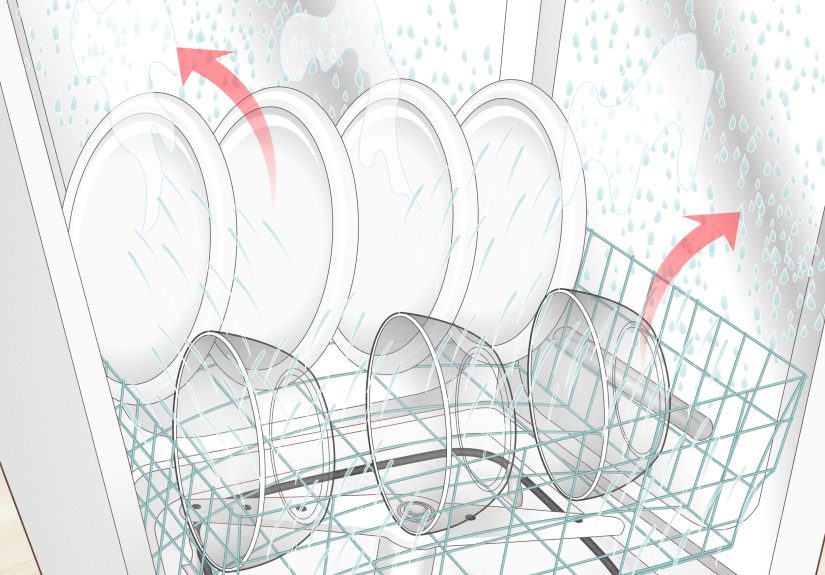
Load dishes at an angle so water can run off. Place cups and bowls upside down and tilted, not flat. Avoid nesting spoons and forks together. Keep plastic containers on the top rack unless your owner’s manual says otherwise. Make sure tall items do not block spray arms, vents, detergent dispensers, or automatic door-opening features.
When unloading, start with the bottom rack first only if the top rack is completely dry. Otherwise, unload the bottom rack after gently shaking water from top-rack cups and plastic items. This prevents the classic dishwasher betrayal: one mug puddle raining down on a clean plate stack.
4. The Incoming Water Is Not Hot Enough
Why it causes wet dishes
Hot water helps clean dishes, dissolve detergent, and support drying. Many dishwashers perform best when the incoming water is around 120°F. If the water entering the dishwasher is too cool, the machine may spend extra time heating it, or the final rinse may not be hot enough to promote evaporation and condensation drying.
This is especially common when the dishwasher is far from the water heater or when the first water entering the machine is cold water sitting in the pipes. The dishwasher starts the cycle, gets a chilly surprise, and drying performance goes downhill from there.
How to fix it
Before starting the dishwasher, run the hot water at the kitchen sink until it feels hot, then turn it off and immediately start the dishwasher. This helps deliver hot water to the appliance sooner. Also confirm that the water supply valve under the sink is fully open and that the dishwasher is connected to the hot water line, not the cold line.
Do not raise your water heater too high in an attempt to supercharge drying. Water that is too hot can increase scalding risk and may damage certain items. If you suspect a plumbing issue or incorrect installation, ask a qualified plumber or appliance technician to inspect it.
5. Plastic Items Are Holding Onto Water
Why it causes wet dishes
If everything is dry except your plastic containers, your dishwasher may not be broken. Plastic simply does not retain heat as well as glass, ceramic, or metal. Since it cools quickly, moisture does not evaporate as effectively. Some plastic surfaces are also shaped in ways that collect droplets.
This is why your ceramic plate may come out dry enough to put away, while your plastic food container looks like it has been training for the Olympics in synchronized swimming.
How to fix it
Use rinse aid consistently, choose Extra Dry or Heated Dry when available, and place plastic items on the top rack with enough spacing between them. Angle containers and lids so water can drain. Avoid placing lightweight plastic pieces where they can flip over during the wash.
Even with perfect settings, some plastic may need a quick towel dry or a few minutes on a drying mat. That is normal. If plastic dryness is a top priority, look for dishwasher-safe plastics with simpler shapes, fewer rims, and fewer water-catching grooves.
6. A Vent, Fan, Heating Element, Filter, or Drainage Issue Is Interfering
Why it causes wet dishes
If you have tried rinse aid, better loading, hotter incoming water, and the correct drying cycle, the issue may be mechanical or maintenance-related. Depending on your dishwasher model, drying may rely on a heating element, vent, fan, condensation system, automatic door opening, or a combination of these.
A clogged filter can affect overall performance by reducing water circulation. A blocked vent can trap humid air. A failed fan may stop moisture from leaving the tub. A heating element problem can reduce wash and dry temperatures. Poor drainage may leave excess water in the bottom of the machine, creating extra humidity during the dry phase.
How to fix it
Start with safe maintenance. Remove and clean the dishwasher filter according to your owner’s manual. Wipe around the door gasket. Check the bottom of the tub for food debris, labels, glass pieces, or anything that should not be auditioning for a role in your appliance. Make sure the drain area is clear.
Next, inspect the vent area if your model has one. Do not force parts open. If the vent cover is blocked by grime, gently clean around it with a damp cloth. If your dishwasher has a visible heating element and it looks damaged, cracked, blistered, or unusually discolored, stop using heated dry and schedule service.
For safety, do not test electrical parts while the dishwasher is powered. Water and electricity are not a charming duo. If you suspect a failed heating element, fan motor, thermostat, control board, or vent actuator, contact a qualified appliance repair technician.
Quick Checklist: How to Get Drier Dishes Tonight
Try this simple routine before calling for repair:
- Refill the rinse aid dispenser and adjust it slightly higher if dishes are spotty or wet.
- Run hot water at the sink before starting the dishwasher.
- Choose Normal, Auto, or Heavy instead of Quick Wash or Rinse Only.
- Select Heated Dry, Extra Dry, Extended Dry, Dry Boost, or Sanitize if available.
- Load cups, bowls, and containers at an angle so water drains off.
- Place plastic on the top rack and expect some towel drying when needed.
- Clean the filter and check the drain area for debris.
When Should You Call a Professional?
Call for service if your dishwasher used to dry well and suddenly does not, especially after you have confirmed rinse aid, cycle settings, loading, and water temperature. Also call a technician if you smell burning, see error codes, notice standing water, hear a fan grinding, or suspect the heating element has failed.
A repair professional can safely test the heating element, thermostat, control board, fan, vent assembly, and wiring. Those parts are not ideal for guesswork. Replacing a rinse aid habit is cheap. Replacing random electrical parts because “a guy on the internet seemed confident” is less fun.
Real-World Experience: What Actually Works in a Busy Kitchen
After dealing with damp dishwasher loads in real homes, one lesson becomes clear: drying problems are usually caused by a combination of small habits rather than one dramatic appliance failure. The dishwasher often gets blamed like the family villain, but the real culprit may be a half-empty rinse aid dispenser, a quick cycle, and a top rack full of upside-down plastic containers holding water like tiny bathtubs.
The first practical habit is to stop treating rinse aid as optional. Many homeowners refill detergent every cycle but forget rinse aid for months. Then they wonder why glasses look foggy and plates feel damp. Keeping rinse aid full is one of the easiest changes with the biggest payoff. In hard-water areas, adjusting the rinse aid level slightly higher can make a noticeable difference. The dishes come out cleaner-looking, glassware has fewer spots, and drying improves without changing anything else.
The second habit is choosing the right cycle for the job. Quick wash is tempting because everyone loves speed. Unfortunately, quick cycles are not always built for bone-dry results. They are great for lightly soiled dishes when you are in a hurry, but they often use less time and may not provide enough drying heat. For everyday dinner plates, cookware, and mixed loads, a normal or auto cycle with a drying option usually performs better. Yes, it takes longer. So does folding laundry, and somehow that still has not become optional.
The third habit is loading with drying in mind, not just cleaning. A dishwasher can spray water into tight spaces, but drying needs open space. Cups should be angled. Bowls should not nest. Lids should not lie flat. Big pans should not block vents or trap steam. Plastic containers should sit securely so they do not flip over and become soup bowls for rinse water. Once you start loading for drainage, the difference can be surprisingly obvious.
Another experience-based tip is to unload strategically. Many people yank out the top rack first and accidentally dump collected water onto the dry dishes below. Instead, check the top rack first. Shake off pooled water from mugs, lids, and container rims. Then unload in a way that does not create an indoor rainstorm. This does not fix the dishwasher, but it does prevent frustration.
Finally, maintenance matters more than people think. A dirty filter, greasy interior, or clogged drain area can reduce performance over time. Cleaning the filter every few weeks, wiping the gasket, and occasionally running a dishwasher cleaner can help the machine work the way it was designed to work. Think of it as giving your dishwasher a spa day, minus cucumber slices and whale music.
The best results usually come from stacking the fixes together: full rinse aid, hot incoming water, proper cycle, smart loading, and regular cleaning. If dishes are still wet after all that, then it is time to consider a vent, fan, heating element, or drainage issue. But start with the simple stuff first. Your wallet will appreciate the emotional support.
Conclusion
A dishwasher not drying is annoying, but it is often fixable without major repair. Start with rinse aid, then check your cycle settings, loading habits, water temperature, plastic items, and basic maintenance. If those steps do not solve the problem, a professional can inspect the heating element, vent, fan, or drainage system safely.
The goal is not just dry dishes. It is opening the dishwasher and feeling like a responsible adult for five glorious seconds before remembering there is still laundry in the dryer.







 Close
Close