
Table of Contents >> Show >> Hide
- Why This Robot Feels Like a Classroom on Four Legs
- The Motor Lesson Hidden Inside Every Leap
- From Big Cheetah to Mini Cheetah: A Smarter Way to Learn
- Why the Robotic Cheetah Matters Beyond the Lab
- What Students and Engineers Can Learn From the Cheetah
- Related Experiences: What the Robotic Cheetah Teaches in Practice
- Conclusion
If you ever wanted to teach a motors class without losing the room to yawns, equations, or the mysterious black hole known as “Monday morning energy,” MIT’s robotic cheetah offers a better plan. Don’t start with a dry lecture on torque constants and gear ratios. Start with a machine that runs, jumps, flips, gets shoved over, and still looks ready for extra credit.
That is why the phrase “Robotic Cheetah Teaches A Motors Class” works so well. It is not just a catchy headline. It is a perfect summary of what the MIT Cheetah project has done for robotics. Over several generations, the robot became more than a flashy quadruped with very good balance and a flair for dramatic entrances. It became a living lesson in how modern motors, control systems, lightweight materials, and clever mechanical design come together when engineers stop treating motion like theory and start treating it like performance.
The result is a story that matters well beyond robot fans on the internet. The MIT Cheetah and Mini Cheetah show why motors are not just parts hidden behind metal covers. They are the heart of dynamic machines. When the motors are efficient, powerful, responsive, and easy to repair, the whole robot becomes more useful, more teachable, and frankly more fun. And when the robot is built to survive experiments instead of merely posing for lab photos, it turns into the kind of platform that can teach students, researchers, and curious readers what good engineering actually looks like in motion.
Why This Robot Feels Like a Classroom on Four Legs
The easiest way to understand the MIT cheetah family is to think of it as a rolling, leaping engineering syllabus. Earlier versions of the robot proved that electric actuation could compete in a field long dominated by bulkier and less efficient approaches. The original MIT Cheetah showed that a legged machine could run efficiently with lightweight, high-torque electric motors. Later versions pushed the idea further by becoming untethered, jumping over obstacles, climbing stairs, and handling rough terrain with impressive balance.
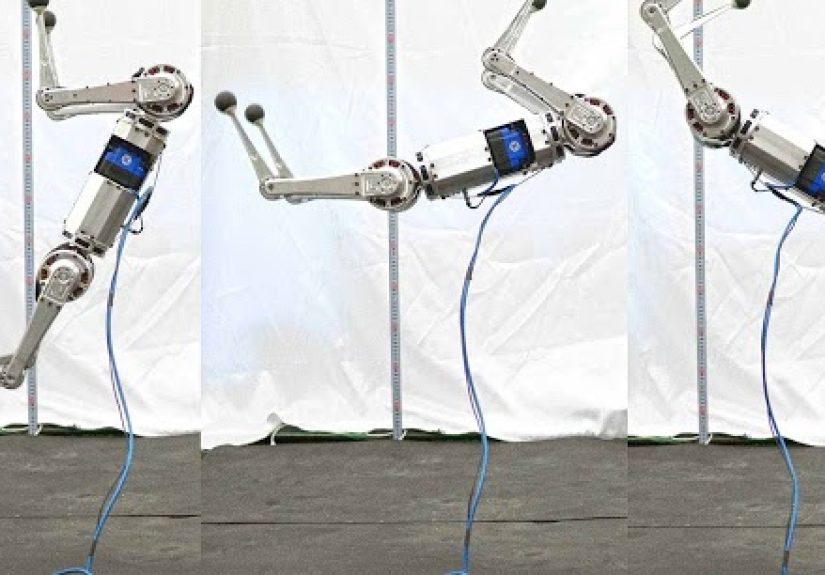
Then came the Mini Cheetah, the robot that really made the educational value obvious. It is smaller, lighter, more modular, and more approachable than larger research quadrupeds. That matters because a robot can only teach you so much if everyone is terrified to touch it. The Mini Cheetah was built to be durable, relatively affordable by research standards, and easy to experiment with. In other words, it was designed less like a museum piece and more like a lab partner that can take a hit.
That shift changes everything. Suddenly, the robot is not only demonstrating motion; it is demonstrating design philosophy. It shows students that the best motor system is not always the one with the most brute force. Sometimes the winning design is the one that balances torque, weight, heat, response speed, control bandwidth, repairability, and cost. If that sounds like a lot to squeeze into one machine, welcome to engineering. The cheetah is the kind of project that teaches all of those lessons at once, usually while backflipping just to show off.
The Motor Lesson Hidden Inside Every Leap
At the center of the robotic cheetah story is a beautiful truth: motion begins with motors, but great motion depends on how those motors are integrated into the rest of the system. MIT’s work repeatedly emphasized high torque, low wasted energy, and fast response to real-world impacts. That is a fancy way of saying the robot needed to be strong, quick, and smart enough not to break itself every time its feet hit the ground.
This is where the project becomes a genuine motors class. The robot invites you to notice the tradeoffs that define electromechanical design. A motor can be powerful, but if it is too heavy, the robot pays a penalty every time a leg swings. A transmission can multiply torque, but if the gearing is excessive, the machine may lose the compliance and backdrivability that help it react gracefully to impacts. A robot can be fast, but if the controller cannot interpret position and force information quickly enough, speed turns into chaos. The cheetah family makes those tradeoffs visible.
MIT’s designers leaned into brushless electric motors, compact actuator packaging, and low-inertia leg designs. On the Mini Cheetah, they also used inexpensive, off-the-shelf parts in clever ways, including motor components commonly associated with drones and radio-controlled aircraft. That move is part of what makes the robot such a strong teaching tool. It reminds students that innovation is not always about inventing a magical part no one has seen before. Sometimes it is about rearranging familiar parts so they do something unexpectedly brilliant.
In practical terms, the robot demonstrates concepts that students usually meet one at a time in separate classes: electromagnetic actuation, feedback control, sensing, mechanical transmission, heat management, and structural efficiency. The cheetah ties them together. When it lands a jump, you are seeing torque delivery, gearbox strategy, control tuning, and impact mitigation working as a team. That is a much more memorable lesson than a slide deck full of arrows and bullet points.
From Big Cheetah to Mini Cheetah: A Smarter Way to Learn
The broader MIT Cheetah program also reveals how engineering knowledge matures. The original robotic cheetah showed that electric motors could support sustained, efficient running. Later generations improved untethered movement and obstacle handling. Cheetah 3 demonstrated that a legged robot could climb stairs and move through cluttered environments even without relying heavily on cameras. That was a major step toward real-world usefulness, especially for inspection tasks in places humans may not want to go.
But the Mini Cheetah changed the pace of learning. Its biggest innovation was not simply that it could backflip. Plenty of robots can do one impressive trick and retire into a looped video clip forever. The real breakthrough was that Mini Cheetah became a platform for rapid experimentation. Because it was lighter, modular, and easier to repair, researchers could spend more time actually running tests and less time babying the hardware. That is a huge educational improvement.
In research, fragile systems slow everything down. One broken component can cancel weeks of momentum. In teaching, the same problem is even worse. Students learn best when they can build, test, fail, fix, and test again. The Mini Cheetah supports that cycle. Each leg uses identical low-cost motors, and the architecture makes swapping parts and modifying the machine more realistic. That modularity turns the robot into something rare in advanced robotics: a platform that encourages curiosity instead of punishing it.
There is also an important mindset lesson here. Bigger and more expensive does not automatically mean better for learning. A large, highly integrated robot may be spectacular, but it can also be intimidating and inflexible. A smaller machine with modular actuators, thoughtful packaging, and fast turnaround between experiments can teach more because it invites more questions. The Mini Cheetah is not just a smaller robot. It is a more educational robot.
Why the Robotic Cheetah Matters Beyond the Lab
It is easy to look at a backflipping quadruped and assume this is all very cool, very expensive, and very irrelevant to normal life. That would be a mistake. The engineering lessons inside the Cheetah project stretch into several important areas.
First, there is mobility in difficult environments. MIT’s larger cheetah robots were developed with inspection and dangerous terrain in mind, including places like industrial sites and disaster zones. Wheels are great until the world gets messy. Stairs, rubble, uneven ground, and narrow obstacles are not especially polite to conventional machines. Legged robots, if designed well, can navigate those spaces with more flexibility.
Second, there is the effect on actuator design more broadly. Lightweight, high-torque electric systems matter in prosthetics, exoskeletons, and other mobile machines where energy efficiency and responsiveness are critical. A robot that can absorb impact and react quickly is not just doing something dramatic for the camera. It is proving principles that may influence how engineers think about human-assist devices and other real-world systems.
Third, there is the research culture piece. The Mini Cheetah’s design encouraged sharing, iteration, and algorithm testing. That means it helped accelerate not just hardware development, but software development too. A robust robot gives researchers room to try new controllers, new gaits, and new learning methods. In that sense, the machine teaches both motors and mindset. It says: build platforms that invite experimentation, not just admiration.
And yes, there is also the public imagination factor. People pay attention when a robot behaves like an acrobat with four legs and a minor attitude problem. That attention matters because it pulls audiences toward subjects they might otherwise avoid. A flashy robot can open the door to deeper conversations about motors, controls, sensing, and mechanical design. Sometimes a backflip is just a backflip. Sometimes it is the best engineering outreach campaign you could ask for.
What Students and Engineers Can Learn From the Cheetah
1. Torque is only useful when the whole system can manage it
A powerful motor is impressive, but power alone is not the point. The robot has to handle impact, maintain balance, and respond quickly. That means torque, gearing, control, and structure must all cooperate. The cheetah teaches that motor selection is never a one-variable decision.
2. Lightweight design is not a luxury
When a legged robot moves fast, every gram matters. Heavier legs demand more energy and create harder control problems. Low-inertia limbs make dynamic behavior possible. That lesson applies in robotics, vehicles, wearable systems, and nearly any machine that moves quickly and repeatedly.
3. Modularity speeds up learning
Elegant repairability is a teaching feature. If students can replace a motor, test a new controller, or modify a limb without redesigning the entire robot, the platform becomes far more valuable. The Mini Cheetah demonstrates that good engineering often includes planning for failure instead of pretending failure will never happen.
4. Control theory becomes more exciting when it can fall over
Feedback control is abstract until a robot has to recover from a shove, a slip, or a bad landing. Then suddenly the equations have consequences. The cheetah makes control theory visible, physical, and impossible to ignore.
5. Great engineering is usually interdisciplinary
The robotic cheetah is not a “motors project” in the narrow sense. It sits at the intersection of electromagnetics, mechanics, embedded systems, controls, materials, and software. That is exactly why it teaches so well. It makes clear that real machines do not care which department designed them; they only care whether the pieces work together.
Related Experiences: What the Robotic Cheetah Teaches in Practice
One of the most interesting experiences tied to the idea of “Robotic Cheetah Teaches A Motors Class” is the moment people realize they are no longer watching a gadget. They are watching a system. That shift happens fast. At first, most people see the robot as a novelty: a mechanical animal, a viral video waiting to happen, or perhaps a polite warning that engineering students have entirely too much fun. Then it takes a few steps, absorbs a landing, or rights itself after being knocked down, and the audience begins to understand that every small movement is the outcome of dozens of engineering decisions working together in real time.
For students, that experience can be transformative. In a traditional classroom, motors are often introduced as components with specifications: voltage, current, torque, speed, efficiency. Those numbers matter, but they can feel detached from reality. A robotic cheetah gives those numbers a pulse. Suddenly, torque is no longer just a value on a chart. It is the reason a leg can lift, push off, and recover. Gear reduction is no longer a technical footnote. It becomes the reason motion looks strong without becoming clumsy. Control bandwidth stops sounding like a phrase designed to frighten undergraduates and starts looking like the difference between a stable landing and a robotic face-plant.
There is also a very practical lab experience embedded in the cheetah story: repair and iteration. Anyone who has worked around physical prototypes knows that the most educational moments often begin right after something goes wrong. A robot slips. A component overheats. A landing is rough. A motor needs to be swapped. That sounds frustrating, and sometimes it is, but it is also where deep understanding develops. The cheetah’s modular design supports that kind of learning. It turns failure into data instead of disaster. That is an underrated engineering experience and one of the reasons the platform is so compelling.
Another important experience is the emotional one. Robotics can intimidate people because it looks like a field reserved for prodigies who were apparently soldering circuit boards in kindergarten. The Mini Cheetah softens that barrier. It is advanced, yes, but it is also approachable in a strange, almost playful way. When a robot can tumble, recover, and keep moving, it invites people in. It makes the field feel less like a locked vault and more like a workshop. Curiosity replaces distance.
For researchers, the experience is slightly different but just as important. A durable, high-performance robot changes the rhythm of experimentation. Instead of treating each trial like a nerve-racking, expensive gamble, teams can explore more freely. They can compare controllers, test maneuvers, and push the hardware harder. That creates a healthier research environment, one where learning happens faster because the machine supports iteration instead of resisting it.
And for the rest of us, the experience is simple: the robotic cheetah makes complex engineering visible. You do not need a graduate degree to understand that something remarkable is happening when a small quadruped turns motor design into motion you can feel in your gut. It is one thing to read that good actuators need high torque density, low inertia, and fast feedback. It is another thing entirely to watch those principles sprint across the floor like they have somewhere important to be.
Conclusion
MIT’s robotic cheetah does more than entertain the internet with backflips and athletic swagger. It offers a sharp, memorable lesson in what modern motors can do when engineers design for efficiency, modularity, control, and real-world impact. The project shows that great robotics is not about stuffing a machine with power and hoping for the best. It is about building actuators and control systems that are strong, responsive, repairable, and smart enough to survive real motion.
That is why this robot really does teach a motors class. It turns abstract concepts into physical behavior. It connects theory to torque, design to durability, and classroom knowledge to something that can run across a room and make everyone look up from their laptops. Not bad for a mechanical cheetah with no biological muscles and an unfair amount of engineering charisma.





 Close
Close