
Table of Contents >> Show >> Hide
- What Actually Happened (And Why the Internet Heard “3 Minutes” and Saw Red)
- The “Mine or Yours?” Post That Poured Gasoline on the Fire
- Why Short Private Jet Flights Hit a Nerve
- Important Nuance the Comment Section Rarely Waits For
- The Bigger Pattern: Private Jets as a Symbol of a System
- The Flight-Tracking Era: “Receipts,” Privacy, and Platforms
- So… Was the Backlash “Fair”?
- What “Being in Touch With Reality” Could Look Like for Celebrities
- What the Rest of Us Can Take From This (Besides Memes)
- of Real-Life Experiences That Explain Why This Story Hit So Hard
- Conclusion
There are “rich people problems,” and then there are “rich people problems” that come with jet fuel, a flight tracker, and a comment section that chooses violence.
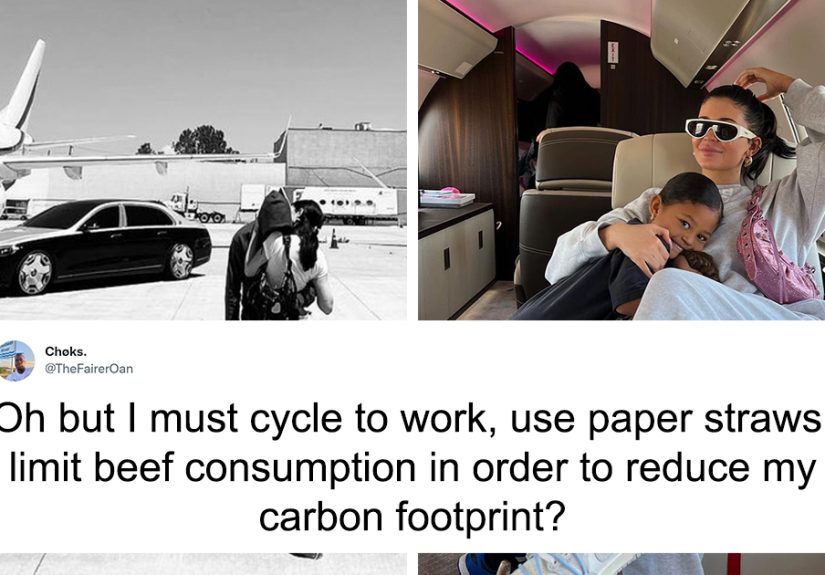
That’s basically what happened when Kylie Jenner got dragged online over reports that a private jet tied to her took an ultra-short flightinitially framed as a three-minute hop. In internet time, that’s long enough to be declared “out of touch,” get meme’d into oblivion, and inspire at least one person to type, “Girl what am I recycling for?” with the passion of a thousand paper straws.
But the real story is bigger than one short flight. It’s about the modern collision of celebrity flex culture, climate anxiety, wealth inequality, and the growing “receipt era” where people can (sometimes) track what the ultra-wealthy dodown to the minute.
What Actually Happened (And Why the Internet Heard “3 Minutes” and Saw Red)
According to public flight tracking shared by a celebrity-jet tracking account, a private aircraft associated with Jenner was reported to have traveled between Camarillo and Van Nuys in Southern Californiaan already infamous pairing in L.A. geography because it’s basically “traffic vs. vibes” in one sentence.
The trip was initially estimated to be around three minutes, which is the aviation equivalent of:
- Calling an Uber to move one block because you “don’t want to walk in the wind.”
- Microwaving a single chicken nugget.
- Starting a workout video and stopping after the instructor says, “Let’s begin.”
Later reporting clarified the airtime was closer to 17 minutesstill short enough to be considered a “blink-and-you-missed-it” flight, just not the viral “3-minute” headline that detonated across social media.
And that’s the key: the outrage wasn’t only about the exact number of minutes. It was about the symbolismthe idea of using a private jet like a car to avoid traffic while the general public is being told, repeatedly, to make lifestyle sacrifices for the planet.
The “Mine or Yours?” Post That Poured Gasoline on the Fire
The controversy didn’t exist in a vacuum. Around the same time, Jenner posted a photo with Travis Scott in front of two private jets with a caption that essentially boiled down to: “Which one?”
To fans, it was a flex. To critics, it was a masterclass in accidental satireespecially during a moment when climate disasters, heat waves, and wildfire seasons are no longer abstract concepts but recurring calendar events.
So when people saw the short-flight reports, the narrative wrote itself: “This is what ‘out of touch’ looks like in 4K.”
Why Short Private Jet Flights Hit a Nerve
1) The climate math feels unfair
Aviation emissions are complicated, but the public-facing truth is simple: flying is carbon-intensive, and private flying is usually worse per passenger because far fewer people share the emissions.
Environmental reporting and research have repeatedly found that private jet travel can produce many times more emissions per person than commercial flying. That’s why the phrase “carbon footprint” shows up in the same sentence as “private jet” so often it should be stamped on the boarding stairs.
2) The optics are brutal in a “do your part” culture
Most people don’t get to choose between jets. Many people don’t even get to choose between bills. So when a celebrity appears to spend a luxury resource to save a relatively small amount of time, critics interpret it as: “My time matters more than the public’s future.”
That’s where the “out of touch with reality” label comes from. Not because the internet expects celebrities to live like monksbut because the scale of convenience looks wildly disconnected from the scale of consequence.
3) Ultra-short flights are peak “inefficient”
Even if a flight is only 17 minutes, jets still burn fuel during taxiing, takeoff, climb, and landing. And short flights don’t get to “spread out” those fuel-heavy phases over a long distance. In other words, you’re paying a big emissions “entry fee” for a tiny trip.
So the internet’s reaction“Couldn’t you just… drive?”isn’t just snark. It’s a common-sense question that feels especially loud when the route is one that many locals know can be driven (traffic pain included).
Important Nuance the Comment Section Rarely Waits For
Here’s where the story gets more complicated than the memes:
It wasn’t confirmed Jenner was physically on that flight
Some reporting around the situation noted that it was unclear whether Jenner herself was actually on the aircraft at the time. Private jets can be used by family members, staff, business associates, or for operational needs.
Jets sometimes reposition without passengers
Private aviation often involves repositioningmoving the plane to pick someone up, return it to a base, or align with scheduling and maintenance. Those “empty legs” can create flights that look ridiculous in isolation.
That said, “it might have been repositioning” is not the same as “there’s nothing to criticize.” The broader criticism remains: why is this level of high-emissions convenience so normalized for a tiny slice of people?
The Bigger Pattern: Private Jets as a Symbol of a System
The Kylie Jenner moment went viral because it was simple: “3-minute flight” is a headline you don’t need a calculator to understand. But it also tapped into a much wider debate that’s only gotten louder.
Private jet use has surgedand scrutiny has surged with it
Multiple investigations and research summaries have pointed to the growth of private jet travel in recent years and the outsized footprint of frequent private flyers. Some studies have also documented sharp increases in private jet emissions globally since 2019, along with spikes around big events.
The policy debate: Who pays, and who benefits?
Another reason people get heated is the fairness argument: the public helps fund airspace infrastructure, yet research and reporting have highlighted how private aviation can contribute a relatively small share of certain aviation tax revenues compared with commercial passengers.
That framing“regular travelers subsidize luxury travel”turns the conversation from celebrity gossip into something closer to economic grievance. And once a story enters that lane, it stops being “about Kylie” and becomes “about the whole setup.”
The Flight-Tracking Era: “Receipts,” Privacy, and Platforms
This story also belongs to a newer era: when publicly available flight data, transponders, and open-source tracking tools can transform a private jet into a public storyline.
Jet-tracking accounts have become a weird blend of watchdog, gossip channel, climate activism, and internet sport. And as they’ve grown, so has pushbackespecially around privacy and safety concerns.
In recent years, major platforms have restricted or removed some flight-tracking accounts, and reporting has described efforts to make certain registration details less visible through official processes. Critics argue transparency matters when emissions and public infrastructure are involved; supporters argue safety and harassment risks are real. Both concerns can be true at the same time, which is why this debate keeps resurfacing.
So… Was the Backlash “Fair”?
If “fair” means “perfectly calibrated,” then noviral outrage rarely is. The internet isn’t a courtroom; it’s a crowd with Wi-Fi.
But if “fair” means “understandable,” then yes. The backlash was predictable because it combined:
- A simple, shareable headline (“3-minute flight”).
- A familiar criticism (“tone-deaf wealth display”).
- A real global issue (emissions and climate impact).
- A simmering fairness debate (who sacrifices, who doesn’t).
And once those elements align, the person at the center becomes the symbolwhether they asked for the job or not.
What “Being in Touch With Reality” Could Look Like for Celebrities
This isn’t about expecting public figures to never fly private. Sometimes private aviation is tied to security concerns, scheduling realities, or medical and logistical needs.
But the backlash does point to changes that would land well with the public and the planet:
1) Don’t flex the flex
In a climate-conscious era, a private jet photo can read less like “success” and more like “I live on a different planet.” If you must fly private, posting it like a trophy is optional.
2) Skip ultra-short hops when ground travel is feasible
Short flightsespecially those that could reasonably be drivenare the easiest to criticize and the hardest to justify. If the goal is “less drama,” the solution is often “less runway.”
3) Support systemic solutions
People roll their eyes at celebrity “awareness,” but they listen when money moves. Supporting stronger aviation climate standards, clean fuel research, or infrastructure that reduces the need for high-emissions travel is more convincing than a caption.
What the Rest of Us Can Take From This (Besides Memes)
It’s easy to spiral into doom: “My reusable water bottle doesn’t matter if billionaires are flying like it’s Uber.” But the takeaway isn’t that individual actions are worthlessit’s that individual actions are not enough on their own.
Stories like this can be useful when they push the conversation toward:
- better rules around emissions and accountability,
- fairer taxation that reflects environmental costs,
- more transparency about the biggest sources of pollution,
- and less performative shaming and more practical pressure.
Because the planet doesn’t care whether a flight was three minutes or seventeen. It cares about totals, trends, and what we decide is normal.
of Real-Life Experiences That Explain Why This Story Hit So Hard
To understand the emotional fuel behind “out of touch” outrage, it helps to look at everyday experiences that make a private-jet headline feel personaleven if the person reading it has never set foot on an airplane.
Experience #1: The “Rules Are for You” feeling
Plenty of people have had the experience of being told to make small lifestyle changesbring your own bag, use less plastic, drive less, eat less meatwhile watching large-scale consumption roll on untouched. It’s not that those small choices don’t matter. It’s that the contrast can feel insulting. When someone sees a headline about a three-minute flight, it doesn’t land as “one flight.” It lands as “proof that the burden is uneven.”
Experience #2: Paying extra for basic comfort
Anyone who has flown commercial lately knows the vibe: baggage fees, cramped seats, tight connections, and the magical experience of paying more money to sit in a chair that has… legroom. People remember saving for trips, stressing about delays, and standing in long lines just to be treated like a number. Against that background, a private jet used for a hop that might be a manageable drive doesn’t just look luxuriousit looks like a shortcut out of the shared reality everyone else has to endure.
Experience #3: Living through climate “seasons” that used to be rare
More people now have personal memories tied to smoke-filled skies, record heat, flooding, or storms that used to feel like once-in-a-lifetime events. Even if someone can’t quote a climate report, they can describe what it felt like to keep kids inside because the air was bad, or to run the AC nonstop because the heat wouldn’t quit. That lived experience turns a private jet story into something emotionally charged: the feeling that some people are insulated from consequences while everyone else is learning new emergency routines.
Experience #4: The commute that steals your day
Commuting is a universal pain point. People lose hours each week to traffic, trains, buses, and unpredictable delays. Most can’t “solve” it by throwing money at the sky. So when a celebrity appears to treat a jet like a traffic hack, it pushes a very specific button: not envy, exactlymore like disbelief. It’s the sensation of watching someone bypass the slow parts of life that shape everyone else’s days.
Experience #5: The internet’s instinct to turn frustration into comedy
Finally, a lot of the viral reaction isn’t just angerit’s humor as coping. Jokes, memes, and sarcastic comments are how people process a world that feels increasingly expensive, unstable, and unfair. A “3-minute flight” becomes a punchline because punchlines are easier to share than despair. And that’s why this story didn’t stay niche: it gave people a simple symbol for a complicated feeling.
In the end, the outrage wasn’t powered only by jet fuel. It was powered by recognitionthe sense that many people are being asked to adapt, sacrifice, and “do the right thing,” while a small group can opt out of inconvenience entirely.
Conclusion
The “3-minute flight” backlash wasn’t really a debate about a stopwatch. It was a referendum on visibility: visible wealth, visible emissions, visible inequality, and visible disconnect.
And in a world where everyone’s being told to make changes for the future, nothing detonates faster than the perception that the most powerful people are playing by different rulesespecially when the receipts are measurable in minutes.







 Close
Close