
Table of Contents >> Show >> Hide
- Introduction: The Budget Bedroom Glow-Up Nobody Saw Coming
- What Is a Pool Noodle Bed Frame?
- Why Use Pool Noodles for a Bed Frame?
- Materials and Tools You Will Need
- Before You Start: Measure Like a Calm Professional
- How to Make an Awesome Pool Noodle Bed Frame in 6 Simple Steps
- Design Ideas for Your Pool Noodle Bed Frame
- Common Mistakes to Avoid
- Cleaning and Maintenance Tips
- Budget Breakdown: What This Project Might Cost
- 500-Word Experience Section: What You Learn While Making a Pool Noodle Bed Frame
- Conclusion: A Pool Noodle Bed Frame Is Weirdly Brilliant
Note: Pool noodles are for padding, shape, and stylenot structural support. The actual strength of this project comes from a solid wood or metal bed frame underneath. In other words, let the noodles bring the drama, but do not ask them to hold up your mattress like tiny foam bodybuilders.
Introduction: The Budget Bedroom Glow-Up Nobody Saw Coming
A pool noodle bed frame sounds like something invented by a crafty parent five minutes before a sleepover, but this playful DIY idea has surprisingly stylish potential. With a few foam noodles, fabric, glue, staples, and a dependable base frame, you can create a soft, rounded, upholstered-looking bed frame that feels custom without requiring a custom-furniture budget. It is part home decor hack, part weekend project, and part proof that pool noodles have been quietly waiting for their interior-design era.
The beauty of a DIY pool noodle bed frame is that it solves several common bedroom problems at once. Sharp bed-frame edges? Covered. Plain platform bed? Instantly upgraded. Tiny room that needs softer shapes? Handled. Budget that gives you emotional damage every time you look at upholstered beds online? Deeply understood.
This guide shows you how to make an awesome pool noodle bed frame in 6 simple steps using practical techniques inspired by DIY upholstered headboards, platform bed construction, renter-friendly decor hacks, and basic mattress-support best practices. The result is a padded, rounded bed surround that can look modern, cozy, whimsical, or boutique-hotel chic depending on the fabric you choose.
Before we begin, one important clarification: this project works best as a decorative upgrade to an existing sturdy bed frame or as a padded exterior built around a simple wooden platform. Pool noodles should never replace slats, rails, legs, center supports, or any other load-bearing part of a bed. Foam is fabulous, but it is not a carpenter.
What Is a Pool Noodle Bed Frame?
A pool noodle bed frame is a DIY bed-frame makeover where foam pool noodles are used to create rounded padding along the headboard, side rails, footboard, or visible outer edges of a bed. The noodles are usually cut, glued, wrapped, and covered with fabric to mimic the soft curves of an upholstered bed.
Think of it as a budget-friendly upholstered bed frame with a secret: underneath the elegant fabric, there are humble pool noodles doing their best impression of luxury foam. The finished look can resemble channel tufting, scalloped upholstery, rounded bumper rails, or a plush dorm-style headboard. The project is especially popular because pool noodles are lightweight, easy to cut, inexpensive, and flexible enough to fit around corners or curved designs.
Why Use Pool Noodles for a Bed Frame?
They Are Affordable
Traditional upholstered bed frames can be expensive, especially if you want a queen or king size. Pool noodles let you build volume and shape for a fraction of the cost. Even after buying fabric, batting, adhesive, and staples, many DIYers can complete the padded portion of the project on a modest budget.
They Create Soft Rounded Edges
Hard bed corners are basically ankle assassins. Adding foam padding around the bed can soften the outline and make the frame friendlier in small rooms, kids’ rooms, guest rooms, dorm rooms, and apartments where every inch counts.
They Are Lightweight and Beginner-Friendly
You do not need advanced woodworking skills to cut and shape pool noodles. A utility knife, scissors, measuring tape, and patience will take you surprisingly far. The structural frame still matters, but the noodle portion is approachable for beginners.
They Offer Design Flexibility
You can wrap the noodles in velvet for a glam look, boucle for a cozy modern vibe, linen for casual elegance, faux leather for a sleek finish, or patterned fabric for a playful guest-room moment. The same basic technique can create very different results.
Materials and Tools You Will Need
For a standard full or queen bed, gather more materials than you think you need. Pool noodles are forgiving, but fabric shortages are not. Nothing ruins DIY confidence faster than discovering you are six inches short and the store has discontinued your “perfect greige.”
Materials
- 8 to 16 pool noodles, depending on bed size and design
- A sturdy existing bed frame, platform base, or simple wooden frame
- Wood boards or plywood if building a basic outer surround
- Batting or thin upholstery foam for a smoother finish
- Fabric wide enough to wrap around the noodles and frame edges
- Spray adhesive or low-VOC craft adhesive
- Hot glue sticks or construction adhesive suitable for foam
- Staples for an upholstery stapler
- Wood screws if reinforcing or building a frame surround
- Felt pads, rubber grippers, or wall bumpers
- Optional: buttons, trim, cording, nailhead tape, or decorative straps
Tools
- Measuring tape
- Utility knife or sharp serrated knife
- Scissors or fabric shears
- Upholstery stapler
- Drill or screwdriver
- Straight edge
- Marker
- Clamps or heavy books for holding glued sections
- Safety glasses and work gloves
Before You Start: Measure Like a Calm Professional
Measure your mattress first. Standard U.S. mattress sizes are usually around 38 by 75 inches for a twin, 54 by 75 inches for a full, 60 by 80 inches for a queen, and 76 by 80 inches for a king. Your actual mattress may vary slightly, especially if it has thick quilting or rounded edges, so use the real mattress in your room as the boss.
You also need to measure the height of your mattress and decide how much of the frame you want visible. Some people like a low, rounded platform look where the pool noodle padding sits just below the mattress edge. Others prefer a taller upholstered rail that rises slightly above the base. For a clean finish, allow enough room for bedding to tuck in without fighting the foam every morning like it owes you money.
How to Make an Awesome Pool Noodle Bed Frame in 6 Simple Steps
Step 1: Choose Your Bed Frame Style
Start by deciding whether you are upgrading an existing frame or building a simple decorative surround. If you already have a solid platform bed, metal frame, or wooden frame with good support, you can attach the pool noodle padding to the visible outer edges. This is the easiest option.
If your current bed frame is plain but sturdy, keep it. The goal is not to rebuild your entire sleeping system unless necessary. Check that the legs are stable, the corners are square, and the slats or platform properly support the mattress. Foam and hybrid mattresses usually need firm, even support, so wide gaps between slats can lead to sagging. Always follow your mattress manufacturer’s requirements for foundation support.
If you are building a simple outer surround, use straight wood boards sized to fit around the mattress and existing foundation. The surround should be decorative, not the only thing holding the mattress up. Add center support and slats if you are making a true platform base, and make sure everything is screwed together securely.
For most beginners, the best design is a low padded rail around three sides of the bed, plus an optional padded headboard. It looks intentional, keeps the project manageable, and reduces the chance of creating a giant foam rectangle that blocks drawers, vents, outlets, or your ability to make the bed without muttering.
Step 2: Prep the Base and Check Stability
Remove the mattress and bedding so you can work with a clear frame. Tighten bolts, replace missing screws, and check whether the bed wobbles. A beautiful pool noodle bed frame that squeaks like an old pirate ship is still a problem.
If the bed slides on the floor, add rubber grippers or felt pads under the legs. If the headboard is tall or freestanding, attach it securely to the frame or anchor it safely according to the manufacturer’s instructions. This is especially important in homes with children or pets. A padded surface may look soft, but unstable furniture is still unsafe.
Next, clean the frame. Dust, oils, and old adhesive can prevent glue from bonding. Wipe down wood or metal surfaces and let them dry fully. If you are attaching fabric to raw wood, sand rough edges first so the fabric does not snag. The smoother your base, the cleaner your final upholstery will look.
At this stage, decide where each pool noodle will go. Mark the side rails, foot rail, and headboard zones with painter’s tape. You can create one row of noodles for a simple rounded bumper, stack two rows for a chunkier designer look, or slice noodles in half lengthwise for a flatter channel effect.
Step 3: Cut and Shape the Pool Noodles
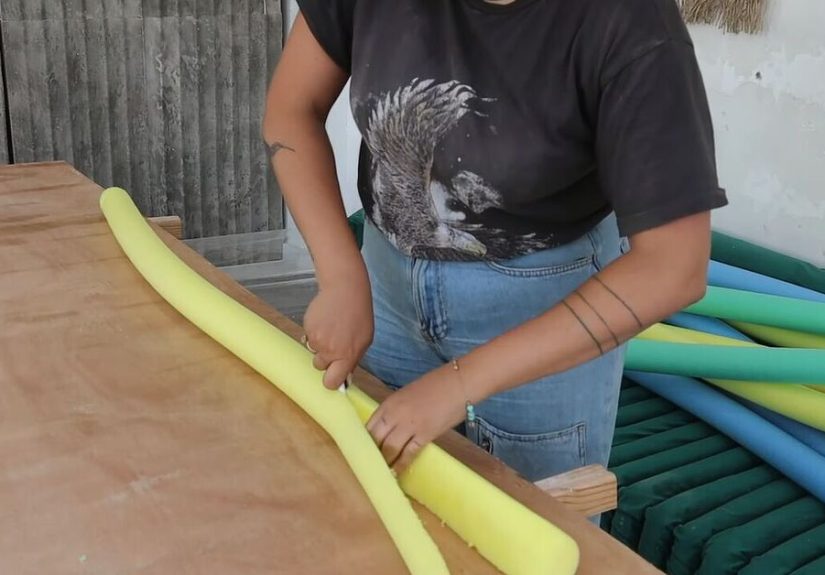
Measure each section of the frame and cut the pool noodles to fit. A utility knife works well, but make slow, controlled cuts. For a cleaner edge, rotate the noodle as you cut instead of trying to chop straight through in one dramatic motion. This is not a cooking show. The noodle does not need flair; it needs accuracy.
For rounded rail padding, you can leave the noodles whole and attach them along the outer top edge of the frame. For a flatter upholstered look, slice each noodle lengthwise to create half-round pieces. Half noodles sit more neatly against flat boards and are easier to wrap with fabric.
If you want a channel-tufted style, cut several noodles to the same length and line them vertically on a plywood headboard. If you want a scalloped border, place the noodles side by side like soft columns. If you want a modern rounded bumper, run long noodles horizontally along the side rails and footboard.
Dry-fit everything before gluing. This means placing the noodles where they will go and checking the corners, gaps, height, and symmetry. Dry-fitting is the moment when you discover whether your design looks like a boutique bed or a foam parade float. Both have charm, but only one is usually the goal.
Step 4: Attach the Pool Noodles Securely
Once you like the layout, attach the pool noodles to the frame or backing board. Use an adhesive that works with foam, and test it on a scrap piece first. Some strong adhesives can melt foam or create fumes, so work in a well-ventilated area and follow the product label. Low-odor and low-VOC options are better for indoor projects when available.
For a headboard, attach half-round noodles to plywood using spray adhesive, hot glue, or a compatible craft adhesive. Press firmly and hold each piece in place until the bond begins to set. For side rails, glue the noodles to the wood surface, then reinforce the fabric later with staples on the underside or back side where they will not show.
Do not rely on glue alone for areas that will be bumped often. The fabric wrapping and staples should help lock the noodles in place. On hidden sections, you can also use fabric strips, upholstery webbing, or zip ties around a wood rail to hold the foam snugly. Keep all fasteners away from the mattress surface so they do not scratch, poke, or tear anything.
Let adhesive cure according to the label. This is the part where impatient DIYers start poking the noodles every three minutes. Resist. Good adhesion takes time, and your future self deserves a bed frame that does not shed foam pieces like confetti.
Step 5: Wrap the Frame With Batting and Fabric
Batting is optional, but it makes the finished bed frame look much smoother. Without batting, the fabric may show every seam, dent, and noodle edge. With batting, the frame gets that soft upholstered look that says “custom furniture,” not “pool aisle clearance bin.”
Lay batting over the noodles and pull it gently around the frame edges. Staple it to the underside or back of the wood frame where staples will not be visible. Avoid pulling so tightly that the noodles flatten. You want smooth tension, not foam strangulation.
Next, add fabric. Choose a durable medium-weight upholstery fabric if possible. Velvet gives a dramatic, plush look. Boucle feels trendy and cozy. Canvas or linen blends are easier to manage and often more forgiving. Stretchy fabric can work, but it may shift over time if not secured carefully.
Start in the center of each rail and work outward. Pull the fabric smooth, staple underneath, then move to the opposite side and repeat. At corners, fold fabric as neatly as you would wrap a giftexcept the gift is enormous, awkward, and shaped like a bed. Trim excess fabric only after you are sure the fit is right.
If your bed has side rails, make sure the fabric does not interfere with slats, brackets, drawers, or assembly hardware. If your frame ever needs to be disassembled for moving, keep screws and bolts accessible. A beautiful bed frame is less fun when you have to surgically remove upholstery just to get it through a doorway.
Step 6: Finish, Style, and Safety-Check the Bed
Put the mattress back on the frame and check the final look. Make sure the mattress sits flat and does not rock, sag, or slide. If the mattress moves, add a nonslip pad between the mattress and foundation. If the bed frame touches the wall, add wall bumpers to prevent marks and reduce noise.
Now style the bed. Rounded pool noodle rails look especially good with layered bedding: a fitted sheet, a slightly relaxed duvet, two or four pillows, and one textured throw. If your frame fabric is bold, keep bedding simple. If your frame fabric is neutral, add personality with pillows, art, or a rug.
Finally, do a safety sweep. Check that all staples are hidden, glue is dry, corners are secure, and no foam pieces are loose. Vacuum the fabric to remove dust or lint. If the bed is for a child’s room, avoid dangling trim, loose cords, or small decorative pieces that could be pulled off.
Congratulations. You have officially turned pool noodles into bedroom furniture, which means you are now legally required to look at every random object in a dollar store and whisper, “Could this be home decor?”
Design Ideas for Your Pool Noodle Bed Frame
The Minimalist Rounded Platform
Use half-round noodles along the side rails and footboard, then cover everything in beige, cream, gray, or warm white fabric. This creates a soft modern look that works well in apartments and small bedrooms.
The Velvet Boutique Bed
Wrap vertical pool noodle channels on a plywood headboard with emerald, navy, blush, or rust velvet. Add matching padded rails for a coordinated look. This version feels dramatic without requiring a dramatic bank account.
The Dorm Room Upgrade
Use lightweight foam, removable fabric panels, and a freestanding padded headboard. Keep the design easy to move and avoid permanent changes to rental furniture. Choose washable fabric because dorm life is where clean intentions go to be tested.
The Kid-Friendly Soft Edge Frame
Wrap the lower rails in durable canvas or performance fabric to soften corners. Keep the structure low, stable, and simple. Avoid beads, cords, or decorative pieces that can detach.
Common Mistakes to Avoid
Using Pool Noodles as Support
Pool noodles should not support the mattress, replace slats, or hold weight. They are padding and decoration only. Your bed still needs a proper base.
Skipping the Dry Fit
Always test the layout before gluing. Once adhesive sets, fixing crooked foam can become a tiny tragedy with scissors.
Choosing Fabric That Is Too Thin
Thin fabric may show the noodle color underneath or tear around staples. Medium-weight fabric usually gives a more professional result.
Blocking Storage or Hardware
If your bed has drawers, removable slats, brackets, or bolts, keep them accessible. Pretty should not mean impossible to maintain.
Ignoring Ventilation
Mattresses need proper airflow and support. Do not wrap the entire underside of the bed in fabric or foam in a way that traps moisture.
Cleaning and Maintenance Tips
Vacuum the fabric regularly using an upholstery attachment. Spot-clean stains according to the fabric type. If you use velvet, brush it gently to keep the pile looking even. If you use boucle, expect lint to move in and act like it pays rent.
Every few months, check the staples, seams, and glued areas. If a noodle starts to shift, lift the fabric carefully, add compatible adhesive, and clamp the section until dry. Also inspect the bed frame itself. Tighten screws and check that the mattress remains evenly supported.
If the frame develops odors after gluing or painting, increase ventilation and allow materials to air out before sleeping close to them. Indoor projects involving adhesives should always be handled with common sense, fresh air, and label-following discipline.
Budget Breakdown: What This Project Might Cost
The total cost depends on bed size, fabric choice, and whether you already own the base frame. Pool noodles are usually the cheapest part. Fabric is often the biggest expense, especially if you choose upholstery velvet, boucle, or performance fabric. Adhesives, batting, staples, and small hardware can add up, but the project still often costs much less than buying a new upholstered bed.
For the most affordable version, upgrade an existing frame, use half noodles only on visible edges, and shop for fabric remnants. For a higher-end version, add a matching headboard, thicker batting, decorative trim, and premium fabric. Either way, the trick is to spend money where people can see and feel it, not on hidden areas nobody will admire unless they are crawling around your bedroom with a flashlight.
500-Word Experience Section: What You Learn While Making a Pool Noodle Bed Frame
The first thing you learn while making a pool noodle bed frame is that soft materials are not automatically easy materials. Pool noodles wiggle, roll, bend, and occasionally behave like they have personal goals. A straight board stays where you put it. A pool noodle sees your carefully measured line and says, “Interesting theory.” That is why dry-fitting matters so much. Before you glue anything, lay every noodle in place and step back. Look at the bed from the doorway, from the side, and from the foot of the bed. Small gaps that seem harmless up close can look oddly obvious once the fabric is stretched over them.
The second lesson is that fabric choice can make or break the project. Thin cotton may be easy to staple, but it can reveal bumps, seams, and bright noodle colors underneath. A slightly thicker fabric hides more sins. Velvet is beautiful but can show pressure marks. Boucle looks expensive but may collect lint. Linen blends are classic but can wrinkle. If you are unsure, wrap a scrap around one noodle and hold it against the frame before committing. This tiny test can save you from building a bed that looks less “designer suite” and more “craft table after a windstorm.”
The third experience is about corners. Corners are where confidence goes to negotiate. Straight sections are simple: pull, smooth, staple, repeat. Corners require folding, trimming, adjusting, and sometimes staring silently for a moment. The best approach is to treat corners like upholstery gift wrap. Fold the fabric in layers, keep bulky seams on the underside or back, and do not cut too much too soon. You can always trim extra fabric later, but you cannot magically grow it back after an enthusiastic scissor decision.
Another practical discovery is that the bed must remain usable. It is easy to get carried away with thick padding until you realize the mattress barely fits, drawers cannot open, or the comforter gets trapped between the rail and the wall. Leave breathing room. A pool noodle bed frame should make the room feel softer and more stylish, not turn sheet-changing into a competitive sport.
You also learn that patience improves the finish. Let glue cure. Pull fabric evenly. Recheck alignment before stapling the entire rail. Work in sections instead of trying to wrap the whole bed at once. If you rush, the fabric may pucker, the noodles may slide, and the final result may have the energy of a couch cushion wearing a Halloween costume.
The best part of the project is the reveal. Once the mattress is back, bedding is layered, and the frame is styled, the transformation can be shockingly good. The soft edges make the bed look intentional and cozy. The rounded padding adds personality. Guests may ask where you bought it, and you get the quiet joy of knowing the answer involves pool noodles, staples, and a level of determination that deserves applause.
Most importantly, this project teaches a useful DIY principle: expensive-looking design is often about shape, proportion, texture, and finishnot necessarily expensive materials. Pool noodles are not glamorous on their own, but when used thoughtfully, covered neatly, and supported by a sturdy frame, they can become part of a genuinely stylish bedroom upgrade. That is the magic of good DIY. It takes something ordinary, gives it structure and polish, and somehow convinces everyone it was planned by a person with a mood board and excellent lighting.
Conclusion: A Pool Noodle Bed Frame Is Weirdly Brilliant
Making an awesome pool noodle bed frame in 6 simple steps is a fun, affordable way to upgrade your bedroom without buying a brand-new upholstered bed. The secret is to respect the difference between decoration and structure. Use a real bed frame or solid platform for support, then let pool noodles create the soft edges, rounded channels, and cozy designer look.
With careful measuring, smart fabric choices, secure attachment, and a little patience, this DIY project can turn a plain bed into a statement piece. It is budget-friendly, beginner-friendly, and just strange enough to be memorable. And honestly, any project that makes your bedroom look better while giving pool noodles a second career deserves a round of applause.







 Close
Close