
Table of Contents >> Show >> Hide
- What Makes Outdoor Commercial String Lights Different?
- How to Choose the Best Outdoor Commercial String Lights
- Best Places to Use Outdoor Commercial String Lights
- Installation Tips That Save Regret Later
- Common Mistakes to Avoid
- Maintenance and Long-Term Care
- The Real Experience of Living With Outdoor Commercial String Lights
- Final Thoughts
There are two kinds of outdoor lighting decisions. The first is calm, rational, and measured. The second happens five minutes before guests arrive, when someone says, “The patio feels a little sad,” and suddenly you are on a ladder negotiating with zip ties and destiny. That is exactly why outdoor commercial string lights matter. They are not just decorative extras. They shape atmosphere, extend usable outdoor hours, improve curb appeal, and help restaurants, event venues, apartment courtyards, retail patios, and home entertaining spaces feel polished instead of half-finished.
The phrase outdoor commercial string lights sounds simple, but it hides a lot of important details. Not every pretty strand deserves year-round duty. Some lights are made for occasional decorating, while true commercial-grade options are built for repeated use, harsher weather, longer runs, and more demanding installations. If you want lighting that looks charming in July and still behaves in October wind and December drizzle, you need more than “cute bulbs on a cord.” You need a smarter setup.
This guide breaks down what makes commercial patio string lights worth buying, how to choose the right style for your space, what installation mistakes to avoid, and how to create an outdoor lighting setup that looks professional without becoming a full-time emotional support project.
What Makes Outdoor Commercial String Lights Different?
Commercial string lights are designed for durability, safety, and repeat performance. In practical terms, that usually means heavier-duty wire, tougher socket construction, better weather protection, more reliable sealing around bulbs, and ratings meant for outdoor use. If residential decorative lights are the weekend cousin who shows up in loafers, commercial-grade lights are the one wearing work boots and already carrying a ladder.
Heavier Wire and Better Construction
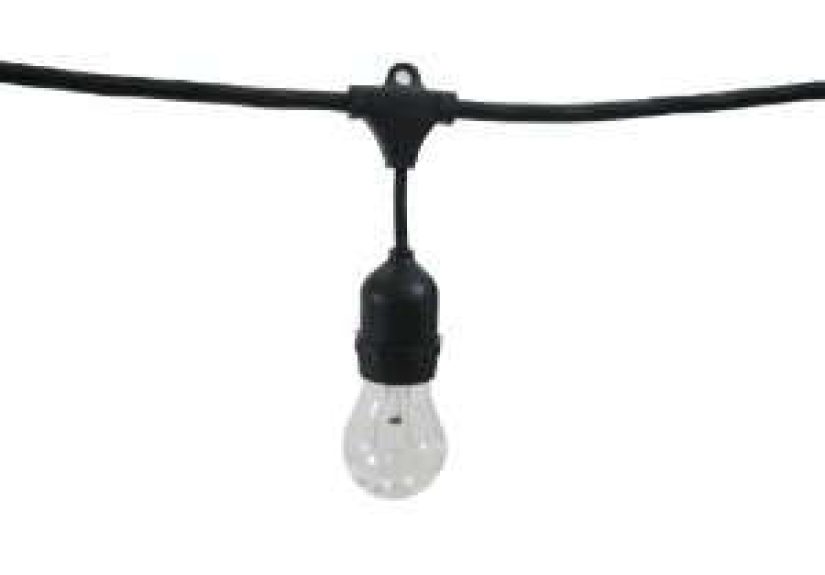
One of the clearest differences is the cord itself. Higher-quality outdoor commercial string lights often use thicker, weather-resistant wire and sturdier sockets. That matters because the cord is doing more than holding bulbs together. It is carrying power, handling tension, dealing with UV exposure, resisting temperature swings, and surviving the occasional enthusiastic installer who thinks “good enough” is a technical specification.
Look for strong wire construction, molded or well-sealed sockets, and product descriptions that clearly identify outdoor durability. Commercial sets tend to feel more substantial in the hand. That is not just marketing poetry. It usually translates into better long-term performance.
Designed for Year-Round or Extended Outdoor Use
Outdoor-rated commercial lights are typically intended for patios, pergolas, restaurant seating areas, beer gardens, courtyards, wedding venues, and other spaces that are used repeatedly or continuously. That makes them a better fit for permanent or semi-permanent installations than lightweight seasonal strands.
In the real world, this means less worry about moisture entering sockets, less frustration with flimsy hanging points, and fewer replacement cycles. It also means the lights usually look better over time. Commercial-grade products tend to droop less awkwardly, discolor less dramatically, and keep the overall installation looking deliberate instead of slightly exhausted.
Weather Resistance and Safety Features
For outdoor use, ratings and safety markings matter. Good string lights should be identified for outdoor conditions, and the surrounding setup matters too. A beautiful strand plugged into a poor outdoor receptacle situation is still a bad idea wearing a nice bulb. Look for outdoor suitability, weather resistance, wet-location compatibility where appropriate, and safe accessory use such as outdoor-rated extension cords, weather-resistant outlets, and proper covers.
How to Choose the Best Outdoor Commercial String Lights
Shopping for patio string lighting gets easier once you stop thinking only about bulb shape. Yes, the bulbs matter. No, they are not the whole story. Here is what separates a smart purchase from a future headache.
1. Choose LED First Unless You Have a Very Specific Reason Not To
For most buyers, LED outdoor commercial string lights are the clear winner. LEDs use less energy, run cooler, and generally offer longer useful life than old-school incandescent options. They are ideal for spaces where lights stay up for long periods or are used night after night. Restaurants, cafés, wedding venues, and backyard entertaining areas benefit from that efficiency because lower power draw and less frequent replacement make life easier.
Another advantage is consistency. LED lamps keep the ambience warm and attractive without demanding constant maintenance. If you are lighting a commercial patio, the goal is not to become a part-time bulb therapist. It is to flip the switch and have the place look inviting.
2. Pay Attention to Bulb Style
Bulb shape dramatically changes the mood. Edison-style bulbs are classic and slightly nostalgic, which is why they show up in cafés, bistros, breweries, and backyard dining spaces. Globe bulbs feel a bit more modern and playful. Smaller bulbs can create a subtle twinkle, while larger bulbs make more of a visual statement even when viewed from across a courtyard.
If your brand or design style leans rustic, industrial, or vintage, Edison bulbs are usually the easy pick. If the space is cleaner, more contemporary, or meant to feel airy and festive, globe styles often work beautifully.
3. Pick the Right Color Temperature
This is where outdoor lighting either becomes magic or accidentally starts impersonating a parking lot. Warm color temperatures, especially in the cozy amber-to-warm-white range, create the most inviting atmosphere for dining, conversation, and relaxed evening use. Many outdoor hospitality spaces look best with warmer bulbs because the light flatters faces, softens materials, and creates that “let’s stay for one more drink” effect.
Cooler light has its place, but it can feel too sharp for decorative overhead strings. If your goal is ambiance, warmth usually wins. If your goal is task-heavy brightness around service zones or work areas, then a more neutral tone may make sense.
4. Check Shatter Resistance
Outdoor installations benefit enormously from shatterproof bulbs. Wind, ladder bumps, accidental contact during setup, and general life chaos all happen. Plastic or shatter-resistant bulb shells lower the odds of cleanup drama and make the system more practical for high-traffic spaces.
This is especially useful for restaurants, event venues, pool decks, family yards, and places where tables and chairs move around frequently. Glass may look romantic, but so does not sweeping up fragments before brunch service.
5. Look at Socket Spacing and Total Run Length
Some lights are meant for dense glow, while others are designed for a more open pattern. Wider spacing creates a more relaxed, architectural look. Tighter spacing increases sparkle and brightness. Measure your space first, then match the product to the visual effect you want.
Also check how many strands can be linked safely. Connectability matters if you are lighting a long pergola, restaurant patio perimeter, wedding tent edge, or multi-zone backyard. Buying without checking maximum run capacity is how people end up discovering math in the least fun possible way.
6. Decide on Power Source Based on Real Use, Not Wishful Thinking
Plug-in sets remain the most dependable choice for continuous use and larger spaces. Solar can work well in sunny areas and for lighter decorative needs, but it is not always the best answer for commercial applications where reliable output is non-negotiable. Battery-operated sets can be useful in niche cases, but they are usually better for temporary styling than serious outdoor illumination.
If your space hosts paying customers, regular events, or heavy evening use, plug-in commercial string lights generally offer the best balance of reliability and output.
Best Places to Use Outdoor Commercial String Lights
One reason these lights remain so popular is versatility. They are decorative, but they also help define space. They can make a blank patio feel intentional, a service area feel warmer, and a backyard feel like someone in the household finally has their life together.
Restaurants and Cafés
Outdoor dining areas benefit from overhead strings because they create intimacy without requiring bulky fixtures. Warm LED bistro lights over tables can help a patio feel more premium, which is useful whether you are selling espresso, oysters, tacos, or very serious fries.
Event Venues and Wedding Spaces
Commercial string lights are a favorite for weddings and events because they photograph well, flatter skin tones, and turn open-air spaces into “moments.” They work beautifully over dance floors, tent edges, courtyards, and ceremony backdrops.
Hotels, Apartments, and Shared Outdoor Amenities
Courtyards, pool lounges, rooftop terraces, and community patios often use commercial string lights to make shared spaces feel finished and welcoming. The right installation can transform a generic outdoor area into somewhere residents and guests actually want to spend time.
Backyards, Pergolas, and Decks
For homeowners, commercial-grade lights are often worth the upgrade because they handle regular use better than flimsy decorative strands. If your deck or pergola is a true living area rather than an occasional “we should really use this more” zone, heavier-duty lighting makes a lot of sense.
Installation Tips That Save Regret Later
Buying good lights is only half the job. Installing them well is what makes the difference between polished ambiance and a cord spaghetti situation.
Measure Before You Buy
Map the path first. Measure the full route, note corners, and decide whether you want a taut, clean line or a softer drape. A little planning prevents awkward midair improvisation, which is usually just optimism with a ladder.
Use Proper Hanging Hardware
Commercial string lights should be supported securely using hooks, guide wire where needed, or appropriate mounting hardware for the structure. Do not rely on the cord alone across long spans. Proper support protects the sockets, reduces sag, and helps the installation survive weather and time.
Mind the Outlet Situation
Outdoor power should be treated like a real part of the design, not an afterthought. Use weather-appropriate receptacles and covers, and keep plugs and connectors protected. If an extension cord is necessary, make sure it is rated for outdoor use. This is the boring advice that keeps the fun advice from catching on fire.
Hang High Enough for Clearance
Overhead strings should be high enough to clear foot traffic, furniture movement, and general human enthusiasm. In many patio applications, mounting around 8 to 10 feet high works well, though the exact height depends on bulb size, span, and space usage.
Common Mistakes to Avoid
Choosing by Looks Alone
A gorgeous bulb on a weak cord is still a weak cord. Start with ratings, build quality, and intended use. Then pick the pretty part.
Ignoring Water Exposure
Covered patio does not automatically mean dry environment. Wind-driven rain, humidity, and splash zones can still matter. Choose products and accessories that match actual exposure conditions.
Overloading a Run
Always follow the manufacturer’s maximum connectable length or wattage guidance. More strands is not always better, especially when “better” becomes “why did everything go dark during the party?”
Using Indoor or Seasonal Decorative Lights as Permanent Fixtures
This is the classic shortcut that becomes expensive later. If the lights are staying up, buy lights meant to stay up.
Maintenance and Long-Term Care
Outdoor commercial string lights are not high-maintenance, but they do appreciate a little attention. Check sockets periodically, inspect cords for wear, make sure hanging points stay secure, and replace damaged bulbs promptly. Clean dirt and pollen off bulbs occasionally so the output stays crisp and the installation keeps its visual sparkle.
If the lights are in a storm-prone area, inspect them after major weather events. If your setup is temporary or seasonal, store strands neatly instead of tossing them into a bin like old holiday resentment. Good storage extends life, protects sockets, and makes the next installation much less annoying.
The Real Experience of Living With Outdoor Commercial String Lights
Here is the part brochures usually skip: the best thing about outdoor commercial string lights is not the product description. It is what happens to the space once they are up. A patio that felt flat during the day suddenly has a purpose at night. A basic pergola starts reading like an outdoor room. A restaurant corner that once looked like overflow seating now feels intentional, cozy, and surprisingly expensive.
There is also a psychological shift that happens when overhead lighting is done well. People linger. They talk longer. They pour another cup of coffee, order dessert, open one more bottle of wine, or decide the night is not over after all. Good string lighting creates permission to stay. It tells people the space was made for evening use, not just tolerated after sunset.
For homeowners, the change can be weirdly dramatic. You start by wanting prettier lighting, and next thing you know, you are outside on a Tuesday night acting like your deck is a boutique hotel lounge. The furniture looks better. The plants look better. Even the same grilled chicken somehow feels more competent. The lights do not literally improve dinner, but they absolutely improve the mood of everyone eating it.
For commercial spaces, the return is even clearer. Outdoor commercial string lights can support branding without screaming for attention. A café becomes warmer. A brewery becomes more social. A wedding venue becomes more photogenic. A hotel courtyard becomes more memorable. People may not always say, “Wow, excellent overhead visual layering,” because thankfully most humans are not interior design robots. But they do feel the difference.
Another real-world advantage is flexibility. These lights work for quiet nights and big events. They can host everyday dinner service, private parties, holiday gatherings, and casual weekend lounging without needing to be reinvented every time. That makes them one of the rare décor investments that can be both beautiful and genuinely useful.
And then there is the maintenance reality. When you choose well, commercial-grade lights are less fussy than cheaper decorative strands. Fewer broken bulbs. Fewer sagging sockets. Fewer moments where half the strand mysteriously quits right before guests arrive. That reliability may not sound glamorous, but in outdoor design, reliability is romance with better electrical habits.
The most successful installations also age well visually. They do not feel trendy for one season and tired by the next. Warm string lights overhead have a timeless quality because they solve both an emotional and practical problem. They add light, yes, but they also add atmosphere, structure, softness, and a sense of welcome. That combination is powerful.
So if you are debating whether outdoor commercial string lights are worth the investment, the answer is usually yes, provided you buy for durability and install with intention. You are not just buying bulbs. You are buying usable evenings, stronger ambience, better photos, more inviting hospitality, and a space that finally looks finished after dark. That is a lot of value from a cord with attitude.
Final Thoughts
The best outdoor commercial string lights combine charm with competence. They look warm and effortless, but behind that glow should be solid construction, outdoor-rated safety, dependable LED performance, smart planning, and installation that respects weather and daily use. Whether you are styling a backyard patio, upgrading a restaurant terrace, or making a venue shine for every event season, commercial-grade string lighting is one of the simplest ways to create a space people remember.
Choose durability first, warmth second, and style right alongside both. Do that, and your outdoor lighting will not just look good in a product photo. It will work beautifully in real life, which is where the actual magic happens.







 Close
Close