
Table of Contents >> Show >> Hide
- What Makes a New York City Screenprint Special?
- A Brief History of Screenprinting and NYC Print Culture
- How a New York City Screenprint Is Made
- Why New York City Looks So Good in Screenprint Form
- Popular Styles of New York City Screenprints
- How to Choose a New York City Screenprint for Your Space
- What to Look for When Buying a Screenprint
- New York City Screenprints as Gifts and Souvenirs
- Why Artists Still Love Screenprinting in a Digital World
- Experience Notes: Living With and Looking for a New York City Screenprint
- Conclusion
A New York City screenprint is more than a pretty poster with a skyline and a taxi that looks like it has somewhere more important to be than you do. It is a love letter to the city, built one layer of ink at a time. Whether it shows the Brooklyn Bridge in bold black lines, the Statue of Liberty in electric green, a subway map-inspired grid, or a moody Manhattan skyline glowing like it just paid too much for rent, a NYC screenprint captures the city’s energy in a way that feels handmade, graphic, collectible, and alive.
Screenprinting, also called silkscreen printing or serigraphy, is a stencil-based printmaking process. Ink is pushed through a mesh screen onto paper, fabric, wood, canvas, or another surface. Areas blocked by the stencil stay blank, while open areas allow ink to pass through. Each color is usually printed separately, which gives screenprints their crisp edges, layered textures, and unmistakable handmade charm. Slight variations from print to print are not flaws; they are part of the personality. Think of them as the printmaking equivalent of a New Yorker saying, “I meant to do that.”
In New York City, screenprints carry a special visual power because the city itself is already graphic. Sharp skyscrapers, subway signs, bridge cables, street grids, fire escapes, corner delis, brownstones, theater marquees, and glowing windows all translate beautifully into bold shapes and layered color. That is why a New York City screenprint can work as fine art, wall decor, travel memorabilia, a gallery edition, a handmade souvenir, or a statement piece for someone who wants their apartment to say, “I have taste, and yes, I know what a limited edition is.”
What Makes a New York City Screenprint Special?
The appeal of a New York City screenprint comes from the marriage of subject and process. NYC is fast, layered, noisy, iconic, and full of contrast. Screenprinting is also layered, bold, tactile, and direct. Together, they make sense. A photograph of Times Square may show what it looks like, but a screenprint can show what it feels like: bright, crowded, theatrical, slightly overwhelming, and somehow exactly where you want to be.
Unlike mass-produced posters that are printed digitally in huge quantities, many screenprints are made by hand in small editions. The artist may design the image, prepare the screen, mix the ink, pull the squeegee, dry each layer, and repeat the process until the final image appears. The result has depth and surface quality. You can often see the ink sitting on the paper. In some prints, color overlaps create unexpected tones. In others, tiny registration shifts add movement and character.
Common Themes in NYC Screenprints
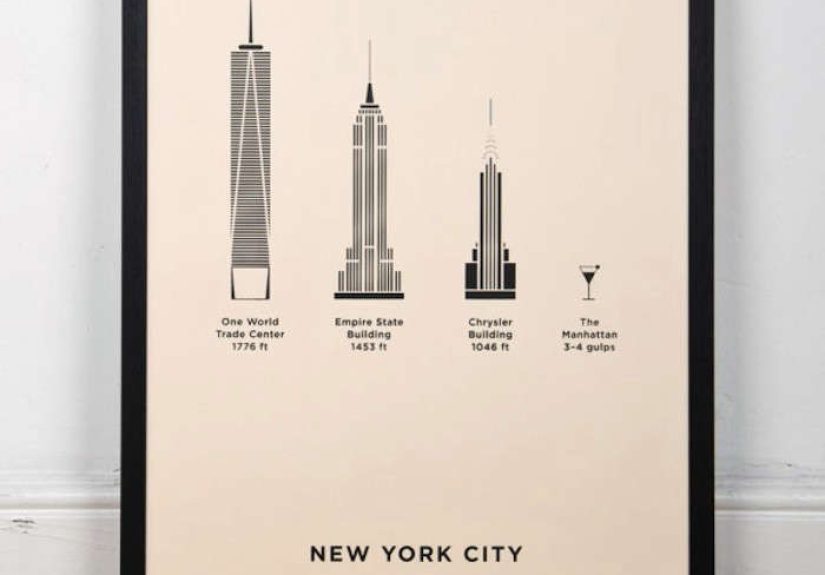
Artists approach New York City in endless ways, but several themes appear again and again because they are instantly recognizable and emotionally rich. Skyline screenprints often feature the Empire State Building, One World Trade Center, the Chrysler Building, or rows of simplified skyscrapers. Landmark prints may focus on the Brooklyn Bridge, Grand Central Terminal, Central Park, the Flatiron Building, Coney Island, or the Statue of Liberty. Neighborhood prints might highlight Brooklyn brownstones, Lower East Side storefronts, SoHo cast-iron architecture, Harlem streets, Queens food culture, or Staten Island ferry views.
Then there are the smaller details: a yellow cab, a bodega awning, a coffee cup, a slice of pizza, a fire hydrant, a subway entrance, or a pigeon walking with suspicious confidence. These everyday symbols make NYC screenprints feel personal. They remind viewers that New York is not only its famous monuments; it is also the corner where someone missed the train, found the best bagel of their life, and decided the city was worth the chaos.
A Brief History of Screenprinting and NYC Print Culture
Screenprinting has ancient roots, with stencil-based printing traditions developing long before modern art studios began using aluminum frames and photo emulsion. In the United States, the technique became especially important in the 20th century because it was practical, economical, and visually striking. It could produce strong colors and clear messages, making it useful for posters, signs, textiles, political graphics, and fine art.
New York City has played a major role in American print culture. During the Works Progress Administration era of the 1930s and early 1940s, government-supported artists produced posters for public programs, exhibitions, theater, health campaigns, parks, and civic life. Many WPA posters used silkscreen methods because the process was affordable and efficient. These posters helped shape the bold, simplified graphic style people still associate with vintage American poster art today.
Later, screenprinting became closely linked with Pop Art. Artists such as Andy Warhol used commercial printing methods to explore celebrity, repetition, advertising, and mass culture. While Warhol is often associated with fame and consumer imagery, his use of screenprinting also helped elevate the process within fine art. New York, with its galleries, museums, advertising industry, fashion scene, and media culture, became a natural home for this kind of work.
Today, NYC remains a major center for printmaking. Organizations and studios such as Print Center New York, Lower East Side Printshop, Bushwick Print Lab, Gowanus Print Lab, and other independent print shops support artists, designers, students, collectors, and DIY makers. These spaces keep the craft alive by offering workshops, studio access, artist residencies, exhibitions, and collaborative print projects. In a city that never stops reinventing itself, screenprinting continues to feel both old-school and fresh.
How a New York City Screenprint Is Made
A screenprint begins with an idea. For a New York City screenprint, that idea might be a skyline at sunset, a black-and-white architectural study, a stylized subway scene, or a colorful pop-art tribute to city life. The artist then simplifies the image into shapes, lines, and color layers. This step matters because screenprinting rewards strong composition. Too much detail can become muddy, while clean shapes can become unforgettable.
Step 1: Designing the Artwork
The design may start as a sketch, photograph, digital illustration, collage, or hand-drawn lettering. Artists often separate the design by color. For example, a four-color NYC skyline print might have one layer for navy buildings, one for orange windows, one for a pink sunset, and one for black outlines. Each layer needs its own screen or printing stage.
Step 2: Preparing the Screen
A mesh screen is stretched tightly over a frame. The screen is coated with light-sensitive emulsion and dried in a dark environment. The artwork is then exposed onto the screen using light. Areas blocked by the artwork remain washable, while exposed areas harden. After rinsing, the open parts of the screen create the stencil through which ink will pass.
Step 3: Pulling the Ink
The screen is placed over the paper or surface. Ink is added to the screen, and a squeegee is pulled across it with steady pressure. The ink passes through the open mesh and transfers the image. For multiple colors, the paper must dry between layers, and each new layer must be carefully aligned. This alignment is called registration. When registration is perfect, the print looks crisp. When it is slightly imperfect, the print may gain a lively handmade edge.
Step 4: Drying, Signing, and Editioning
After printing, the artwork dries flat. Fine art screenprints are often signed and numbered by the artist. A notation such as “12/100” means the print is the twelfth impression in an edition of one hundred. Some editions also include artist proofs, printer proofs, or special color variations. Collectors often value smaller editions, strong condition, artist signatures, and documentation.
Why New York City Looks So Good in Screenprint Form
New York City is built from visual contrast. Tall and short. Old and new. Steel and brick. Neon and shadow. Luxury towers and corner fruit stands. Screenprinting thrives on contrast, so it naturally suits the city’s visual language.
The skyline becomes a rhythm of rectangles and spires. Bridges become elegant webs of cables. Subway signs become bold circles, arrows, and typography. Brownstones become repeating patterns of windows and stairs. Even steam rising from a manhole can become a dramatic shape. A good NYC screenprint does not need to show every brick in a building; it only needs to capture the feeling of walking down a street and recognizing the city in a single glance.
Color also plays a huge role. Some artists use classic black, white, and yellow to reference taxis and city streets. Others lean into sunset oranges, deep blues, and bright reds. Minimalist prints may use only two or three colors, while Pop Art-inspired prints may explode with saturated pink, turquoise, green, and purple. There is no single “correct” palette for New York because the city changes color by neighborhood, season, weather, and mood.
Popular Styles of New York City Screenprints
Vintage Travel Poster Style
This style borrows from early and mid-20th-century travel advertising. It often uses simplified landmarks, bold lettering, and warm nostalgic colors. A vintage-style New York City screenprint might show the Statue of Liberty, the Manhattan skyline, or Central Park with a polished, timeless look. It works well in living rooms, offices, hotels, coffee shops, and anywhere that needs a little “book a ticket immediately” energy.
Minimalist Architectural Style
Minimalist screenprints focus on clean lines, limited color, and strong negative space. A print may show only the outline of the Brooklyn Bridge or the silhouette of the Chrysler Building. These pieces suit modern interiors because they feel sophisticated without shouting across the room like Times Square on a Saturday night.
Pop Art and Street-Inspired Style
Pop Art-inspired NYC screenprints use bright colors, repetition, halftone patterns, comic-book energy, or bold cultural references. Street-inspired prints may include graffiti-like marks, gritty textures, layered typography, and urban symbols. These works feel energetic and youthful, making them great for studios, creative offices, music rooms, and apartments with personality.
Map and Subway-Inspired Style
New York’s grid, borough shapes, and subway system are perfect for graphic design. Map-based screenprints may highlight neighborhoods, transit lines, or abstract city routes. They appeal to locals, former New Yorkers, commuters, design lovers, and anyone who has ever stared at a subway map pretending they meant to transfer twice.
How to Choose a New York City Screenprint for Your Space
Before buying a New York City screenprint, think about mood, size, color, and meaning. A large skyline print can become the focal point of a room. A smaller neighborhood print can feel intimate and personal. A bold red-and-yellow poster might energize a hallway, while a monochrome bridge print can make a bedroom feel calm and architectural.
If the print is for a home, consider your existing decor. Industrial interiors pair beautifully with black-and-white architectural prints. Mid-century rooms can handle vintage travel poster colors. Minimalist spaces may benefit from a simple two-color design. Eclectic rooms can welcome brighter, stranger, more experimental prints.
If the print is a gift, choose a subject with emotional meaning. A Brooklyn Bridge print may suit someone who lived in Brooklyn. A Central Park screenprint might be perfect for a couple who got engaged there. A subway-inspired print may delight a transit nerd, which is a real and noble species of human.
What to Look for When Buying a Screenprint
Quality matters. Look for clear ink coverage, good paper, strong registration, and an edition number if it is sold as a fine art print. Handmade screenprints may show subtle differences, but they should still feel intentional and well-crafted. If a seller describes a piece as a “screenprint,” it should not simply be a digital poster printed to look like one.
Paper weight is another important detail. Heavier archival paper usually feels more substantial and lasts longer. Acid-free paper helps prevent yellowing over time. For collectible prints, ask whether the ink and paper are archival. If the print is signed and numbered, keep any certificate, receipt, or artist information.
Framing also affects longevity. Use UV-protective glass or acrylic if the print will hang in a sunny room. Avoid placing screenprints in direct sunlight, damp areas, or above radiators. New York apartments are already tough enough; your print should not have to survive steam heat drama too.
New York City Screenprints as Gifts and Souvenirs
A New York City screenprint makes a thoughtful gift because it can be both decorative and personal. Unlike a generic souvenir magnet, a handmade print feels considered. It can celebrate a first trip to NYC, a move to a new apartment, a graduation, a wedding, a favorite neighborhood, or a long-distance love for the city.
For tourists, a screenprint offers a more artistic memory than a standard postcard. For locals, it can honor the city without feeling cliché. For former residents, it can bring a little piece of New York into a new home. And for people who have never visited but dream of going, it can act as visual motivation. Hang it above a desk and call it “manifestation with better typography.”
Why Artists Still Love Screenprinting in a Digital World
Digital printing is fast, flexible, and convenient, but screenprinting offers something different: touch. The process requires physical decisions. How much pressure should the squeegee have? Is the ink too thick? Is the paper aligned? Should the second color overlap slightly or sit cleanly beside the first? These choices create a relationship between artist, material, and image.
For NYC artists, screenprinting also fits the city’s collaborative spirit. Print studios bring people together: illustrators, painters, designers, textile artists, activists, musicians, small businesses, students, and collectors. A single studio might produce fine art editions one day, tote bags for a nonprofit the next, and band posters by the weekend. That flexibility keeps the medium connected to both art and everyday life.
Screenprinting is also democratic. It can produce affordable multiples, allowing more people to own original artwork. A painting may cost thousands of dollars, but a limited-edition screenprint can make an artist’s work accessible to a wider audience. In a city where almost everything feels expensive, accessible art is not just nice; it is a small miracle with deckled edges.
Experience Notes: Living With and Looking for a New York City Screenprint
Experiencing a New York City screenprint is different from simply seeing one online. On a screen, it may look like a clean image. In person, the ink has presence. You notice the slight ridge where one color sits over another. You see how the paper catches light. You may spot tiny variations that prove the print was touched by human hands, not just released from a machine with the emotional warmth of a parking meter.
Walking through a print fair, art market, gallery shop, or local studio in New York, screenprints tend to pull you in quickly. They are graphic from a distance but rewarding up close. A skyline print might first catch your eye because of its strong silhouette. Then, as you move closer, you notice small details: a ferry crossing the harbor, a row of windows, a hidden street sign, or a clever color overlap that makes the city look like it is glowing from inside.
One of the most enjoyable experiences is choosing a print that matches a personal memory. Someone who lived near Washington Square Park may gravitate toward an arch print. A person who spent years riding the L train may love a Brooklyn-themed design. A visitor who saw the city for the first time from the Staten Island Ferry may choose a harbor scene. The best New York City screenprint is not always the most famous landmark; it is the one that makes you say, “That feels like my New York.”
Hanging the print at home adds another layer to the experience. A bold NYC screenprint can change the mood of a room immediately. Put a bright pop-art Manhattan print above a sofa, and the space feels more energetic. Hang a quiet black-and-white bridge print near a reading chair, and suddenly the room has architectural calm. Place a subway-inspired print in an entryway, and guests may stop to read it before they even take off their shoes. This is useful because it buys you time to hide clutter.
For people who make screenprints, the experience is even more memorable. Pulling a squeegee across a screen for the first time feels simple until you try to do it evenly. Too little pressure, and the ink skips. Too much pressure, and things get messy. The first successful pull feels oddly triumphant, especially when an image of New York appears on paper like a tiny city rising from ink. There is a rhythm to it: flood, pull, lift, check, breathe, repeat. It is part craft, part patience test, part magic trick.
Screenprinting also teaches you to appreciate imperfection. New York itself is not perfect. It is loud, expensive, crowded, brilliant, exhausting, and unforgettable. A handmade screenprint shares that spirit. A tiny shift in registration or a slight change in ink density can make the piece feel alive. That is why a New York City screenprint belongs in homes, studios, offices, cafes, and creative spaces. It does not just decorate a wall; it brings in a little of the city’s pulse.
Conclusion
A New York City screenprint combines the bold personality of the city with the tactile beauty of handmade printmaking. It can be historic or modern, minimalist or colorful, polished or gritty. It can celebrate famous landmarks, beloved neighborhoods, subway culture, street life, architecture, or personal memories. More importantly, it offers something that mass-produced decor often lacks: character.
Whether you are buying your first NYC wall art, collecting limited-edition prints, decorating an apartment, choosing a meaningful gift, or learning to pull your own ink in a studio, screenprinting gives New York a physical presence. The city becomes layers of color, pressure, paper, and design. And somehow, in that mix of craft and chaos, it feels exactly right.
Note: This article is written as original, publication-ready content based on established information about screenprinting, New York City print culture, museum-level printmaking definitions, WPA poster history, contemporary NYC print studios, and common practices in collecting and displaying handmade screenprints.





 Close
Close