
Table of Contents >> Show >> Hide
- Why These Trials Matter: “Clinically Meaningful” Weight Loss Has a Definition
- What Tirzepatide Is (and Why It’s Different)
- The SURMOUNT Phase 3 Program: The Big Picture
- SURMOUNT-1: Adults With Overweight/Obesity (Without Diabetes)
- SURMOUNT-2: When Type 2 Diabetes Is Part of the Story
- SURMOUNT-3: After an Intensive Lifestyle “Head Start”
- SURMOUNT-4: The “Continue vs. Stop” Reality Check
- Safety and Side Effects: What People Should Know
- What the FDA Indication Actually Says (and Why That Matters)
- How This Fits Into the Broader Obesity Health Conversation
- Real-World Experiences: What This Topic Often Feels Like Outside a Trial (Bonus 500+ Words)
- Conclusion: Big Data, Big Expectations, and a More Honest Conversation
If you’ve followed the weight-management conversation lately, you’ve probably noticed a recurring theme: people aren’t
just “trying harder” anymorethey’re finally getting treatments that match how stubborn human biology can be.
And in the Phase 3 trial world, tirzepatide is the headline act.
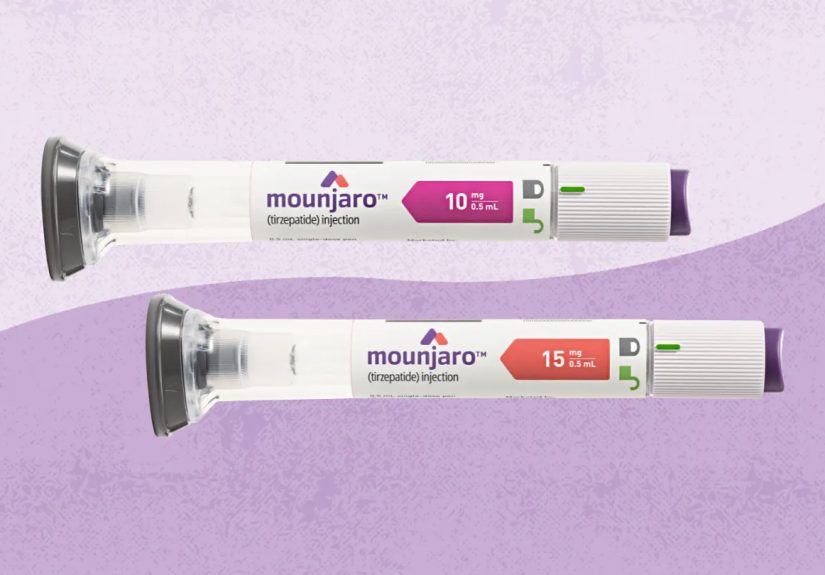
Here’s the quick translation of the name confusion: tirzepatide is the medication. It’s marketed as
Mounjaro for type 2 diabetes, and as Zepbound for chronic weight management in adults.
The obesity-focused Phase 3 studies (the SURMOUNT program) are the reason so many people started
associating “Mounjaro” with major weight losseven though the weight-management indication is under a different brand.
In this article, we’ll walk through what the Phase 3 data actually showed, why clinicians call the results “clinically
meaningful,” what safety signals matter, and what real life often looks like when trial outcomes meet everyday routines.
(Spoiler: the scale may move, but your calendar still exists.)
Why These Trials Matter: “Clinically Meaningful” Weight Loss Has a Definition
In medicine, “significant” isn’t supposed to mean “wow” (even though the numbers can be wow). It’s supposed to mean
measurable health benefit. A common benchmark is that losing around 5% to 10% of starting body
weight can improve key health markers for many peoplethings like blood pressure, blood sugar trends, and lipid profiles.
Phase 3 trials are designed to test whether a medication can reliably get people there, and whether the benefits are worth
the risks.
The SURMOUNT Phase 3 program tested tirzepatide in adults with overweight or obesity across different real-world-ish
scenarios: without diabetes, with type 2 diabetes, after an intensive lifestyle “head start,” and even in a
“continue vs. stop” design that reveals what happens when treatment changes.
What Tirzepatide Is (and Why It’s Different)
Tirzepatide works as a dual incretin agonist: it activates the GIP receptor and the
GLP-1 receptor. These incretin pathways are tied to insulin secretion, appetite regulation, and other
metabolic signals. Practically speaking, many people experience reduced appetite, earlier fullness, and improved glycemic
control (especially relevant when diabetes is in the picture). Think of it less like “willpower in a pen” and more like
“biology getting a firmware update.”
The SURMOUNT Phase 3 Program: The Big Picture
Across SURMOUNT trials, participants generally received tirzepatide as a once-weekly injection with
dose escalation (starting low and increasing over time). Lifestyle support was part of the package in
these studies, because modern obesity trials typically test medication as an adjunctnot as a solo magic trick.
The key question: How much weight changes compared to placebo? The even more practical question:
How many people hit meaningful thresholds, like 5%, 10%, 15%, or even 20%?
SURMOUNT-1: Adults With Overweight/Obesity (Without Diabetes)
How the study was set up
SURMOUNT-1 enrolled adults with obesity (BMI ≥30) or overweight (BMI ≥27 with at least one weight-related complication),
excluding diabetes. Participants received placebo or one of multiple tirzepatide doses, with outcomes tracked over
72 weeks.
What happened to body weight
The headline result: average weight loss with higher-dose tirzepatide approached territory that, not long ago, people
mostly associated with bariatric procedureswhile placebo produced much smaller changes.
- Average percent weight change at 72 weeks: about -15% (5 mg), -19.5% (10 mg), and -20.9% (15 mg) versus roughly -3.1% with placebo.
- At least 20% weight reduction: about 30% (5 mg), 50% (10 mg), and 56.7% (15 mg), compared with about 3.1% on placebo.
Those numbers matter because they’re not “best day” resultsthey’re averages across a large group. In other words,
the trial wasn’t measuring a motivational speech; it was measuring a medication’s consistent effect.
So…is it “significant”?
If 5% to 10% weight loss is often considered clinically meaningful, averages approaching ~15% to ~21% in a Phase 3 trial
are absolutely notable. That said, not everyone loses the same amount, and the trial setting includes structured follow-up.
SURMOUNT-2: When Type 2 Diabetes Is Part of the Story
Weight loss tends to be harder when type 2 diabetes is present (multiple physiological reasons, plus medication
interactions). SURMOUNT-2 tested tirzepatide in adults with obesity and type 2 diabetes over 72 weeks.
Results still showed substantial loss compared with placebo:
- Average percent weight change at 72 weeks: about -12.8% (10 mg) and -14.7% (15 mg) versus about -3.2% with placebo.
- At least 5% weight reduction: roughly 79%–83% with tirzepatide versus about 32% with placebo.
In plain English: even in a group where weight loss is typically more challenging, many participants reached clinically
meaningful thresholds, and the average separation from placebo remained large.
SURMOUNT-3: After an Intensive Lifestyle “Head Start”
SURMOUNT-3 asked a particularly relatable question: what if people already did the hard lifestyle work firstand then
added medication? Participants completed an intensive lifestyle intervention and had to achieve at least 5% weight loss
before being randomized to tirzepatide or placebo.
The result: tirzepatide produced additional weight reduction beyond the lifestyle-driven loss.
- Additional mean percent change from randomization to week 72: about -18.4% with tirzepatide versus +2.5% with placebo.
- Additional ≥5% weight reduction: about 87.5% with tirzepatide versus 16.5% with placebo.
This design is important because it separates two ideas people often mash together: “I lost weight because I made changes”
versus “I lost weight because biology let those changes actually stick.” In SURMOUNT-3, lifestyle got the ball rolling, and
medication pushed the results further for many participants.
SURMOUNT-4: The “Continue vs. Stop” Reality Check
SURMOUNT-4 is the trial that quietly answers a question people sometimes avoid asking out loud:
What happens if you stop?
Participants first took tirzepatide in an open-label lead-in period and achieved major weight loss. Then they were randomized:
continue tirzepatide or switch to placebo.
- Average weight reduction during the lead-in: about -20.9%.
- From randomization to the end of the trial: those who continued lost an additional ~5.5%, while those switched to placebo regained about 14%.
This doesn’t mean “everyone regains everything,” but it does reinforce a clinical reality: obesity is often chronic, and
ongoing treatment (whether behavioral, pharmacologic, or both) can be part of maintaining resultssimilar to how blood
pressure often rises if antihypertensive meds are stopped.
Safety and Side Effects: What People Should Know
Big results are only useful if people can tolerate the treatment safely. Across trials, the most common side effects were
gastrointestinalnausea, diarrhea, vomiting, constipationoften mild to moderate and more common at higher doses.
That’s not glamorous, but it’s honest.
There are also important safety warnings and contraindications in FDA labeling for tirzepatide used for weight management:
- Boxed warning/contraindication: not for people with a personal or family history of medullary thyroid carcinoma or MEN 2.
- Not studied in certain situations: for example, Zepbound labeling notes it has not been studied in patients with a history of pancreatitis.
- Hypoglycemia risk: especially when combined with certain diabetes medications (like sulfonylureas) or insulin.
- Gallbladder and kidney concerns: labeling includes reports of gallbladder events and acute kidney injury in trials.
Also important for this audience: weight-management tirzepatide is labeled for adults, and labeling notes that
safety and effectiveness have not been established in pediatric patients (under 18). If someone under 18 is dealing
with weight-related health concerns, that’s a conversation for a clinician trained in pediatric or adolescent medicine, not a
DIY internet plan.
What the FDA Indication Actually Says (and Why That Matters)
FDA approval for chronic weight management centers on adults with:
- BMI ≥30 (obesity), or
- BMI ≥27 (overweight) plus at least one weight-related condition (such as hypertension, dyslipidemia, type 2 diabetes, obstructive sleep apnea, or cardiovascular disease).
It’s also indicated as an adjunct to a reduced-calorie diet and increased physical activity. That’s not a moral
statement; it’s a design reality. Trials include lifestyle guidance because medication and habits tend to work better as a team
than as rivals.
How This Fits Into the Broader Obesity Health Conversation
Obesity is common in the U.S., and it’s linked to higher risks of type 2 diabetes, cardiovascular disease, sleep apnea, and
other complications. The reason these SURMOUNT numbers caused such a stir is that they suggest pharmacologic tools can help
some people reach weight-loss ranges that were previously difficult to achieve and maintain with lifestyle changes alone.
And yesother medications also show meaningful results (for example, semaglutide 2.4 mg in a major trial produced an average
weight change of about -14.9% at 68 weeks vs. -2.4% with placebo). The bigger story is that obesity treatment is evolving from
“advice-only” to a broader toolbox that can be individualized.
Real-World Experiences: What This Topic Often Feels Like Outside a Trial (Bonus 500+ Words)
Clinical trials are great at measuring outcomes and side effects. Real life is great at measuring… everything else.
Here are patterns people commonly describe when they start a weekly incretin-based medication like tirzepatideframed as
experiences, not promises.
Week 1–4 can be oddly quiet or surprisingly loud. Some people feel appetite changes quickly, like a volume knob
turning down on constant food thoughts. Others feel almost nothing at first and wonder if the pen is secretly filled with
motivational quotes. (It’s not.) Dose escalation exists for a reason: tolerability and gradual adjustment can matter as much as
the destination.
The “GI chapter” is real. A lot of people report nausea that comes in wavesoften around dose increasesor a
general “my stomach is negotiating new terms” feeling. Many describe learning the difference between hunger, habit, and
boredom in a way that’s equal parts helpful and mildly inconvenient. Eating too fast, eating very rich foods, or pushing portion
sizes “just to see” can backfire. Over time, many people report that side effects ease, but not everyone has the same ride.
Food becomes less dramatic. One of the most common experience-based comments is that cravings don’t always vanish,
but they stop feeling like an emergency. People describe being able to keep snack foods in the house without thinking about
them all day. That doesn’t make someone morally superior. It just illustrates what it’s like when biology stops shouting and
starts speaking at a normal indoor voice.
Plateaus still happenand they can be emotionally weird. Even with medication, weight loss is rarely a straight
line. People often report a period where the scale pauses, and the brain immediately tries to narrate it as failure. In reality,
bodies adapt. Sometimes the “win” during a plateau is improved energy, better blood sugar readings, looser-fitting clothes, or
better stamina. For some, follow-up visits become less about chasing a number and more about tracking health markers and
sustainability.
Social life gets… complicated. People describe navigating comments like “What’s your secret?” or “You look so
different!” Some feel relief. Others feel exposed. Many learn to redirect the conversation toward health and away from
appearance. And practically, there’s the restaurant learning curve: ordering becomes simpler when you’re satisfied sooner, but
it can be awkward if friends interpret smaller portions as judgment (it isn’t).
Access and logistics can be the real boss fight. Outside trials, people run into insurance requirements, prior
authorizations, pharmacy stock issues, and the frustrating “approvedexcept not really” paperwork maze. Some describe feeling
like they need a second job titled “professional phone caller.” It’s a reminder that medical innovation isn’t only about science;
it’s also about systems.
Maintenance becomes the long game. The SURMOUNT-4 style findingweight regain risk when stoppingmatches what many
people fear: “What if this only works while I’m on it?” In real life, that question turns into planning. Some people view
medication as longer-term treatment for a chronic condition, like managing hypertension. Others work with clinicians to find
the lowest effective maintenance dose, or to build stronger lifestyle scaffolding before any change. The best experiences tend
to come from realistic expectations, regular medical follow-up, and focusing on health outcomesnot perfection.
Conclusion: Big Data, Big Expectations, and a More Honest Conversation
The Phase 3 SURMOUNT trials showed that tirzepatide can produce substantial weight loss in adults with overweight and obesity,
including high proportions of participants reaching clinically meaningful thresholds. Just as importantly, the program showed
that tolerability, safety screening, and long-term strategy matterbecause success isn’t only about losing weight; it’s about
improving health and maintaining progress in a sustainable way.
If there’s one takeaway worth keeping, it’s this: these results didn’t happen because people suddenly became “better” at
dieting. They happened because modern medicine is learning to treat obesity like the complex, biology-driven condition it is.






 Close
Close