
Table of Contents >> Show >> Hide
- What Are the Backrooms, Exactly?
- Why Do the Backrooms Feel So Unsettling?
- How to Get into the Backrooms (Safely, Legally, and With Your Dignity Intact)
- How to Get Out Alive (In-Story Survival Rules That Also Help in Real Life)
- Important Real-World Safety Note: The Backrooms Are Not an Excuse to Trespass
- The Backrooms Today: From Meme to Mainstream Pop Culture
- Quick FAQ
- Experiences: What “Entering the Backrooms” Feels Like (A 500-Word Add-On)
- Conclusion
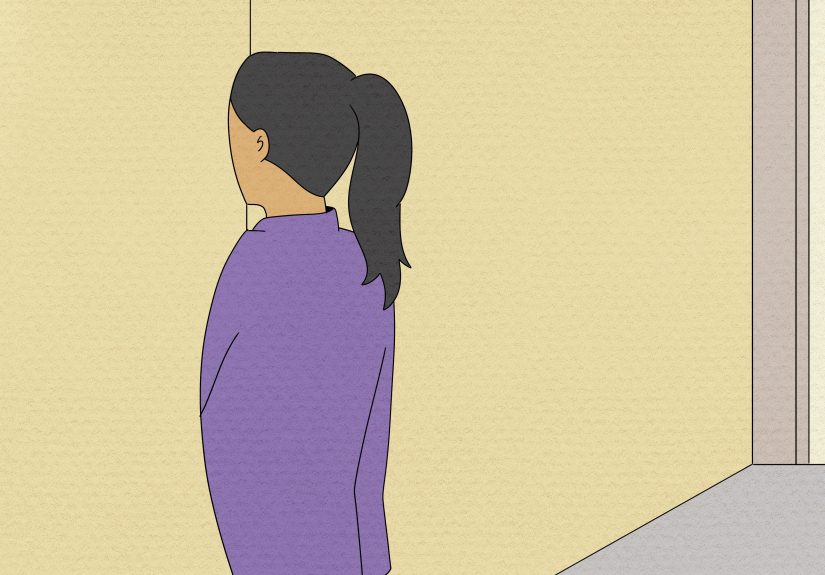
You’ve seen it: the sickly-yellow walls, the too-bright fluorescent lights, the carpet that looks like it remembers every spilled soda since 1998,
and that low electrical hum that makes your brain feel like it’s buffering. The Backrooms are the internet’s favorite “place-that-isn’t-a-place”
a creepy, collaborative horror myth built from nostalgia, uncertainty, and the fear of being lost indoors.
Here’s the twist, though: the Backrooms aren’t real. You cannot actually “no-clip out of reality” like a video game character and end up in an endless
maze of office hallways. But you can “get into the Backrooms” in a way that’s fun, creative, andvery importantlegal. And you can learn
how to “get out alive,” meaning: how to enjoy the vibe without putting yourself in danger, spiraling your anxiety, or doing something that ends with a
very unfun conversation with a security guard.
This guide breaks down what the Backrooms are, why they hit such a primal nerve, how people safely recreate the experience through media and creativity,
and how to “escape” using practical grounding and wayfinding ideas you can apply to real life (like: not getting turned around in an unfamiliar building).
What Are the Backrooms, Exactly?
The Backrooms started as an internet horror concept: a fictional, endless “in-between” dimension that you enter by accidentoften described as
“no-clipping,” a nod to video game glitches where you pass through solid objects. The original vibe is simple: an empty interior that feels
wrong in a way you can’t explain. Over time, the community expanded the myth into “levels,” entities, rules, and survival stories.
The “liminal space” ingredient
The Backrooms are basically liminal spaces with the emotional volume turned up. A liminal space is a transitional place: hallways, stairwells, empty
hotel corridors, closed malls, an airport gate at 2 a.m.places designed for passing through, not living in. When they’re empty, they can feel eerie,
nostalgic, or both at once.
Why the Backrooms went mainstream
A few things helped the Backrooms explode beyond niche creepypasta circles: viral short films, social media obsession with liminal-space imagery,
and the fact that the concept is endlessly remixable. One creator can make found-footage horror. Another can make a game. Another can write
a “field guide.” And suddenly the Backrooms aren’t a single storythey’re a shared universe built by thousands of people.
Why Do the Backrooms Feel So Unsettling?
The Backrooms hit a nerve because your brain loves predictability. In normal life, spaces have purpose and social cues: a lobby has people,
a school hallway has noise, a store has music and movement. The Backrooms strip that away. You’re left with geometry, lighting, repetition, and
the feeling that you’re missing a rule everyone else knows.
1) Your brain uses landmarksrepetition breaks it
Real-world wayfinding depends on distinct cues: signs, windows, unique corners, the “big plant by the elevator,” that one weird painting you
can’t stop looking at. Backrooms-style spaces are defined by samenessso your internal map has nothing to latch onto. That can create confusion,
stress, and a sense of being trapped even when you’re technically free to walk.
2) It’s nostalgia with the safety rails removed
The Backrooms aesthetic often resembles late-90s/early-2000s interiorscheap carpet, drop ceilings, fluorescent lighting, blank walls, office-park
vibes. That familiarity can make the emptiness feel personal, like you’re revisiting a half-remembered place… except it forgot to load the people.
3) The hum is doing psychological heavy lifting
A constant fluorescent buzz is a tiny sensory stressor that becomes huge when everything else is silent. Silence plus hum equals:
“Why do I feel like something is behind me?” (Nothing has to be behind you for your brain to ask.)
How to Get into the Backrooms (Safely, Legally, and With Your Dignity Intact)
If you’re trying to physically “find the Backrooms” by sneaking into abandoned buildings: don’t. That’s not the Backroomsthose are real places
with real hazards (and real laws). The Backrooms experience is best “entered” through media and creative simulation:
you want the vibe, not the emergency room bill.
Option A: Enter through games (the safest “portal” there is)
Backrooms games are designed to deliver that disoriented, liminal feeling without actual danger. Look for titles that focus on navigation, atmosphere,
and environmental storytelling (instead of nonstop jump scares). Co-op games are especially good if you want “survival mode” teamwork:
communication, route planning, and keeping each other calm.
- Try co-op: You’ll naturally practice “escape skills” like marking decision points and agreeing on a plan.
- Play with sound on: Audio is half the mood; silence is the other half.
- Take breaks: The Backrooms vibe is supposed to be unsettling, not emotionally exhausting.
Option B: Enter through analog-horror and found-footage style videos
The Backrooms thrive in “documentary-like” horror: grainy footage, clinical camera movement, and the feeling that the building itself is the monster.
If you like storytelling that rewards attention (signs, details, background clues), this is a great way to “visit” without risk.
Option C: Make your own Backrooms photoswithout trespassing
You don’t need forbidden locations. You need timing, angles, and emptiness.
- Choose public, permitted places: open libraries, community centers, hotel lobbies (if allowed), convention halls during off-hours.
- Capture “in-between” moments: early morning, closing time, after an event clears out.
- Use wide angles and off-center framing: the “wrongness” often comes from composition, not danger.
- Look for repeating patterns: identical doors, endless hallway lights, identical carpet squares.
Pro tip: a “Backrooms” image is usually clean, quiet, and slightly too emptylike the world stepped out for one minute and forgot to come back.
Option D: Build the Backrooms in your head (writing prompts that work)
The best Backrooms stories aren’t just “monster = scary.” They’re about rules, uncertainty, and problem-solving under weird constraints.
Try prompts like:
- The map is wrong: Every time you draw a map, the hallway changes behind you.
- Familiar-but-not: You find a room that looks exactly like your childhood school… except the signs use no vowels.
- Rules with consequences: “Don’t open doors that have warm handles.” Why? What happens if you do?
- Escape isn’t a door: The exit is a pattern, a sound, or a behaviornot a physical place.
How to Get Out Alive (In-Story Survival Rules That Also Help in Real Life)
“Get out alive” is a fun phrase, but let’s translate it into something useful: staying calm, oriented, and safewhether you’re deep in a creepy game,
watching a video at 1 a.m., or simply trying not to get lost in an unfamiliar building.
Rule 1: Slow your panic first (you can’t navigate while spiraling)
In Backrooms fiction, panic gets characters into trouble. In real life, it does the same thingjust with less dramatic lighting.
Use a quick reset:
- Box breathing: inhale 4, hold 4, exhale 4, hold 4 (repeat 3–4 times).
- Grounding check: name 5 things you see, 4 you feel, 3 you hear, 2 you smell, 1 you taste.
Rule 2: Use “decision points,” not constant tracking
Wayfinding gets easier when you mark the moments that matter: the stairwell, the elevator bank, the big intersection hallway. In a game, you can
literally note these. In real life, pause at intersections and consciously decide: “We’re taking the left corridor past the vending machines.”
Rule 3: Don’t rely on memory aloneexternalize your plan
Memory gets fuzzy fast in repetitive environments. If you’re playing a Backrooms game, jot quick notes or use in-game landmarks.
If you’re in a real building (like a huge hospital or convention center), use what’s provided: directories, signs, and staffed desks.
Asking for help is not a moral failure. It’s an escape mechanic.
Rule 4: “Buddy system” beats bravery
Solo exploration is a Backrooms trope for a reasonit’s scarier. But if you want to “get out alive,” teamwork wins.
In co-op games, communicate constantly (“left turn,” “dead end,” “backtrack”). In real life, stay together.
Rule 5: Know when to exit the experience
If Backrooms content triggers intense anxiety, nightmares, or panic, treat that like a flashing EXIT sign. Switch to lighter content,
watch in daylight, or take a break. Horror is entertainment; it’s allowed to be fun, not draining.
Important Real-World Safety Note: The Backrooms Are Not an Excuse to Trespass
Some people confuse “Backrooms vibes” with “abandoned building exploration.” That’s a risky leap. In the real world, entering abandoned or restricted
properties can be illegal and dangerous. Hazards can include structural instability, fire risks, pests, and chemical exposureplus you may not be
alone in there, which is its own problem.
If you want the Backrooms aesthetic, choose safe alternatives: public spaces during open hours, permitted photo shoots, game environments, or
film sets you create yourself. The goal is eerie art, not real-life danger.
The Backrooms Today: From Meme to Mainstream Pop Culture
The Backrooms have grown from a single unsettling image into a full-on cultural phenomenon: short films, games, wiki-style lore, and even a feature
film adaptation in the works. Part of the appeal is how collaborative the myth isanyone can contribute a “level,” a rule, an entity, or a story,
and the community decides what sticks.
A real photo helped start a fictional universe
One reason the Backrooms feel so “almost real” is that the iconic image was an actual interior photo of a mundane space. That mix of real-world
texture with fictional framing is powerful: it lets your brain believe, just for a second, that you’ve seen a place like this before.
Quick FAQ
Are the Backrooms real?
No. The Backrooms are fictionalan internet horror concept built around liminal-space imagery and video game language (“no-clipping”).
What’s real is the feeling they create: disorientation, nostalgia, and unease.
What does “no-clip” mean?
In video games, “noclip” refers to moving through walls or objects when collision is disabled (often a cheat or developer mode).
Backrooms stories use the term as a spooky metaphor for “glitching out of reality.”
What’s the safest way to experience the Backrooms?
Games, films, and creative projectsespecially ones you can stop at any time. If you want the aesthetic in real life, stick to legal,
permitted locations and prioritize safety.
Experiences: What “Entering the Backrooms” Feels Like (A 500-Word Add-On)
People who love the Backrooms often describe the “entry” as less like walking through a magic portal and more like noticing something that was
always therejust outside your attention. The feeling usually starts small: you turn a corner in a quiet building and the hallway looks a little too
long. The lights buzz a little too loudly. The carpet pattern repeats like copy-paste. You’re not scared yet, exactlyyou’re curious, in the
same way you’re curious when a song sounds familiar but you can’t place it.
Then the second feeling arrives: disorientation. Not because you’re lost, but because the space refuses to confirm where you are. In normal life,
rooms have identity. A classroom has posters. A hotel hallway has doors with numbers and little “do not disturb” signs. A store has brands and
displays. A Backrooms-like space feels scrubbed of its name tags. You’re left with pure “interior,” like the building is showing you its bones.
That’s when people often notice the humsteady, electric, indifferent. It doesn’t rise and fall like music. It just is.
In Backrooms games and videos, the next phase is usually a choice: do you move forward, or do you freeze? Most players move forward, but they move
differently than they do in bright, friendly spaces. They hug walls. They pause at intersections. They look behind them more than they’d admit.
Even without a monster on-screen, the emptiness supplies its own tension. Your brain starts writing explanations: “This looks like an office park.”
“This feels like a closed mall.” “This reminds me of a hallway outside a dentist’s office.” The Backrooms feed on that half-recognition.
Another common experience is the weird mix of dread and comfort. Dread because the place feels wrong; comfort because it feels oddly familiar,
like a dream you used to have. That’s why the Backrooms aren’t just scarythey’re sticky. You can leave the content, but the mood lingers for a bit,
especially if you’ve ever been in a real liminal space late at night: an empty airport terminal, a quiet hospital corridor, a school building after
everyone’s gone home. The Backrooms take that everyday moment and turn it into a myth.
The “getting out alive” partemotionally speakingoften comes when you remember you’re in control. You can pause the game. You can turn off the video.
You can switch on a lamp, text a friend, or watch something silly to reset your nervous system. And if you’re chasing the Backrooms vibe through
photography or writing, the escape is even better: you don’t just survive the spaceyou create something from it. The Backrooms, at their best,
are not a dare. They’re a creative playground for the fear of being lost… and the relief of finding your way back.
Conclusion
Getting into the Backrooms isn’t about breaking into forbidden buildingsit’s about stepping into a shared internet myth built from liminal spaces,
video game language, and the universal fear of being disoriented. The safest “entrances” are games, videos, and creative projects that capture the
vibe without real-world risk. And “getting out alive” means staying calm, using smart navigation habits, leaning on the buddy system, and knowing when
to close the tab and rejoin reality (preferably with a snack and a normal, non-haunted light bulb).







 Close
Close