
Table of Contents >> Show >> Hide
- Quick Overview: What Is Men in Black II About?
- Men in Black II Franchise Ranking
- Best Things About Men in Black II
- Weakest Parts of Men in Black II
- Ranking the Best Characters in Men in Black II
- Ranking the Best Scenes in Men in Black II
- Critical Opinion: Why Reviews Were Mixed
- Audience Opinion: Why Some Fans Defend It
- Final Ranking Verdict
- Viewing Experiences and Personal-Style Opinions About Men in Black II
- Conclusion
Men in Black II is one of those sequels that walks into the room wearing sunglasses indoors and dares everyone to ask why. Released in 2002, directed by Barry Sonnenfeld, and powered again by Will Smith and Tommy Lee Jones, the film had every ingredient Hollywood loves: a beloved original, a big summer release date, returning stars, aliens with questionable manners, and enough black suits to make a funeral home jealous.
But when fans talk about Men in Black II rankings and opinions, the conversation gets complicated fast. Some viewers remember it as a brisk, funny, comfort-watch sequel full of weird creatures and easy chemistry. Others rank it as the franchise’s least inspired early entry, arguing that it repeats the first movie without the surprise, freshness, or emotional snap that made Men in Black such a sci-fi comedy classic.
The truth sits somewhere in the middle, probably inside a locker at Grand Central Station, being worshiped by tiny aliens. Men in Black II is not the sharpest installment in the series, but it is not an empty neuralizer flash either. It has memorable gags, a few excellent character moments, a crowd-pleasing reunion between Agents J and K, and a runtime so short it practically sprints past its own plot holes.
Quick Overview: What Is Men in Black II About?
Men in Black II brings back Agent J, now a more experienced member of the secret organization that monitors alien life on Earth. His old partner, Agent K, has been neuralized and returned to civilian life as a postal worker. Naturally, because this is the Men in Black universe, “civilian life” means unknowingly working around aliens while sorting mail like the galaxy depends on it.
The main threat is Serleena, a shape-shifting Kylothian villain who comes to Earth searching for the Light of Zartha. After Serleena invades MIB headquarters, J realizes he needs K’s forgotten knowledge to stop her. The movie then becomes a buddy-comedy rescue mission, memory mystery, alien chase, and occasionally a Frank the Pug variety show.
The film stars Will Smith as Agent J, Tommy Lee Jones as Agent K, Lara Flynn Boyle as Serleena, Rosario Dawson as Laura Vasquez, Rip Torn as Zed, Tony Shalhoub as Jack Jeebs, Johnny Knoxville as Scrad and Charlie, and Patrick Warburton as Agent T. It is short, fast, goofy, and packed with visual jokes. Whether that makes it efficient or undercooked depends on your tolerance for talking dogs, tentacle villains, and sequels that say, “Remember the first movie? Great, we brought leftovers.”
Men in Black II Franchise Ranking
When ranking the Men in Black movies, most fans and critics place the original at the top. That is hardly shocking. The 1997 film had novelty, a perfect odd-couple rhythm, Vincent D’Onofrio’s unforgettable bug performance, and a wonderfully deadpan world where alien weirdness was treated like paperwork.
1. Men in Black
The original remains the gold standard. It introduced the universe with style, confidence, and a perfect balance of comedy, sci-fi, action, and mystery. It felt strange without trying too hard and cool without begging for applause. Agent J’s transformation from NYPD officer to galaxy-saving rookie gave the story a clear emotional arc.
2. Men in Black 3
Men in Black 3 often ranks above the second film because it brings stronger emotional stakes, especially through the younger version of Agent K and the time-travel plot. It is not as fresh as the original, but it gives the series a surprisingly heartfelt angle. The ending has more emotional weight than many viewers expected from a franchise famous for slime and sunglasses.
3. Men in Black II
Men in Black II usually lands in third place among the main Will Smith and Tommy Lee Jones trilogy. It is fun, familiar, and easy to watch, but it feels smaller than the first movie even though the budget was bigger. The plot moves quickly, but it sometimes moves so quickly that character development gets tossed into the alien containment unit.
4. Men in Black: International
Men in Black: International attempted to refresh the franchise with new leads and a broader global setting. While it has talented stars and glossy production design, many fans feel it lacks the original duo’s dry comic spark. Compared with that later reboot-style entry, Men in Black II benefits from having J and K back together, which counts for a lot.
Best Things About Men in Black II
Will Smith Still Carries the Energy
Will Smith’s Agent J is the film’s main engine. In the first movie, he was the rookie learning that the universe is bigger, weirder, and slimier than expected. In the sequel, he is more seasoned, more confident, and slightly more frustrated because nobody seems to meet his standards as a partner. Smith’s comic timing remains one of the movie’s strongest assets. Even when the script gives him lightweight material, he can turn a look, a pause, or a sarcastic line into something watchable.
Tommy Lee Jones Makes Deadpan Look Effortless
Tommy Lee Jones returns as Agent K, and the film improves the moment he is fully back in the black suit. Jones has a rare gift for making absurd dialogue sound like government policy. He can stare at a tentacled alien, a talking pug, or a cosmic prophecy with the same expression a man might use while reading a disappointing lunch menu. That dry seriousness is essential to the franchise’s humor.
The Locker Aliens Are a Tiny Masterpiece
One of the most beloved bits in Men in Black II is the civilization of tiny aliens living inside a locker. It is exactly the kind of joke the franchise does best: small in scale, huge in imagination, and weirdly committed to its own nonsense. The gag works because it suggests that the MIB universe is full of bizarre little stories happening just outside human awareness.
Frank the Pug Deserves His Own Agent Badge
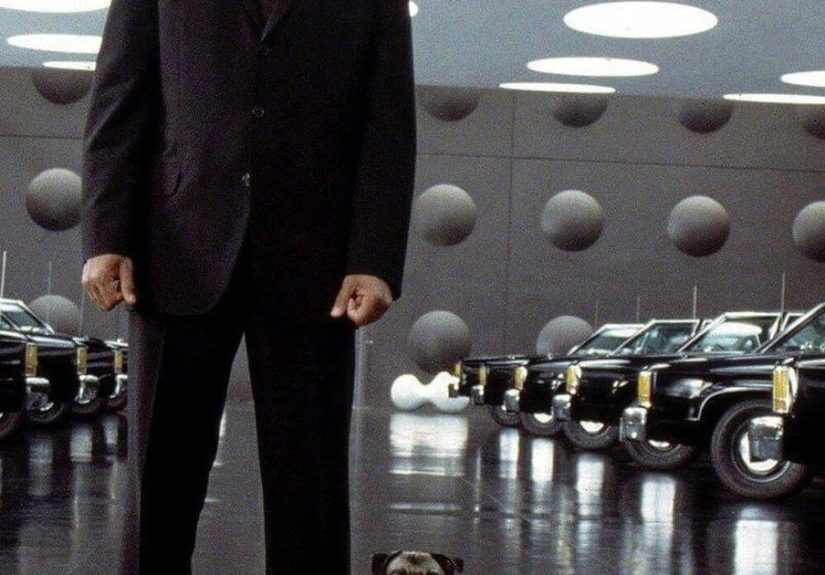
Frank the Pug gets a bigger role in the sequel, and your opinion of that decision may determine your opinion of the entire movie. Some viewers love him. Others think he is proof that the sequel pushes side jokes too far. Either way, Frank is memorable. He is loud, ridiculous, and somehow more confident than most actual field agents.
Weakest Parts of Men in Black II
The Plot Feels Recycled
The biggest criticism of Men in Black II is that it repeats the structure of the first film without matching its sense of discovery. Once again, Earth faces an alien threat. Once again, J and K must solve the problem with secret knowledge, futuristic weapons, and a lot of property damage. The movie knows the formula, but it does not always find a fresh way to use it.
Serleena Looks Cool but Lacks Depth
Lara Flynn Boyle’s Serleena has a strong visual concept: a dangerous alien disguised as a glamorous human woman. The problem is that the character rarely becomes more than a threat with tentacles and attitude. Compared with the original film’s bug villain, Serleena feels less funny, less disgusting, and less memorable. She is dangerous in theory, but the movie often treats her as a walking special effect.
Rosario Dawson Needed More to Do
Rosario Dawson brings warmth and presence to Laura Vasquez, but the script does not give her enough agency for much of the story. She becomes important to the plot, but too often she is positioned as a mystery, a love interest, or a person being moved from one location to another. A stronger version of the film would have made Laura more active earlier.
The Movie Is Almost Too Short
A fast pace can be a gift, especially in summer blockbuster territory. Nobody wants a two-and-a-half-hour alien comedy where the third act includes a subcommittee meeting. Still, Men in Black II sometimes feels rushed. At around an hour and a half, it does not overstay its welcome, but it also does not give its best ideas much room to breathe.
Ranking the Best Characters in Men in Black II
1. Agent J
Agent J ranks first because he is the sequel’s heartbeat. He has the confidence of a veteran but the irritation of someone who knows his favorite coworker got memory-wiped and replaced by inferior options. His best scenes combine swagger, annoyance, and genuine loyalty to K.
2. Agent K
K is essential because the franchise needs his dry, stone-faced worldview. The movie takes too long to fully restore him, but once he is back, the chemistry improves immediately. J may provide the spark, but K provides the cool surface that makes the spark visible.
3. Frank the Pug
Frank is either hilarious or too much, and sometimes he is both in the same scene. Still, he earns a high ranking because he is one of the sequel’s most recognizable comic additions. He represents the movie’s willingness to be silly without apology.
4. Laura Vasquez
Laura has one of the more interesting roles in the story, even if the film underuses her. Dawson gives the character enough sincerity to make the emotional beats work better than they might have on the page.
5. Serleena
Serleena has style, menace, and a memorable design, but she ranks lower because the writing does not make her as distinctive as the franchise’s best villains. She is more concept than character.
6. Jack Jeebs
Tony Shalhoub’s Jack Jeebs remains a fun piece of the MIB world. He is the kind of side character who makes the universe feel lived-in, shady, and full of businesses that definitely do not pass inspection.
Ranking the Best Scenes in Men in Black II
1. The Postal Workers Reveal
The scene where J finds K at the post office is one of the sequel’s best comic ideas. It flips an ordinary workplace into a secret alien environment, which is exactly the kind of casual absurdity that made the original film work. The joke is simple: of course the post office is full of aliens. Why would it not be?
2. The Locker Civilization
This tiny alien world is the film’s most charming sight gag. It is funny, strange, and surprisingly imaginative. It also captures the franchise’s best theme: humans are constantly surrounded by cosmic weirdness and almost never notice.
3. J and K Back in the Car
Any scene that puts Smith and Jones together in classic buddy-comedy mode automatically rises in the rankings. Their rhythm is the franchise’s secret weapon. The plot can wobble, the villain can underwhelm, but when J and K are trading looks and lines, the movie remembers why people bought tickets.
4. Frank Singing
Frank’s musical moment is absurd, unnecessary, and impossible to forget. Depending on your mood, it is either a delightful bit of chaos or a warning sign that the sequel has given the pug too much power.
5. The Final Light of Zartha Reveal
The ending gives the story its emotional and mythological payoff. It is not as clean or surprising as the first movie’s finale, but it does add a touch of cosmic melancholy to a film mostly built from jokes, chases, and goo.
Critical Opinion: Why Reviews Were Mixed
Critical opinion on Men in Black II has long been mixed. Many reviewers agreed that the sequel had amusing moments, but they also argued that it lacked the original’s freshness. That is the central problem with many comedy sequels: the first film gets to invent the joke, while the second has to prove the joke is still funny.
The original Men in Black surprised audiences with its calm approach to insanity. Aliens were not treated with wonder; they were treated like annoying paperwork. The sequel tries to return to that tone, but because viewers already understand the world, the same tricks do not hit as hard. The neuralizer, the secret headquarters, the alien disguises, the big guns, and the banter are all present. What is missing is the thrill of discovery.
Still, it would be unfair to say the movie has no value. As a light sci-fi comedy, it remains accessible and rewatchable. It is the cinematic equivalent of ordering the same meal at a diner: maybe not life-changing, but you know what you came for, and sometimes the fries are still excellent.
Audience Opinion: Why Some Fans Defend It
Fans who defend Men in Black II usually point to three things: the chemistry, the pace, and the comfort factor. Smith and Jones are still fun together. The movie moves quickly enough that weak sections do not linger. And the whole thing has the glossy, early-2000s blockbuster energy that many viewers now find nostalgic.
For younger viewers who discovered the series on cable, DVD, or streaming, Men in Black II may feel less like a disappointing sequel and more like a familiar weekend watch. It has aliens, jokes, gadgets, a talking dog, and two movie stars doing what they do best. That formula may not be bold, but it is rarely boring for long.
Final Ranking Verdict
So where should Men in Black II rank? As a film, it is a middle-tier sequel: entertaining, uneven, and visibly dependent on the original. As a franchise entry, it is better than its weakest reputation suggests, but not strong enough to challenge the first movie or the emotional ambition of Men in Black 3.
On a 10-point fan-opinion scale, Men in Black II lands around a 6.5 out of 10. It gets points for star chemistry, speed, creature design, and a handful of classic gags. It loses points for a thin villain, recycled structure, underused supporting characters, and a story that feels like it was neuralized halfway through development.
In plain English: it is not the best Men in Black movie, but it is still a fun one to revisit. Just do not expect it to erase your memory of how much better the original was.
Viewing Experiences and Personal-Style Opinions About Men in Black II
Watching Men in Black II today feels different from watching it in 2002. At release, audiences expected a sequel that could match the original’s cool surprise. That was a heavy assignment. The first movie had already done the hardest job: it introduced the secret alien world, established the rules, and made black suits, sunglasses, and memory-erasing pens feel iconic. By the time the sequel arrived, the audience already knew the magic trick. They wanted the rabbit, the hat, and maybe a second rabbit riding a motorcycle.
That expectation is probably why the movie disappointed some viewers. It is not that Men in Black II has no jokes. It has plenty. The issue is that many jokes feel like variations on a familiar rhythm. You can sense the movie trying to recreate the exact flavor of the first film: the same attitude, the same banter, the same alien bureaucracy, the same “normal New York is secretly cosmic chaos” setup. Sometimes it works. Sometimes it feels like reheated alien leftovers, and nobody wants microwaved tentacle.
But as a casual rewatch, the movie has aged into something easier to enjoy. Removed from the pressure of being the big follow-up to a modern classic, it becomes a compact piece of early-2000s blockbuster comfort food. The effects are not always perfect, and some jokes are very much products of their time, but the film has a bright, rubbery, cartoonish personality. It is the kind of movie you can put on during a lazy afternoon and understand instantly, even if you missed the first five minutes because you were making popcorn.
The best viewing experience is to treat Men in Black II less like a major franchise statement and more like a bonus episode with a blockbuster budget. It is not trying to reinvent science fiction. It is trying to reunite J and K, throw weird aliens at the screen, and exit before anyone starts asking too many questions about the plot. In that sense, the short runtime becomes part of its charm. The movie knows it is a snack, not a banquet.
One of the most enjoyable parts of revisiting it is noticing how much the film depends on facial expressions. Will Smith’s reactions do a lot of heavy lifting. Tommy Lee Jones can make silence funnier than a page of dialogue. Even when a scene is built around a big digital creature or a loud gag, the funniest detail is often J looking personally offended by the universe’s stupidity or K acting like cosmic nonsense is just Tuesday.
The movie also works well as a nostalgia piece for viewers who grew up with cable reruns. For that audience, Men in Black II is not merely “the weaker sequel.” It is part of the same pop-culture shelf as superhero DVDs, fast-food tie-ins, soundtrack singles, and summer movies that ran under 100 minutes because apparently Hollywood once understood mercy. It reminds people of a time when a blockbuster could be goofy, self-contained, and done before your soda got warm.
Still, the criticisms remain fair. Laura deserved a stronger role. Serleena needed sharper writing. The story could have explored K’s erased past with more emotional detail. A better sequel might have used the memory theme to say something deeper about identity, regret, or the cost of secret service. Instead, the film often chooses another gag. Sometimes the gag lands. Sometimes it crashes into a wall, gets slimed, and keeps walking.
That is why the most balanced opinion is this: Men in Black II is a flawed but likable sequel. It is not essential cinema, but it is also not the disaster some rankings make it out to be. It has enough charm to justify its place in the franchise and enough weaknesses to explain why it rarely tops anyone’s list. It is the movie equivalent of Frank the Pug in a suit: ridiculous, slightly overused, but difficult to hate completely.
Conclusion
Men in Black II remains one of the most debated entries in the franchise because it gives fans exactly what they recognize while rarely giving them something truly new. It has the black suits, the alien chaos, the neuralizer, the deadpan humor, and the Smith-Jones chemistry. What it lacks is the original film’s freshness and narrative sharpness.
For rankings, it belongs below Men in Black and usually below Men in Black 3, but above the franchise’s least successful attempts to restart the formula. For opinions, it is best described as a fun, lightweight sequel with memorable moments, uneven storytelling, and enough charm to survive repeat viewings. It may not be the brightest star in the galaxy, but it still knows how to wear sunglasses at night and act like that is completely normal.
Note: This article is written as an original SEO-focused analysis based on verified public film information, box-office records, critic consensus, and long-running audience discussion. It is intended for web publication and contains no copied review text, source-link blocks, or citation placeholders.







 Close
Close