
Table of Contents >> Show >> Hide
- The B-21 Raider: What the Air Force Has Publicly Said
- So Why Does Area 51 Keep Entering the Conversation?
- Is There Evidence the B-21 Is Testing at Area 51?
- Why Edwards AFB Makes Sense for B-21 Testing
- Could Area 51 Still Be Involved Somehow?
- Why Aviation Enthusiasts Watch the B-21 So Closely
- Area 51’s Real Legacy Is Bigger Than the Myths
- What the B-21 Means for the Future Bomber Force
- How to Read B-21 Rumors Without Falling Into the Rabbit Hole
- Verdict: Testing at Area 51 or Not?
- Experience-Based Perspective: Watching the B-21 Story Like a Smart Aviation Reader
- Conclusion
Is the Air Force’s new bomber testing at Area 51? It is the kind of question that practically comes with its own dramatic soundtrack: desert heat, black hangars, restricted airspace, blurry long-lens photos, and one guy on the internet saying, “Enhance!” until a pixel becomes a conspiracy. The aircraft at the center of the curiosity is the B-21 Raider, the U.S. Air Force’s new stealth bomber and one of the most closely watched military aviation programs in the world.
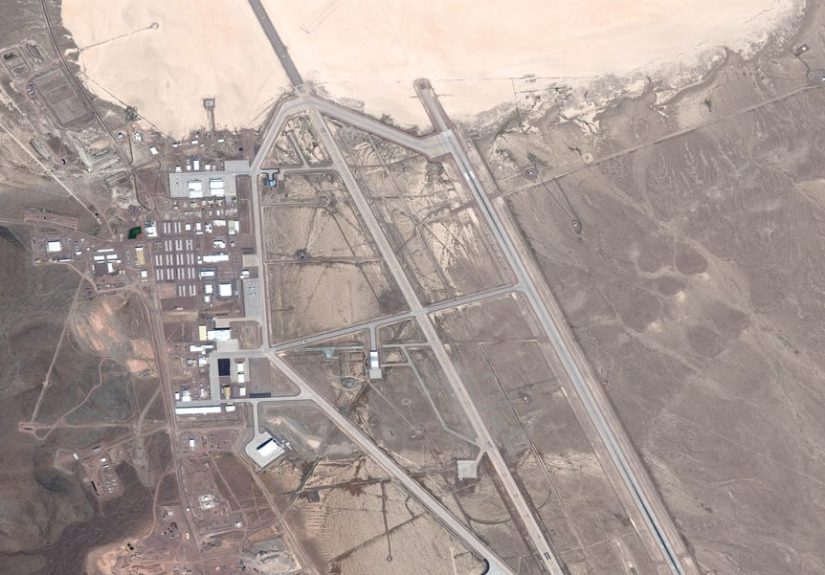
The short, responsible answer is this: there is no public confirmation that the B-21 Raider is testing at Area 51. Official public information points to Edwards Air Force Base in California as the primary home of the B-21 flight test effort. However, the question is not silly. Area 51, also known as Groom Lake, has a real history of testing secret aircraft. That history is exactly why aviation watchers perk up whenever a new stealth aircraft enters the sky.
So let’s separate the runway from the rumor. No alien autopsy table required.
The B-21 Raider: What the Air Force Has Publicly Said
The B-21 Raider is the Air Force’s next-generation stealth bomber, designed to eventually become the backbone of the future bomber fleet alongside the upgraded B-52. It is described publicly as a dual-capable, penetrating strike aircraft, meaning it is intended to support both conventional and nuclear deterrence missions. That sentence alone explains why the program is surrounded by a fog machine of secrecy.
Northrop Grumman, the prime contractor, unveiled the B-21 to the public in Palmdale, California, in December 2022. The aircraft made headlines not because it looked wildly futuristic, but because it looked almost suspiciously calm: smooth flying-wing shape, pale gray skin, and the visual personality of a very expensive manta ray that skipped leg day.
Official Air Force material has consistently tied B-21 testing to Edwards Air Force Base, where the Air Force Test Center and the B-21 Combined Test Force support developmental flight testing. In 2025, the Air Force announced the arrival of a second B-21 test aircraft at Edwards, expanding the program’s ability to conduct flight tests, maintenance learning, and sustainment preparation. In 2026, public updates also highlighted aerial refueling work with a KC-135 Stratotanker, another sign that the B-21 test program had moved into more mature phases of evaluation.
So Why Does Area 51 Keep Entering the Conversation?
Area 51 is not famous because people there have excellent souvenir magnets. It is famous because it really has been connected to classified aircraft development. Groom Lake was used for testing the U-2 spy plane in the 1950s and the A-12 OXCART in the 1960s. Those programs were not internet myths; they were real, high-risk aviation projects that later became part of declassified Cold War history.
That legacy created a simple public formula: new secret aircraft + Nevada desert + silence from officials = Area 51 speculation. It happens almost automatically. Whenever satellite images show new construction, a strange aircraft is photographed from a distant ridge, or a military testbed appears near restricted airspace, aviation forums start warming up like engines on a cold morning.
Area 51’s reputation is also boosted by the fact that it is officially quiet by design. Public details about current activities at Groom Lake are limited. That silence protects classified work, but it also leaves a vacuum. And if there is one thing the internet loves more than a vacuum, it is filling that vacuum with wild theories, arrows, circles, and “you won’t believe what they’re hiding” thumbnails.
Is There Evidence the B-21 Is Testing at Area 51?
Publicly, the strongest evidence says Edwards AFB is the confirmed B-21 test hub. The Air Force has released photos, statements, and program updates showing B-21 activity at Edwards. Northrop Grumman has also publicly discussed the B-21’s flight test campaign in connection with Edwards and its Palmdale production facility.
By contrast, claims linking the B-21 directly to Area 51 are largely speculative. Some aviation observers have pointed to past construction at Groom Lake, unusual aircraft support activity, and the base’s long history of stealth-related work. Those are interesting clues in the broad sense, but they are not proof. A big hangar does not automatically equal a B-21. It could support another aircraft, a drone program, electronic testing, maintenance operations, or something the public does not yet know about.
That distinction matters. “Possible” is not the same as “confirmed.” In defense aviation, the difference between those two words is roughly the size of a restricted airspace warning sign.
Why Edwards AFB Makes Sense for B-21 Testing
Edwards Air Force Base is not exactly a backup dancer in aviation history. It has hosted decades of experimental aircraft testing, including legendary programs connected to high-speed flight, stealth development, and complex systems evaluation. It offers large test ranges, experienced flight test organizations, engineering infrastructure, and a public-facing role that makes it suitable for a program like the B-21 once the aircraft has been unveiled.
The B-21 is still highly sensitive, but it is no longer completely hidden. The Air Force has shown the aircraft publicly, acknowledged test flights, and released carefully selected images. That makes Edwards a logical location for visible developmental testing. It allows the program to gather flight data, train maintenance teams, and prepare for operational basing without pretending the aircraft does not exist.
Ellsworth Air Force Base in South Dakota has been selected as the first operational B-21 base and formal training unit location. Whiteman AFB in Missouri and Dyess AFB in Texas have also been named as later B-21 basing locations. That public basing plan reinforces the idea that the Raider is moving from mystery object to fielded military aircraft, even if many technical details remain classified.
Could Area 51 Still Be Involved Somehow?
This is where the honest answer gets more nuanced. Could elements of technology related to the B-21, such as sensors, materials, electronic systems, survivability testing, or companion capabilities, be evaluated in classified environments? In general terms, yes, classified test ranges exist for classified work. That is not shocking; that is Tuesday in defense aerospace.
But saying “classified testing exists” is very different from saying “the B-21 is testing at Area 51.” The latter requires evidence that has not been publicly established. The Air Force has not publicly announced B-21 testing at Groom Lake. Northrop Grumman has not publicly said the Raider’s flight test campaign is based there. Public photos and official releases point elsewhere.
It is also possible that people are using “Area 51” as shorthand for any secret desert test activity. That is convenient, but not accurate. The western United States contains multiple test ranges, bases, restricted areas, contractor facilities, and military corridors. Not every mysterious aircraft in the desert is automatically headed to Groom Lake. Sometimes the desert is just being very desert-like.
Why Aviation Enthusiasts Watch the B-21 So Closely
The B-21 Raider is exciting because it sits at the crossroads of stealth, long-range aviation, nuclear modernization, and digital engineering. It is not simply a new bomber in the old-fashioned sense of “big aircraft carries big payload.” The program is expected to rely heavily on open systems architecture, advanced software, maintainability improvements, and a production approach designed to avoid some of the cost and complexity traps that haunted earlier stealth aircraft.
That makes every public milestone meaningful. A first flight suggests the design is ready to leave the ground. A second test aircraft suggests the program can expand testing tempo. Aerial refueling work suggests the aircraft is moving into more operationally relevant testing. Maintenance training at Edwards suggests the Air Force is thinking beyond the prototype phase and toward real squadrons.
For aviation fans, these breadcrumbs are irresistible. The problem is that breadcrumbs can lead to good analysis or to a gingerbread house full of nonsense. The best approach is to follow official facts first, then treat rumors as interesting but unproven.
Area 51’s Real Legacy Is Bigger Than the Myths
The funniest thing about Area 51 is that the real history is already fascinating enough. The U-2 program pushed aircraft into extreme altitudes during the Cold War. The A-12 OXCART explored speed, altitude, materials, and stealthy design ideas long before most people understood what “stealth” meant. These projects were difficult, dangerous, and technologically bold.
Because of that legacy, Area 51 has become a cultural magnet. It attracts speculation about aliens, UFOs, secret aircraft, reverse engineering, hidden runways, underground cities, and whatever else can survive on a diet of grainy photos and late-night documentaries. But the real lesson from Area 51 is not that every rumor is true. It is that advanced military aviation often becomes public history only years later.
That is important when discussing the B-21. Some details about the Raider may stay classified for decades. Future declassified documents might reveal support activities, test methods, or classified companion programs that are not publicly understood today. But responsible analysis has to live in the present tense. Right now, the public record supports Edwards AFB as the B-21 test center, not a confirmed Area 51 testing claim.
What the B-21 Means for the Future Bomber Force
The Air Force wants the B-21 to replace portions of the aging B-1 and B-2 fleets and support future long-range strike missions. The aircraft is meant to operate in highly contested environments where older platforms may face growing risks from advanced air defense systems. That does not mean it is magic. Stealth is not invisibility. It is a set of design, materials, tactics, and systems choices that reduce detection and improve survivability.
The B-21 also arrives at a time when the Air Force is trying to modernize multiple parts of the nuclear enterprise. Bombers remain useful because they are visible, recallable, flexible, and able to signal deterrence without necessarily escalating immediately. In plain English: a bomber can show up, hold, turn around, or continue depending on the situation. Missiles are less flexible once launched, which is putting it mildly.
That strategic role is one reason the Raider attracts so much attention. It is not just an aircraft. It is a symbol of how the United States expects to project power and maintain deterrence in a future shaped by China, Russia, advanced sensors, cyber threats, and long-range precision weapons.
How to Read B-21 Rumors Without Falling Into the Rabbit Hole
When a claim appears online saying the B-21 is testing at Area 51, ask three practical questions. First, does the claim come from an official source, a credible defense publication, or a random account with a profile picture of a skull wearing sunglasses? Second, does the claim distinguish between confirmed aircraft activity and speculation about support facilities? Third, does it explain what evidence would prove the claim?
Healthy curiosity is good. Military aviation history was built partly by people noticing details, asking questions, and preserving records. But healthy curiosity should not become certainty without evidence. The B-21 is already interesting without needing to bolt a UFO sticker to the wing.
Verdict: Testing at Area 51 or Not?
Based on public information, the best answer is: the B-21 Raider is officially associated with flight testing at Edwards Air Force Base, not publicly confirmed testing at Area 51. Area 51 remains relevant because of its historical role in secret aircraft programs and because it may still support classified aviation work. But there is no public proof that the Air Force’s new bomber is currently testing there.
In other words, the Raider may be stealthy, but the official paper trail is surprisingly visible. It leads to Palmdale, Edwards, Ellsworth, Whiteman, and Dyess. It does not publicly lead to Groom Lake.
Experience-Based Perspective: Watching the B-21 Story Like a Smart Aviation Reader
Following the B-21 story feels a lot like watching a movie trailer released one frame at a time. You get a public unveiling, then a carefully angled photo, then a flight test update, then a refueling image, and suddenly everyone is trying to predict the whole plot. The experience can be exciting, but it also requires patience. The Air Force reveals what it wants the public to know, when it is ready to reveal it. Everything else becomes a guessing game played with satellite imagery, official language, contractor statements, and aviation history.
For readers, the best experience is to treat the B-21 like a serious technology story, not just a mystery story. The interesting part is not only whether it flew near a famous secret base. The bigger question is how the aircraft changes long-range deterrence, how quickly the Air Force can produce it, how maintainable it becomes compared with the B-2, and whether its digital design approach actually delivers faster upgrades over time. That is where the real drama lives. It is less “little green men” and more “can a massive defense program avoid becoming a budget-eating space whale?”
There is also a useful lesson in how public evidence works. A dramatic claim can be fun, but a boring official release may be more valuable. When the Air Force says a second B-21 arrived at Edwards, that is a concrete milestone. When it releases photos of aerial refueling, that tells us the test campaign is expanding into more complex mission areas. When basing decisions name Ellsworth, Whiteman, and Dyess, that tells us the aircraft is moving toward an operational future. None of that requires decoding a shadow next to a hangar in Nevada.
At the same time, the Area 51 question will probably never disappear. Groom Lake earned its reputation honestly through decades of secret aviation work. For people who love aircraft, the place represents the edge of what is known. It is natural to wonder whether the next great machine is hiding there. The trick is to enjoy the mystery without letting the mystery drive the facts.
My practical takeaway is simple: if you are writing, reading, or thinking about the B-21, start with the public record and build outward carefully. Edwards is confirmed. Area 51 is historically important. The B-21 is real, flying, and progressing through test. The rest should be labeled clearly as possibility, context, or speculation. That approach keeps the story exciting without turning it into a desert mirage wearing a bomber jacket.
Conclusion
The Air Force’s new bomber is not confirmed to be testing at Area 51. The B-21 Raider is publicly tied to Edwards Air Force Base, where official updates show ongoing developmental testing, additional test aircraft, and expanding evaluation milestones. Area 51 remains part of the conversation because Groom Lake has a genuine history of secret aircraft testing, including the U-2 and A-12 programs. But history is not proof of current activity.
The most accurate conclusion is also the least clickbait-friendly: Area 51 may still matter to classified aviation, but the public evidence for the B-21 points to Edwards. And honestly, that is still a fascinating story. A new stealth bomber moving from rollout to flight testing to future operational basing is big enough without needing an alien cameo in the third act.
Note: This article is written from public, unclassified information and avoids sensitive operational details.






 Close
Close