
Table of Contents >> Show >> Hide
- Why Ubud Feels Like a Living Portrait
- The Humans Behind the Famous Ubud Scenes
- Sacred Spaces Require Sacred Manners
- Monkey Forest: Where the Humans Are Not in Charge
- How to Photograph the People of Ubud Respectfully
- Ubud’s Daily Theater: Small Scenes Worth Capturing
- Capturing Ubud Beyond the Instagram Frame
- Specific Examples of Human-Centered Ubud Photography
- The Experience: What It Feels Like to Capture Ubud And Its Humans
- Conclusion: The Real Portrait of Ubud
Ubud does not simply appear in front of a camera. It negotiates. It leans out from behind a temple gate, smiles through incense smoke, hides in a rice field at 6:30 a.m., then pops up again in a market stall where someone is calmly convincing you that, yes, this handwoven bag will change your personality. And honestly, in Ubud, it might.
To capture Ubud and its humans is to photograph more than a beautiful town in Bali. It is to notice the rhythm of ordinary life: a grandmother arranging offerings with the concentration of a jeweler, a scooter rider balancing three impossible things and one coconut, a painter waiting for tourists to stop rushing, a dancer preparing her eyes before the music begins. Ubud travel photography is not only about jungle villas, rice terraces, yoga mats, and smoothie bowls with suspiciously confident chia seeds. It is about people, patience, permission, and the small human gestures that make Bali’s cultural heart beat.
This is a portrait of Ubud through its humans: the artists, farmers, vendors, priests, drivers, dancers, cooks, guides, children, elders, travelers, and dreamers who make the town feel alive. The scenery is spectacular, of course. But the people of Ubud are the real landscape.
Why Ubud Feels Like a Living Portrait
Ubud sits in Bali’s Gianyar Regency, surrounded by river valleys, villages, rice paddies, temples, and forests. It has long been known as one of Bali’s major centers for art, culture, dance, wellness, and spiritual life. Travelers come for the lush views and leave talking about a conversation they had with a woodcarver, a cooking teacher, or a woman selling fruit under a blue tarp during a tropical rainstorm.
That is the first lesson of photographing Ubud: the background may be green, gold, and cinematic, but the story is human. A rice terrace is beautiful; a farmer stepping carefully along the narrow mud ridge at sunrise gives it meaning. A temple courtyard is photogenic; a family preparing for ceremony turns it into memory. A market is colorful; the vendor’s laugh when you bargain badly is what you remember later.
Ubud rewards the slow observer. It is not a place to photograph like a checklist. Monkey Forest, click. Ubud Palace, click. Campuhan Ridge Walk, click. Art Market, click. Done. Congratulations, you have captured several pixels and missed the point. Ubud asks for a softer lens, a slower walk, and the courage to put the camera down before picking it up again.
The Humans Behind the Famous Ubud Scenes
The Rice Field Workers
Many visitors first fall for Ubud through its rice fields. Terraced paddies curve through valleys, reflecting clouds after rain and glowing electric green in the morning. Bali’s traditional irrigation culture, known as subak, connects farming, water management, temples, and community cooperation. It is not just an agricultural system; it is a social and spiritual framework.
For photographers, rice fields are tempting because they look effortless. They are not. Behind every perfect green layer are people who plant, weed, harvest, repair channels, manage water, and keep inherited knowledge alive. A respectful image of Ubud’s rice fields should honor that labor. The best frame may not be the widest view. It may be a hand holding seedlings, a hat moving through the paddy, or a muddy foot placed with perfect confidence on a narrow terrace edge.
If you photograph farmers, ask first when possible. Buy a drink from a nearby warung, hire a local guide, or support the landowners who maintain pathways. A photo becomes better when it is attached to gratitude instead of extraction.
The Market Sellers
Ubud Art Market is a human symphony performed in cotton, wood, silver, leather, rattan, and cheerful bargaining. The market is packed with sarongs, carved masks, baskets, paintings, jewelry, and souvenirs that somehow multiply when you blink. It is also one of the best places to understand the lively social theater of Ubud.
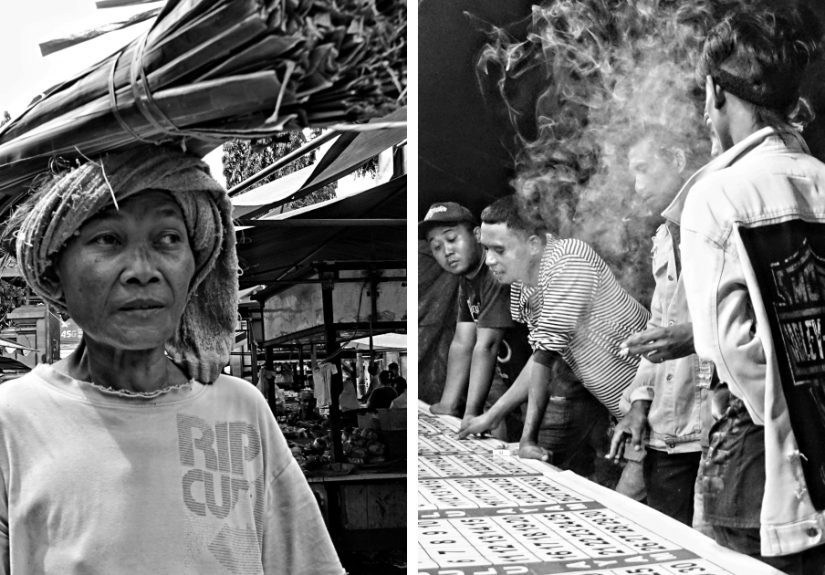
Here, the camera must behave. A market seller is not a prop in a travel fantasy. She is working. He is arranging stock. They are calculating prices, answering questions, joking with neighbors, and trying to make a living while tourists debate whether they truly need a fifth woven bag. Spoiler: emotionally, yes. Logistically, your suitcase disagrees.
The most honest market photographs often come after a short conversation. Ask the vendor’s name. Compliment the craft. Make a purchase if something speaks to you. Then ask politely for a portrait. A smile earned through conversation will always outshine a stolen shot.
The Artists and Makers
Ubud’s artistic identity is deep. Painting, woodcarving, textiles, dance, music, and craft are woven into daily life. Studios and galleries sit beside family compounds, cafes, and roads where roosters believe they are opera singers. The art scene is not just a tourist attraction; it is part of the town’s memory.
Photographing Ubud’s artists means watching process. A painter mixing color. A mask maker smoothing wood. A dancer tying a costume. A musician waiting backstage with a calm face and restless fingers. These moments reveal more than finished products because they show concentration, repetition, skill, and pride.
Good Ubud photography does not shout, “Look what I found!” It whispers, “Look what someone has spent years learning to do.”
Sacred Spaces Require Sacred Manners
Ubud is full of temples, shrines, offerings, and ceremonies. Even ordinary sidewalks can hold small palm-leaf offerings called canang sari, placed with flowers, rice, incense, and devotion. To an unaware visitor, they may look like decoration. To Balinese Hindus, they are part of a living spiritual practice.
When capturing Ubud and its humans in sacred spaces, respect comes before composition. Dress modestly when visiting temples. Wear a sarong and sash where required. Do not interrupt ceremonies for a better angle. Do not climb on sacred structures, stand higher than priests during rituals, or point your feet toward altars. And please, do not treat a temple like a fashion runway unless your personal brand is “confused tourist escorted out politely.”
Photography in sacred spaces should feel quiet. Use natural light when possible. Avoid flash during ceremonies. Ask before photographing people praying or preparing offerings. Some of the most powerful images are taken from respectful distance: hands folded, incense rising, a procession crossing the street, children watching adults with solemn curiosity.
Monkey Forest: Where the Humans Are Not in Charge
The Sacred Monkey Forest Sanctuary is one of Ubud’s most famous places, a nature reserve and temple complex home to long-tailed macaques. It is lush, atmospheric, and slightly chaotic in the way only a forest full of intelligent snack criminals can be. The monkeys are fascinating, but they are not actors in your vacation movie.
Visitors should keep belongings secure, avoid feeding the monkeys unless guided by official rules, and never tease or touch them. A monkey can open a zipper faster than a bored teenager opens a messaging app. Sunglasses, loose snacks, water bottles, and dangling accessories may suddenly become part of the forest economy.
The “humans” of Monkey Forest include sanctuary staff, temple caretakers, guides, and visitors navigating the ancient relationship between nature, spirituality, and tourism. The best images here often show scale: stone statues wrapped in moss, macaques sitting like tiny philosophers, staff calmly managing visitor behavior, and tourists realizing that eye contact with a monkey is a negotiation they did not train for.
How to Photograph the People of Ubud Respectfully
Ask First, Especially for Portraits
Street photography can be beautiful, but consent matters. In Ubud, where culture and ceremony are deeply personal, permission is not a minor detail. A simple smile, gesture to the camera, or polite question can change the entire energy of the moment. Many people are generous when approached respectfully. Some will decline. That is not rejection; it is their right.
Learn a Few Local Phrases
Even basic Indonesian phrases can soften a moment. “Terima kasih” means thank you. “Permisi” means excuse me. “Boleh foto?” means may I take a photo? You do not need perfect pronunciation. You need humility. Locals usually appreciate the effort, even if your accent sounds like a blender full of vowels.
Pay Attention to Context
A person in ceremonial clothing is not automatically available for a photo. A child playing near a temple is not a travel accessory. A vendor resting between customers deserves rest. The best photographers read the room, the street, the courtyard, and the mood. Ubud gives you plenty of beauty; you do not need to force it.
Support the Community You Photograph
If you take images in a village, market, workshop, or farm area, consider how your presence benefits the people there. Hire local guides. Eat at family-owned warungs. Buy directly from artisans. Pay entrance fees without grumbling. Tip fairly. Photography should not be a one-way harvest.
Ubud’s Daily Theater: Small Scenes Worth Capturing
The most memorable Ubud photos are often not the obvious ones. They happen between attractions, when your itinerary loosens its belt and life walks in.
Morning in Ubud begins with scooters, roosters, incense, sweeping, and the soft shuffle of offerings being placed at doorways. A cafe opens. A dog claims the center of the road with spiritual authority. A driver waits beside his car, scrolling his phone, while a temple procession forms nearby. In the market, vendors unwrap goods. In the rice fields, farmers move with the relaxed precision of people who understand both mud and weather.
By afternoon, the light grows thick and tropical. Rain may arrive suddenly, drumming on roofs and turning streets into reflective ribbons. Humans adapt instantly. Ponchos appear. Motorbikes continue. Tourists panic mildly. Locals continue with the calm of people who have met rain before and do not consider it a personal attack.
Evening brings another Ubud: dance performances, gamelan music, warm restaurant lights, temple silhouettes, and travelers walking home with that slightly dazed expression that says, “I came for two days and may now need a life coach.”
Capturing Ubud Beyond the Instagram Frame
Ubud has become globally famous, and fame is complicated. Social media has turned rice terraces, jungle swings, cafes, and temple gates into visual icons. There is nothing wrong with wanting a beautiful image. Beauty is one of Ubud’s native languages. But when every visitor chases the same shot, the town can become flattened into a backdrop.
To capture Ubud honestly, look sideways. Photograph the person repairing the offering tray, not only the offering. Notice the guide tying a guest’s sarong correctly. Watch the cook grinding spices in a morning class. See the painter’s wall, the dancer’s ankle bells, the old man reading under a shade tree, the teenager laughing on a scooter, the mother adjusting her child’s ceremonial clothes.
The people of Ubud are not extras in the scenery. They are the reason the scenery breathes.
Specific Examples of Human-Centered Ubud Photography
A Sunrise Rice Walk
Start before breakfast, when the air is cool and the rice fields are still wrapped in mist. Instead of aiming only for a wide landscape, look for human scale: a farmer crossing the field, a small shrine at the edge of the path, a warung owner opening shutters, or a guide explaining how irrigation channels feed the terraces. The story becomes richer when people and place are shown together.
A Workshop Portrait
Visit a woodcarving, batik, silver, or painting workshop with permission. Photograph hands before faces. Hands show process, age, skill, and rhythm. A close-up of a chisel, brush, or wax tool can say more than a staged smile. Then step back and capture the artist in their working environment.
A Dance Night at Ubud Palace
Traditional dance performances are among Ubud’s most memorable cultural experiences. Instead of photographing only the final pose, observe preparation: musicians tuning instruments, dancers adjusting headdresses, ticket sellers managing the evening rush, children watching from the side. Performance is not only what happens onstage; it is the entire human machine around it.
A Market Morning
Markets are full of motion, but do not shoot as if you are hunting. Stand still. Let patterns reveal themselves. A vendor stacking fruit, a shopper counting cash, a basket moving through the crowd, a laugh between neighboring stallsthese images carry warmth. They show Ubud as lived, not merely visited.
The Experience: What It Feels Like to Capture Ubud And Its Humans
The first time I tried to capture Ubud and its humans, I made the classic beginner mistake: I chased the postcard. I woke early, marched into the rice fields with heroic ambition, and immediately stepped into mud with the confidence of a person who had learned nothing from gravity. My shoe made a sound like soup giving up. Nearby, a farmer looked at me, smiled gently, and continued working. That smile was better than any landscape photo I took that morning.
Later, I learned to slow down. Ubud does not respond well to being rushed. It is not a city that performs on command. It reveals itself in layers. On one morning walk, I watched a woman place offerings outside a doorway. She moved with such practiced grace that the whole street seemed to pause. I did not photograph her immediately. I waited, smiled, and asked. She nodded. The image I took was simple: her hand, the flowers, the incense, the stone step. But it held the quiet architecture of daily devotion.
At Ubud Art Market, I once tried bargaining with a vendor and lost so beautifully that I considered applauding her. She knew the price, my budget, my weakness for handmade textiles, and probably my childhood fears within thirty seconds. After buying a scarf I absolutely did not need but deeply respected, I asked for her portrait. She laughed, adjusted the scarf around my neck like a stylist preparing a confused celebrity, and allowed one photo. That picture still feels alive because it came from a shared joke, not a stolen second.
In Monkey Forest, I learned another lesson: never underestimate a macaque with a plan. I watched a tourist raise a camera for a cute monkey photo, only to have another monkey inspect his backpack with professional interest. The sanctuary staff handled it calmly, as if negotiating with tiny furry diplomats was just another Tuesday. My favorite photo from that visit was not of a monkey at all. It was of a staff member smiling while explaining safety rules to visitors who were suddenly listening with deep spiritual focus.
One evening near Ubud Palace, I photographed the crowd before a dance performance. Tourists were checking tickets, children were peeking between adults, musicians were preparing, and the dancers appeared in flashes of gold, red, and intense concentration. The performance was stunning, but the human suspense before it was even better. It reminded me that culture is not frozen in museums or brochures. It is rehearsed, carried, corrected, taught, paid for, protected, and performed by real people.
Capturing Ubud also changed how I think about travel photography. I used to believe the goal was to bring back proof: proof that I had stood somewhere beautiful, proof that I had seen what others had seen. Ubud taught me that the better goal is relationship. Not a dramatic relationship, not a grand spiritual awakening with background flute music, but a modest one: a greeting, a purchase, a thank-you, a moment of patience, a willingness to be corrected.
The best photographs I made in Ubud were not the cleanest. They were a little humid, a little imperfect, sometimes crooked, occasionally photobombed by scooters, dogs, or a chicken with excellent timing. But they felt human. They carried laughter, work, ceremony, rain, bargaining, music, mud, and the soft green light that seems to belong only to Ubud.
So when I say, “I capture Ubud and its humans,” I do not mean I own the place through images. I mean I try to receive it carefully. I try to notice the people who make the town more than a destination. Ubud is beautiful because of its temples, rice fields, forests, and art. But it becomes unforgettable because of its humans: the ones who welcome, work, pray, perform, guide, cook, carve, farm, sell, laugh, and keep living fully while the rest of us try to fit the wonder into a frame.
Conclusion: The Real Portrait of Ubud
To capture Ubud and its humans is to understand that every beautiful travel image carries responsibility. Ubud is not just a place of scenic Bali photography; it is a living cultural community. Its people are not background details. They are artists, farmers, caretakers, vendors, performers, guides, parents, elders, and children whose lives give meaning to the famous landscapes around them.
The best Ubud travel photography begins with respect. Ask permission. Learn context. Support local people. Step aside during ceremonies. Buy from artisans. Walk slowly. Laugh at yourself when mud wins. Let the town teach you where to look. Because once you stop chasing the obvious picture, Ubud gives you something better: a human story worth remembering.
Note: This article is original, written for web publication, and based on real cultural and travel information about Ubud without copying source text.






 Close
Close