
Table of Contents >> Show >> Hide
- What “damage” looks like on curly hair (and why it feels worse)
- The curly-hair repair rulebook (aka “Stop the bleeding first”)
- Step-by-step: a realistic repair routine that actually works
- Step 1: Get a trim (yes, even a tiny one)
- Step 2: Wash your scalp, not your soul
- Step 3: Condition like it’s your job
- Step 4: Deep condition weekly (or every wash, if damage is intense)
- Step 5: Add a leave-in conditioner (your daily insurance policy)
- Step 6: Learn the “protein vs. moisture” balance (without spiraling)
- Step 7: Consider bond-building treatments (especially after heat/bleach)
- Damage-proof styling for curls (because styling is where most damage happens)
- The ingredient cheat sheet for damaged curly hair
- “Emergency mode” for severely damaged curls
- A simple repair timeline (so you don’t quit on Day 6)
- When to see a pro (and when to see a dermatologist)
- FAQs: quick answers for busy curl owners
- Real-world experiences: what people learn while repairing damaged curly hair
- Research basis (no links)
Curly hair is basically a high-maintenance houseplant that lives on your head. It thrives on moisture, hates surprise heat, and will absolutely stage a protest (frizz) if you look at it the wrong way. If your curls feel rough, won’t clump, snap like dry spaghetti, or have “mystery fuzz” that shows up the second humidity hits, you’re likely dealing with damage.
The good news: you can’t “unglue” split ends back together forever, but you can dramatically improve curl softness, definition, elasticity, and shine with the right repair plan. This guide distills dermatologist-backed hair-care fundamentals plus modern “bond repair” and curl recovery strategies into a routine you can actually keep.
What “damage” looks like on curly hair (and why it feels worse)
Curly and coily hair tends to be drier because natural scalp oils don’t travel down twists and turns as easily. When the outer layer (cuticle) gets roughed up from heat, chemicals, friction, or aggressive detangling, curls lose moisture faster, tangle more, and break more. That’s why the same level of damage that looks “meh” on straight hair can look like a full-on crisis on curls.
Quick self-check: which damage bucket are you in?
- Mostly dryness: frizz, dullness, tangles, but hair still stretches a bit before breaking.
- Breakage + split ends: short flyaways everywhere, uneven curl pattern, ends feel thin or “see-through.”
- Heat/chemical damage: curls won’t spring back, some sections look straight-ish, mushy when wet, snaps when dry.
- Buildup masquerading as damage: hair feels coated, heavy, or sticky; products stop working; scalp feels itchy.
The curly-hair repair rulebook (aka “Stop the bleeding first”)
Repair is a two-part mission: (1) prevent new damage and (2) rebuild softness + strength. If you only do masks but keep frying your hair with high heat, that’s like putting a Band-Aid on a leaky roof.
Rule #1: Be gentler than you think you need to be
- Detangle with slip (conditioner/leave-in) and patience, not brute force.
- Don’t scrub shampoo into your lengths like you’re washing a sweatshirt.
- Stop towel-rubbing. Your curls are not a gym locker room mop.
Rule #2: Treat your ends like antique lace
Ends are the oldest, driest, most fragile part of your hair. If your goal is “longer curls,” your real goal is “fewer snapped ends.” Everything we do below is about keeping ends moisturized, protected, and unbothered.
Step-by-step: a realistic repair routine that actually works
Here’s the framework. Don’t worryyou don’t need 17 steps. You need consistency and the right priorities.
Step 1: Get a trim (yes, even a tiny one)
Split ends don’t permanently fuse back together. Products can temporarily smooth and reduce the look of fraying, but trimming removes the weakest part so damage doesn’t “zip” farther up the strand. If you’re scared of losing length, ask for a “dusting” (micro-trim) every 8–12 weeks while you rebuild.
Step 2: Wash your scalp, not your soul
For many curl types, washing too often can worsen dryness, but never washing can lead to buildup that blocks moisture and makes curls limp. The sweet spot is usually washing your scalp regularly (often 1–3 times per week, depending on your hair, activity, and products).
- Choose a gentle cleanser: Look for sulfate-free or low-lather shampoos if your hair feels dry and fragile.
- Focus on the scalp: Massage cleanser into roots/scalp, then let suds rinse through the lengths.
- Use lukewarm water: Hot water can worsen dryness and frizz.
Step 3: Condition like it’s your job
Rinse-out conditioner is non-negotiable for damaged curls. You want “slip” to reduce friction during detangling and enough conditioning agents to help hair feel softer and more elastic.
Detangling technique (breakage-saving mode):
- Apply conditioner generously from mid-lengths to ends.
- Finger-detangle first (find the big knots before tools do).
- Use a wide-tooth comb or detangling brush while hair is wet and coated.
- Start at the ends, then move upward in small sections.
Step 4: Deep condition weekly (or every wash, if damage is intense)
Deep conditioners are your curl recovery meal prep: they keep moisture on standby so your hair doesn’t turn into a crunchy tumbleweed mid-week.
- If hair is dry/frizzy: prioritize moisturizing masks (fatty alcohols, humectants, butters, gentle oils).
- If hair is weak/stretchy: choose a strengthening mask with a little protein or amino acids.
- Use gentle heat if you want: a warm cap or steam can help some peoplebut avoid “hot oil treatments” that overheat fragile hair.
Step 5: Add a leave-in conditioner (your daily insurance policy)
Leave-in conditioner can improve detangling, reduce frizz, and help curls stay soft longer. If you diffuse or blow-dry, pick a leave-in that also functions as a heat protectant (or layer a dedicated heat protectant on top).
Step 6: Learn the “protein vs. moisture” balance (without spiraling)
Curly hair repair is basically a balancing act between moisture (softness, flexibility) and protein/strength (structure, resilience). Too much moisture with not enough strength can feel limp, overly stretchy, and fragile. Too much protein can feel stiff, rough, and tangle-prone.
Simple guide:
- Needs moisture: feels dry, rough, frizzy; snaps quickly; doesn’t feel “bouncy.”
- Needs protein/strength: feels gummy when wet, stretches too much, curls won’t hold shape, breakage increases.
- Most people: weekly moisture + occasional protein (every few weeks) works better than daily extremes.
Step 7: Consider bond-building treatments (especially after heat/bleach)
“Bond repair” products are designed to support damaged hair structureespecially after coloring, bleaching, or frequent heat. They’re not magic, but they can be a useful tool in a repair routine when used as directed and combined with moisturizing steps (because strong-but-dry hair still behaves like a broom).
How to use them without chaos: pick one system (a pre-shampoo or mask), use it on schedule (often weekly or biweekly), and keep your normal conditioner/deep conditioner in the routine so you don’t end up with “crunchy strength.”
Damage-proof styling for curls (because styling is where most damage happens)
Heat: either reduce it, or get extremely strategic
- Air-dry partway first: less time under heat = less damage.
- Use heat protectant: especially before diffusing or any hot tool use.
- Lower temperatures win: “as low as possible to get the job done” is the grown-up rule.
- One pass, not twelve: repeated passes are where hot tools do the most harm.
Friction: the silent curl killer
Friction creates frizz, tangles, and breakage. Reduce it and your curls immediately act like they’ve had therapy.
- Dry with a microfiber towel or soft T-shirt: blot/scrunch, don’t rub.
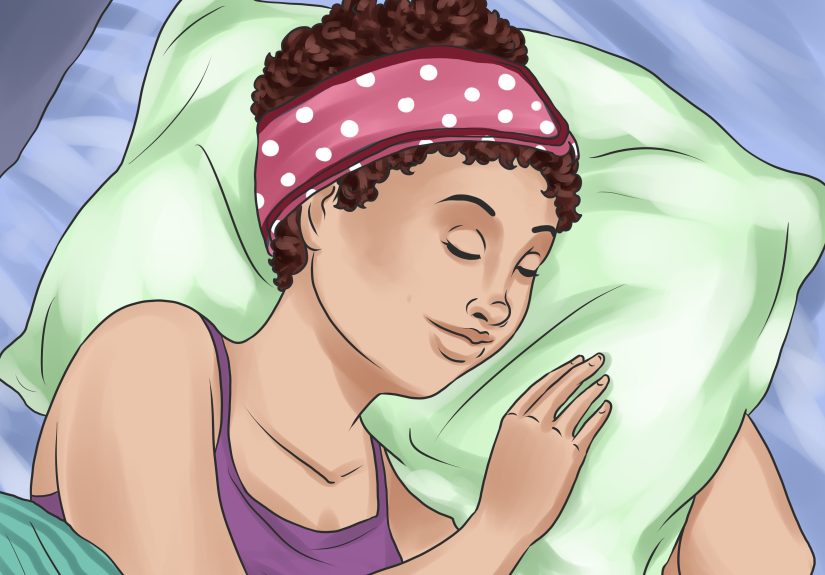
- Sleep protection: satin/silk pillowcase or bonnet; loose “pineapple” on top of your head.
- Avoid tight styles daily: tension can cause breakage around the hairline and edges.
Product layering that helps (not hinders)
A simple layering order that works for many curl types: leave-in → curl cream (optional) → gel/foam → oil (optional, just a little). Oil is best used as a sealant on damp hair, not as a replacement for conditioner.
The ingredient cheat sheet for damaged curly hair
Look for these helpers
- Conditioning agents: fatty alcohols (cetyl/stearyl), cationic conditioners (behentrimonium, cetrimonium).
- Humectants: glycerin, panthenol, honey derivatives (great in many climates; adjust if humidity makes you frizz).
- Strengtheners: hydrolyzed proteins (keratin, silk, wheat), amino acids, peptides (use strategically).
- Oils/butters: jojoba, argan, coconut (some hair loves it, some gets buildup), shea butter (great for coarse curls).
- Bond repair tech: “bond building” or “molecular repair” claims can be useful post-bleach/heat.
Be cautious with these (not eviljust easy to misuse)
- Strong detergents: can strip and worsen dryness if used too frequently.
- Heavy silicones: can be great for slip and shine, but may require occasional clarifying to prevent buildup.
- Too much protein: can make curls stiff, brittle, and more prone to snapping.
- DIY chaos: kitchen masks can be fun, but some mixtures lead to buildup or inconsistent resultspatch test and don’t overdo it.
“Emergency mode” for severely damaged curls
If your hair is breaking faster than you can say “why did I flat-iron in 90% humidity,” try this for 4–6 weeks:
- Pause chemical services and high heat.
- Wash 1–2x/week with gentle shampoo; clarify every few weeks if you use heavy products.
- Condition every wash + deep condition weekly.
- Add bond repair weekly (or as directed), followed by a moisturizing conditioner.
- Style low-manipulation: buns with low tension, braids/twists (not too tight), wash-and-go with gel for hold.
- Protect nightly with satin/silk + refresh with water + leave-in as needed (not a full product pile-up).
A simple repair timeline (so you don’t quit on Day 6)
Week 1
- Hair feels softer immediately after deep conditioning.
- Detangling gets easier if you improve technique and add slip.
Weeks 2–4
- Less breakage during wash day.
- Curls start clumping again; frizz becomes more “manageable” than “possessed.”
Weeks 6–12
- Noticeable improvement in elasticity and definition (especially if heat/chemical damage was mild to moderate).
- Ends look fuller if you trim consistently and protect them.
When to see a pro (and when to see a dermatologist)
See a curl-experienced stylist if you need help with trimming, reshaping, or choosing products for your density and porosity. See a dermatologist if you have sudden hair loss, scalp pain, scaling that doesn’t improve, or breakage paired with symptoms like fatigue or unexplained changesbecause sometimes the issue isn’t just “hair,” it’s health.
FAQs: quick answers for busy curl owners
Can damaged curly hair be fully repaired?
You can significantly improve softness, strength, and curl pattern, but you can’t permanently “heal” split ends or severely compromised sections. Think improvement + prevention, plus trimming the worst bits.
Should I stop brushing my curls?
Stop brushing them dry for most curl types. Detangle wet, with conditioner/leave-in, and use gentle tools.
Do oils fix damage?
Oils can reduce friction, add shine, and help seal in moisture, but they don’t replace conditioning or structural repair. Use them as support, not the whole plan.
Real-world experiences: what people learn while repairing damaged curly hair
The most common “aha” moment people have in curl recovery is that repair isn’t one heroic maskit’s a series of small, boring habits that add up. In real life, damaged curly hair usually comes with a backstory: a season of heat styling, an ambitious color experiment, or a stretch of “I’ll detangle it later” (narrator: they did not). Here are patterns that show up again and again when people successfully bring their curls back from the brink.
Experience #1: The Heat-Tool Hangover
Many curl owners describe the same cycle: blowout or flat iron looks amazing, so they do it more often, then the curl pattern starts looking “looser” or uneven. At first it seems like a style choice; later it becomes a mystery: the top curls, the ends don’t. People who recover fastest typically make one strategic change: they don’t swear off heat foreverthey change the rules. Lower temperature, fewer passes, always heat protectant, and drying hair more before diffusing are the habits that actually reduce the damage curve. The other big lesson: once curls are heat-altered, expecting them to bounce back in a week is like expecting a houseplant to revive after one sip of water. Consistency (and trimming the weakest ends) is what brings the spring back.
Experience #2: “I Used Protein and My Hair Got Worse”
This is more common than you’d think. Someone hears “damaged hair needs protein,” buys a heavy protein mask, and suddenly their curls feel stiff, tangled, and oddly straw-like. The takeaway people learn the hard way: protein is a tool, not a lifestyle. If your hair is already dry and rough, piling on protein can make it feel even harsher. Successful routines tend to use moisture as the weekly foundation, with protein added only when signs point to weakness (over-stretching, gummy feel, curls not holding shape). Once people start alternatingmoisture most weeks, protein occasionallythey often report their curls feeling “bouncier” instead of crunchy.
Experience #3: The Buildup Plot Twist
A surprisingly common experience is thinking hair is “damaged” when it’s actually coated. People try richer and richer products to fix dryness, but hair starts feeling dull, sticky, or heavy. Curls stop clumping. The fix that changes everything? A gentle clarifying wash once in a while, followed immediately by a deep conditioner. After that, products absorb better, definition returns, and people realize their hair wasn’t refusing moistureit was wearing a raincoat made of old product.
Experience #4: The Nighttime Breakthrough
Many curl owners swear their biggest improvement came from what they did at night, not in the shower. Switching to a satin/silk pillowcase or bonnet, loosely tying hair up, and avoiding rough cotton friction can reduce tangles and snapping dramatically. People often describe waking up with fewer knots, less frizz, and curls that “last” longer. It’s not glamorous, but it’s one of the highest-return changes because it happens every single day without extra effort.
Experience #5: Progress Looks Like “Less Bad Hair Days,” Not Perfection
A final, very real experience: repaired hair doesn’t mean your curls never misbehave again. Humidity, hard water, and life will still happen. The most satisfied curl-repair stories sound like this: “My hair breaks less. Wash day is faster. I can detangle without dread. My curls are more consistent.” That’s the win. The goal isn’t to become a shampoo commercialit’s to get your curls healthy enough that they don’t require a weekly emotional support group.
Research basis (no links)
- American Academy of Dermatology (AAD)
- Mayo Clinic / Mayo Clinic Press / Mayo Clinic News Network
- Cleveland Clinic
- MedlinePlus (U.S. National Library of Medicine)
- Harvard Health Publishing
- WebMD
- Real Simple
- Good Housekeeping
- Allure
- Byrdie
- ACS Publications (American Chemical Society)
- NaturallyCurly






 Close
Close