
Table of Contents >> Show >> Hide
- What Is the Fireball Jutsu in Naruto?
- The Classic Fireball Jutsu Hand Sign Sequence
- Before You Start: Safety and Practice Tips
- How to Perform Each Fireball Jutsu Hand Sign
- Putting the Full Sequence Together
- Common Mistakes Beginners Make
- Why Are There Different Fireball Jutsu Hand Sign Versions?
- How to Make Your Fireball Jutsu Look Better for Cosplay or Videos
- Practice Routine for Beginners
- Fan Experience: What It Feels Like to Learn the Fireball Jutsu Hand Signs
- Conclusion
If you have ever watched Naruto and thought, “I too would like to dramatically weave hand signs in my bedroom like an underpaid shinobi with a destiny problem,” welcome. You are in the right village. The Fireball Jutsu, officially known as Fire Release: Great Fireball Technique or Katon: Gōkakyū no Jutsu, is one of the most recognizable techniques in the series. It is closely associated with Sasuke Uchiha, Itachi Uchiha, and the Uchiha clan’s fiery reputation for being intense, talented, and emotionally complicated enough to need several family therapy arcs.
This guide explains how to perform the Fireball Jutsu hand signs from Naruto in a safe, fan-friendly way. You will learn the classic six-sign sequence, how to shape each seal, how to practice the transitions, and why different versions of the technique sometimes appear in the anime, manga, and reference material. No actual fire, chakra, or village-level property damage required.
What Is the Fireball Jutsu in Naruto?
The Fireball Jutsu is a Fire Release ninjutsu in which a shinobi molds chakra inside the body, converts it into fire, and releases it from the mouth as a stream or large orb of flame. In the story, it is powerful enough to leave visible damage and is treated as a signature Uchiha technique. In particular, the Great Fireball Technique is tied to the Uchiha clan’s identity and is often remembered as a coming-of-age milestone for young clan members.
For fans, however, the main attraction is not burning down a training field. It is the hand signs. Naruto hand signs, also called hand seals, are symbolic gestures used by shinobi to focus chakra and activate techniques. They are inspired by a set of twelve animal-based seals connected to the Chinese zodiac: Rat, Ox, Tiger, Hare, Dragon, Snake, Horse, Ram, Monkey, Bird, Dog, and Boar. Different jutsu use different combinations, which is why Naruto characters sometimes look like they are playing high-speed finger chess before launching a spectacular attack.
The Classic Fireball Jutsu Hand Sign Sequence
The most popular full sequence for the Fireball Jutsu hand signs is:
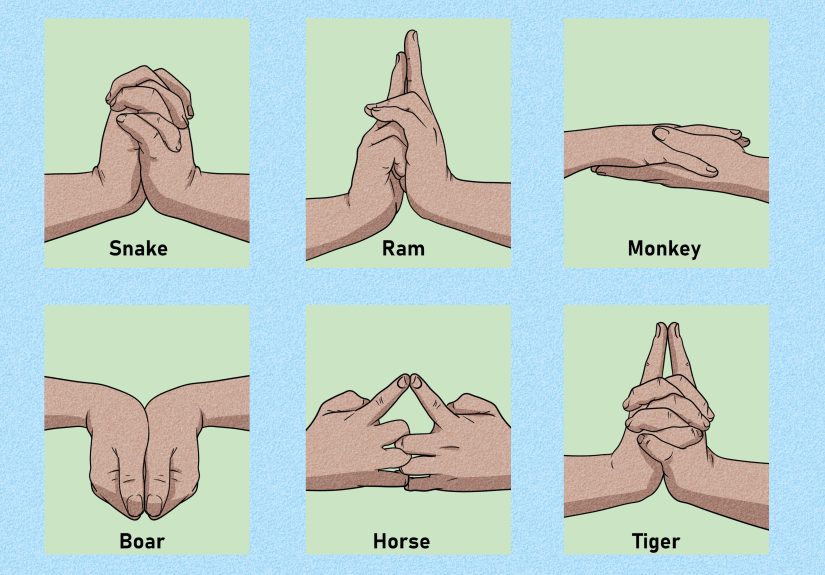
Snake → Ram → Monkey → Boar → Horse → Tiger
You may also see shorter versions in official and fan discussions. Some reference materials list Horse → Tiger, others mention only Tiger, and certain anime scenes show characters using variations such as Boar → Horse → Tiger. That does not mean everyone on the internet is secretly in a genjutsu. It simply means the technique is portrayed differently depending on the source, scene, character skill level, and dramatic pacing. Skilled shinobi in Naruto can often reduce the number of hand seals needed for a technique, so shorter sequences make sense within the world of the series.
For a beginner-friendly fan tutorial, the classic six-sign sequence is the best version to learn. It is recognizable, satisfying, and long enough to make you look like you are about to do something impressive instead of just aggressively folding your hands.
Before You Start: Safety and Practice Tips
Before performing Naruto hand signs, loosen your hands, wrists, and fingers. Some seals can feel awkward, especially Horse and Boar. You should never force your fingers into a painful position. If something hurts, stop, shake out your hands, and try a simpler version. A shinobi with a wrist strain is still a shinobi, but probably one who needs ice and a break.
Practice slowly at first. The goal is not to perform the hand signs at anime speed on day one. In the show, characters move fast because they are animated, trained, and occasionally powered by plot urgency. In real life, your fingers have opinions. Build accuracy first, then rhythm, then speed.
How to Perform Each Fireball Jutsu Hand Sign
1. Snake Hand Sign
The Fireball Jutsu sequence begins with the Snake sign. This is one of the easiest Naruto hand signs and a good starting point for beginners.
To perform Snake, bring both hands together in front of your chest. Interlock your fingers so your hands form a compact, woven shape. Keep your palms close and your wrists relaxed. Your forearms should feel steady but not stiff. Think of this as the “okay, let’s begin” position. It is simple, clean, and hard to mess up unless you are trying to perform it while eating ramen.
Practice moving into Snake quickly from a neutral position. Since it starts the Fireball Jutsu hand signs, a confident Snake seal sets the rhythm for the rest of the sequence.
2. Ram Hand Sign
Next comes Ram, sometimes called Sheep. This sign is famous because Naruto often uses a version of it for Shadow Clone Jutsu. It also appears frequently throughout the series, making it one of the most recognizable hand seals.
To perform Ram, raise your index and middle fingers upward on both hands. Keep the fingers close together. Your left index and middle fingers should sit slightly higher than the right pair. Fold the remaining fingers inward so they overlap neatly. The result should look like two upright finger pairs, almost like a small tower.
Ram can feel strange at first because both hands are doing similar but not identical things. Go slowly. Line up your fingers, relax your thumbs, and avoid clenching too hard. The Ram seal should look controlled, not like your hands are arguing over who gets to be Hokage.
3. Monkey Hand Sign
The third sign is Monkey. Compared with Horse or Boar, Monkey is fairly manageable, but the pinky placement can confuse beginners.
To perform Monkey, place your palms together horizontally rather than vertically. Slide the pinky of your right hand between the thumb and index finger of your left hand. Keep both palms close and your fingers aligned. The position should feel like your hands are locked together in a sideways clasp.
When learning the Fireball Jutsu hand signs, Monkey often becomes the first transition challenge. Going from Ram to Monkey requires you to rotate your hands and change finger placement quickly. Practice just that transition several times: Ram, pause, Monkey. Once it feels natural, add Snake before it.
4. Boar Hand Sign
The fourth sign is Boar, also called Pig. This one looks simple but can feel awkward because of the downward angle.
To perform Boar, form partial fists with both hands. Bring the fists together so the palms face each other. Point the fists downward while keeping your forearms roughly parallel. Do not squeeze tightly. The shape should be compact and relaxed, like you are politely presenting two tiny ninja hammers to the floor.
Boar is important in many Naruto hand sign sequences, so learning it well helps beyond Fireball Jutsu. The biggest mistake is over-tightening the fists. Keep the grip soft. You are making a seal, not trying to crush a walnut with your knuckles.
5. Horse Hand Sign
The fifth sign, Horse, is often the trickiest part of the Fireball Jutsu hand signs. If your fingers suddenly feel like they were designed by a villain, congratulationsyou have met Horse.
To perform Horse, bring your palms inward toward each other. Connect the tips of your index fingers. Interlock the remaining fingers around the knuckles, with the right fingers generally placed over the left. Your palms should face inward, and the shape should feel tight but not painful.
Horse may take extra practice because it requires coordination and flexibility. Break it down slowly. First touch your index fingertips together. Then arrange the other fingers one by one. Once the shape is correct, release and repeat until your hands remember it. Muscle memory is your best friend here. Your Sharingan, unfortunately, is still pending.
6. Tiger Hand Sign
The final sign is Tiger, one of the most iconic seals associated with Fire Release. Ending with Tiger gives the Fireball Jutsu its dramatic finish.
To perform Tiger, clasp your hands together with your fingers interlocked. Raise both index fingers and middle fingers together so they point upward. Keep the other fingers folded and locked. Your forearms should stay steady, and the sign should look sharp and deliberate.
Once you hit Tiger, this is where a character would usually inhale, mold chakra, and release the fire technique. In real life, this is where you may say “Fire Style: Fireball Jutsu!” and hope no one in the room asks whether you have finished your homework.
Putting the Full Sequence Together
Now combine the signs in order:
Snake → Ram → Monkey → Boar → Horse → Tiger
Start slowly. Perform each sign and pause for one second before moving to the next. Do not worry about speed. Focus on clean shapes and smooth transitions. Once you can complete the sequence without looking at a guide, reduce the pause. Eventually, you can practice the sequence as a single flowing motion.
A useful training method is the “three-speed drill.” First, perform the sequence at slow speed, saying each sign out loud. Second, perform it at medium speed while whispering the names. Third, perform it silently and focus only on the movement. This helps your brain connect the order, shape, and rhythm.
Common Mistakes Beginners Make
Mixing Up Snake and Tiger
Snake and Tiger both involve interlocked fingers, so beginners sometimes confuse them. Remember: Snake keeps the fingers interlocked without the upright index and middle fingers. Tiger raises the index and middle fingers together. Snake starts the sequence; Tiger finishes it with style.
Rushing the Horse Sign
Horse is the sign most likely to turn into finger spaghetti. Do not rush it. If the sequence falls apart at Horse, isolate that sign and practice it separately. A clean Horse at medium speed looks better than a chaotic Horse at full speed.
Forgetting the Order
If you forget the order, use a simple memory phrase: “Sneaky Rams Make Boars Hold Tigers.” It is ridiculous, but that is why it works. Snake, Ram, Monkey, Boar, Horse, Tiger. Your brain loves weird little hooks, especially when anime homework is involved.
Trying to Create Real Fire
This should be obvious, but the internet has taught us never to underestimate ambition mixed with poor supervision. Do not use lighters, candles, aerosol sprays, matches, fireworks, or any real flame while practicing Fireball Jutsu hand signs. This is a cosplay and fandom tutorial, not a recipe for explaining smoke damage to your landlord.
Why Are There Different Fireball Jutsu Hand Sign Versions?
One reason fans debate the Fireball Jutsu hand signs is that Naruto does not always show techniques the same way. The longer six-sign sequence is widely recognized among fans and tutorials. However, some reference books and anime scenes present shorter combinations, such as Horse and Tiger, Tiger alone, or Boar, Horse, and Tiger.
Within the story, this makes sense. Hand signs help shinobi mold chakra and perform techniques efficiently. A less experienced ninja may need more seals, while an expert can reduce the sequence. This is why elite characters sometimes perform jutsu with fewer signs than expected. It is not laziness; it is mastery. Or, from a production standpoint, sometimes the animation team simply has a battle scene to move along and cannot spend twenty seconds on finger choreography while everyone waits politely.
How to Make Your Fireball Jutsu Look Better for Cosplay or Videos
If you want your Fireball Jutsu hand signs to look good on camera, posture matters. Stand with your shoulders relaxed, elbows slightly away from your body, and hands centered near your chest. Keep your face focused. The Uchiha clan did not build its brand on cheerful finger wiggling. A calm, intense expression sells the effect.
Lighting also helps. If you are filming a cosplay video, use warm lighting or a safe digital flame effect in editing. A quick camera push-in on the final Tiger sign can make the sequence feel more dramatic. Add a short pause before saying “Katon: Gōkakyū no Jutsu” or “Fire Style: Fireball Jutsu.” The pause creates anticipation, which is basically chakra for video editing.
For photos, the Tiger sign is usually the strongest pose because it is recognizable and easy to frame. For tutorials, show each sign slowly from the front, then repeat the full sequence at normal speed. Viewers appreciate clarity, especially when their fingers are already confused.
Practice Routine for Beginners
Here is a simple practice routine you can use:
Minute 1: Warm Up
Open and close your hands gently. Rotate your wrists. Stretch your fingers lightly. Do not force anything.
Minutes 2–4: Learn the Shapes
Practice Snake, Ram, Monkey, Boar, Horse, and Tiger one at a time. Hold each sign for three seconds.
Minutes 5–7: Practice Transitions
Move from Snake to Ram, Ram to Monkey, Monkey to Boar, Boar to Horse, and Horse to Tiger. Repeat the difficult transitions more often.
Minutes 8–10: Full Sequence
Perform the full Fireball Jutsu hand sign sequence slowly five times. Then perform it at medium speed five times. End with one dramatic final attempt, because every training session deserves a tiny anime finale.
Fan Experience: What It Feels Like to Learn the Fireball Jutsu Hand Signs
Learning the Fireball Jutsu hand signs is one of those fan experiences that sounds simple until your fingers file a formal complaint. At first, Snake feels easy enough. You interlock your hands and think, “Excellent. I am basically ready for the Chunin Exams.” Then Ram appears, and you realize Naruto characters have been casually doing finger gymnastics for hundreds of episodes while you were just sitting there eating chips and judging their life choices.
The most satisfying part is the moment the sequence starts to flow. When you first memorize Snake → Ram → Monkey → Boar → Horse → Tiger, it feels like unlocking a tiny piece of the anime world. You are not just watching Sasuke perform the move anymore; you understand the rhythm behind it. Your hands begin to anticipate the next shape. Snake folds into Ram. Ram turns into Monkey. Monkey drops into Boar. Then Horse arrives, knocks over the furniture, and reminds you humility is important.
Horse is usually the sign that separates casual curiosity from actual practice. It is awkward, oddly specific, and easy to mess up. But that is also what makes it fun. After a few tries, you start to notice small improvements. Your index fingers meet faster. Your other fingers stop panicking. The shape becomes less of a puzzle and more of a movement. It is a good reminder that fandom skills, like drawing anime eyes or pronouncing “Rasenshuriken” confidently, improve through repetition.
Another fun experience is practicing in front of a mirror. The signs look different from the viewer’s perspective, and a mirror helps you clean up messy angles. You may discover that your Tiger sign looks heroic, your Ram sign looks respectable, and your Monkey sign looks like your hands are trying to keep a secret. That is normal. The mirror is not judging you. Probably.
If you are making cosplay content, the Fireball Jutsu sequence is especially rewarding because it is instantly recognizable to Naruto fans. You do not need a full Uchiha costume to enjoy it, but adding a headband, dark shirt, or dramatic lighting makes the performance feel more complete. Even a simple video can look impressive if the hand signs are crisp and the final Tiger seal is held with confidence.
The best advice from experience is to keep it playful. You are not preparing for an actual shinobi battle. You are connecting with a story, a fandom, and a memorable technique that has lived rent-free in anime fans’ minds for years. Practice slowly, laugh when your fingers betray you, and enjoy the small victory when the sequence finally clicks. The first time you complete the full Fireball Jutsu hand signs smoothly, you may not breathe fire, but you will absolutely feel a tiny spark of Uchiha-level pride.
Conclusion
The Fireball Jutsu hand signs from Naruto are a fun, iconic way to bring one of anime’s most famous techniques into real-life fandom practice. The classic sequence is Snake → Ram → Monkey → Boar → Horse → Tiger, though shorter variations appear across different Naruto materials and scenes. For beginners, the full six-sign version offers the best balance of recognition, challenge, and dramatic flair.
Take your time, practice each sign carefully, and focus on smooth transitions rather than raw speed. Whether you are learning for cosplay, a fan video, a convention pose, or the simple joy of doing anime hand signs in your room, the Fireball Jutsu sequence is a satisfying skill to master. Just remember: keep it safe, keep it fun, and leave the real flames to animation studios and extremely fictional ninja clans.
Note: This article is a fan-friendly educational guide for cosplay, entertainment, and harmless practice. Do not attempt to create real fire or imitate dangerous stunts. Naruto, its characters, and related terms belong to their respective copyright owners.







 Close
Close