
Table of Contents >> Show >> Hide
- What Self-Harm Can Look Like Without Making Assumptions
- Common Signs Someone May Be Self-Harming
- Why People Self-Harm
- What Not to Do if You Suspect Self-Harm
- How to Talk to Someone You Think May Be Self-Harming
- When to Get Immediate Help
- How Parents and Caregivers Can Respond
- How Friends Can Help Without Becoming the Therapist
- What Professional Help May Involve
- Supportive Things to Say
- Experience-Based Reflections: What People Often Notice Before They Understand
- Conclusion
Wondering how to know if someone self harms can feel scary, confusing, and emotionally heavy. You may notice a friend suddenly pulling away, a sibling wearing long sleeves in hot weather, or a loved one making jokes that sound a little too sad to be random. Your brain starts playing detective, but this is not the kind of mystery where you want to burst into the room yelling, “Aha!” with a magnifying glass. Self-harm is sensitive. The goal is not to catch someone. The goal is to care for them.
Self-harm usually means a person is intentionally hurting their own body as a way to cope with overwhelming emotional pain, stress, anger, numbness, shame, or pressure. It is not always a suicide attempt, but it should always be taken seriously because it signals distress and may increase risk if the person does not get support. The most helpful response is calm, compassionate, and practical: notice the signs, start a gentle conversation, and connect the person with safe help.
This guide explains common warning signs of self-harm, what they may mean, how to talk to someone you are worried about, and what to do next. It avoids graphic details because you do not need disturbing descriptions to be helpful. You need awareness, patience, and the ability to say, “I’m here with you,” without making the person feel like they are on trial.
What Self-Harm Can Look Like Without Making Assumptions
The first thing to understand is that self-harm does not have one single “look.” Some people hide their distress behind perfect grades, jokes, busy schedules, or the classic “I’m fine” delivered with the emotional depth of a brick wall. Others may show clearer changes in behavior, mood, clothing, or social habits.
It is also important not to jump to conclusions. A person can have an injury from sports, work, pets, cooking, or plain old gravity. Humans are surprisingly talented at bumping into furniture. But when several signs appear together, especially alongside emotional withdrawal or secrecy, it may be time to check in with care.
Common Signs Someone May Be Self-Harming
1. Unexplained Injuries or Frequent “Accidents”
One possible sign is a pattern of unexplained injuries, marks, or bandages. The key word is pattern. Everyone gets hurt sometimes, but repeated injuries with vague explanations may suggest something deeper is going on. The person may brush it off quickly, change the subject, or become tense when asked about it.
A helpful response is not, “Tell me exactly what happened right now.” A better approach is, “I noticed you seem to be getting hurt a lot lately, and I’m worried about you. You don’t have to explain everything, but I care and I’m here.” That sentence gives them an open door instead of a spotlight.
2. Covering Up More Than Usual
Another sign can be suddenly wearing clothing that covers more skin than usual, even in warm weather, or avoiding situations where they might need to change clothes, swim, or participate in physical activities. This does not automatically mean self-harm. Some people dress for comfort, style, modesty, body image concerns, or because air conditioning in public buildings seems designed by penguins.
Still, if the change is sudden and paired with emotional distance, secrecy, or repeated injuries, it may be worth paying attention. Avoid teasing or making comments about their body or clothing. Instead, focus on their wellbeing: “You haven’t seemed like yourself lately. Want to talk?”
3. Pulling Away From Friends and Family
Self-harm often grows in secrecy. A person may spend more time alone, stop answering messages, cancel plans, or seem emotionally unavailable. They may still show up physically while mentally checking out. Think of it as “present, but buffering.”
Withdrawal can be linked to many things: depression, anxiety, bullying, family stress, grief, trauma, academic pressure, or relationship problems. You do not need to diagnose the person. You only need to notice that isolation plus distress is a reason to reach out.
4. Intense Mood Changes or Emotional Overload
Someone who self-harms may seem overwhelmed by emotions or, on the opposite end, unusually numb. They may become easily irritated, deeply sad, anxious, ashamed, or hopeless. Sometimes they may appear calm after a period of distress, which can be confusing for friends and family. Emotional pain does not always look dramatic; sometimes it looks like silence.
Watch for phrases such as “I can’t deal with this,” “I feel empty,” “Nothing helps,” or “I’m a burden.” These statements do not always mean immediate danger, but they are signals to take the person seriously and offer support.
5. Secrecy Around Personal Space
A person may become unusually protective of their room, backpack, phone, bathroom time, laundry, or personal belongings. Privacy is normal, especially for teens and young adults. However, sudden secrecy combined with other warning signs may suggest they are trying to hide distress.
Try not to turn into a spy. Secretly searching someone’s belongings can damage trust unless there is an urgent safety concern. When possible, choose direct care over detective work: “I’m not trying to invade your privacy. I’m worried because you seem like you’re hurting.”
6. Avoiding Questions With Humor or Anger
Some people deflect concern with jokes. Others snap back, deny everything, or accuse you of being dramatic. That reaction can hurt, but it does not mean your concern is wrong. Shame and fear often come out wearing a tiny little anger costume.
If they shut down, keep your tone steady. You might say, “I’m not mad at you. I’m not here to judge. I just care about you.” The calmer you are, the safer the conversation feels.
7. Online Posts That Hint at Emotional Pain
Social media can reveal distress through sad captions, dark humor, isolation-themed posts, sudden account changes, or messages that sound hopeless. Not every emotional post is a crisis. People can be dramatic online because, well, the internet practically hands everyone a tiny stage and a fog machine. But repeated posts about pain, emptiness, or not wanting to be around should not be ignored.
Reach out privately. Avoid public comments that embarrass them. A simple message like, “I saw your post and wanted to check on you. Are you safe right now?” can be much more helpful than a dramatic public reaction.
Why People Self-Harm
People may self-harm for different reasons, but it is often connected to emotional regulation. In plain English: feelings get too big, too loud, or too numb, and the person does not know how else to cope. Self-harm can become a harmful attempt to manage pain, express feelings, regain a sense of control, or interrupt emotional numbness.
Common underlying issues may include anxiety, depression, trauma, bullying, family conflict, relationship stress, grief, low self-worth, identity struggles, or feeling trapped by expectations. Some people self-harm once or a few times. Others develop a repeated pattern. Either way, the behavior deserves care, not shame.
What Not to Do if You Suspect Self-Harm
Do Not Shame Them
Comments like “Why would you do that?” or “That’s crazy” can make the person feel worse and less likely to seek help. Even if you are shocked, take a breath before responding. Your first reaction can shape whether they open up or retreat.
Do Not Make It About Punishment
Taking away a phone, grounding someone, yelling, or threatening them may increase secrecy. Safety boundaries may be necessary, especially for parents and caregivers, but they should be paired with emotional support and professional help.
Do Not Promise to Keep Dangerous Secrets
If someone tells you they are self-harming, you may feel honored that they trusted you. That trust matters. But if they are in danger, you cannot promise silence. A kind response is: “I care about you too much to handle this alone. We can choose a safe adult or professional together.”
How to Talk to Someone You Think May Be Self-Harming
Choose a private, calm moment. Do not start the conversation during an argument, in front of other people, or five minutes before school, work, or bedtime chaos. Keep your voice gentle and your words simple.
You can say:
“I’ve noticed you seem really overwhelmed lately, and I’m worried about you.”
“You don’t have to tell me everything, but I want you to know I care.”
“Are you hurting yourself or feeling like you might?”
“Can we talk to someone together who knows how to help?”
Asking directly about self-harm does not “put the idea” in someone’s head. It can actually make them feel less alone. The important part is to ask calmly, without panic or judgment.
When to Get Immediate Help
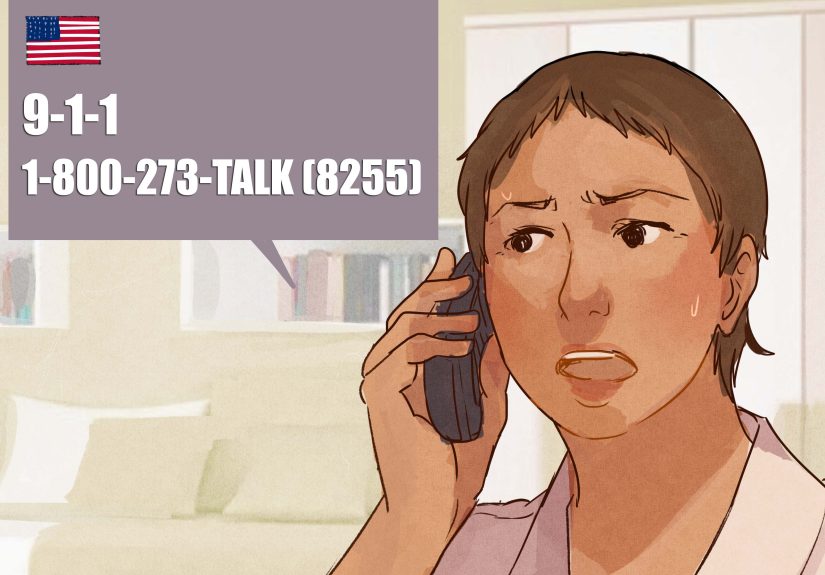
Get immediate help if the person may be in danger, talks about wanting to die, cannot promise they are safe, has injuries that need medical attention, is intoxicated, disappears after alarming messages, or seems unable to stay in control. In the United States, call or text 988 to reach the Suicide & Crisis Lifeline. If there is immediate danger, call emergency services right away.
If the person is a minor, involve a trusted adult as soon as possible. That could be a parent, guardian, school counselor, teacher, coach, doctor, or another responsible adult. You are not betraying them by getting help. You are widening the safety net.
How Parents and Caregivers Can Respond
For parents, discovering that a child may be self-harming can feel like the floor has vanished. You may feel fear, guilt, anger, sadness, or confusion. Those feelings are real, but the first conversation should center on the child’s safety, not the parent’s panic.
Start with connection: “I love you. I’m not angry. I want to understand what you’re going through.” Then ask direct but gentle questions. Keep the conversation focused on support and next steps, such as scheduling an appointment with a pediatrician, therapist, school counselor, or mental health professional.
Avoid treating self-harm as “bad behavior.” It is better understood as a sign that the child needs healthier coping tools, emotional support, and possibly treatment for underlying anxiety, depression, trauma, or other mental health concerns.
How Friends Can Help Without Becoming the Therapist
If you are a friend, your role is important, but you are not responsible for fixing everything. You can listen, check in, sit with them, encourage help, and tell a trusted adult if safety is at risk. You cannot be someone’s entire emergency plan, therapist, crisis line, and emotional support golden retriever all at once.
Good friend support sounds like:
“I’m really glad you told me.”
“You deserve help with this.”
“Let’s talk to someone safe together.”
“I can stay with you while you text or call for support.”
If you are also young, do not carry the secret alone. Tell a trusted adult. It may feel awkward, but awkward is much better than unsafe.
What Professional Help May Involve
Professional support may include therapy, family support, safety planning, treatment for anxiety or depression, coping skill development, and medical care when needed. Therapy can help someone understand what triggers the urge to self-harm and build safer ways to manage emotional pain.
Common goals include learning how to name feelings, tolerate distress, communicate needs, reduce shame, and create a plan for difficult moments. Recovery is not always instant. It may involve progress, setbacks, and more progress. Healing is less like flipping a light switch and more like untangling earbuds that have been in a pocket since 2014: frustrating, possible, and easier with patience.
Supportive Things to Say
Words matter. Try using phrases that reduce shame and increase safety:
“I’m sorry you’ve been dealing with so much.”
“You are not in trouble for being honest.”
“I may not understand everything, but I want to help.”
“You do not have to handle this alone.”
“Let’s find someone trained to support you.”
The best words are calm, clear, and caring. You do not need a perfect speech. You need presence.
Experience-Based Reflections: What People Often Notice Before They Understand
In real life, people rarely recognize self-harm from one dramatic clue. More often, they notice small changes that slowly stop feeling small. A friend who used to text back quickly now replies with one-word messages. A student who once loved group activities starts skipping them. A sibling becomes jumpy when someone enters the room. A classmate laughs at every joke but looks exhausted when they think no one is watching. These little shifts can be easy to dismiss, especially because life is busy and everyone has stress. But when your gut says, “Something is not right,” it is worth listening.
One common experience is the feeling of uncertainty. People worry they will offend the person by asking. They wonder if they are overreacting. They may think, “What if I make it worse?” That fear is understandable. But a gentle check-in is usually better than silence. You do not have to accuse anyone. You can simply name what you see: “You’ve seemed really down lately, and I care about you.” That kind of sentence is not invasive. It is human.
Another experience is realizing that the person who is struggling may not fit the stereotype. They may be popular, funny, athletic, artistic, high-achieving, or the person everyone else goes to for advice. Pain does not always announce itself with gloomy background music. Sometimes the person who makes everyone laugh is also the person who goes home feeling completely alone. That is why it is important to look beyond appearances and pay attention to patterns.
People who have supported someone through self-harm often learn that listening matters more than lecturing. The first conversation may not produce a big confession. The person may deny it, shrug, cry, joke, or get irritated. That does not mean the conversation failed. You planted a message: “Someone sees me, and they care.” Sometimes that message becomes the bridge they use later when they are ready to ask for help.
It is also common to feel helpless. You may want to say the perfect thing, solve the whole problem, and wrap the person in emotional bubble wrap. Unfortunately, humans do not come with a “fix sadness” button, which seems like a major design flaw. What you can do is stay steady. Encourage professional support. Check in without smothering. Celebrate honesty. Avoid gossip. Keep safety bigger than secrecy.
For parents and caregivers, the experience can be especially painful because it may bring up guilt: “How did I miss this?” But guilt is not a treatment plan. A more useful question is, “What support does this young person need now?” Calm action is more helpful than self-blame. That may mean contacting a doctor, therapist, school counselor, or crisis service. It may also mean changing the emotional climate at home so the child feels safer talking about hard things.
For friends, the experience can be heavy because loyalty feels complicated. You may worry that telling an adult will make your friend hate you. They may even say, “Don’t tell anyone.” But self-harm is not a secret that friends should be expected to carry alone. A caring friend does not have to become a crisis professional. A caring friend helps connect the person to someone who can protect them.
Many people also discover that recovery is not a straight line. Someone may open up, get help, improve, struggle again, and need more support. That does not mean they failed. It means healing is a process. Patience matters. So does consistency. A simple “How are you really doing today?” can mean more than a grand speech.
The most important experience-based lesson is this: people who self-harm are not trying to be difficult. They are often trying to survive feelings they do not know how to manage yet. Your response can either add shame or add safety. Choose safety. Choose calm. Choose connection. You do not need to be perfect. You just need to care enough to notice, brave enough to ask, and wise enough to bring in help when the situation is bigger than you.
Conclusion
Knowing how to tell if someone self harms is not about becoming suspicious of every bruise, hoodie, or canceled plan. It is about recognizing patterns of distress and responding with compassion. Possible signs include unexplained injuries, sudden secrecy, covering up more than usual, social withdrawal, intense mood changes, and online posts that hint at emotional pain. None of these signs proves self-harm on its own, but together they can signal that someone needs support.
The best response is calm concern: ask directly, listen without judgment, avoid shame, and involve trusted help when safety is at risk. If there is immediate danger in the United States, call emergency services or contact 988 by call or text. A supportive conversation may not solve everything in one moment, but it can become the first step toward safety, treatment, and healing.







 Close
Close