
Table of Contents >> Show >> Hide
- Meet the Blue Atlas Cedar
- Choosing the Right Spot
- Soil Preparation and Planting
- Watering and Fertilizing
- Pruning and Training Blue Atlas Cedar
- Seasonal and Long-Term Care
- Pests, Diseases, and Common Problems
- Design Ideas: Making Blue Atlas Cedar the Star
- Real-World Experiences: What Gardeners Learn Growing Blue Atlas Cedar
- Final Thoughts
If you’ve ever seen a Blue Atlas cedar glowing silver-blue against a plain old lawn,
you know it’s not just a treeit’s a full-time main character. With shimmering needles,
sculptural branching, and a dramatic silhouette, this conifer can turn a regular yard
into “wow, who lives there?” territory. The good news: once established,
Blue Atlas cedar is tough, drought tolerant, and surprisingly low-maintenance. The
better news: with a little smart planting and early care, you can avoid the common
mistakes that turn a showstopper into a very expensive, very sad stick.
This guide walks you through everything you need to know about growing and caring for
Blue Atlas cedarwhether you’re planting the classic upright form, a weeping cultivar,
or a compact variety for smaller spaces.
Meet the Blue Atlas Cedar
Blue Atlas cedar (Cedrus atlantica var. glauca) is an evergreen conifer
native to the Atlas Mountains of Morocco and Algeria. It’s part of the pine family
(Pinaceae) and is prized for its dense clusters of short, icy blue needles that cover
gracefully layered branches. In the landscape, it reads like a living sculptureespecially
when grown as a specimen tree.
In its upright form, Blue Atlas cedar typically reaches about
40–60 feet tall and 30–40 feet wide at maturity in home landscapes,
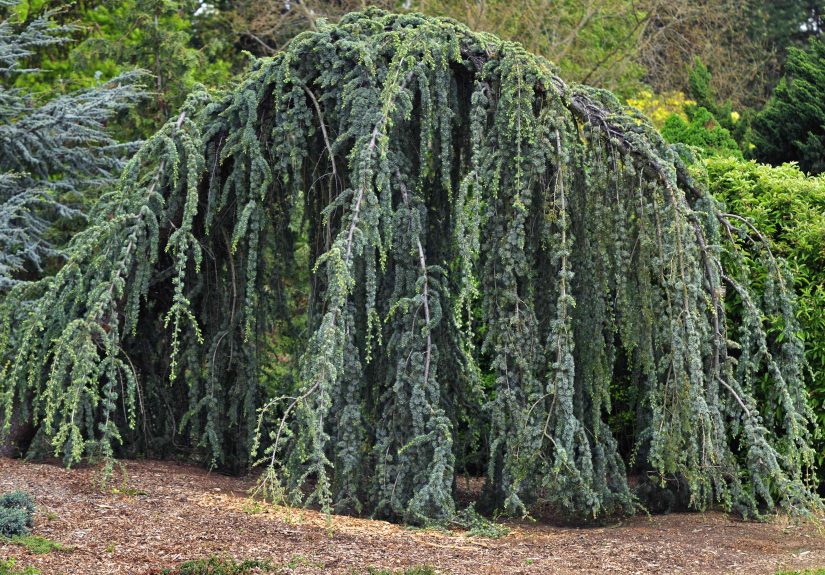
with a broad, pyramidal shape. Dwarf and specialty cultivars such as ‘Horstmann’ or
weeping forms (‘Glauca Pendula’) are much smaller, often topping out around 10–15 feet
tall with a wider spread, making them ideal for smaller gardens or for dramatic
near-entry plantings.
Blue Atlas cedar thrives in USDA hardiness zones 6–9, where winters
are cold but not brutal and summers are warm to hot. In these zones, it’s valued as a
relatively heat- and drought-tolerant conifer once its roots are established.
Why gardeners love it
- Striking blue foliage that stands out year-round.
- Sculptural branching that adds instant architecture to the yard.
- Moderate growth rate (often 1–2 feet per year in youth) so it fills in without taking over overnight.
- Generally deer-resistant and tolerant of dry conditions once mature.
Choosing the Right Spot
Think of Blue Atlas cedar like a celebrity: it needs good lighting, plenty of space,
and a location where it can be admired from many angles.
Sunlight
Blue Atlas cedar performs best in full sun, meaning at least six hours
of direct sunlight each day. It can tolerate light, open shade, but the bluer needles
and the densest growth appear in brighter conditions. Too much shade can lead to
thinner foliage, lanky growth, and a less dramatic color.
Space and placement
Before you fall in love with a cute 5-gallon sapling, remember what it wants to be
when it grows up. Give upright Blue Atlas cedars at least
20–25 feet of clearance from houses, driveways, and power lines so
the mature canopy doesn’t feel cramped or require constant corrective pruning.
Weeping forms and dwarfs still need elbow roomoften 10–15 feet of spreadso don’t
squeeze them into a tiny foundation bed or right next to a walkway. They shine when
given space to sprawl and drape without bumping into the front porch.
Climate and exposure tips
-
In colder parts of zone 6, choose a spot sheltered from harsh north or east winds
to reduce winter burn. -
In hot, dry regions toward zone 9, full sun is still ideal, but consistent moisture
during the first years helps the tree root deeply and handle summer heat. -
Avoid low spots where cold air and water poolthis tree dislikes soggy soil and
“wet feet.”
Soil Preparation and Planting
Blue Atlas cedar isn’t fussy about soil textureit can handle loam, sandy soil, or
light clayas long as it drains well. Prolonged soggy conditions
invite root rot and other problems.
Ideal soil conditions
- Drainage: Essential. Water should drain away within a few hours of heavy rain.
- pH: Slightly acidic to neutral is best, but it can adapt to mildly alkaline soils.
- Amendments: Organic matter like compost can improve compacted or poor soil, but avoid creating a super-rich “pot” in otherwise poor native soilroots may circle there instead of spreading out.
How to plant Blue Atlas cedar
-
Time it right. Plant in early spring or fall when temperatures are
mild and soil is workable. Avoid the hottest and coldest weeks of the year. -
Dig a wide hole. Make the hole about 2–3 times as wide as the root
ball but no deeper. The top of the root ball should sit at or just slightly above
the surrounding soil level. -
Loosen the roots. Gently tease apart circling roots to encourage
them to grow outward into the native soil. -
Backfill with native soil. Mix in some compost if your soil is
very poor, but keep the blend mostly native to prevent a “flowerpot” effect. -
Water deeply. After planting, soak the root zone thoroughly to
settle soil and remove air pockets. -
Mulch smart. Apply a 2–3 inch layer of mulch over the root zone,
keeping it a couple of inches away from the trunk to prevent rot.
Blue Atlas cedar is known to be tricky to transplant when larger, so
choosing the right spot the first time is ideal. It’s better to plant a smaller tree
where it can stay for life than to move a bigger tree later.
Watering and Fertilizing
Watering during establishment
The first 1–2 years after planting are all about root building. During this time,
Blue Atlas cedar needs consistent, deep watering:
-
Water deeply once or twice a week during the growing season, depending on weather
and soil type. -
Aim to moisten the soil 8–12 inches deep. Shallow sprinkling encourages surface
roots and stress. -
Check moisture by sticking your finger or a trowel into the soil. If the top
2–3 inches are dry, it’s time to water.
Once established, Blue Atlas cedar becomes quite drought tolerant and
usually doesn’t need supplemental irrigation except during prolonged, severe dry
spells. At that stage, deep infrequent watering is much better than frequent light
sips.
Fertilizer needs
In reasonably good soil, this tree doesn’t need heavy feeding. Too much fertilizer
can push weak, overly soft growth that’s more susceptible to cold and pests.
-
In early spring, you may apply a light dose of a balanced, slow-release tree
fertilizer around the drip line if growth seems sluggish or needles look pale. -
In rich or regularly amended soil, you can often skip fertilizer altogether and
rely on compost and mulch to feed the soil gradually. -
Avoid high-nitrogen lawn fertilizers overlapping the root zonethey can encourage
lush but weak growth.
Pruning and Training Blue Atlas Cedar
One of the joys of Blue Atlas cedar is that it naturally forms a handsome shape. In
other words, you don’t have to be a pruning artist to keep it looking good. A light
touch is usually best.
Basic pruning
-
Remove dead, damaged, or crossing branches any time of year, but major pruning is
best done in late winter or very early spring before new growth begins. -
Maintain a single central leader (main trunk) on upright trees for a strong,
symmetrical structure. -
Avoid heavy “lion’s tail” pruning (stripping inner branches and leaving tufts at
the ends) which can make limbs weak and awkward.
Training weeping and dwarf forms
Weeping Blue Atlas cedar cultivars are often sold staked to a certain height. After
that, you can let them trail and drape naturally or continue to stake and guide
branches to create serpentine shapes.
-
Use soft ties to gently secure branches to a sturdy stake, gradually guiding them
where you want them to go over several seasons. -
For a mounding look, allow branches to spill and spread over rocks, walls, or
groundcovers. -
If you’re into bonsai, Blue Atlas cedar is a popular subjectit responds well to
careful structural pruning and shaping over time.
Seasonal and Long-Term Care
Winter care
In zones 6–7, Blue Atlas cedar is hardy but can still be stressed by sudden
temperature swings and desiccating winter winds.
- Maintain a mulch layer year-round to moderate soil temperature and protect roots.
-
Water deeply in late fall before the ground freezes, especially after a dry
autumn. Evergreens lose moisture from their needles even in winter. -
Young trees in very exposed sites may benefit from a temporary windbreak of burlap
or snow fencing.
Summer care
-
Keep an eye on moisture during heat waves, particularly for trees under 5 years
old. -
Avoid piling mulch or decorative rock tightly against the trunk; give the base
some breathing room. - Resist the urge to prune heavily during hot, dry weatherit can stress the tree.
Pests, Diseases, and Common Problems
Blue Atlas cedar is generally tough and relatively trouble-free, but a few issues
can pop up, especially if the tree is stressed by poor site selection or incorrect
watering.
Needle blight and dieback
Fungal diseases such as needle blights can cause browning or dieback on branches,
especially in cool, wet springs. You may see sections of the canopy turning brown or
entire small branches dying back.
-
Prune out affected branches back to healthy wood, disinfecting your tools between
cuts. - Improve air circulation by avoiding crowding and keeping mulch off the trunk.
-
In severe cases, consult a certified arborist for diagnosis and potential
fungicide options.
Root and trunk issues
Chronic wet soil is the enemy. Root rot can show up as overall decline, yellowing
needles, and poor growth. Planting too deeply or burying the trunk flare under mulch
also increases the risk of decay at the base.
If you notice the tree struggling despite adequate watering, check drainage and
planting depth first. Sometimes improving surface drainage or carefully exposing the
root flare can make a big difference.
Normal needle drop vs. real trouble
Like other conifers, Blue Atlas cedar naturally sheds older interior needles every
year or two. If you see some browning and drop close to the trunk in late summer or
fall while the outer needles remain vibrant, it’s usually normal.
On the other hand, extensive browning on branch tips, sudden yellowing across large
sections, or visible cankers on branches should be investigated more closely.
Design Ideas: Making Blue Atlas Cedar the Star
Blue Atlas cedar is the plant equivalent of a statement necklaceyou don’t need a
lot of extra jewelry around it. Here are a few ways to show it off:
-
Lawn specimen: Plant a single upright tree in the center or corner
of a lawn where its shape and color can be fully appreciated. -
Framed entry: Use a pair of more compact or weeping forms near a
front walk or driveway entrance (with enough space for their mature size). -
Rock garden drama: Let a weeping cultivar spill over a rock wall
or boulder grouping for a natural, waterfall effect. -
Mixed conifer bed: Combine Blue Atlas cedar with green and gold
conifers, ornamental grasses, and dark-leafed shrubs for contrast.
Real-World Experiences: What Gardeners Learn Growing Blue Atlas Cedar
Guides and plant tags are helpful, but the real lessons show up a few seasons (and a
few “oops” moments) later. Here are experience-based insights that many gardeners
discover while living with Blue Atlas cedar.
1. Don’t underestimate its presence
When you plant a young Blue Atlas cedar, it might look like a skinny teenager of a
tree. It’s easy to tuck it near the driveway or a corner of the house and think,
“We’ll see how it goes.” Fast-forward ten years, and that “little” tree may be
brushing the roofline, leaning over the sidewalk, and photobombing every family
picture.
Gardeners who’ve been through this usually say the same thing: they wish they’d
given it more room. Planning for a generous mature spread avoids tough choices
laterlike heavy, disfiguring pruning or removal just as the tree becomes
spectacular.
2. The first two years make or break it
Many unhappy Blue Atlas cedars have one thing in common: they were either overwatered
in heavy soil or underwatered in blazing heat during their establishment phase.
Gardeners who get the best results treat the first one to two years as the “training
program” for the tree’s roots:
- Deep, consistent watering instead of frequent light sprinkles.
- A simple mulch ring instead of a water-holding “moat” right against the trunk.
- Periodic checks of soil moisture rather than watering on a strict calendar.
Once the tree’s roots reach out into the surrounding soil, it usually shifts into
“independent adult” mode and needs far less attention.
3. Weeping forms are living art projects
Gardeners who plant weeping Blue Atlas cedar quickly realize they’re basically
adopting a long-term creative project. Some stake their trees into serpentine shapes,
creating dramatic curves that become a focal point from the street. Others remove the
stakes early and let branches wander freely, creating low, mounded forms that look
like blue waves.
The key lesson here: there’s no single “right” form. Taking a few minutes each year
to step back, visualize the structure, and gently guide a few branches can transform
the tree into something uniquely yours.
4. Less pruning is usually better
New cedar owners sometimes treat Blue Atlas like a hedge and start snipping back
branches for “neatness.” The result is often uneven growth and awkward gaps that
take years to fill.
Experienced gardeners learn to trust the tree’s natural architecture. They focus on
removing only:
- Dead or damaged limbs.
- Branches that truly interfere with walkways or structures.
- Occasional crossing or rubbing branches that might cause long-term problems.
With this light-handed approach, the tree keeps its graceful, layered character
instead of looking over-manicured.
5. Color and contrast are your best friends
Gardeners who get the biggest visual payoff from Blue Atlas cedar lean into contrast.
The silvery blue needles pop beautifully against dark green hollies, burgundy
Japanese maples, deep brown mulch, or even a simple white or charcoal-painted fence.
On the flipside, planting it against a busy background of mixed colors and textures
can cause that gorgeous blue to visually “disappear.” The tree looks most impressive
when it has a relatively calm backdrop and a clean foregroundthink simple lawn,
gravel, or a low, uniform groundcover.
6. Patience pays off
Blue Atlas cedar is often described as slow to moderate in growth, and that can feel
frustrating if you’re hoping for instant impact. But many gardeners discover that
the “slow build” is part of its charm. Over time, as the branches lengthen and the
trunk thickens, the tree starts to look less like a nursery plant and more like a
piece of living architecture.
The takeaway from those who’ve lived with the tree for a decade or more: if you
choose the right spot, care for it well early on, and then mostly leave it alone,
Blue Atlas cedar rewards you with year-round presence, movement, and color that only
gets better with age.
Final Thoughts
Blue Atlas cedar is not the tree for someone who wants everything small, tidy, and
matchy-matchy. It is the tree for gardeners who appreciate a little drama,
value four-season structure, and are willing to give one plant room to truly shine.
Choose a sunny, well-drained site, water deeply while it establishes, prune with a
light hand, and this shimmering blue giant (or its smaller cousins) can anchor your
landscape for decades.






 Close
Close