
Table of Contents >> Show >> Hide
- What a “broken braces wire” usually means
- 1. Cover the sharp area with orthodontic wax
- 2. Gently nudge the wire back into place
- 3. Use clean tweezers for a tiny loose end or sliding bracket
- 4. No wax? Use gauze or a small cotton pad as a temporary buffer
- 5. Soothe the sore spot with warm salt water, soft foods, and smart pain relief
- 6. Call your orthodontist and know when it is actually urgent
- What not to do when a braces wire breaks
- How to prevent another broken braces wire
- Common experiences with a broken braces wire: what real life feels like
- Final thoughts
Few things ruin a perfectly normal day faster than a broken braces wire. One minute you are minding your business, chewing something you probably knew you should not have chewed, and the next minute it feels like a tiny sword is jabbing your cheek. Glamorous? No. Common? Very.
The good news is that a broken braces wire is usually not a true emergency. The even better news is that there are several safe, simple things you can do at home to make your mouth more comfortable until your orthodontist can fix the problem properly. The not-so-good news is that this is still not the moment to audition for a DIY dentistry show.
In this guide, you will learn how to fix a broken braces wire temporarily, how to protect your cheeks and gums, what to avoid, and when it is time to call your orthodontist right away. If your wire is poking, bent, loose, or just being dramatically unhelpful, here are six simple ways to deal with it without making matters worse.
Important note: These are temporary at-home braces emergency tips, not a substitute for professional care. Even if the wire stops bothering you, your orthodontist should still know what happened so your treatment stays on track.
What a “broken braces wire” usually means
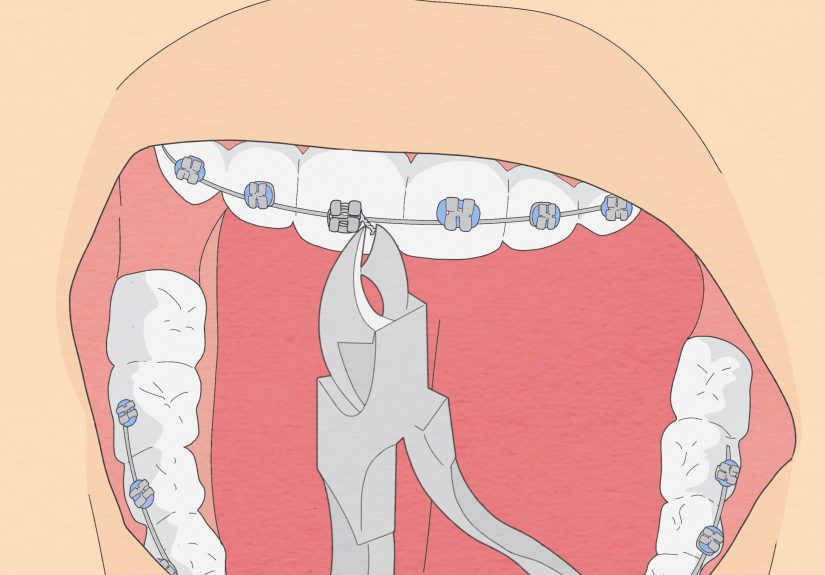
When people say they have a broken braces wire, they usually mean one of a few things: the main archwire has shifted and is poking the inside of the mouth, a small tie wire has come loose, or a bracket has popped off and is now sliding along the wire like it pays rent there.
Braces work because wires run through brackets and apply gentle, controlled force to move teeth. When a wire bends, breaks, or pops out of place, that force can change. Translation: your mouth gets irritated, and your treatment may not work the way it should until the issue is repaired.
Before you try anything, wash your hands, stand in front of a mirror, and figure out what is happening. Is the wire sticking out at the back? Is a bracket loose? Is a tiny metal end scratching your cheek or tongue? Once you know what kind of chaos you are dealing with, you can use the right fix.
1. Cover the sharp area with orthodontic wax
If your braces wire is poking your cheek, lip, gums, or tongue, orthodontic wax is usually the fastest and safest first move. Think of it as a tiny cushion that tells the sharp metal, “You are done causing problems for today.”
How to use orthodontic wax
- Wash your hands.
- Brush your teeth if possible, or at least rinse your mouth.
- Dry the irritating bracket or wire with a clean tissue, gauze, or cotton swab.
- Roll a pea-sized amount of wax into a ball.
- Flatten it slightly and press it over the sharp end or rough area.
If the wax falls off, replace it. That is normal. The goal is not beauty. The goal is survival. Orthodontic wax is a temporary fix, but it is one of the most reliable ways to stop rubbing and help small mouth sores calm down.
If you do not have wax at home, check a pharmacy. Many stores keep it in the oral care aisle near floss, mouthwash, and the section that somehow always looks more organized than your bathroom drawer.
2. Gently nudge the wire back into place
If the wire is sticking out but still attached, you may be able to move it into a more comfortable position. The key word here is gently. This is not a wrestling match.
What to use
- A clean pencil eraser
- A clean cotton swab
- A similar blunt, soft tool
What to do
Using the eraser or cotton swab, carefully push the wire toward the tooth so it lies flatter and stops stabbing soft tissue. Small movements are enough. If the wire moves and you feel relief, great. Add wax afterward for extra protection.
Do not jab, yank, or force the wire. If it resists, skip the heroics and move on to the next step. A simple reposition can help with a loose or poking braces wire, but if the wire is badly bent or deeply out of place, your orthodontist needs to handle it.
3. Use clean tweezers for a tiny loose end or sliding bracket
Sometimes the issue is not the big wire itself but a small loose end, or a bracket that has detached from the tooth and is now sliding along the wire like a confused little subway car. In those cases, clean tweezers may help.
When tweezers can help
- A small wire tie is sticking out
- A detached bracket is still on the wire and irritating your mouth
- A tiny broken piece can be safely lifted away because it is already loose
Use clean tweezers to carefully move the loose piece into a less annoying position. If a bracket is still attached to the wire, you may be able to slide it gently toward the center of the tooth. If a very small broken piece is already free and easy to remove, you can place it in a clean container and bring it to your appointment.
What you should not do is twist metal around, pull hard, or play orthodontist in your bathroom mirror for 45 minutes. If the piece is not easy to reposition, stop and call the office.
4. No wax? Use gauze or a small cotton pad as a temporary buffer
Orthodontic wax gets most of the attention, but it is not the only temporary barrier. If you are caught without wax, a small piece of clean gauze or cotton can help cushion the sharp spot until you can get proper supplies.
How to do it
Dry the area as much as possible. Then place a small bit of clean gauze or cotton over the irritating end. This will not stick as well as wax, and it is definitely not a long-term solution, but it can reduce friction for a little while.
This is especially helpful if you are away from home, at school, traveling, or stuck somewhere inconveniently far from your braces emergency kit. In other words, life.
One caution: make sure the cotton or gauze is large enough to handle safely and do not use anything that could easily shred, unravel, or get stuck around the wire.
5. Soothe the sore spot with warm salt water, soft foods, and smart pain relief
A broken braces wire often causes more than sharpness. It can leave behind an irritated cheek, a sore tongue, or a tiny ulcer that makes everything from talking to drinking orange juice feel deeply personal.
Try a warm salt water rinse
Mix about half a teaspoon of salt into 8 ounces of warm water. Swish gently, then spit. This can help clean the area and calm irritated tissue.
Eat like your mouth has had enough excitement
For a day or two, stick with softer foods such as:
- Yogurt
- Scrambled eggs
- Mashed potatoes
- Oatmeal
- Smoothies
- Pasta
- Soup that is not lava-hot
Skip hard, crunchy, chewy, and sticky foods. That means no popcorn kernels, hard candy, gum, ice chewing, or anything else that sounds like it belongs in a “how this got worse” story.
If you need pain relief
Over-the-counter pain relievers may help, if they are appropriate for you and you follow the package directions. If you are not sure what is safe based on your age, health, or medications, check with a medical professional.
6. Call your orthodontist and know when it is actually urgent
Here is the golden rule: even if you manage the poking, you still need to contact your orthodontist. Broken braces wires can interfere with treatment, and what feels “good enough for now” may still need a prompt repair.
Call your orthodontist soon if:
- The wire keeps shifting back out
- You cannot cover or reposition it comfortably
- A bracket is loose or sliding around
- You are in ongoing pain
- The broken wire is affecting how your teeth fit together
Seek urgent medical or dental care right away if:
- You have heavy or nonstop bleeding
- You have trouble breathing or swallowing
- You have severe pain with facial swelling or fever
- You suspect a broken jaw or major dental injury
- You swallowed or inhaled a piece and are coughing, choking, or struggling to breathe
Most broken braces are not true emergencies, but some situations absolutely are. When breathing, swallowing, infection, or severe trauma enters the chat, skip the wait-and-see approach.
What not to do when a braces wire breaks
A calm mouth is good. A creative but questionable DIY experiment is not. Here are a few things to avoid:
- Do not use sharp tools like knives, safety pins, or random metal objects.
- Do not keep bending the wire back and forth because that can make it worse.
- Do not pull off a bracket that is still attached to the wire.
- Do not ignore it for days just because the pain comes and goes.
- Do not cut the wire unless your orthodontist specifically instructs you to do so and you understand how to do it safely.
That last one matters. Some orthodontic offices may occasionally guide patients through trimming a tiny protruding end as a last resort, but it is not the first choice, and it is not something to improvise casually. Wax, gentle repositioning, and professional advice come first.
How to prevent another broken braces wire
Braces wires do not usually break for fun. They break because something put pressure on them, shifted them, or damaged the hardware around them. Prevention will not make you invincible, but it can absolutely lower the odds of a repeat performance.
Helpful habits that protect braces
- Avoid hard, sticky, and chewy foods
- Cut crunchy fruits and vegetables into smaller pieces
- Do not chew ice, pen caps, or fingernails
- Wear a mouthguard for sports
- Brush well around brackets and wires
- Floss daily using a floss threader or orthodontic tool if needed
- Keep regular cleaning appointments and orthodontic visits
- Carry a small braces kit with wax, a mirror, cotton swabs, and gauze
Good braces care is not just about comfort. It also helps prevent plaque buildup, food traps, white spots on teeth, and treatment delays. In other words, a little effort now saves a lot of annoyance later.
Common experiences with a broken braces wire: what real life feels like
One reason people panic about a broken braces wire is that the experience is weirdly dramatic for such a tiny object. It is just a little piece of metal, and yet it can make your entire face feel like it has entered a protest. Knowing what other people commonly go through can make the problem feel a lot less alarming.
A very common experience is the “everything was fine until dinner” moment. Someone bites into pizza crust, toast, a granola bar, or a suspiciously crunchy salad topping, and suddenly the back wire starts poking the cheek. At first, they think food is stuck. Then they realize it is not food. It is betrayal.
Another classic scenario happens late at night. The orthodontist’s office is closed, the wire starts rubbing the tongue, and every attempt to fall asleep turns into a tiny fencing match inside the mouth. In these situations, wax becomes the overnight hero. It is not glamorous, but neither is sleeping with your mouth half-open because a wire has declared war.
Parents often deal with the “my child says it hurts, but I cannot see anything” phase. That is common too. Sometimes a loose tie wire is small enough that it does not look dramatic in the mirror, yet it still scratches soft tissue every time the child talks or chews. A flashlight, a calm look, and a little wax can make a huge difference.
Teens and adults also frequently experience the “I thought I fixed it, but it moved again” problem. This usually happens when the wire is only temporarily nudged back and then shifts while eating, brushing, or talking. That does not mean you failed. It just means the underlying issue still needs professional adjustment.
Some people are surprised by how much soreness lingers even after the sharp part is covered. That is normal. If the wire has rubbed the inside of your cheek for hours, the tissue may stay tender for a day or two. Salt water rinses, softer foods, and avoiding spicy or acidic foods can help while the area settles down.
Then there is the emotional side, which deserves mention because braces problems always seem to happen at the worst possible time: before photos, before a date, on vacation, during exams, or five minutes before leaving for work. It is frustrating, uncomfortable, and inconvenient. But it is also usually manageable. Most broken braces wire issues can be stabilized at home long enough for an orthodontist to repair them properly.
The biggest shared experience, honestly, is relief. Once the sharp end is covered, the wire is moved off the cheek, and the orthodontist is contacted, most people go from full panic mode to “okay, I can deal with this.” That is the goal. Not perfection. Just getting your mouth out of crisis mode and back to normal-ish.
Final thoughts
If you are wondering how to fix a broken braces wire, the safest answer is this: make it comfortable, do not make it worse, and get professional help. Orthodontic wax, a clean pencil eraser, cotton swabs, tweezers, salt water rinses, and soft foods can all help you manage the problem temporarily. Your orthodontist, however, is the one who turns the temporary truce into an actual fix.
So yes, a broken braces wire is annoying. Yes, it can make chewing feel like an extreme sport. But with the right steps, you can protect your mouth, stay calmer, and keep your treatment moving in the right direction. Which is exactly what that little wire was supposed to be doing in the first place.






 Close
Close