
Table of Contents >> Show >> Hide
- Who Is the TikToker Behind the Viral Tattoo Clapbacks?
- Why This Story Blew Up Online
- The Bigger Issue: Online Harassment Is Not Just “People Being Mean”
- Is Trolling the Bullies Actually a Good Idea?
- What TikTok Culture Has to Do With It
- Why the Tattoo Element Hits Harder Than Other Viral Feuds
- The Real Takeaway
- Related Experiences: What This Kind of Viral Backlash Actually Feels Like
- Conclusion
The internet has given us many strange forms of revenge. There are clapback videos, shady subtweets, duet takedowns, and the classic “I’m not naming names, but…” monologue. But every once in a while, social media cooks up a comeback so bizarre it makes the rest look like polite customer service. Enter the viral TikToker who reportedly decided that if strangers were going to leave nasty comments on his page, he might as well turn their insults into permanent body art. Yes, permanent. As in tattoo gun, ink, skin, forever-ish.
That outrageous premise is what made the story explode. It was not just another creator responding to hate with a sarcastic caption. It was a creator making online cruelty feel oddly physical. Suddenly, trolling was not floating in the cloud anymore. It had a shape, a cost, and a needle attached to it. That is exactly why the headline “Comment At Your Own Risk” hit such a nerve. It sounded like a joke, a threat, and a social media marketing slogan all at once.
But beneath the spectacle is a more interesting story about online bullying, internet performance, identity, and the bizarre economy of attention. Why did this TikToker go viral for trolling bullies by getting them tattooed? Why were millions of people fascinated instead of simply horrified? And where is the line between defending yourself and becoming the chaos goblin you were trying to defeat in the first place?
Who Is the TikToker Behind the Viral Tattoo Clapbacks?
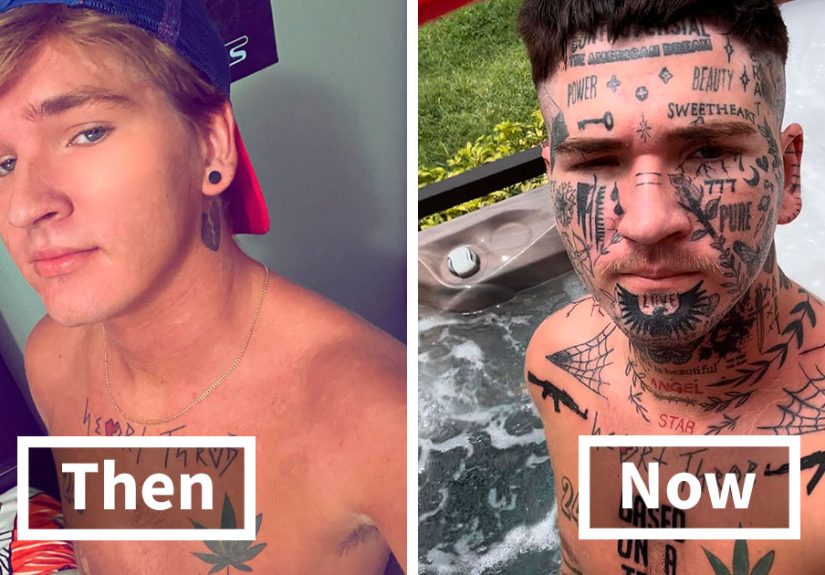
The creator at the center of the story is Ethan, a heavily tattooed TikToker from Tampa, Florida, best known online as @modern_day_angel. According to multiple reports, his account originally featured content about his religious upbringing and his experience as a gay man. Over time, though, the page evolved into something much louder, sharper, and significantly more unhinged in the internet-famous sense of the word. Instead of ignoring hateful comments, he began building content around them.
That shift matters. It helps explain why this story struck such a chord. Online harassment is common, but the usual advice is familiar: block, report, move on, touch grass, drink water, perhaps scream into a pillow. Ethan chose a wildly different path. He made his haters part of the show. In interviews, he described getting tattoos based on insulting comments, the people behind them, or the digital fallout that followed. The trolling became the content, and the content became his brand.
One of the stories most often cited in coverage involved a commenter whose criticism reportedly helped launch his format into a broader viral cycle during the summer of 2023. From there, the concept escalated. The hook was simple and effective: say something mean, and you might end up immortalized on somebody else’s body. That is the kind of sentence that sounds fake until the algorithm decides it is perfect.
Why This Story Blew Up Online
1. It flips the power dynamic in a way people instantly understand
Most bullying stories online follow a familiar rhythm. Someone posts. Someone mocks. The target either disappears, apologizes, argues, or gets dogpiled. This story disrupted that script. Instead of shrinking, the creator weaponized absurdity. He turned cruelty into content, and content into currency. In internet terms, that is a power move. In normal-human terms, it is also a little alarming.
There is a reason reversal stories travel so fast. People love seeing the target of ridicule regain control, especially when the response is creative. A tattoo is not just a comeback. It is a performance of fearlessness. It says, “You thought your comment would ruin my day. Congratulations, it’s now part of my lore.” Whether viewers found that hilarious or unsettling, they could not pretend it was forgettable.
2. Tattoos make online drama feel real
The internet is often slippery. Screens create distance. Comments can feel disposable, even when they are cruel. Tattoos do the opposite. They are intimate, expensive, and hard to undo. That permanence is what gave the story its shock value. People were not just reacting to a creator trolling bullies. They were reacting to the fact that he was using one of the most permanent forms of self-expression to answer some of the internet’s most disposable behavior.
That contrast is the whole magic trick. A troll comment may take three seconds to type. A tattoo can take hours to plan, pay for, and sit through. One is impulsive. The other is commitment with a buzzing soundtrack. Put them together, and you get a story that feels half genius, half fever dream.
3. The internet cannot resist a morally messy main character
Clean heroes are fine. Messy heroes go viral. Part of the fascination here came from the fact that many viewers were not sure whether to cheer, cringe, laugh, or call a therapist on behalf of the entire timeline. The creator was not presenting himself as a calm victim with a polished TED Talk about resilience. He was theatrical, provocative, and willing to escalate.
That made the story more clickable and more controversial. Supporters saw a bullied creator fighting back in a language trolls finally understand: humiliation. Critics saw someone turning harassment into a performance loop that risked becoming harassment itself. Both reactions fueled the same machine. Outrage and applause are cousins online, and both are excellent for engagement.
The Bigger Issue: Online Harassment Is Not Just “People Being Mean”
As entertaining as the tattoo angle is, the subject underneath it is not lightweight. Online harassment is a real and documented problem, and it often hits identity-based targets hardest. Research has shown that online abuse can be persistent, public, and difficult to escape. It can also affect reputation long after the original moment has passed, which makes social media cruelty feel less like a fleeting insult and more like a digital stain.
That context matters even more in this case because the creator’s identity was part of his content. Reports about Ethan repeatedly connected the attention on his account to visible self-expression, queerness, and a highly unconventional appearance. Those are exactly the kinds of traits that can attract pile-ons online. In other words, this was not just random internet snark floating in from nowhere. It fit a wider pattern in which people who visibly challenge norms often receive disproportionate abuse.
That helps explain why so many viewers found the story emotionally satisfying. The tattoo stunt felt like a revenge fantasy against a culture that still treats certain people as public targets. When the internet mocks someone for being visibly different, a dramatic comeback can feel cathartic, even if it is wildly impractical and probably not what your guidance counselor had in mind.
Is Trolling the Bullies Actually a Good Idea?
Now for the less-fun question. Is this a brilliant response to bullying, or is it the internet eating its own tail? The honest answer is: both interpretations have some merit.
On one hand, the stunt works because it exposes the laziness of online cruelty. Many trolls assume there are no consequences for the things they type. They expect anonymity, distance, and zero accountability. Seeing someone turn those cheap insults into a permanent and public joke can be satisfying. It punctures the illusion that hateful comments are harmless background noise.
On the other hand, retaliation on social media has a nasty habit of escalating. There is a difference between mocking a comment and digging into someone’s personal life. There is also a difference between satire and targeted humiliation. Once private information, family members, or off-platform details get pulled into the mix, the moral high ground packs its bags and leaves the building. Fast.
That is where the story gets ethically slippery. A creator may begin as the target of harassment and still make choices that intensify the cycle. In fact, that is one of the internet’s favorite traps. It rewards retaliation that is louder, meaner, and more theatrical than the original offense. The algorithm does not care who started it. It cares who kept people watching.
What TikTok Culture Has to Do With It
TikTok did not invent bullying, but it did supercharge a certain kind of public performance around conflict. The platform is built for reaction. Comment sections become stages, duets become mini-trials, and controversy is often packaged as entertainment. In that ecosystem, even a nasty remark can function as raw material.
That helps explain why this story felt so native to TikTok. It was dramatic, visual, escalating, and impossible to summarize without sounding like you made it up. It also fit the platform’s tendency to blur the line between authenticity and bit. Was the creator sincerely hurt? Was he playing a character? Was the trolling a defense mechanism, an art project, or a business model with ink? The answer may be yes, yes, and unfortunately yes again.
That uncertainty did not hurt the story. It helped it. Viral fame today often depends on being interpretable from multiple angles. Fans can call it empowering. Critics can call it reckless. Everyone still watches the video.
Why the Tattoo Element Hits Harder Than Other Viral Feuds
Tattoos carry cultural weight. They can signal identity, rebellion, memory, grief, humor, or community. They can also be deeply impulsive, which is probably why half the world has at least one design they would now describe as “a time capsule of poor judgment.” Because tattoos are permanent or at least stubbornly semi-permanent, they raise the emotional stakes of any story attached to them.
That is especially important here. The tattooed response works as spectacle because it turns a passing insult into something heavy and lasting. It is internet drama translated into flesh. That makes people stop scrolling. It also makes them ask a deeper question: what kind of online environment produces a world where getting a troll immortalized on your body feels like a coherent content strategy?
The answer is not flattering. It is a world where attention is valuable, cruelty is common, platform moderation is imperfect, and creators are often expected to transform pain into content if they want to survive the feed. This story just happened to do that with a tattoo machine and a sense of humor dark enough to qualify for its own zip code.
The Real Takeaway
The viral success of “Comment At Your Own Risk” was never just about body art. It was about the fantasy of consequence. People are tired of seeing strangers dump cruelty into comment sections as if human beings are NPCs designed to absorb abuse. Ethan’s stunt, however extreme, dramatized the idea that words can come back to haunt the people who toss them around carelessly.
At the same time, the story also shows the danger of building your identity around internet conflict. A clever clapback can be empowering. A whole ecosystem of revenge content can become a trap. When every insult becomes a new episode, the bully and the anti-bully can start feeding the same machine.
That tension is what makes this story memorable. It is funny, troubling, clever, excessive, and weirdly revealing. It exposes how badly social media can reward hostility, but also how hungry audiences are for any sign that the target is not powerless. In that sense, the tattoos were not just retaliation. They were theater. They were proof of pain, proof of defiance, and proof that the internet will watch almost anything if it comes with enough audacity.
So, was this TikToker’s strategy brilliant? Maybe. Unhinged? Absolutely. Advisable for normal people? Please do not let this article be your sign from the universe to book a revenge tattoo appointment. But as a piece of viral internet culture, it was undeniably effective. It turned cruelty into spectacle, spectacle into conversation, and conversation into a very modern warning label: comment at your own risk.
Related Experiences: What This Kind of Viral Backlash Actually Feels Like
To really understand why this story hit so hard, it helps to step back from the headline and think about the experience surrounding it. Not the algorithmic version. The human version. The part where a stranger wakes up, opens an app, and finds their face, body, voice, or identity being treated like a public suggestion box for people who are bored, angry, or desperate to be funny in front of an audience.
For the person receiving that kind of attention, online bullying rarely feels like a single rude comment. It feels cumulative. One remark becomes ten. Then someone screenshots it. Then another person quotes it with an insult that is somehow both less original and more vicious. Even when the comments are ridiculous, they can create a weird buzzing pressure, like your phone has become a mosquito with Wi-Fi. That is part of why extreme responses sometimes make emotional sense to viewers. They understand the fantasy of not just enduring humiliation, but interrupting it.
There is also the experience of spectatorship. Plenty of people followed this story because it was wild, but also because it felt satisfying to watch a target refuse the usual role. Viewers are used to seeing bullied people told to be mature, rise above it, and quietly preserve their dignity while the comment section turns into a dumpster fire. This story broke that pattern. It offered a form of revenge that was performative, absurd, and impossible to ignore. For some viewers, that felt liberating. For others, it felt like watching a gasoline fight next to a bonfire.
Then there is the experience of the trolls themselves, which is maybe the strangest part. The internet has trained a lot of people to believe that posting cruelty is consequence-free entertainment. A mean comment can feel anonymous, disposable, and unserious. But the moment somebody reacts in a big, visible, deeply weird way, that illusion collapses. Suddenly the comment is not just text. It is evidence. It has a life beyond the moment it was typed. That is unsettling, and that discomfort may be part of why the story spread so fast.
There is even an experience built into the tattoo itself. A tattoo is pain with intention. It takes planning, money, time, and endurance. Whether people admired the stunt or hated it, they understood that it was not casual. The act of sitting for the tattoo turned a passing insult into a ritual. In a culture where so much communication is frictionless and forgettable, that level of commitment reads as shocking. It says, “I am not just reacting. I am engraving the bit.”
And maybe that is the deepest reason the story stuck. It captured the emotional absurdity of modern online life. People say cruel things casually. Other people turn those cruel things into content. Everyone else watches, debates, judges, laughs, and shares. Somewhere in that loop, real feelings still exist: shame, anger, fear, delight, vindication, exhaustion. This viral TikTok saga was ridiculous, yes, but it was also familiar. It showed what happens when internet cruelty meets a creator who refuses to play the quiet victim and instead answers the chaos with even louder chaos.
Conclusion
“Comment At Your Own Risk” went viral because it packaged several internet obsessions into one unforgettable story: tattoos, trolls, identity, revenge, and the spectacle of somebody refusing to be an easy target. The result was messy, hilarious, ethically questionable, and oddly revealing about how social platforms work. It reminded people that online harassment is not weightless just because it arrives through a screen. It also showed that when creators fight back in theatrical ways, audiences will treat the battle like appointment viewing.
That does not mean this is the best model for handling bullies. It means this is the perfect model for understanding the internet in 2026: pain becomes performance, performance becomes engagement, and engagement becomes fame. The tattoos were the hook, but the real story was about consequence, control, and the strange emotional math of social media. If nothing else, this viral saga proved one thing beyond debate: the comment section is no longer just where people talk. For some creators, it is where the plot begins.





 Close
Close