
Table of Contents >> Show >> Hide
- Highway vs. Freeway vs. Expressway: Does the Name Matter?
- Before You Get On: Set Yourself Up to Win
- The On-Ramp: Merging Without Making Enemies
- Speed + Space: The Real Highway Safety Superpower
- Lane Discipline: Where Highway Calm Comes From
- Passing and Being Passed: Clean, Simple, Safe
- Sharing the Road With Trucks and Buses (a.k.a. The Giants)
- Exits and Interchanges: Beat the “Late-Exit Panic”
- Night, Rain, and Bad Weather: Drive for What You Can See
- Work Zones and Roadside Incidents: “Drive Like You Work Here”
- Distraction and Fatigue: The Quiet Highway Threats
- If Something Goes Wrong: Emergencies Without the Chaos
- The “10-Second” Highway Safety Checklist
- Conclusion
- Real-World Highway Driving Experiences (Plus What They Teach You)
- 1) The first big merge: “Why is everyone so close?”
- 2) The semi-truck “wall”: learning to avoid the no-zone
- 3) The surprise brake lights: why space is stress relief
- 4) The missed exit: the moment you choose safety over pride
- 5) Night + rain: when visibility shrinks and confidence should too
- 6) The long drive home: catching drowsiness before it catches you
Highways are where your commute turns into a high-speed group project. Everyone’s trying to get somewhere, half the class forgot the syllabus,
and one person is definitely eating a burrito while “multitasking.” The good news: highway driving isn’t scary once you understand the rhythm.
The bad news: the rhythm is not “do whatever feels right in the moment.”
This guide breaks down what safe freeway/expressway driving actually looks likemerging without drama, keeping a smart following distance,
handling trucks, navigating exits, and staying calm when traffic gets weird. Think of it as defensive driving, but with fewer lectures and more “please don’t do that.”
Highway vs. Freeway vs. Expressway: Does the Name Matter?
In everyday U.S. driving, these terms often get used interchangeably. Generally:
- Freeway: controlled access (on-ramps/off-ramps), no stoplights.
- Expressway: may be controlled access, but sometimes includes limited intersections depending on the region.
- Highway: broad term that can include freeways, rural highways, and routes with intersections.
The safety basics are the same: manage speed, space, and attentionbecause the stakes go up when everyone’s moving fast.
Before You Get On: Set Yourself Up to Win
Do a 10-second vehicle reality check
You don’t need to perform a pre-flight inspection like you’re piloting a Boeing, but you should know:
your tires look healthy (not low or bulging), your windshield is clean, your mirrors are positioned well,
and your gas level won’t force you into a “spiritual journey” to the next exit.
Pick the right mindset
Highway safety is mostly decision quality. The goal is to drive predictably, not “politely” in a way that confuses everyone.
Be smooth. Be clear. Signal early. Don’t surprise people at 70 mph.
The On-Ramp: Merging Without Making Enemies
Use the ramp to match traffic speed
The ramp (and any acceleration lane) is there so you can build speed and enter the flow of traffic smoothly.
Merging at a drastically slower speed forces other drivers to brake hard or swerveexactly the kind of highway “teamwork” nobody asked for.
Scan early, signal early, pick a gap
As you approach the merge point, look for an opening before you’re at the end of the lane. Use your turn signal to communicate,
then commit to a safe gap. If traffic is heavy, aim for a space that gives you a cushionwedging your car into a half-gap is not a personality trait.
In lane closures, think “zipper,” not “battle royale”
When two lanes become one (often in construction zones), the zipper merge approach is simple: cars take turns at the merge point.
It’s not “cutting” when both lanes are meant to be used fully. It’s organized, fair, and shockingly effective when people remember we live in a society.
Speed + Space: The Real Highway Safety Superpower
Use a following-distance rule you can actually remember
A solid baseline is the 3–4 second rule: pick a fixed object the car ahead passes (a sign, shadow, bridge seam),
then count “one-one-thousand…” until you pass it. If you reach it too soon, back off.
More space buys you time to brake gently, avoid rear-end crashes, and reduce stress.
Increase your cushion in the real world
Rain, fog, darkness, heavy traffic, construction zones, or just a day when you feel tired? Add more seconds.
On slick roads, extra following distance is not being timidit’s being mathematically correct.
Lane Discipline: Where Highway Calm Comes From
Keep right, pass left (and don’t “camp” in the passing lane)
Most states teach a simple principle: slower traffic stays right, the left lane is mainly for passing.
Hanging out in the left lane at the same speed as everyone else creates congestion, encourages risky passing, and turns normal drivers into frustrated poets.
Change lanes like a professional: mirror, signal, shoulder check, go
Safe lane changes follow a pattern:
check mirrors (rear + side),
signal,
quick shoulder check for blind spots,
then move smoothly.
Avoid weaving. Avoid last-second darts. If you need multiple lanes, do it one lane at a time unless road markings and traffic conditions clearly allow otherwise.
Avoid living in someone’s blind spot
If you’re cruising next to another vehicle for a long time, you’re increasing riskespecially near big trucks.
Either pass steadily or drop back. “Hovering” beside a vehicle is like walking next to a stranger swinging a backpack: eventually something’s going to bonk you.
Passing and Being Passed: Clean, Simple, Safe
How to pass safely
- Make sure you have room and a speed advantage.
- Signal, move left, pass without lingering in blind spots.
- When you can see the passed vehicle clearly in your rearview mirror, signal and return to the right lane.
What to do when someone tailgates or speeds
Don’t “teach lessons” on the freeway. The safest move is usually to increase your following distance (so you can brake gradually)
and, if possible, move right to let aggressive drivers pass. You’re not surrenderingyou’re choosing not to co-star in their bad decisions.
Sharing the Road With Trucks and Buses (a.k.a. The Giants)
Respect stopping distance and blind spots
Large commercial vehicles need more time and distance to stop, and they have major blind spots (“no-zones”) around the front, sides, and rear.
If you can’t see the driver’s mirrors, assume the driver can’t see you.
Pass decisively and don’t cut in too close
When passing a truck, do it smoothly and avoid hanging out alongside the trailer. After passing, don’t merge back in immediatelyleave plenty of room.
Cutting in close forces the truck driver to brake with a vehicle that can weigh many times more than yours. Physics will not negotiate.
Exits and Interchanges: Beat the “Late-Exit Panic”
Plan early
If you know your exit is coming up, start moving toward the correct lane early (without crossing solid lines).
The safest exit is the one you can take calmlynot the one you “earn” by swerving across three lanes like you just remembered you left the oven on.
Missed the exit? Congratulations, you are now taking the next exit
Never stop on the highway, never back up on a ramp, and never attempt a last-second cut across painted gore areas.
Take the next exit and reroute. It costs minutes, not lives.
Night, Rain, and Bad Weather: Drive for What You Can See
Night driving basics
At night your visibility shrinks, and hazards appear later. Slow down a bit and increase following distance.
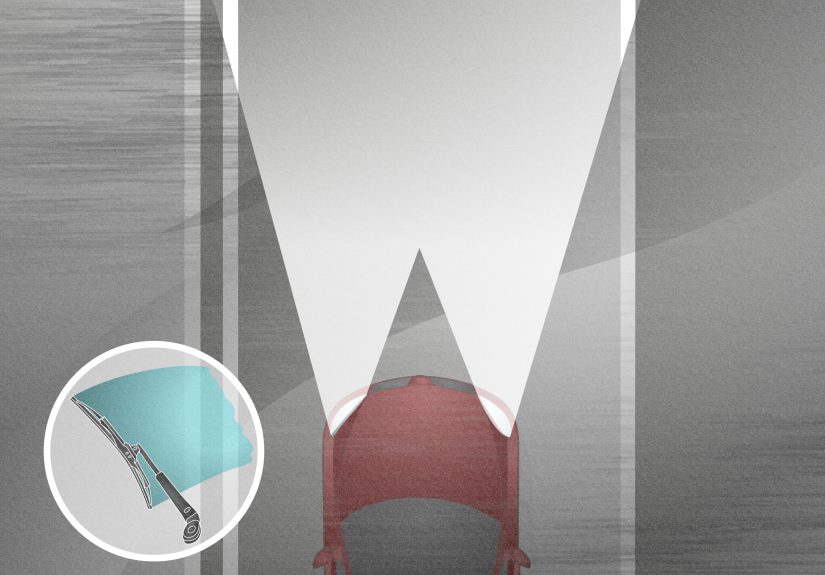
Keep your windshield clean inside and out (glare is real), and use high beams responsibly when they won’t blind others.
Rain and slick roads
Gentle steering, gentle braking, more space. If traction is reduced, sudden inputs are your enemy.
If your vehicle begins to skid, the key is to stay calm and make smooth correctionsabrupt moves tend to make things worse.
Work Zones and Roadside Incidents: “Drive Like You Work Here”
Work zones are dynamic: lanes shift, shoulders disappear, people are close to traffic, and the road surface may be uneven.
Slow down, follow signs, merge where indicated, and keep distractions off. Many places also increase penalties for violations in work zones.
Distraction and Fatigue: The Quiet Highway Threats
Phones are not “quick”they’re five seconds of blindness
Texting or looking down even briefly can take your eyes off the road long enough to travel the length of a football field at highway speeds.
If you need navigation, set it before you go. If you need to respond to something, take an exit or pull off safely.
Drowsy driving is impaired driving
If you’re fighting heavy eyelids, missing signs, drifting, or hitting rumble strips, it’s time to stop.
Plan breaks on longer trips, avoid peak sleepiness hours when you can, and don’t treat caffeine like a magical force field.
If Something Goes Wrong: Emergencies Without the Chaos
Breakdowns and shoulder stops
If you must stop, signal early, move to the right shoulder as far as possible, turn on hazard lights, and stay buckled.
If it’s unsafe to exit the vehicle (fast traffic, narrow shoulder), staying inside may be safer until help arrives.
Tire blowout basics
A blowout is loud and dramatic, but your response should be boring: hold the wheel firmly, ease off the accelerator,
keep the car straight, and gradually move to a safe spot. Sudden hard braking can make the vehicle harder to control.
The “10-Second” Highway Safety Checklist
- Buckle up (every seat, every trip).
- Mirrors set, windshield clean, lights on when needed.
- Merge at speed and signal early.
- 3–4+ seconds of following distance (more in poor conditions).
- Keep right, use left lanes mainly to pass.
- One lane change at a time, with a shoulder check.
- Respect trucks: avoid blind spots, don’t cut in close.
- Plan exits early; never back up or stop to “save” one.
- Zero phone handling; pull off if you must.
- Stop if drowsy. Arriving late beats not arriving.
Conclusion
Safe highway driving isn’t about being fearlessit’s about being prepared, predictable, and patient.
Merge smoothly, leave space, keep your attention on the road, and treat lane discipline like a public service.
When you drive this way, the freeway stops feeling like a chaotic video game and starts feeling like what it should be:
an efficient, fast-moving system that gets everyone home in one piece.
Real-World Highway Driving Experiences (Plus What They Teach You)
Most people don’t learn highway driving from a single perfect lessonthey learn it from a handful of “well, that was intense” moments.
Here are a few common scenarios drivers run into, and the practical safety lessons hiding inside them.
1) The first big merge: “Why is everyone so close?”
Picture a busy on-ramp with a short acceleration lane. You check your mirror andsurprisecars are already doing 65 mph.
New highway drivers often react by hesitating, slowing down, or (worst case) stopping at the end of the ramp.
The safer move is usually the opposite: use the ramp to build speed, signal early, and merge into a clear gap.
That gap might be behind a car rather than in front of it, and that’s okay. A calm merge beats a heroic one.
2) The semi-truck “wall”: learning to avoid the no-zone
Another classic: you’re cruising along and suddenly realize you’ve been sitting next to a tractor-trailer for way too long.
Nothing bad has happened, but you feel uneasyand that instinct is useful. Trucks have large blind spots, and lane changes can happen quickly
when traffic shifts or lanes narrow. The lesson: don’t hover. Either pass steadily (without speeding like you’re qualifying for a race)
or drop back so you’re visible and have reaction time.
3) The surprise brake lights: why space is stress relief
One minute traffic is flowing, the next minute brake lights bloom across all lanes like a holiday display nobody wanted.
Drivers who follow too closely are forced into panic braking, which increases the chance of a rear-end crashand starts a chain reaction behind them.
Drivers who keep a 3–4+ second buffer usually brake earlier and gentler, and that smoother response helps everyone. The lesson is simple:
space is time, and time is what keeps mistakes from becoming collisions.
4) The missed exit: the moment you choose safety over pride
Nearly every driver has had the “that’s my exit!” moment, followed by the temptation to do something creative with steering.
Safe drivers learn a humble truth: missing an exit is normal. Risky swerves across multiple lanes, cutting over solid lines,
or diving through a gore area is not. The lesson: take the next exit and reroute.
Your GPS will forgive you faster than the laws of physics will.
5) Night + rain: when visibility shrinks and confidence should too
Rain at night turns reflective signs into glare, lane markings into faint suggestions, and puddles into hydroplaning opportunities.
Most drivers who’ve done it remember thinking, “I can’t see as far as I’m traveling.” That’s the cue to slow down a bit,
increase following distance, and keep steering/braking inputs smooth. The lesson: drive for the conditions you have,
not the conditions you wish you had.
6) The long drive home: catching drowsiness before it catches you
Drowsy driving can feel sneaky: first you miss a sign, then you realize you don’t remember the last few miles.
Many drivers describe the same warning signsheavy blinking, wandering attention, drifting toward lane lines.
The lesson is blunt: if you’re sleepy, stop. A short break, a nap, switching drivers, or even adjusting your travel time
beats pushing through and hoping for the best.
The common thread in all these experiences is that safe highway driving is less about perfect reflexes and more about good choices early:
build space, signal clearly, plan ahead, and treat distractions and fatigue like the serious risks they are. Do that consistently,
and the freeway becomes a lot less “survive the level” and a lot more “arrive like a functioning adult.”





 Close
Close