
Table of Contents >> Show >> Hide
- What Is the Tarantella (and Why Is Everyone Moving So Fast)?
- The Music: How to Hear 6/8 Without a Music Degree
- What to Wear and Bring
- Warm-Up: Don’t Skip It (Unless You Love Regret)
- The Core Tarantella Feeling: Bounce + Lightness
- Basic Tarantella Step (Solo): The 6-Count Step-Hop
- Add Travel: The “Little Running Steps” Option
- Partner Tarantella: Flirt Without Fear
- Add Turns (Without Getting Dizzy and Spilling Your Soul)
- Regional Flavor: Tarantella Isn’t Just One Dance
- Tarantella Practice Plan (15 Minutes a Day)
- Performance Tips: Make It Look Like a Party, Not a Workout
- Where Americans Often Encounter Tarantella
- Real-World Experiences Around Tarantella (About )
- Conclusion
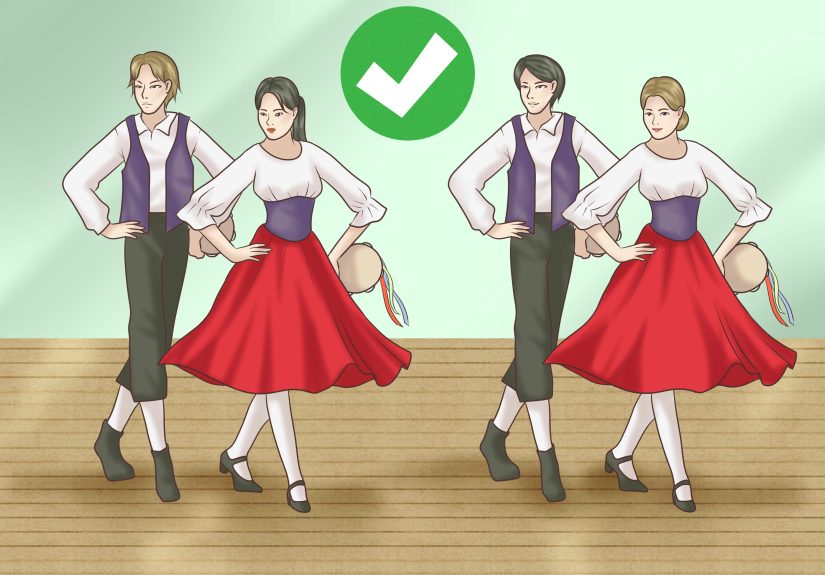
Warning: You’re about to learn a dance that looks like espresso got turned into a human being. The tarantella is fast, flirty, rhythmic, and famously “light and quick” (which is also what your legs will feel like after you stop questioning your life choices and start having fun). Traditionally, it’s a couple folk danceoften with playful teasing between partnersset to lively music in 6/8 time, and it’s not unusual to see tambourines involved. In other words: it’s basically cardio with charm and better music.
This guide breaks tarantella down into friendly, learnable pieces: the rhythm, the basic footwork, partner play, regional “flavors,” and a practice plan that won’t leave you crawling off the dance floor like a heroicbut exhaustedItalian movie extra.
What Is the Tarantella (and Why Is Everyone Moving So Fast)?
The tarantella is an Italian folk dance most commonly danced by couples. It’s known for quick, light steps and a playful, flirtatious vibe between partners, sometimes with the dancer (often the woman in older descriptions) holding a tambourine. The music is typically in lively 6/8, which gives it that rolling “da-da-da / da-da-da” drive that makes your feet want to sprint even if your brain is still buffering.
You may also hear the tarantella linked to tarantisma historical belief (15th–17th centuries) that frenzied dancing could “cure” someone afflicted by a spider bite. Today, that story lives more as cultural history than medical fact, and many sources note that the spider bite explanation doesn’t hold up scientifically. Still, it’s part of why the tarantella has this legendary reputation for being fast, intense, and a little dramatic (like your aunt after one sip of limoncello).
The Music: How to Hear 6/8 Without a Music Degree
Most tarantella music is in 6/8 meter, often felt as two big pulses per measure, each split into three smaller beats:
- Count it: 1-2-3, 4-5-6
- Feel it: STRONG-weak-weak, STRONG-weak-weak
- Say it: “quick-quick-quick / quick-quick-quick”
A fun historical note: in some early film-music contexts, “tempo di tarantella” was practically shorthand for lively “hurry” energyfast, driving, and meant to push action forward. That same urgency is exactly what your feet will be channeling.
Pick the Right Song (Your Knees Will Thank You)
Start with a tarantella track that’s bright and clearly “in six,” but not at maximum speed. If the music feels like a sprint from the first second, you’ll spend the whole dance negotiating with your lungs instead of learning steps. Smithsonian Folkways collections and Italian folk recordings are great places to find tarantellas from different regionseach with its own personality.
What to Wear and Bring
- Shoes: Lightweight shoes with a secure fit. You want enough grip to avoid slipping, but not so much that turning becomes a wrestling match with the floor.
- Clothes: Anything that lets you bend knees and move fast. If your outfit says “I cannot lift my leg,” believe it.
- Optional prop: A tambourine if you want the classic vibe. (Bonus: shaking a tambourine makes you feel 17% more authenticthis is not peer-reviewed, but it feels correct.)
- Hydration: Tarantella is cheerful, but it’s still exercise. Water is the unsung hero of folk dance.
Warm-Up: Don’t Skip It (Unless You Love Regret)
Tarantella involves fast steps, hops, and often turning. A short warm-up helps your joints and muscles prepare. Research on warm-ups and dynamic movement commonly supports dynamic activity and dynamic stretching within warm-ups for performance readiness and injury risk reductionespecially for moving bodies like dancers and athletes.
5-Minute Tarantella-Friendly Warm-Up
- March in 6/8: Light march while counting “1-2-3, 4-5-6.”
- Ankle circles: 10 each direction per foot.
- Heel-toe rocks: Shift weight forward/back to wake up calves and feet.
- Dynamic leg swings: Front/back and side/side (controlled, not “windmill of doom”).
- Easy grapevine or side steps: Get lateral movement and balance online.
The Core Tarantella Feeling: Bounce + Lightness
Before we talk steps, lock in the feel:
- Soft knees: Your knees act like shock absorbers.
- Light feet: Think “skimming” rather than stomping.
- Small steps at first: Speed comes from control, not from launching yourself like a human pinball.
- Upright posture: Chest open, shoulders relaxed. You’re energized, not tense.
Basic Tarantella Step (Solo): The 6-Count Step-Hop
This is a beginner-friendly pattern you can use for many tarantella styles. It matches the “1-2-3, 4-5-6” count and keeps you grounded while still looking lively.
Step Pattern: “Step, Close, Hop” (Repeat)
Count 1-2-3:
- 1: Step to the right with your right foot.
- 2: Close left foot toward right (a small step in).
- 3: Hop lightly on the right (or a tiny lift/bounce if hopping is tough).
Count 4-5-6:
- 4: Step to the left with your left foot.
- 5: Close right foot toward left.
- 6: Hop lightly on the left.
Repeat. Keep it small and springy. Once it feels steady, add energy, then add direction changes.
Common Mistakes (and Easy Fixes)
- Too big: If you’re traveling across the room like you’re late for your own wedding, make the steps smaller.
- Heavy hops: Reduce hop height. Think “popcorn,” not “earthquake.”
- Losing the beat: Speak the count out loud. It feels silly. It works anyway.
Add Travel: The “Little Running Steps” Option
Many descriptions of folk dances include quick, light running steps traveling side to side. If your basic step-hop is comfortable, you can “upgrade” to a traveling version:
- Take three small running steps across counts 1-2-3, then three small running steps back across 4-5-6.
- Keep the steps tiny and the upper body relaxed.
This is where tarantella starts looking like joyful speed instead of a structured exercise. It’s also where you learn the ancient dance secret: small steps are faster than big steps.
Partner Tarantella: Flirt Without Fear
Tarantella is often danced as a couple dance with teasing, playful energy. “Flirtatious” here doesn’t have to mean romanticthink of it as a friendly game of “catch me if you can,” with smiles, eye contact, and quick changes of direction.
Partner Setup
- Stand facing each other about an arm’s length apart.
- Agree on a “no collisions” rule. This is folk dance, not bumper cars.
- Start with the basic step-hop in place so you share the same rhythm.
Partner Game 1: Mirror and Switch
- For 8 measures, both dancers do the basic step-hop while maintaining eye contact (yes, it feels intense; no, you are not in trouble).
- On the next 4 measures, one dancer adds a tiny turn or a direction change while the other mirrors it.
- Switch roles. Laugh when it gets messy. That’s part of it.
Partner Game 2: Circle and Meet
- Do 2 measures stepping in place.
- Then take 2 measures to travel in a small circle around each other (same direction).
- Return to face each other again, as if you “found” each other in the crowd.
Keep the circle small. The goal is playful motion, not orbiting like satellites.
Add Turns (Without Getting Dizzy and Spilling Your Soul)
Turns are common in stylized versions of tarantella and in stage adaptations. But you don’t need ballet-level spins to look great. Here’s a simple, safe approach:
The “Quarter-Turn” Method
- During the hop on count 3 (or 6), rotate your body a quarter turn (90 degrees).
- Continue stepping in the new direction.
- Repeat another quarter turn later to complete a full rotation over time.
This avoids the “one giant spin” that makes beginners wobble. Also: pick a visual focus point when turning (a spot on the wall), so your head doesn’t feel like it’s being used as a cocktail shaker.
Regional Flavor: Tarantella Isn’t Just One Dance
“Tarantella” is a broad label for a family of related southern Italian dance traditions, and you’ll see (and hear) differences across regions. For example, many performers and educators reference styles connected to southern Italy such as tarantella-pizzica and other local forms. Smithsonian Folkways recordings also highlight that different tarantellas reflect regional musical characteristicsmeaning the rhythm, instrumentation, and feel can shift depending on where the tradition comes from.
How to Adapt Without Overthinking
- If the music feels bouncy: emphasize hops and spring.
- If it feels driving and percussive: keep steps crisp and grounded.
- If there’s strong tambourine/frame drum energy: let your shoulders and torso have a subtle pulse, not just your feet.
The goal isn’t to “fake” a specific village style in one afternoon. The goal is to dance musically, with respect and joy.
Tarantella Practice Plan (15 Minutes a Day)
Days 1–3: Rhythm and Basics
- 2 minutes: march in 6/8 while counting out loud
- 8 minutes: basic step-hop (slow music first)
- 5 minutes: basic step-hop to a slightly faster track
Days 4–7: Travel and Direction Changes
- 5 minutes: step-hop with small side travel
- 5 minutes: “little running steps” side to side
- 5 minutes: add quarter-turns occasionally
Week 2: Partner Play and Performance Polish
- Practice mirroring with a partner or even a mirror (yes, you can flirt with yourself; confidence is important).
- Work on clean starts and finishes: begin on a strong “1,” end with a proud pose, not a collapse.
Performance Tips: Make It Look Like a Party, Not a Workout
- Smile with intent: You’re inviting the audience into the fun.
- Use the “tease and return” idea: step away, then back toward your partner.
- Play with levels: a slightly deeper knee bend for a few measures, then spring back up.
- Let the tambourine talk: if you’re holding one, accent the strong beats (“1” and “4”).
And remember: even when the dance is fast, it should still look light. Think champagne bubbles, not construction work.
Where Americans Often Encounter Tarantella
In the United States, tarantella shows up in multiple “homes”: Italian-American weddings and community events, folk music concerts, educational programs that explore Italian regional traditions, and even staged works (including ballet interpretations). That mix is part of why so many dancers learn a “starter” tarantella first and then discover deeper regional specifics later.
Real-World Experiences Around Tarantella (About )
If you’ve never seen a tarantella in the wild, picture this: you’re at a community festival, a wedding reception, or a cultural event where the food smells like garlic and optimism. Someone claps a rhythm that feels like it has wheels. A tambourine appears (as tambourines often do, like friendly glittery UFOs). And suddenly there’s a circle of people smiling like they all just remembered how to have fun at the same time.
One of the most common “first experiences” dancers describe is the moment they realize tarantella isn’t about perfect techniqueit’s about energy exchange. The music in 6/8 doesn’t just sit there politely; it nudges you forward. Beginners often start a little stiff, counting carefully, trying to “get it right.” Then a more experienced dancer steps in with light, quick footwork and an expression that says, “Relaxthis dance is allergic to fear.” That’s when the magic happens: your steps get smaller, your shoulders drop, and your body starts to ride the rhythm instead of chasing it.
Another real-world moment: partner dancing without overthinking it. In many social settings, the “flirt” in tarantella is playful rather than serious. People do quick feintsstepping toward a partner, then awaylike a game of tag where everyone agreed the prize is laughter. You’ll often see little improvisations: a tiny turn, a quick hop, a change in direction. When it works, it feels like friendly conversation in movement. When it doesn’t work, it still feels like a good joke, because the dance is fast enough that mistakes fly by before anyone can judge them.
And yes, there’s the physical reality: tarantella is sneaky cardio. A lot of dancers report the same surprise: “Why am I out of breath? I’m smiling!” That’s the tarantella trickit convinces you you’re partying while it upgrades your stamina. In a class setting, instructors often coach dancers to stay “light,” because beginners tend to stomp when they get tired. Learning to keep the steps quick but small is a genuine breakthrough. Suddenly the dance feels less like sprinting and more like bouncingspringy, buoyant, sustainable.
There’s also a cultural experience that many people appreciate as they learn more: tarantella isn’t a single frozen choreography. It’s a family of traditions, influenced by regions, communities, and contextsweddings, celebrations, and performances. Listening to different recordings (and watching different groups) can feel like traveling without a suitcase. One tarantella might sound bright and airy; another might feel percussive and intense. The experience of switching styles teaches you the best folk-dance lesson of all: let the music lead, and your body will follow.
Finally, the best “tarantella experience” is the simplest: that shared grin when the music peaks and everyone finds the beat together. For a few minutes, you’re not thinking about emails, errands, or existential dread. You’re just stepping, hopping, laughing, and moving like joy has a tempoand you finally learned how to count it.
Conclusion
To dance the tarantella, you don’t need a perfect costume, a professional partner, or a tambourine with a backstory. You need three things: the 6/8 feel, light quick footwork, and a playful spirit. Start with the step-close-hop pattern, keep your steps small, warm up like you respect your future self, and let the music drive the energy. Then, when you’re ready, add partner games, travel, and gentle turns. The tarantella rewards bravery, musicality, and the willingness to look a little ridiculous in the name of funwhich, honestly, is the best kind of dancing.






 Close
Close