
Table of Contents >> Show >> Hide
- What It Is (And Why Your Desk Suddenly Looks More Adult)
- Who Is Doug Johnston, and Why Is He Sewing Rope Into Objects?
- Materials & Construction: The “Flexible Yet Stiff” Magic Trick
- Design Language: A Pencil Cup That Thinks It’s a Sculpture
- Desk Ergonomics: How It Actually Works Day to Day
- How It Compares to Typical Pencil Cups
- Style Notes: Where This Pencil Bucket Looks Ridiculously Good
- Buying & Availability: Why This Kind of Thing Disappears
- Care & Keeping It Looking Nice
- Why People Keep Calling It “More Than a Pencil Holder”
- Experiences: of Desk Life With Doug Johnston’s Large Pencil Bucket
- Conclusion
There are two kinds of desk people in this world: the “everything in a jar” crowd and the “my pens are free-range animals” crowd.
Doug Johnston’s Large Pencil Bucket is for bothbecause it’s basically a soft-spoken peace treaty between chaos and order.
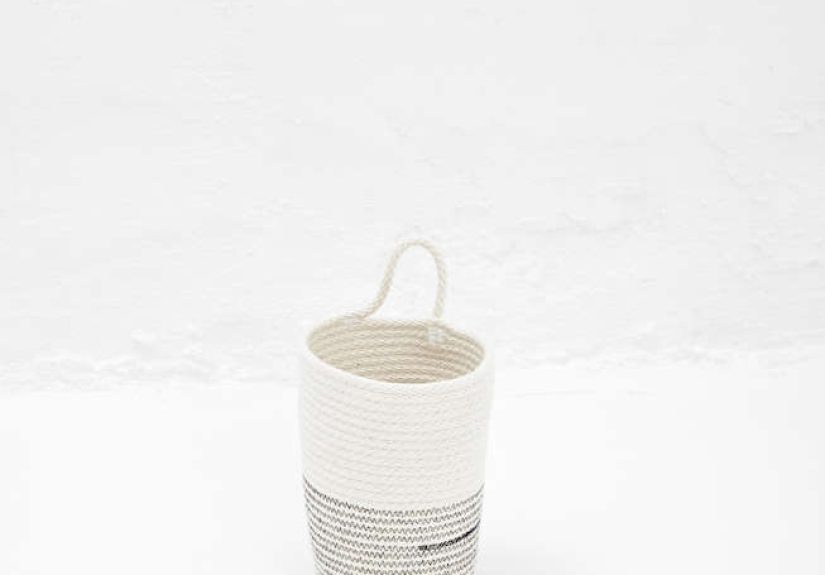
It’s a handmade cotton rope pencil holder that looks like a tiny utility pail took a studio-art class and came back with better posture.
[1]
What It Is (And Why Your Desk Suddenly Looks More Adult)
The Large Pencil Bucket is exactly what it sounds like: a bigger version of Johnston’s smaller pencil bucket, built to corral
pencils, pens, markers, X-Actos, and all the other pointy little tools that love to vanish the moment you need them.
[1]
Unlike a metal mesh cup that clangs like a tiny drum solo every time you drop in a pen, this bucket is textile-basedflexible,
but designed to hold its shape. Think “soft” in the way a good leather bag is soft: it has give, but it’s not collapsing into
a sad pancake.
[1]
Quick specs for the detail-oriented
- Approx. size: 4.5″ diameter × 6″ tall [1]
- Materials: cotton cord/rope + sewing thread (handmade; each piece varies) [1][2]
- Design detail: includes a handle so you can hang it near a desk or on a wall [1]
- Price point commonly listed: around $45 (varies by retailer/availability) [1][2][6]
Who Is Doug Johnston, and Why Is He Sewing Rope Into Objects?
Doug Johnston is a Brooklyn-based artist/designer known for coiling and stitching cotton rope into functional objectsbaskets,
vessels, and bags that live in the overlap between “useful” and “gallery-worthy.” [3][8][10]
His background runs through architecture and fabrication, which helps explain why even his smallest pieces feel engineered
rather than merely “crafty.” [6][7]
An origin story that starts at a hardware store
Multiple profiles trace the spark to something wonderfully unromantic: cotton rope on a store shelf. Johnston began experimenting
in early 2010using an industrial zig-zag sewing machine to coil rope into basketsthen started selling online the next year.
[3][7]
That timeline matters because it frames the Large Pencil Bucket not as a random novelty, but as a small, practical branch
of a larger studio practice: take a humble material, run it through a rigorous process, and make it feel newly inevitable.
[8][9]
Materials & Construction: The “Flexible Yet Stiff” Magic Trick
Johnston describes the Large Pencil Bucket as made from #6 cotton sash cord and sewing thread, producing a textile that’s
both flexible and stiff enough to stand on its own. [1]
That “contradiction” is the whole point: the bucket behaves more like a structured container than a fabric pouch.
Coiling as analog 3D printing (but with more personality)
A recurring theme in coverage of Johnston’s work is how the coiling-and-stitching method resembles additive manufacturing:
form builds up in rings/rows, guided by the maker’s decisions as the object grows. Johnston himself has compared the process
to a kind of analog 3D printingexcept the “file” is in his head and the machine is a sewing machine, not a robot.
[5]
Remodelista’s early write-up adds a useful detail: it took Johnston about a year of experimenting with materials and equipment
before he felt ready to produce pieces for sale, and the resulting baskets were described as flexible but sturdy, stitched
from cotton cord with colored thread using a vintage sewing machine. [11]
Design Language: A Pencil Cup That Thinks It’s a Sculpture
One reason the Large Pencil Bucket keeps showing up in design circles is that it doesn’t try to look “minimal” in the cold,
sterile sense. It’s minimal in materials (rope + thread), but warm in vibelike it belongs next to sketchbooks, wooden rulers,
and a mug that says “World’s Okayest Creative.”
[2][6]
Johnston has talked about blurring the boundary between sculpture and functiontreating a simple basket as a sculpture
in the shape of a basket, and refusing the idea that usefulness disqualifies something from being art. [9]
The Large Pencil Bucket is that philosophy, scaled to your desk.
Why the handle is not just “cute”
The handle makes the bucket more than a stationary pencil cup: it can live on a hook by your workspace, float near your
drafting table, or hang where you keep tools. In a small space, that’s not decorationthat’s strategy.
[1]
Desk Ergonomics: How It Actually Works Day to Day
Here’s the practical truth: most pencil holders are either too narrow (topples if you put in scissors) or too wide (everything
sinks into a dark pit and you end up fishing for a highlighter like you’re noodling for catfish).
At roughly 6 inches tall and 4.5 inches wide, the Large Pencil Bucket lands in a sweet spot for “grab-and-go” storage.
Tall enough to keep longer tools upright, wide enough to stop the cluster from feeling jammed.
[1]
And because it’s textile rather than ceramic or metal, it tends to be friendlier to delicate surfaces. You’re less likely to
scratch a lacquered desk or chip a pen barrel if you toss things in without looking. (Your desk can remain judgment-free.)
How It Compares to Typical Pencil Cups
Metal mesh cups
They’re cheap, breathable, and have the aesthetic charm of “office supply closet, aisle 3.” They also snag felt-tip markers,
catch eraser crumbs in the corners, and broadcast every pen-drop like a percussion section.
Ceramic or glass holders
Gorgeous, heavy, stablealso fragile. One bump during a frantic Zoom call and you’re suddenly learning how to sweep with the
emotional intensity of a Greek tragedy.
Wood blocks and minimalist organizers
Beautiful, but often rigidly specific: this hole is for a pen, this other hole is for a pen, and this hole is also for a pen.
If your tools vary in size (they do), the organizer silently judges you.
The Doug Johnston Large Pencil Bucket
You get structure without brittleness, softness without sag, and a handmade object that looks intentional rather than
mass-produced. It also comes with the quiet satisfaction of owning something that was stitched into existence instead of
stamped out by a factory line. [1][2][6][8]
Style Notes: Where This Pencil Bucket Looks Ridiculously Good
- Creative home office: next to sketchbooks, drafting pencils, and a notebook that’s 60% ideas and 40% grocery lists.
- Kitchen command center: hold Sharpies, scissors, a tiny tape measureanything that “belongs somewhere” but never does.
- Studio/workshop corner: keep utility blades, pens, chalk, and marking tools together without going full tool chest.
- Entryway drop zone: yes, it can be a catchall for keys and odds-and-endsbecause rules are optional and the bucket won’t narc.
Johnston’s broader practice often leans into variation and improvisationno two pieces are ever exactly alikeso the bucket’s
small irregularities read as character, not flaw. [2][10]
Buying & Availability: Why This Kind of Thing Disappears
A handmade desk organizer lives in a different economy than mass-market cups: it doesn’t “restock” like toothpaste.
Listings have historically put the Large Pencil Bucket around $45, including appearances through design retailers like Totokaelo,
and it’s also been sold directly by Johnston. [1][2][6]
On Johnston’s own product page, the Large Pencil Bucket is presented with straightforward detailsmaterials, size, and the
very important legal disclaimer that pencils are not included (the saddest sentence since “batteries sold separately”).
[1]
If you’re shopping directly, notes like “free shipping in the USA” and quick ship windows may appear depending on current shop
status. [1]
Care & Keeping It Looking Nice
The sources emphasize cotton rope/cord and stitched construction. [1][2][3]
That suggests two common-sense rules for longevity:
- Keep it dry-ish: it’s cotton, not a submarine.
- Spot-clean gently: a light clean is usually smarter than aggressive scrubbing (especially if you want the shape to stay crisp).
The bucket’s real strength is that it’s meant to be handled. This isn’t a museum pedestal objectit’s an everyday tool that
happens to look like it could have a museum label.
[9]
Why People Keep Calling It “More Than a Pencil Holder”
A lot of Doug Johnston coverage returns to the same idea: the work is built from a single, humble material, shaped through
an additive process, and guided by a maker’s eyeresulting in objects that feel ancient and modern at once.
[4][5][8][10]
That’s the Large Pencil Bucket’s sneaky superpower. It doesn’t just store pencils; it makes the act of storing pencils feel
like an aesthetic decision. Which, frankly, is how adulthood happens: not all at once, but one good-looking container at a time.
Experiences: of Desk Life With Doug Johnston’s Large Pencil Bucket
If you’ve never owned a “nice” pencil holder, the first experience is usually confusion. You put it on your desk and immediately
wonder why everything around it looks like it should apologize. That’s the bucket effect: it doesn’t shout for attention, but it
quietly raises the standard for what belongs nearby.
Day one is all about the satisfying dump. Pens, pencils, a highlighter that’s technically empty but emotionally important, a ruler,
and the one Sharpie you guard like a family heirloomeverything goes in. Because the bucket is described as flexible yet stiff,
it tends to feel forgiving: you can toss items without the “clink panic” you get from ceramic, but the walls still behave like a
real container instead of slumping.
[1]
Around day three, you notice the handle is more useful than expected. Maybe you hang it on a hook by your desk so the surface stays
clear. Maybe you move it to a shelf when you need space to spread out papers. The ability to relocate your “pen ecosystem” in one grab
turns into a tiny productivity trickespecially if you work in bursts and like to reset your workspace between tasks.
[1]
The second week is where the bucket starts pulling double duty. Artists and note-takers tend to store tools by “mood” more than by
category: the good pencil for sketching, the cheap pencil for lists, the red pen for edits, the gel pen for dramatic signing of receipts
like you’re closing a movie deal. A container with some width and height makes those micro-systems easier to keep intact.
With the Large Pencil Bucket’s proportions, you can usually separate longer tools (scissors, brush pens, utility knives) from shorter ones
simply by leaning them to one sideno internal dividers required.
[1]
Then comes the “unexpected compliment” moment. Someone sees it on a video call and asks, “Where did you get that?”
That’s when you realize this object is doing the thing Doug Johnston’s practice is known formaking functional forms feel like sculptural
statements. It’s a pencil cup that behaves like a piece of design: made through coiling and stitching, tied to a larger body of work,
and intentionally a little unique. [2][8][9][10]
Finally, there’s the long-haul experience: the bucket becomes part of your routine. It’s where you drop pens at the end of the day.
It’s what you grab when you move to the kitchen table. It’s the one container that keeps you from buying three more containers.
And maybe that’s the real winthis isn’t “organization theater.” It’s a genuinely useful desk organizer that just happens to look
like it should be featured in an editorial spread titled “The Calm Corner of Your Brain, But in Object Form.”






 Close
Close