
Table of Contents >> Show >> Hide
- The “Why” Behind the Giant: Built for a Spaceplane
- Anatomy of a Myth: What Made the AN-225 So Special
- What the AN-225 Actually Did: Real-World Missions and Records
- Why There Was Only One (and Why That Wasn’t an Accident)
- The 2022 Destruction: When the Dream Was Grounded
- Will the AN-225 Fly Again? Rebuild Talk vs. Reality
- Legacy: More Than a Plane, Less Than a Legend (Wait, Actually, a Legend)
- Experiences Related to the Antonov AN-225 (Extra Section)
- Conclusion
If airplanes had a “do you even lift?” division, the Antonov AN-225 Mriya would be the undisputed championand the
one everyone pretends they’re not staring at. It wasn’t just big. It was impossibly big: a purpose-built,
six-engine heavy-lift cargo aircraft designed to haul things most planes would file a formal complaint about.
To fans, it was a flying monument to engineering audacity. To logistics teams, it was the ultimate “Yes, we can”
answerfollowed by a very long planning meeting.
The AN-225’s story is equal parts Cold War ambition, niche commercial genius, internet celebrity, and heartbreak.
It also doubles as a masterclass in what happens when you design an aircraft around a single extraordinary job,
then spend decades finding new jobs worthy of it.
The “Why” Behind the Giant: Built for a Spaceplane
The AN-225 was created for one of the most dramatic errands imaginable: carrying the Soviet Buran space shuttle and
related rocket components. When your cargo is literally a spacecraft, “oversize load” becomes a lifestyle.
Engineers leveraged the proven Antonov An-124 Ruslan as a starting point, then scaled, reinforced, and rethought
the design to handle massive external and internal loads.
The result entered service in the late 1980s as a one-of-a-kind aircraft. And “one-of-a-kind” wasn’t a marketing
flourishit was literal. Only a single AN-225 was completed and operated, which turned every sighting into an event
and every mission into aviation trivia gold.
Anatomy of a Myth: What Made the AN-225 So Special
Six Engines, Because Four Would’ve Been Comedy
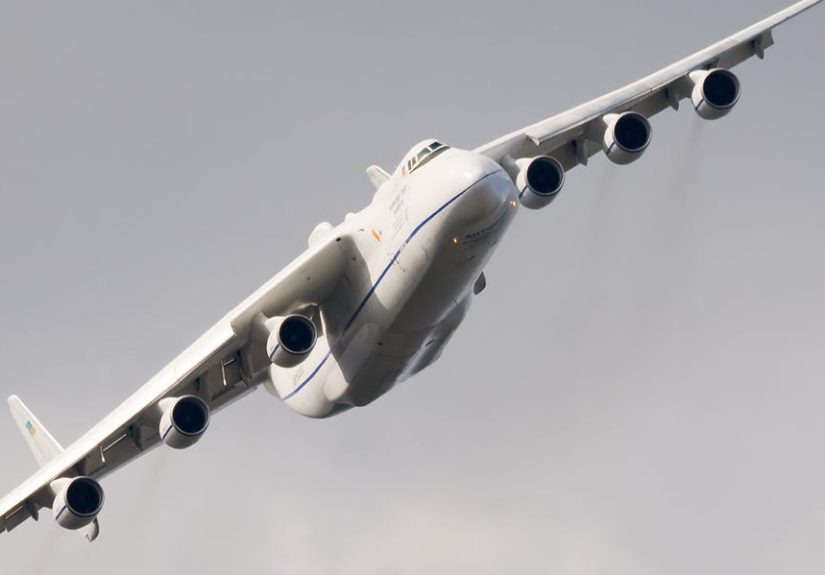
The AN-225 used six high-thrust turbofan enginesan immediate visual cue that this wasn’t your average cargo jet.
More engines meant more thrust and more redundancy, but it also meant more fuel burn, more maintenance, and more
engineering compromises everywhere else. You don’t get a plane this capable without paying for it in complexity.
The Twin Tail That Wasn’t Just for Looks
One of the AN-225’s signature features was its twin vertical stabilizers (twin tail). This wasn’t a styling choice.
When you carry bulky cargoespecially external loadsairflow behind the fuselage can get messy. A twin tail helps
keep directional stability when the wake is disturbed by giant payloads.
Nose Loading: The Ultimate “Open Wide” Feature
Many cargo aircraft load from the rear. The AN-225 famously loaded through its nose. The nose could hinge upward,
and the aircraft could “kneel” by adjusting its landing gear, making it easier to roll cargo directly into the hold.
For oversized freight, that’s not just convenientit can be the difference between “shipped” and “stuck in a factory
until further notice.”
32 Wheels and a Whole Lot of Pavement Math
The landing gear was legendary: dozens of wheels spread weight across the runway and taxiways. This matters because
“the world’s heaviest aircraft” is only useful if it can actually land somewhere without turning infrastructure into
modern art. Even so, the AN-225’s operations required careful airport compatibility checks: runway length, pavement
strength, turning radius, gate space, and ground equipment availability.
Size and Weight That Rewrote the Record Books
Guinness World Records recognized the AN-225 as the largest aircraft by weight, noting a strengthened configuration
that raised its maximum takeoff weight to about 640 metric tons (1.41 million pounds). Its payload capability is
widely cited around 250 metric tonsnumbers that sound fake until you see the plane next to normal things like
hangars, terminal buildings, and your sense of proportion.
What the AN-225 Actually Did: Real-World Missions and Records
A plane this specialized doesn’t do “routine.” It did the opposite of routine: it showed up when the cargo was too
heavy, too large, too urgent, or too weird for anything else.
Power Plant Hardware and the “One Piece, Please” Problem
One of the most famous AN-225 achievements was transporting an enormous generator that set a record for the
heaviest single piece of cargo carried by an aircraftreported at 187.6 tons in a widely cited aviation account.
It wasn’t just a flex; it solved a real industrial challenge. When a component is too heavy to split into smaller
parts (or splitting it would create a nightmare of reassembly and risk), a one-shot airlift can save months.
Wind Turbine Blades: Long, Fragile, and Not Interested in Bending
The aircraft also carried extremely long cargo like wind turbine bladesitems that aren’t necessarily the heaviest,
but are incredibly awkward. This is where cargo volume, hold geometry, and loading methods matter as much as raw
weight capacity.
Pandemic Logistics: When “Air Freight” Turned into “Air Lifeline”
During the COVID-19 era, the AN-225 became a headline machine again, flying medical supplies and test kits on
high-demand routes. Reports from that period describe missions moving roughly 100 tons of supplies and hitting
extraordinary cargo volume milestones (around 1,000 cubic meters), which is a reminder that “biggest” isn’t only
about weightsometimes it’s about swallowing a mountain of bulky, time-sensitive freight in one trip.
Why There Was Only One (and Why That Wasn’t an Accident)
The AN-225 wasn’t mass-produced because its original mission was singular. Once the Soviet-era space-shuttle
logistics requirement faded, the aircraft’s reason for existing had to evolve. And it didbeautifullybut the market
for ultra-heavy outsized cargo is inherently limited.
Operating the AN-225 wasn’t just “own plane, move stuff.” It was a full ecosystem: specialized maintenance,
highly trained crews, custom loading plans, route permissions, airport coordination, and ground equipment. Add in the
reality that many airports simply aren’t built for an aircraft of that size, and you get a plane that’s priceless
when neededand expensive when it isn’t.
The 2022 Destruction: When the Dream Was Grounded
In February 2022, the AN-225 was destroyed during the Battle of Hostomel (Antonov Airport) near Kyiv. Early reports
were chaoticas wartime information often isbut subsequent on-the-ground reporting and imagery confirmed the loss.
News organizations described the wreckage beneath a damaged hangar, and the event quickly became symbolic: the
destruction of an aviation icon as part of a broader national tragedy.
The plane’s loss hit multiple communities at once. Ukrainians saw a national symbol harmed. Aviation enthusiasts
mourned a once-in-a-generation engineering marvel. And cargo specialists quietly thought, “Okay… what replaces
that?” Because while many aircraft move freight, almost none can move the kinds of freight the AN-225 made
possible.
Will the AN-225 Fly Again? Rebuild Talk vs. Reality
After the destruction, discussions about rebuilding surged. There’s a reason hope attached itself to that idea:
a second, incomplete airframe existed. In theory, a rebuild could combine surviving components, unfinished structure,
and new manufacturing to create a successor.
In practice, rebuilding an aircraft like the AN-225 is less like restoring a classic car and more like recreating a
cathedral… while also rewriting the building code. Costs cited publicly have varied widely over time, and aviation
analysts have raised hard questions about recertification and structural integrity after catastrophic damageespecially
if any parts exposed to heat or blast forces were considered for reuse. Even if a new “Mriya 2.0” were built, it
would likely require modernized systems, updated avionics, and a certification path that reflects today’s standards,
not the late 1980s.
Still, the idea persists because the need is real. The world continues to build massive infrastructureturbines,
industrial machinery, emergency-response equipmentthat occasionally demands airlift beyond conventional capability.
If anything could justify a revival, it’s that rare intersection of necessity, funding, and national will.
Legacy: More Than a Plane, Less Than a Legend (Wait, Actually, a Legend)
The AN-225 became famous for the most modern reason possible: people couldn’t believe it was real. Photos looked
like forced perspective. Videos of takeoffs felt like physics taking a deep breath and committing to the bit.
Wherever it landed, crowds gathered. In one widely shared account, an appearance drew massive spectators and even
traffic chaosbecause apparently humans will happily miss dinner to watch 32 wheels roll by in slow motion.
But its fame wasn’t only spectacle. The AN-225 represented a specific kind of competence: when there’s a critical
cargo problem and every normal option fails, engineering can still produce an answersometimes a six-engine answer
with a nose that opens like a shark.
Experiences Related to the Antonov AN-225 (Extra Section)
The AN-225 didn’t just transport cargoit generated experiences that people still describe with the same tone usually
reserved for seeing a comet. Aviation fans who planned trips around its arrivals treated each landing like a limited
tour date. You’d check schedules, track flight paths, and then join a crowd at a perimeter fence where everyone
suddenly becomes an amateur aerospace engineer. When it finally appears, it doesn’t “arrive” so much as it
materializes: a moving building with wings, rolling forward while smaller aircraft nearby look like they’ve
accidentally wandered into a movie set.
One of the most common reactions wasn’t even “It’s huge.” It was, “How is it quiet enough to be this big?”
Of course, it wasn’t actually quietpeople recall a deep, sustained roar that felt more like weather than sound,
a low-frequency reminder that six engines are working overtime. But the scale plays tricks on perception. The plane
is so large that your brain expects a louder, sharper noise, and when reality arrives as a heavy rumble, it feels
surreallike thunder that decided to taxi.
For airport staff and cargo teams, the experience was a different kind of intense. Handling an AN-225 operation meant
choreography. Ground crews had to think in unusual dimensions: parking space that could handle the wingspan, taxi
routes that wouldn’t pinch turns, pavement strength that wouldn’t be stressed, and equipment that could reach
higher and lift heavier than typical ramps and loaders. The nose-loading feature turned cargo work into something
closer to industrial theater: the aircraft kneels, the nose lifts, and suddenly the biggest plane on Earth looks
like it’s politely bowing to accept a gift the size of a bus.
Then there were the “this is why it exists” momentswhen the cargo was so odd or urgent that the mission felt like
aviation improvisation. Oversized generators, massive industrial parts, and bulk relief supplies weren’t just items
on a manifest; they were problems being solved in real time. During pandemic-era flights, reports described the
aircraft carrying enormous volumes of medical supplies and test kits. For people watching from outside the industry,
it was a headline. For people inside it, it was a reminder that logistics can be lifesavingand that capacity,
reliability, and speed matter when the clock is loud.
Pilots and test crews spoke about the AN-225 with a mix of pride and respect that you usually hear about ships rather
than aircraft. Flying something so large requires discipline and patience: long planning, careful energy management,
and no impulsive moves. Yet the awe wasn’t only technical. Many described the emotional punch of realizing they were
operating the only aircraft of its kinda machine that carried national identity, engineering legacy, and the hopes
of everyone who looked up and thought, “If that can fly, maybe anything can.”
Even after its destruction, the experiences keep circulatingvideos, photos, runway-side stories, and memories of
seeing it in person. In that sense, the AN-225 still “moves” things, just not cargo: it moves curiosity, inspiration,
and that uniquely human joy of watching something enormous do something graceful.
Conclusion
The Antonov AN-225 Mriya was never just an aircraft. It was a solution to impossible freight problems, a symbol of
engineering ambition, and a traveling event that turned ordinary airports into festivals. Its destruction in 2022
closed a chapter that can’t be replaced by a simple “next model.” Whether or not a successor ever flies, the Mriya’s
legacy is already locked in: proof that the limits of aviation are sometimes less about physics and more about how
bold you’re willing to be with the blueprint.







 Close
Close