
Table of Contents >> Show >> Hide
- How a bottle became the whole brand
- What Crystal Head was actually protecting
- The long KAH Tequila battle: where the skull really hit the fan
- When the skull theory spread beyond vodka
- Why this matters for founders, designers, and anyone with a “cool packaging” idea
- Experiences from the shelf, the studio, and the cease-and-desist pile
- Conclusion
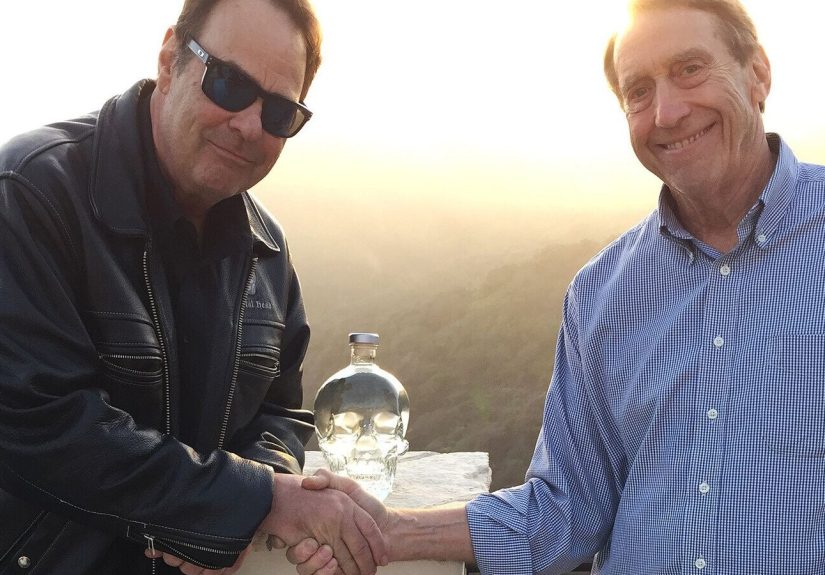
There are plenty of ways to make a bottle stand out on a shelf. You can make it taller, darker, shinier, weirder, or wrapped in enough gold foil to blind a bartender at twenty feet. Dan Aykroyd and his Crystal Head team took a more memorable route: they made the bottle a skull. Not a label with a skull. Not a little spooky flourish. A full-on, unmistakable, glass cranium that looks like it belongs in a haunted apothecary, a rock star minibar, or the world’s most expensive Halloween party favor.
And here is where the story gets deliciously litigious. Over the years, the skull-shaped Crystal Head bottle has not just served vodka. It has served legal paperwork. If you have ever wondered whether a brand can turn package design into a courtroom weapon, the Crystal Head saga is your answer. The short version is this: Dan Aykroyd does not own skulls in the abstract, and no, the human head has not been privatized. But the company he co-founded has spent years arguing that its specific skull bottle design functions as protectable trade dress, meaning the shape itself tells consumers who made the product.
That distinction matters. A lot. Because once packaging becomes brand identity, copying the vibe can become much riskier than copying a color palette or tossing a spooky flourish on a label. This is why the headline joke lands: in pop-culture shorthand, “Dan Aykroyd will sue you” really means “the Crystal Head legal machine may decide your skull-shaped packaging looks a little too familiar.” And if your product manager thought skull glass was merely an aesthetic choice, well, surprise: it can also be a litigation strategy.
How a bottle became the whole brand
Crystal Head launched in 2008, and the bottle was never treated like an afterthought. From the start, Aykroyd and artist John Alexander positioned the skull as the central identity of the product. That matters because the law tends to protect packaging more readily when it signals source, not when it is just decorative flair. In plain English, if shoppers see a shape and immediately think of one brand, that shape starts doing trademark-style work.
That is exactly the lane Crystal Head tried to occupy. The bottle was designed to look like a crystal skull rather than a generic horror prop, and the company built marketing around that silhouette. This is why the product became so recognizable even among people who have never ordered a vodka soda in their lives. Many consumers know the bottle before they know the flavor profile. That is branding gold. Or in this case, branding bone.
The lesson for marketers is almost unfairly simple: people do not always remember copy, but they do remember shapes. Think of iconic soda contours, perfume flacons, or sauce jars that practically introduce themselves from across a room. Crystal Head took that principle and cranked it into novelty-object territory. The bottle does not merely hold the product. The bottle is the ad, the collectible, the conversation starter, and, eventually, the basis of years of legal arguments.
What Crystal Head was actually protecting
Trade dress is not “ownership of skulls”
It is tempting to reduce this whole saga to a punch line: “Aykroyd thinks he owns skulls now.” That is funny, but it is also legally sloppy. The actual claim has never been that Crystal Head owns the concept of a skull, gothic imagery, or every bony-looking bottle made by mankind. The real argument is narrower and more conventional: the company says its specific skull-shaped bottle operates as protected trade dress.
Trade dress covers the look and feel of a product or package when that appearance identifies the product’s source. In the Crystal Head litigation, the company described the protected features in detail, focusing on the bottle’s human-skull shape and facial elements rather than some vague claim to “spooky stuff.” That legal framing is important because courts are far more receptive to precise, source-identifying features than to broad claims over an aesthetic theme.
So, no, nobody can monopolize basic skull imagery across the marketplace. But a company can argue that a particular 3D package design has become distinctive enough that similar packaging will confuse buyers. That is the pivot. The conversation moves from “Can you sell something in a skull?” to “Does your skull-shaped package look so much like theirs that ordinary consumers may assume affiliation?” The first question is broad and dramatic. The second is the one that gets answered in court.
Why courts took the argument seriously
Crystal Head’s fight with a rival liquor brand shows that this was not just celebrity chest-thumping. In 2012, the Ninth Circuit revived Globefill’s claim against Elements Spirits and recognized that the skull-shaped bottle could qualify as protectable trade dress. That did not end the dispute, but it did establish a crucial point: the design was not automatically too functional or too generic to protect.
That ruling mattered because it turned the bottle from a flashy marketing gimmick into a legally cognizable brand asset. In other words, the skull went from “cool package” to “potentially enforceable identity.” Once that happened, anyone entering the market with a similar bottle was no longer just making a design decision. They were wandering into a zone where similarity itself could become evidence.
For founders and designers, this is the part worth underlining. A distinctive package can gain legal gravity over time if it is used consistently, promoted heavily, and recognized by consumers. The law is not rewarding cleverness alone. It is rewarding distinctiveness that functions as brand shorthand. Crystal Head was not selling a bottle shape in a vacuum. It was selling a bottle shape so aggressively that the shape became inseparable from the brand.
The long KAH Tequila battle: where the skull really hit the fan
The best-known legal war in this saga involved KAH Tequila, sold in its own skull-shaped bottle. Globefill sued in 2010, kicking off a years-long dispute that became a surprisingly useful case study in how trade dress fights drag on. There was motion practice, appellate review, jury questions, retrials, and enough procedural mileage to make any packaging designer suddenly interested in plain cylinders.
The timeline matters because it shows how stubborn and expensive these disputes can become. First, the appellate court gave Crystal Head new life by recognizing that the bottle could have protectable trade dress. Later, a jury initially found for the defendants. Then, in 2016, the Ninth Circuit ordered a new trial after concluding that misconduct in closing argument had tainted the original proceedings. That is not minor procedural lint; it is a full legal rewind.
Then came the 2017 retrial, where Crystal Head scored the kind of result brand owners dream about and defendants loathe. An eight-person jury unanimously found for Crystal Head and determined that KAH had intentionally infringed the trade dress. That verdict supercharged the public narrative. Suddenly, this was not just Dan Aykroyd defending a quirky bottle. It was a jury saying, in essence, “Yes, this look is source-identifying enough, and yes, the similarity crossed the line.”
Even after that win, the story did not neatly wrap itself in a bow made of legal fees. In 2019, the Ninth Circuit denied Crystal Head’s request for attorneys’ fees. That detail is important because it reminds everyone that even a successful brand owner does not always get every remedy it wants. Winning on infringement does not mean the court turns into a cash cannon and starts firing reimbursement checks at your legal team.
Still, from a branding standpoint, the bigger victory was symbolic. Crystal Head demonstrated that it was willing to spend years protecting packaging. That kind of enforcement sends a message far beyond the named defendant. It tells competitors, retailers, importers, and ambitious founders that the skull bottle is not just shelf theater. It is a line in the sand.
When the skull theory spread beyond vodka
If the KAH case were the end of it, this would simply be a strange but instructive liquor-industry dispute. But the story kept getting weirder. In 2017, Vice reported that a family-run hot sauce company claimed it had received a threat of legal action over selling its sauce in a glass skull bottle. That story helped cement Aykroyd’s public reputation as the man who really, really does not like seeing products in suspiciously familiar skull containers.
Then came a broader, more commercial example. In late 2022, Bloomberg Law reported that Globefill sued TJ Maxx and a supplier in Delaware over allegedly infringing skull-shaped glass bottles. The claims reached beyond trademark-style theories and also invoked copyright and design patent rights. In 2023, the Delaware court addressed venue issues and the matter was transferred out to the Southern District of New York.
That expansion is what makes the Crystal Head saga so fascinating. This is not just about one spirit brand feuding with another spirit brand in the same aisle. It shows how a company can try to protect a package design across product categories and retail contexts. Once a package becomes iconic enough, enforcement logic tends to spread. First you protect the bottle against direct beverage rivals. Then you start eyeing other skull-shaped goods and asking whether they cash in on your recognition.
To be fair, courts do not automatically bless every expansion of that theory. Similarity, product context, consumer confusion, and the exact rights asserted all matter. But from a business perspective, the pattern is clear: Crystal Head did not treat the bottle like decoration. It treated the bottle like core intellectual property. And once a company sees package design that way, enforcement is not an occasional outburst. It becomes part of brand management.
Why this matters for founders, designers, and anyone with a “cool packaging” idea
The funniest thing about packaging law is that it becomes serious the second somebody sells enough units. Founders love to talk about branding as if it were a vibe board with better coffee. But once a product catches on, the package can become one of the company’s most valuable assets. That is especially true when the item is easy to imitate and the container does a lot of the recognition work.
So what does the Crystal Head saga teach? First, distinctive packaging can become enforceable, even when the general motif seems ancient, obvious, or culturally widespread. The key is not whether skulls exist. Congratulations, they do. The key is whether your particular expression of that motif has become associated with you in the marketplace.
Second, broad themes are safer than narrow silhouettes. “Spooky,” “gothic,” and “Day of the Dead-inspired” are themes. A specific glass bottle with a recognizable skull contour, facial structure, and overall look is something else. Once you start echoing a famous silhouette too closely, your “homage” may begin to resemble “exhibit A.”
Third, product teams should stop thinking of packaging as the thing that happens after branding. Packaging is branding. In many categories, it is the fastest, loudest, and most durable expression of brand identity. If you build your business around a signature container, protect it early. If you are entering a category with a signature container already dominating attention, do more homework than simply typing “skull bottle but different” into the group chat.
And finally, understand the psychological side of all this. Consumers do not conduct trademark analyses while shopping. They make fast associations. If a bottle reminds them of a product they already know, that moment of recognition can be commercially powerful and legally dangerous. Trade dress law lives in that split-second confusion zone. Which is why, yes, the shape of a bottle can become a very expensive problem.
Experiences from the shelf, the studio, and the cease-and-desist pile
One reason the Crystal Head story keeps circulating is that it captures real experiences people have with packaging in the wild. Start with the shopper. A consumer walks into a liquor store, scans a crowded wall of bottles, and does not read every label like a monk studying scripture. They react to shape first. Tall bottle, squat bottle, faceted bottle, skull bottle. That is how many purchasing decisions begin. The experience is visual before it is verbal. A brand that owns a memorable shape knows this and counts on it.
Then there is the founder experience, which tends to begin in a much more innocent place. Someone wants a product to feel bold, spooky, luxurious, rebellious, or unforgettable. The mood board fills with gothic glass, metallic caps, and words like “iconic.” At this stage, packaging feels like creativity. But when the prototype arrives and looks a bit too much like something consumers already recognize, creativity quietly turns into risk. That is often the exact moment when a founder learns that brand identity and legal identity are roommates, not distant cousins.
Retailers have their own version of this experience. A buyer may simply think a skull-shaped bottle is seasonal, giftable, and likely to sell around Halloween or year-round to anyone whose décor choices can be described as “cabinet of curiosities chic.” But retailers do not always realize that novelty packaging can bring intellectual property baggage with it. If a product’s strongest selling feature is the thing another company has spent years defending, a simple merchandising decision can unexpectedly become a legal headache.
Designers feel this tension especially hard. Good package designers know that every product needs enough familiarity to feel legible and enough originality to feel ownable. Too generic, and nobody remembers it. Too close to a famous package, and everyone remembers it for the wrong reason. The Crystal Head saga is basically a stress dream for designers: make it recognizable, but not that recognizable; make it bold, but not already famous; make it spooky, but not lawsuit spooky.
Even lawyers experience this saga in a strangely practical way. For trademark counsel, the case is a reminder that packaging can function like a logo with curves and volume. For litigators, it is a reminder that trade dress disputes are often messy because they rely on consumer perception, marketplace context, and visual comparison rather than a simple side-by-side name match. Nobody is arguing over a word alone. They are arguing over whether the total commercial impression lodges in the same part of the consumer brain.
And finally, there is the brand-owner experience, which is maybe the most relatable of all. If you spend years building a product whose signature feature is instantly recognizable, you will almost certainly become protective of it. Perhaps aggressively so. That does not mean every enforcement move is equally persuasive. It does explain why a bottle can go from “cute idea” to “fortified perimeter” once enough money, recognition, and reputation are attached to it. In that sense, the Crystal Head story is not really weird at all. It is just branding, distilled down to its sharpest point: once a package becomes the product in consumers’ minds, defending the package starts to feel like defending the entire business.
Conclusion
So, can Dan Aykroyd sue you for putting something in a skull? Not automatically, and not because he owns skeletal imagery like some kind of intellectual property necromancer. But if your packaging gets too cozy with the distinctive Crystal Head look, history suggests that the company behind the bottle may take that personally, strategically, and legally.
The real lesson is bigger than celebrity vodka. Package design is no longer the quiet supporting actor in brand strategy. In many categories, it is the lead. It signals source, drives shelf recognition, shapes consumer memory, and can become enforceable intellectual property when used consistently enough. Crystal Head understood that early and fought like it meant it.
That is why this saga still matters. It is funny because the premise sounds absurd: skull bottle drama. But it is useful because it shows how modern branding actually works. If your package is distinctive enough to become famous, it can become valuable. If it becomes valuable, it can become protected. And if it becomes protected, you should not be surprised when somebody eventually says, in the politest legal language possible, “Please stop selling your haunted bottle.”







 Close
Close