
Table of Contents >> Show >> Hide
- Why an Ombre Hexagon Accent Wall Works So Well
- Planning Your DIY Ombre Hexagon Accent Wall
- Tools and Materials You’ll Need
- Step-by-Step: How to Paint an Ombre Hexagon Accent Wall
- Design Ideas and Variations
- Common Mistakes and How to Avoid Them
- Time, Budget, and Skill Level
- Real-Life Experiences with DIY Ombre Hexagon Accent Walls
- Conclusion: A Custom Look You Can Actually DIY
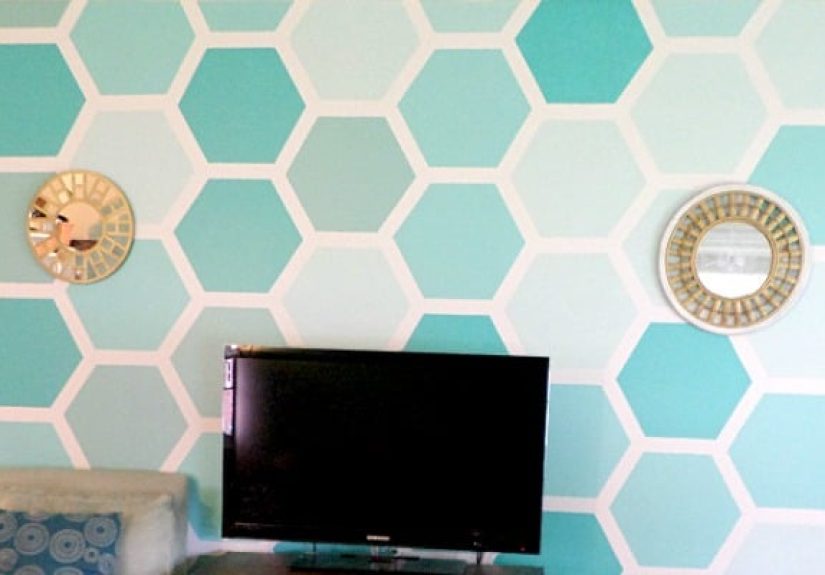
If you’ve ever stared at a blank wall and thought, “You deserve better,” an ombre painted hexagon accent wall might be exactly what your inner designer is begging for. This DIY project blends modern geometric style with a dreamy gradient of color, creating a feature wall that looks custom, high-end, and totally Pinterest-worthywithout the designer price tag.
Inspired by the beloved DIY ombre hexagon projects shared on sites like Remodelaholic and other home decor blogs, this guide walks you through everything from planning your layout to keeping paint from bleeding under your tape. You’ll get the math, the paint tips, the “what I wish I’d known” moments, and plenty of design ideas so you can confidently tackle your own hexagon accent wall.
Why an Ombre Hexagon Accent Wall Works So Well
Before you break out the painter’s tape, it helps to know why this style is such a winner in real roomsnot just on mood boards.
A Bold Pattern That Still Feels Organized
Hexagons are naturally pleasing to the eye because they repeat in a clean, honeycomb pattern. Unlike random shapes or freehand murals, hexagons give you a built-in grid that feels structured and intentional. That balance of order and creativity makes the wall feel designed, not chaotic.
The Ombre Effect Adds Depth and Movement
An ombre or gradient effectmoving from light to darkadds subtle movement and depth. It can visually “stretch” a room, make a low ceiling feel higher, or draw the eye toward a focal point like a TV unit, headboard, or desk. Soft gradients in grays, blues, greens, or blush tones are especially popular in living rooms, nurseries, and home offices.
High Impact, Low Material Cost
Here’s the best part: you don’t need gallons of paint. Most ombre hexagon accent walls use one base color plus three to five shades in the same color family. In many cases, sample jars or quarts are enough, especially if the wall isn’t huge. With some quality painter’s tape, a few brushes or mini rollers, and patience, you can create a designer-level wall on a budget.
Planning Your DIY Ombre Hexagon Accent Wall
Like most geometric accent walls, success comes down to planning. The painting itself is not difficultbut the layout and taping require focus. Take your time here and future you with a paint roller will be very grateful.
1. Choose the Right Wall
- Pick a focal wall: Great candidates are behind a bed, a TV console, a sofa, or a desk.
- Avoid super busy walls: If you’ve got lots of doors, windows, or angled ceilings, you can still do it, but be prepared for trickier tape lines and partial hexagons.
- Check the surface: Smooth walls are best. Heavy texture can cause tape bleed and uneven lines.
2. Pick Your Color Palette and Ombre Direction
Decide whether your gradient will move:
- Light at the top to dark at the bottom (most common)
- Dark to light left to right
- Diagonal, from one corner to the far opposite corner
Then choose 3–5 shades in one color family (for example, pale gray to charcoal, soft blush to deep rose, or dusty blue to navy). You can grab a single paint chip strip and pull your colors straight from there, or have the paint desk mix custom shades between two favorites.
3. Decide on Hexagon Size and Layout
This is where a little math meets a lot of common sense. You want hexagons big enough to notice across the room, but not so huge that you end up with only a few shapes.
- Measure your wall: Note the width and height in inches.
- Cut a paper template: Use cardstock or poster board to create a test hexagon. Hold it on the wall to see if you like the scale.
- Roughly estimate how many hexagons: Most DIYers like around 6–10 hexagons across the width of a standard wall. Bigger room? Bigger or more hexagons.
- Plan for partials at edges: It’s normal to have half-hexagons at corners, the ceiling, or at baseboards. They actually help the pattern look continuous instead of cut off.
Don’t stress about perfect math. The goal is visually even spacing, not a geometry exam. If the pattern looks balanced to your eye, you’re winning.
Tools and Materials You’ll Need
- Interior wall paint for the base color (eggshell or matte finish)
- 3–5 quart or sample-size paints for the ombre shades
- High-quality painter’s tape (a delicate-surface or multi-surface type)
- Level or laser level
- Measuring tape and pencil
- Cardstock or thin cardboard for a hexagon template
- Utility knife or scissors
- Small foam rollers and/or angled brushes
- Paint trays or liners
- Drop cloths and painter’s plastic
- Spackle, putty knife, and sanding block for wall repairs
- Step ladder, if needed
Step-by-Step: How to Paint an Ombre Hexagon Accent Wall
Step 1: Prep the Wall Like a Pro
Start by moving furniture away from the wall and laying down drop cloths. Wipe the wall with a damp cloth or mild cleaner to remove dust and oils. Patch nail holes or dings with spackle, let dry, and sand smooth.
If the wall is heavily marked or has uneven color, apply a coat of primer. Once dry, roll on your base colorusually the lightest shade in your ombre palette or a soft neutral that works with your hexagon colors. Let it dry fully according to the paint can instructions.
Step 2: Create a Hexagon Template
- Draw a horizontal line for the base of your hexagon.
- Use a ruler to mark equal-length sides and connect them to form a six-sided shape.
- Cut out the shape carefully with scissors or a utility knife.
If you’re not confident drawing by hand, you can print a hexagon from a free graphing tool or design software and scale it to the size you want.
Step 3: Lightly Map the Pattern on the Wall
Use your template and a level to lightly trace where your hexagons will go:
- Start at the center of the wall so the pattern feels balanced.
- Work outward in horizontal rows, staggering each row so the hexagons interlock like a honeycomb.
- Keep the pencil lines very lightyou just need a guide for your tape.
Step 4: Tape the Hexagons
This is the most time-consuming part, but it’s also where the magic starts to show.
- Place painter’s tape along the outside of each pencil line, creating clean edges for every hexagon.
- Press the tape firmly with your fingers or a clean putty knife to seal the edges.
- Double-check your lines with a level, especially on the most visible section of the wall.
Tip: If your wall isn’t perfectly straight (spoiler: most aren’t), prioritize visual straightness over exact measurements. Small adjustments won’t be noticeable once the pattern is complete.
Step 5: Plan Your Ombre Color Placement
Now the fun, artsy part. Decide how the gradient will move and roughly assign colors to zones:
- Lightest shades near the top or one side.
- Medium tones in the center.
- Darkest shades at the bottom or opposite side.
You can sketch a rough map on paper or jot color initials directly inside each taped hexagon with a pencil (for example, “L” for light, “M” for medium, “D” for dark). Keep things somewhat random, but avoid obvious clumps of the same color that will look patchy from across the room.
Step 6: Paint the Hexagons
- Start with the darkest color: Many DIYers work from the bottom up with dark tones first, then move to mid and light shades.
- Use small foam rollers or angled brushes: Apply the paint carefully inside each taped hexagon, brushing away from the tape edges rather than toward them.
- Apply 2 coats: Let each coat dry as directed. Most colors need at least two coats to look solid and consistent.
- Feather edges if needed: If you want a truly soft ombre, you can lightly blend where a lighter and darker hexagon meet by dry-brushing with a nearly empty brush.
Step 7: Remove the Tape for the Big Reveal
Once the final coat is just barely dry to the touch (not fully cured), carefully peel off the painter’s tape at a 45-degree angle away from the painted area. Doing this while the paint is slightly soft helps prevent the paint from tearing or chipping along the edge.
If you spot minor bleed-through, use a small artist’s brush and your base or hexagon color to touch up edges. Step back every so often to check the overall effect. From normal viewing distance, small imperfections will disappear.
Design Ideas and Variations
Neutral and Minimalist
Use shades of white, cream, and greige for a subtle ombre effect that reads like texture rather than bold pattern. This works beautifully in living rooms and primary bedrooms where you want calm, not chaos.
Bold and Playful
For kids’ rooms or creative studios, try fun gradients like teal to navy, blush to berry, or mint to emerald. You can even add one metallic accent colorlike a soft gold or copperused sparingly in a few hexagons for a touch of glam.
Soft Pastels for Nurseries
Ombre hexagons in dusty lavender, blush, or sage look sweet without being overly baby-ish. When the child grows, the wall still feels stylish and can work with more “grown-up” decor.
Monochrome with Texture
Another option is to keep all your hexagons in one color family but shift sheen (for example, mixing matte and satin) to create a pattern that’s visible when light hits the wall but looks subtle otherwise.
Common Mistakes and How to Avoid Them
1. Skipping Wall Prep
If you paint over dust, gloss, or damage, your tape won’t seal properly and your lines will suffer. Take the extra time to clean, patch, sand, and prime if needed.
2. Using Cheap Tape
Low-quality masking tape can result in fuzzy edges and serious bleed-through. Invest in painter’s tape specifically made for clean lines.
3. Overcomplicating the Color Pattern
A little planning goes a long way, but you don’t need a full-blown spreadsheet. Aim for a balanced distribution of light, medium, and dark shades and accept that “perfectly random” is impossible. Your wall will still look incredible.
4. Leaving the Tape On Too Long
Removing tape from fully cured paint can cause peeling. Pull it off while the paint is just dry to the touch for the cleanest edges.
Time, Budget, and Skill Level
Time: Plan on a weekend project. Day one is for prep and base coat; day two for taping, painting, and touch-ups.
Budget: Depending on what you already own, expect to spend on paint samples or quarts, tape, and a few tools. For most standard accent walls, it’s often less than the cost of one roll of designer wallpaper.
Skill level: Beginner to intermediate. If you can measure, tape, and roll paint, you can absolutely do this. Patience is more important than prior experience.
Real-Life Experiences with DIY Ombre Hexagon Accent Walls
Reading a tutorial is one thing, living through the projectpainted hands, tape mishaps, and allis another. Here’s what many DIYers discover once they actually tackle an ombre hexagon accent wall.
Expect the “What Have I Done?” Moment
Somewhere around the third row of taped hexagons, almost everyone has a moment of doubt. The wall looks like a confusing web of blue tape, your pencil marks are everywhere, and you might start wondering if a plain white wall is really so bad. This is normal.
The key is to keep going. Once you start filling in hexagons with color, the pattern suddenly makes sense. The first few painted shapes are the confidence boost you need to finish strong.
Planning Beats Perfectionism
DIYers who love the final result almost always did at least one of these things:
- Created a rushed sketch of the wall and mapped out color zones.
- Tested their paint colors together on a piece of scrap drywall or poster board.
- Stood back often to check how the gradient looked from across the room.
They didn’t obsess over every millimeter of spacing, but they did make sure the pattern felt balanced and the colors flowed smoothly from light to dark.
Math Isn’t as Scary as It Looks
At first, the idea of calculating hexagon sizes and spacing can feel like high school geometry all over again. In practice, it’s more like “measure, eyeball, adjust.” Many DIYers discover that once they choose a template size they like, they can simply trace, tape, and tweak instead of doing intense calculations.
If one hexagon ends up a fraction of an inch off, no one will notice once furniture and decor are in place. The overall effect is what matters.
Good Tape Is Worth Every Penny
One of the most common “I wish I’d known” comments is about painter’s tape. People who tried to save money with low-cost tape often ended up spending extra hours touching up fuzzy lines or cleaning up bleed-through. Those who invested in high-quality tape from the start usually report crisp lines and far less frustration.
Another pro tip from seasoned DIYers: run a small roller or dry cloth firmly along the tape after applying it. This extra pressure helps seal the edges and reduces bleed-through dramatically.
The Reveal Is Ridiculously Satisfying
Peeling off the tape is easily the best part of the entire project. DIYers describe it as “weirdly addictive” and “like unwrapping a present from your past self.” Each strip you pull away reveals another perfect crisp hexagon and brings the ombre pattern to life.
If you film anything, film the tape removal. It’s instant content for social media and a satisfying reminder of how far the wall has come.
Living with the Wall: It’s Easier to Decorate Around Than You Think
Some people worry that such a bold feature will limit their decor choices. In reality, a well-designed ombre hexagon wall acts as a backdrop, not a bully. Keep your furniture and textiles mostly solid, sprinkle in a few accents that echo your ombre colors, and the wall becomes a built-in piece of art that pulls everything together.
And if your style evolves? You can always repaint individual hexagons, adjust a few colors, or eventually roll the whole wall back to neutral. It’s paintnothing is permanent.
Conclusion: A Custom Look You Can Actually DIY
A DIY ombre painted hexagon accent wall looks like something you’d find in a boutique hotel or a high-end design portfolio, but it’s absolutely doable at home with basic tools, thoughtful planning, and a weekend of focused effort. You’re not just painting a wall; you’re creating a focal point that reflects your personality, your color choices, and your willingness to try something a little daring.
So measure your wall, cut that first hexagon template, queue up a good podcast, and start taping. By the time you peel that last strip of painter’s tape, you’ll have a modern, eye-catching feature wall worthy of any Remodelaholic-style makeover.






 Close
Close