
Table of Contents >> Show >> Hide
- Why Designers Are Moving Beyond White Cabinets
- The Designer-Favorite Cabinet Color Families
- 1. Sage Green: The Soft Neutral With a Garden Passport
- 2. Olive Green: Earthy, Elegant, and Surprisingly Flexible
- 3. Deep Navy: The Classic That Refuses to Retire
- 4. Dusty Blue and Blue-Gray: Calm Without Being Boring
- 5. Blue-Green and Teal: The Chameleon Choice
- 6. Warm Taupe, Mushroom, and Greige: The New Neutrals
- 7. Charcoal and Soft Black: Drama With Manners
- 8. Burgundy, Merlot, and Warm Mahogany: Rich Color for the Brave
- How to Choose the Right Non-White Cabinet Paint Color
- Best Color Pairings for Non-White Cabinets
- Mistakes to Avoid When Painting Cabinets a Non-White Color
- Experience Notes: What Actually Happens When You Choose Colorful Cabinets
- Conclusion
White kitchen cabinets had a good run. They were crisp, dependable, photogenic, and about as controversial as a plain bagel. But after years of all-white kitchens dominating renovation boards, designers are reaching for cabinet paint colors with more personality, depth, and warmth. The new favorites are not random splashes of color. They are livable shades that make a kitchen feel considered: sage green, olive, deep navy, smoky blue, warm taupe, charcoal, brown, burgundy, and blue-green tones that behave like neutrals while still giving the room a pulse.
The best kitchen cabinet paint colors that aren’t white do more than look pretty on a swatch. They work with countertops, flooring, hardware, backsplash tile, natural light, and the daily reality of coffee spills, grocery bags, and someone opening the snack drawer 47 times a day. Designers love these shades because they can make a kitchen feel custom without requiring a full gut renovation. Paint is not magic, but on cabinets, it gets dangerously close.
Why Designers Are Moving Beyond White Cabinets
The shift away from white cabinets is not really about rejecting white. It is about wanting kitchens to feel warmer, more personal, and less like a showroom where nobody has ever chopped an onion. Today’s homeowners are asking for rooms that feel lived-in, grounded, and connected to the rest of the home. A cabinet color can set that tone instantly.
White cabinets still have their place, especially in classic kitchens, coastal homes, and spaces with complicated finishes. But stark white can feel cold under certain lighting, and builder-basic white shaker cabinets have become so common that they no longer feel like a design decision. Designers are now using color to make cabinetry look intentional. The result is a kitchen that feels less “default setting” and more “someone with taste lives here.”
The Designer-Favorite Cabinet Color Families
1. Sage Green: The Soft Neutral With a Garden Passport
Sage green is one of the most requested non-white kitchen cabinet colors because it offers color without shouting across the room. It has enough gray or muted undertone to stay calm, but enough green to feel fresh. In bright kitchens, sage can look airy and botanical. In lower light, it becomes softer and almost neutral.
Designers like sage because it pairs beautifully with natural materials. Think oak floors, marble countertops, soapstone, unlacquered brass, woven shades, and handmade tile. A shade like Benjamin Moore Gloucester Sage or Sherwin-Williams Evergreen Fog can give cabinets a quiet, tailored look. For a softer version, dusty sage works especially well in smaller kitchens because it adds character without closing in the room.
Best pairings include creamy walls, warm brass hardware, butcher block accents, zellige tile, and natural linen window treatments. Avoid pairing sage with icy gray floors or blue-white walls unless you want the kitchen to feel a little chilly.
2. Olive Green: Earthy, Elegant, and Surprisingly Flexible
Olive green is sage’s moodier cousinthe one who reads design books and somehow always has good lighting. Designers love olive because it behaves like a deep neutral. It can look classic in a traditional kitchen, organic in a modern farmhouse, and dramatic in a city apartment.
Deep olive and mossy greens are especially strong choices for lower cabinets or islands. They ground the space while allowing upper cabinets, shelves, or walls to stay lighter. Olive also looks expensive next to stone. Pair it with honed marble, dark soapstone, terrazzo, or warm quartz with subtle veining.
For a sophisticated palette, try olive cabinets with aged brass pulls, walnut shelves, and creamy plaster walls. For a bolder look, mix olive with burgundy accents or warm terracotta tile. The secret is choosing an olive with depth, not a flat military green. You want “European country kitchen,” not “camp duffel bag.”
3. Deep Navy: The Classic That Refuses to Retire
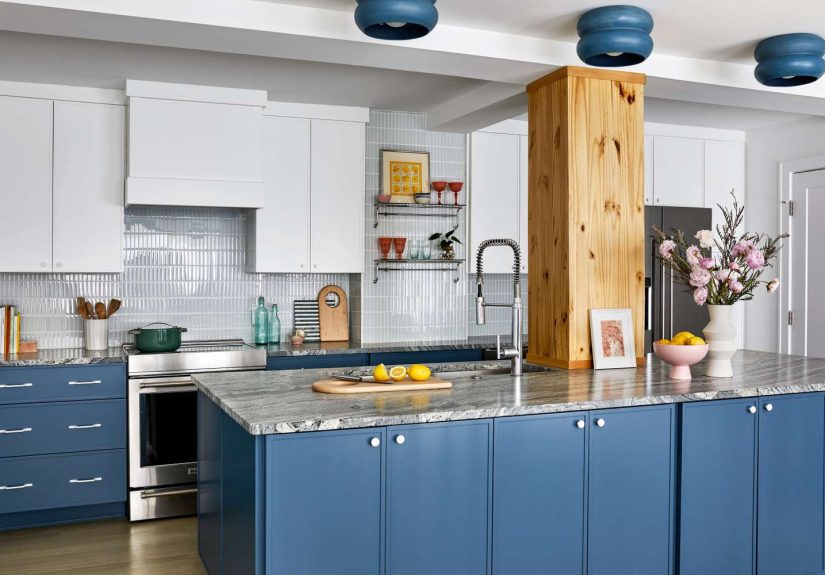
Navy blue remains one of the safest bold cabinet colors because it has the polish of black but the softness of color. Designers often recommend navy for homeowners who want something darker than gray but less severe than black. It works in coastal, transitional, traditional, and modern kitchens, which is why it keeps returning to designer mood boards year after year.
Paint colors like Benjamin Moore Hale Navy, Van Deusen Blue, Sherwin-Williams Needlepoint Navy, and similar deep blues can turn simple cabinet doors into a tailored architectural feature. Navy is especially good on kitchen islands because it adds contrast without overwhelming the entire room.
Pair navy cabinets with white oak, polished nickel, brass, marble, or warm white walls. If the room lacks natural light, choose a navy with a touch of gray rather than a nearly black blue. In a sun-filled kitchen, a richer navy can look crisp and confident. Either way, navy is the cabinet color equivalent of a well-cut blazer: reliable, flattering, and never trying too hard.
4. Dusty Blue and Blue-Gray: Calm Without Being Boring
For homeowners who like blue but fear a dark kitchen, dusty blue and blue-gray cabinets are a designer-approved compromise. These shades feel serene, airy, and slightly vintage. They are particularly beautiful in cottage kitchens, coastal homes, and spaces with lots of natural wood.
A dusty blue cabinet color can soften hard surfaces like stone, tile, and stainless steel. It also gives a kitchen a collected look, as if the cabinets have always belonged there. Benjamin Moore’s blue cabinet range, Sherwin-Williams Stardew, and similar muted blue-gray shades are often used when designers want color that still feels restrained.
To keep dusty blue from looking too sweet, pair it with clean-lined hardware, stone countertops, and natural textures. Brushed nickel creates a cooler look, while aged brass warms it up. If your backsplash has blue undertones, test the paint carefully. Blue loves to change personalities depending on its neighbors.
5. Blue-Green and Teal: The Chameleon Choice
Blue-green cabinet colors are having a major moment because they sit between two beloved design moods: calming blue and nature-connected green. A smoky teal, jade, or blue-green can feel refined, cozy, and a little unexpected. Behr’s Hidden Gem, for example, represents the current appetite for grounded blue-green shades with gray undertones.
Designers like this family because it can shift depending on the light. In warm sunlight, blue-green cabinets may look richer and more jewel-like. In cooler rooms, they can read as quiet, moody, and sophisticated. That makes them ideal for kitchens where you want color but do not want a bright, sugary shade.
Blue-green cabinets pair beautifully with oak, soapstone, creamy white walls, aged brass, hammered iron, and handmade ceramic tile. They also look excellent in Craftsman, coastal, cottage, and modern organic kitchens. If you want the kitchen to feel special but not trendy in a disposable way, blue-green is a smart contender.
6. Warm Taupe, Mushroom, and Greige: The New Neutrals
Not everyone wants colorful cabinets. Some homeowners want the comfort of a neutral without repeating the white kitchen formula. Enter taupe, mushroom, warm greige, clay beige, and soft brown-gray. These colors are quietly stylish and incredibly useful when a kitchen has multiple finishes competing for attention.
Designers love warm neutrals because they make cabinetry feel softer and more expensive. They also work with a wide range of countertops, from creamy quartz to marble, limestone, butcher block, and concrete. Sherwin-Williams Accessible Beige, Natural Tan, and similar earthy neutrals can make cabinets feel warm without turning yellow.
The trick is undertone control. A good mushroom cabinet color should look complex, not muddy. Sample it near your flooring and countertops before committing. If your floors are orange-toned oak, choose a taupe with enough warmth to harmonize. If your counters are cool gray, avoid beige shades that turn peachy under kitchen lighting.
7. Charcoal and Soft Black: Drama With Manners
Black kitchen cabinets can be stunning, but not every kitchen needs full midnight drama. Designers often soften the effect with charcoal, off-black, or black-brown shades. These colors bring depth and elegance while hiding everyday smudges better than pale cabinets. Very convenient if your family treats cabinet doors like hand towels.
Sherwin-Williams Tricorn Black, Benjamin Moore Black, Farrow & Ball Off Black, and Benjamin Moore Kendall Charcoal are examples of shades that can create a grounded, high-end look. Charcoal works especially well on base cabinets, islands, butler’s pantries, and built-ins.
To keep dark cabinets from feeling heavy, balance them with lighter countertops, reflective tile, warm wood, or open wall space. Matte and satin finishes are usually more forgiving than high gloss. Designers are cautious with glossy cabinets because they show fingerprints, scratches, and smudges faster than a toddler finds a permanent marker.
8. Burgundy, Merlot, and Warm Mahogany: Rich Color for the Brave
Burgundy and deep red-brown cabinet colors are not for the faint of heart, but designers are increasingly drawn to them because they feel romantic, grounded, and unexpected. These shades bring warmth to the kitchen without relying on beige or wood alone. They also pair beautifully with natural stone, especially marble, quartzite, soapstone, and warm-veined counters.
Think wine, oxblood, deep maroon, or mahogany rather than fire-engine red. Sherwin-Williams Sommelier and Deep Maroon are examples of rich cabinet colors that can look sophisticated instead of loud. PPG’s Warm Mahogany reflects the larger design movement toward grounded reds and browns that feel both historic and current.
Use burgundy on an island, lower cabinets, pantry cabinetry, or a small jewel-box kitchen. Pair it with unlacquered brass, creamy walls, dark stone, and wood accents. Avoid overly glossy bright red unless your design goal is “retro diner with espresso machine.”
How to Choose the Right Non-White Cabinet Paint Color
Start With the Fixed Finishes
Before falling in love with a cabinet paint color, look at what is already staying in the room. Countertops, floors, backsplash tile, appliances, and nearby wall colors all influence how paint reads. A green that looks perfect online may turn muddy next to beige tile. A navy that looks chic in a showroom may feel too dark under your kitchen’s low evening light.
Designers usually begin with undertones. If your countertop has warm veining, warm greens, taupes, browns, and burgundies may feel natural. If your kitchen has cool stone or stainless elements, blue-gray, charcoal, navy, or teal may be easier to coordinate.
Test Large Samples, Not Tiny Chips
A two-inch paint chip is a liar with excellent branding. Cabinet colors should be tested on large sample boards and moved around the kitchen throughout the day. Look at the color in morning light, afternoon light, and under your actual bulbs at night. Paint the sample in the finish you plan to use, because sheen changes the way color behaves.
Cabinets also have vertical surfaces, recessed panels, shadows, and edges. A color that looks soft on a flat wall may appear deeper on detailed cabinet doors. Large samples help you avoid expensive heartbreak and dramatic statements like, “Why is our kitchen suddenly avocado?”
Choose the Right Finish
For kitchen cabinets, durability matters as much as color. Satin, semi-gloss, and specialized cabinet enamels are common choices because they can handle cleaning better than flat wall paint. Many paint brands offer cabinet-friendly formulas designed for trim, doors, and high-touch surfaces.
Designers often prefer satin or semi-gloss for a polished but not overly shiny look. High gloss can be glamorous in the right kitchen, especially with burgundy or black, but it requires excellent prep and a tolerance for fingerprints. If your kitchen is busy, satin is usually the peace treaty between beauty and reality.
Best Color Pairings for Non-White Cabinets
Green Cabinets
Pair sage, olive, or forest green cabinets with creamy walls, warm wood, brass hardware, soapstone, marble, terracotta, or woven accents. Green also works with patterned tile as long as the undertones are friendly.
Blue Cabinets
Pair navy or dusty blue cabinets with white oak, polished nickel, aged brass, marble, quartz, beadboard, or pale handmade tile. For a coastal look, add natural fiber stools and light counters. For a city look, use darker stone and sleek hardware.
Warm Neutral Cabinets
Pair taupe, mushroom, beige, or greige cabinets with limestone, travertine, creamy quartz, bronze hardware, walnut, and textured backsplashes. These shades thrive with layered materials.
Dark Cabinets
Pair charcoal, black, or deep brown cabinets with lighter counters, wood shelves, brass or nickel hardware, and plenty of lighting. Dark cabinets look best when the rest of the kitchen has visual breathing room.
Mistakes to Avoid When Painting Cabinets a Non-White Color
First, do not choose a color because it is trending without checking whether it belongs in your house. A moody olive may look incredible in a historic home but odd against ultra-cool gray flooring. Second, do not ignore prep. Cabinet paint needs cleaning, sanding, priming, and curing time. Skipping prep is how beautiful paint becomes a peeling tragedy.
Third, be careful with highly saturated colors. Bright yellow, neon green, and intense red can be fun in small doses, but on every cabinet door they may become visually exhausting. Designers generally prefer muted, earthy, or deeply grounded versions of bold colors because they are easier to live with long-term.
Finally, do not forget hardware. Changing cabinet color without updating knobs and pulls can make the whole project feel unfinished. Brass warms greens and burgundies. Nickel sharpens blues. Black hardware can modernize taupe or sage. Hardware is the jewelry of the kitchen, and yes, your cabinets deserve accessories.
Experience Notes: What Actually Happens When You Choose Colorful Cabinets
The first thing most homeowners notice after painting cabinets a non-white color is that the kitchen suddenly feels designed. Not necessarily expensive, not necessarily trendy, but intentional. A beige wall and white cabinet combination can be lovely, but a kitchen with smoky green lower cabinets, brass pulls, and a warm stone counter tells a clearer story. It says someone made a choice. In design, that matters.
One common experience is the “sample board surprise.” A color that seemed dark in the store may look perfect once it is balanced by countertops and floors. Deep navy, for instance, can feel intimidating on a chip but calm and classic on an island. Sage green may look boring under fluorescent store lighting but become soft and elegant in morning sun. This is why designers keep repeating the same advice: test, test, and then test again while holding snacks, because kitchen decisions should never be made hungry.
Another real-life lesson is that darker cabinets often make a kitchen feel cleaner, not dirtier. Homeowners sometimes fear charcoal, olive, or navy because they imagine the room becoming gloomy. But darker base cabinets can hide scuffs, shoe marks, and daily fingerprints better than pale painted doors. When paired with lighter walls and counters, the kitchen still feels bright, just more grounded. It is like wearing dark jeans with a white shirt: practical, balanced, and usually a good idea.
Families with busy kitchens often appreciate warm neutrals the most. Mushroom, taupe, and greige cabinets do not demand attention, but they soften the room. They also forgive changing decor. You can swap bar stools, rugs, pendants, or seasonal flowers without fighting the cabinet color. Designers like these shades for homeowners who want a fresh look but are not ready for navy or burgundy drama. Warm neutrals are the “I have taste, but I also have soccer practice at 5” option.
Bold colors create the strongest emotional reaction. Burgundy cabinets can make a kitchen feel cozy and dinner-party-ready before anyone has opened a bottle of wine. Blue-green cabinets can make a room feel calm, layered, and slightly artistic. Olive cabinets can turn plain doors into something architectural. The key experience is confidence. Once the color is up, many homeowners wonder why they waited so long to move beyond white.
The most successful colorful cabinet projects usually share three habits: the color is tested in the real room, the undertones match the fixed materials, and the finish is durable enough for daily use. When those pieces come together, non-white cabinets do not feel risky. They feel personal, polished, and refreshingly alive.
Conclusion
Designers’ favorite kitchen cabinet paint colors that aren’t white prove that practical spaces can still have personality. Sage green brings softness, olive adds organic depth, navy delivers timeless polish, dusty blue creates calm, teal feels fresh and flexible, taupe warms the room, charcoal adds drama, and burgundy gives cabinets a rich, custom look. The right shade depends on your light, countertops, flooring, hardware, and appetite for adventure. But one thing is clear: the best kitchens today are not trying to look untouched. They are warm, layered, personal, and ready for real lifecrumbs, coffee, color, and all.






 Close
Close