
Table of Contents >> Show >> Hide
- What Is the Decline Bench Press?
- Muscles Worked (and What “Lower Chest” Really Means)
- Potential Benefits of the Decline Bench Press
- 1) It can feel more shoulder-friendly for some lifters
- 2) Many lifters can move more weight (for legit reasons)
- 3) It may emphasize the sternal (mid-to-lower) pec fibers a bit more than incline
- 4) It can be a useful variation when flat bench gets stale
- 5) Great carryover for some people who love dips
- Potential Drawbacks of the Decline Bench Press
- How to Do the Decline Bench Press Safely (Without Becoming a Gym Story)
- Programming: When (and How Often) the Decline Bench Makes Sense
- Smart Alternatives If the Decline Bench Isn’t for You
- Who Should Try the Decline Bench Press (and Who Should Skip It)
- Conclusion
- Real-World Experiences: What Lifters Notice Over Time (The “Human” Section)
If the bench press is the gym’s “How much ya bench?” handshake, the decline bench press is the awkward cousin who shows up to the reunion upside-down and immediately starts an argument. Some lifters swear it’s the secret sauce for a fuller-looking chest. Others treat the decline bench like a haunted house: interesting in theory, but they’d rather not go in.
So… is the decline bench press a smart tool or just an “ego lift” with a foot strap?
Let’s break down what the decline bench press actually does, where it may help, where it can backfire, and how to use it safely if you decide it deserves a spot in your program.
What Is the Decline Bench Press?
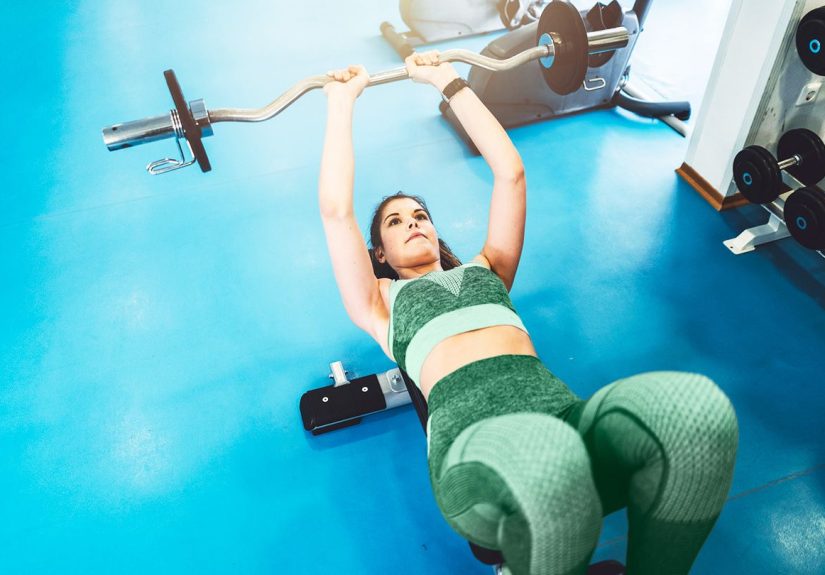
The decline bench press is a bench press variation performed on a bench angled slightly downwardtypically around 15–30 degrees. Your head is lower than your hips, your feet are usually secured under pads/rollers, and you press a barbell or dumbbells from the lower chest area to lockout.
Mechanically, it’s still a horizontal pressing pattern, but the angle changes how your shoulders and upper arms travel. That small shift is why the decline press has a reputation for being easier on some shoulders and “better for the lower chest.”
Muscles Worked (and What “Lower Chest” Really Means)
The main mover in all bench press variations is the pectoralis major (your big chest muscle), assisted by the triceps and anterior deltoids (front shoulders). The pec has regions/fiber directions often described as “upper” (clavicular) and “mid-to-lower” (sternal/costosternal), but it’s still one muscle working as a team.
Here’s the honest truth: you can’t completely “isolate” one tiny strip of chest. But you can bias emphasis by changing bench angle, grip, range of motion, and where the load feels hardest.
Think of it like shining a flashlight. You can aim the beam more toward one areabut the whole room still gets lit.
Potential Benefits of the Decline Bench Press
1) It can feel more shoulder-friendly for some lifters
Many people find decline pressing more comfortable than flat or incline because the shoulder position can involve a slightly different path and less demand on the front delts. Research on bench angle and muscle activation suggests that as bench incline increases, the upper chest and anterior deltoid tend to contribute more. In plain English: more incline often means more shoulder involvement, which isn’t always what you want if your shoulders get cranky.
This doesn’t mean decline bench is “safe” for everyonejust that for certain body structures and setups, it can be a friendlier pressing option than steep incline work.
2) Many lifters can move more weight (for legit reasons)
The decline press often involves a shorter range of motion compared to flat or incline. Shorter distance + a strong pressing line can make heavier loads feel more manageable. That’s not cheating; it’s physics and leverage doing their thing.
Why that matters:
- Confidence builder: Handling heavier loads can help lifters get comfortable under weight.
- Overload tool: Advanced lifters sometimes use slight declines to overload the press without grinding through as much sticking-point distance.
- Strength specificity: If your sport or training goal benefits from strong horizontal pressing, the decline can be one more angle to train it.
3) It may emphasize the sternal (mid-to-lower) pec fibers a bit more than incline
Angle matters. Multiple studies on bench inclinations show changes in which portions of the pec are more active depending on the bench angle. Generally, incline tends to increase upper pec involvement, while flat and decline are more aligned with the sternal portion. That supports the idea that decline pressing can be a reasonable way to bias the “lower-looking” chest regionespecially compared to incline.
Key word: bias, not “magically carve a new muscle.”
4) It can be a useful variation when flat bench gets stale
Muscle growth thrives on good training volume, consistent progressive overload, and enough variation to keep you progressing without beating up your joints. If flat bench is starting to feel like a rerun of a show you’ve watched 12 times, a decline block can refresh training without abandoning pressing altogether.
It’s also handy if your gym’s flat benches are always occupied by someone doing “texting supersets” (3 reps, 7 minutes of scrolling, repeat).
5) Great carryover for some people who love dips
If dips are one of your best chest builders, decline bench can sometimes feel similar: more emphasis on that “lower chest line” sensation, strong triceps involvement, and a pressing angle that doesn’t scream “front delts, please do everything.” It’s not the same movement, but many lifters experience a comparable chest/triceps pump.
Potential Drawbacks of the Decline Bench Press
1) Setup is awkwardand safety matters more here
Decline bench press is one of those exercises where the setup is half the battle:
- You’re often more wedged in (feet locked, hips higher than head).
- Unracking can be trickier, especially if the rack height isn’t ideal.
- If you fail a rep, the “exit strategy” is less graceful than on flat benchespecially with a barbell.
Translation: A spotter and/or safety arms are a really good idea. This is not the lift to “just see what happens” with a near-max attempt.
2) Shorter range of motion can reduce stimulus (depending on your goal)
For hypertrophy (muscle growth), long-term progress is strongly supported by challenging your muscles through a meaningful range of motion, controlling the eccentric, and accumulating quality volume. Because decline pressing may reduce total range of motion, some coaches argue it can provide less “time under tension” than flat or incline pressesespecially if the lifter turns it into a bounce-and-launch routine.
That doesn’t make it useless. It just means you should be honest about your goal:
- Strength focus? Heavier loads can still be very productive.
- Hypertrophy focus? You may want to prioritize full-range pressing and use decline as a secondary tool, not your entire chest personality.
3) The “lower chest only” narrative is oversold
Some fitness content makes “lower chest” sound like a separate muscle you can switch on like a lightbulb. In reality, your pec works across fibers, and most people will build their chest well with a combination of flat pressing, slight incline pressing, and good accessory work (like fly variations and dips, if they agree with your shoulders).
So yes, decline can bias emphasis. No, it won’t instantly “delete” chest fat or sculpt a superhero shelf overnight. (If it did, every gym would have a decline bench line longer than the coffee shop line.)
4) Head-down positioning can cause discomfort or dizziness
Some people simply don’t tolerate the declined position well. Being angled downward can increase pressure sensations in the head, and heavy pressing often involves breath-holding or bracing that can spike blood pressure in the short term. If you’re prone to dizziness, headaches, or you’ve been told to be cautious with blood pressure, the decline bench may not be your best choice.
Even if you’re healthy, it’s smart to avoid super long breath-holds and to build up gradually instead of jumping into max attempts.
5) Not every gym setup supports it well
Some decline benches are fantastic. Others are basically a slippery slide with a prayer. If the bench is unstable, the foot pads are too far away, or the rack height makes unracking feel like a circus act, don’t force it. A “good exercise” becomes a bad idea in a bad setup.
How to Do the Decline Bench Press Safely (Without Becoming a Gym Story)
Step-by-step setup
- Choose a mild decline: Start around 15 degrees. More decline isn’t automatically better.
- Lock your feet in: Secure your feet under the pads so you don’t slide. If you feel like you’re slowly becoming a human banana peel, reset.
- Set your upper back: Retract and depress your shoulder blades (think “proud chest, shoulders down and back”).
- Grip the bar: Start with a grip that’s slightly wider than shoulder width. Wrists stacked over forearms.
- Unrack with control: If possible, use a spotter. Keep the bar stable before lowering.
- Lower to a consistent touch point: Usually the lower chest/upper rib area. Elbows roughly 30–60 degrees from your torso (not flared straight out).
- Press up and slightly back: Smooth drive to lockout without letting your shoulders roll forward.
Common mistakes (aka “how to make your shoulders hate you”)
- Bouncing the bar off your chest because gravity is “helping.”
- Letting elbows flare hard and losing upper-back tightness.
- Going too steep on the decline, turning it into an awkward partial press.
- No spotter, no safeties with heavy loads. The risk-to-reward ratio gets ugly fast.
Programming: When (and How Often) the Decline Bench Makes Sense
Most people don’t need decline bench press as a main lift year-round. It tends to work best as a variation or a secondary press.
If your goal is strength
- Option A (secondary press): 3–5 sets of 3–6 reps, 1–2 times per week
- Best for: Lifters who want more horizontal pressing volume without piling on shoulder irritation
If your goal is hypertrophy
- Option B (accessory press): 3–4 sets of 8–12 reps, once per week
- Pair with: A full-range press (flat or slight incline) and a fly/cable movement for deep stretch
If your goal is “my shoulders are dramatic”
- Option C: Use dumbbells or a machine decline press for a more joint-friendly path
- Keep reps moderate: 8–15 reps, controlled tempo, stop shy of failure
Smart Alternatives If the Decline Bench Isn’t for You
If decline bench feels awkward, causes headaches, or your gym’s decline setup is basically a medieval device, you have options:
- Flat bench press: Still one of the best all-around chest builders.
- Slight incline dumbbell press: Often great for overall chest development with a comfortable shoulder path.
- Weighted dips (if pain-free): Big chest/triceps stimulus, but respect shoulder mobility and control depth.
- Cable or machine decline press: More stable, easier to adjust path, great for controlled hypertrophy work.
- Decline cable fly or press variations: Excellent for constant tension and a strong mind-muscle connection.
Who Should Try the Decline Bench Press (and Who Should Skip It)
Good candidates
- Lifters who feel shoulder discomfort on flat/incline and want an alternative pressing angle
- Strength-focused trainees who want a variation for overload or novelty
- Chest builders who already do flat/incline and want a “third angle” in moderation
Maybe skip it (or get guidance first)
- Anyone who gets dizzy, headaches, or feels “head pressure” in decline positions
- Lifters training alone without safeties/spotter and pushing heavy loads
- People with blood pressure concerns who haven’t been cleared for intense resistance training
- Beginners who haven’t built consistent bench press technique yet
Conclusion
The decline bench press isn’t a miracle, and it isn’t worthless. It’s a toolone that can be genuinely useful for certain lifters and totally unnecessary for others.
Potential benefits include a pressing angle that may feel friendlier on some shoulders, the ability to handle heavier loads, and a modest emphasis shift toward the sternal (mid-to-lower) pec region. Potential drawbacks include awkward setup, shorter range of motion (which can matter for hypertrophy), and head-down discomfort that makes some lifters bail after one setand honestly, fair.
If you like it, can set it up safely, and it helps you train consistently: keep it. If it feels like you’re benching on a slide at a waterpark: don’t force it. Your chest will grow just fine without turning every workout into a stunt show.
Real-World Experiences: What Lifters Notice Over Time (The “Human” Section)
Talk to enough lifters and you’ll notice something funny about the decline bench press: it’s rarely anyone’s “first love,” but it sometimes becomes a “solid relationship” exercisereliable, low-drama, and surprisingly productive when used at the right time.
Experience #1: The surprise shoulder relief. A lot of people try decline because their shoulders feel beat up from too much flat pressing or aggressive incline work. The first reaction is usually, “Wait… why does this feel smoother?” For some body types, the angle naturally encourages a bar path and elbow position that feels less pinchy. When that happens, decline becomes a way to keep pressing volume up while giving the shoulders a break. The lifter still gets a chest stimulus without feeling like their front delts are filing a complaint with HR.
Experience #2: The “I’m stronger here” confidence boost. Many lifters can load decline heavier than incline and sometimes even heavier than flat. In real life, that can be motivatingespecially for people who get stuck in a bench plateau. Even if the carryover isn’t perfectly one-to-one, feeling stable under heavier weight can build confidence. Just don’t confuse confidence with invincibility. The decline bench is famous for turning “I feel strong today” into “Why is the bar moving so slowly and why am I upside-down?” when someone skips warm-ups.
Experience #3: The spotter becomes your best friend. Decline bench is one of those lifts where people learn humility fast. Unracking feels different, and failing a rep can be awkward. Lifters who stick with decline usually develop a “no ego” routine: they use safeties, ask for a spot, and keep reps clean. The funny thing is that this often improves their pressing habits everywhere else, too. Once you’re disciplined on decline, you tend to bench smarter on flat.
Experience #4: The lower-chest “pump” is real… but so is the placebo effect. Plenty of lifters report that decline gives them a strong sensation near the lower pec lineespecially if they’re used to pressing with lots of shoulder involvement. That sensation can be useful (mind-muscle connection matters), but experienced trainees learn not to chase the pump as proof of “best exercise.” Some people get the same chest growth from flat bench + dips + cables, and decline becomes optional. Others love decline because it helps them feel their pecs better. Both can be true without the universe collapsing.
Experience #5: The “head rush” dealbreaker. There are lifters who would benefit from decline in theorybut their body simply hates being angled downward. They get pressure in the head, feel dizzy after a heavy set, or just feel uncomfortable. The most experienced lifters don’t argue with that signal. They swap in a decline dumbbell press, a machine press, or dips and move on. Progress isn’t about proving you can tolerate every exercise; it’s about training consistently with movements that let you recover and repeat.
Experience #6: Decline works best when it’s not your whole identity. In the real world, the decline bench press shines as a rotation. Lifters often run it for 4–8 weeks as a secondary press, then switch back to flat or incline. It becomes a “spice,” not the entire meal. And like any spice, too much can ruin dinnerespecially if “too much” means heavy sets with no safeties because you’re chasing a personal record while upside-down.
In short: lifters who do best with decline bench are usually the ones who treat it like a smart training toolcontrolled reps, safe setup, reasonable programmingnot a carnival ride.





 Close
Close