
Table of Contents >> Show >> Hide
- Why This Creamy Carrot Pasta Actually Works
- Ingredients You’ll Need
- How to Make Creamy Carrot and Roasted Garlic Bucatini
- What This Recipe Tastes Like
- Pro Tips for the Best Creamy Carrot and Roasted Garlic Pasta
- Easy Variations and Smart Substitutions
- What to Serve with Creamy Carrot and Roasted Garlic Bucatini
- How to Store and Reheat It
- Recipe Card: Creamy Carrot and Roasted Garlic Bucatini
- Kitchen Experience: Why This Recipe Feels So Good to Make and Eat
- Conclusion
If you have ever looked at a bag of carrots and thought, “You seem nice, but are you pasta-sauce material?” this recipe is here to answer with a confident, creamy yes. Creamy carrot and roasted garlic bucatini is the kind of dinner that sounds fancy enough for company but is secretly relaxed enough for a Tuesday night when your energy level is somewhere between “competent home cook” and “person eating shredded cheese over the sink.”
The magic of this dish comes from turning humble ingredients into something unexpectedly luxurious. Roasted carrots become sweet and silky. Roasted garlic loses its sharpness and turns mellow, buttery, and a little dramatic in the best possible way. Bucatini, with its thick, hollow strands, grabs onto the sauce like it was born for this exact job. Add a splash of cream, a shower of Parmesan, and just enough pasta water to make everything glossy, and suddenly dinner feels suspiciously restaurant-worthy.
This version is rich without being heavy, vegetable-forward without feeling virtuous, and comforting without sliding into sleepy casserole territory. It is bright, savory, and just sweet enough from the carrots to make the garlic and cheese pop. In other words, it has range.
Why This Creamy Carrot Pasta Actually Works
Roasted carrots build a naturally silky sauce
Carrots are not just there for color. When roasted, they become sweeter, deeper, and softer, which makes them perfect for blending into a smooth pasta sauce. Instead of tasting like baby food in a blender nightmare, properly roasted carrots create body, subtle sweetness, and a velvety texture that makes the sauce feel luxurious.
Roasted garlic mellows out and gets buttery
Raw garlic can be punchy, which is great when you want a little attitude. This recipe wants charm. Roasting a whole head of garlic transforms it into something soft, spreadable, and gently sweet. It brings depth and savory warmth without bulldozing the rest of the ingredients.
Bucatini is the pasta shape you want here
Bucatini looks like spaghetti that hit the gym. It is thicker, has a tiny hollow center, and holds creamy sauces exceptionally well. That means every twirl picks up sauce on the outside and pulls a little into the center too. More sauce in every bite is not a problem. It is the goal.
A little pasta water does the glamorous finishing work
The difference between a sauce that sits on the pasta and a sauce that clings to it is usually reserved pasta water. Those starchy spoonfuls help the carrot puree, cream, butter, and cheese come together into one glossy, cohesive sauce. It is a small move with big main-character energy.
Ingredients You’ll Need
This recipe serves 4 generously, or 2 very hungry pasta enthusiasts who “just want a little more.”
For the pasta
- 12 ounces bucatini
- 1 whole head garlic
- 1 pound carrots, peeled and cut into coins
- 1 small yellow onion, chopped
- 2 tablespoons olive oil, plus more for drizzling
- 2 tablespoons unsalted butter
- 1/3 cup heavy cream
- 1/2 cup finely grated Parmesan cheese, plus more for serving
- 1/2 teaspoon kosher salt, plus more for pasta water
- 1/4 teaspoon black pepper
- 1/4 teaspoon red pepper flakes, optional
- 1 teaspoon lemon zest
- 1/2 to 3/4 cup reserved pasta water, as needed
Optional crunchy topping
- 1/2 cup panko breadcrumbs
- 1 tablespoon olive oil or butter
- 1 tablespoon chopped parsley
- 2 to 3 sage leaves, thinly sliced, optional
How to Make Creamy Carrot and Roasted Garlic Bucatini
1. Roast the garlic
Preheat your oven to 400 degrees Fahrenheit. Slice the top off the head of garlic to expose the cloves. Drizzle with a little olive oil, wrap it in foil, and roast for 40 to 50 minutes, until the cloves are soft and golden. Let it cool enough to handle, then squeeze the roasted garlic out of its skins.
2. Roast the carrots
While the garlic roasts, toss the carrots with 1 tablespoon olive oil, salt, and pepper. Spread them on a sheet pan in a single layer. Roast for 25 to 30 minutes, flipping once halfway through, until the carrots are tender and lightly caramelized around the edges. Those browned spots are flavor, not a scheduling error.
3. Cook the bucatini
Bring a large pot of well-salted water to a boil and cook the bucatini until al dente according to package directions. Before draining, reserve at least 1 cup of the pasta water. This is not optional. This is the liquid gold portion of the evening.
4. Build the sauce base
In a large skillet or Dutch oven, melt the butter with a small drizzle of olive oil over medium heat. Add the chopped onion and cook for 5 to 6 minutes until soft and translucent. If using red pepper flakes, add them now. Stir in the roasted carrots and roasted garlic.
5. Blend until smooth
Transfer the carrot mixture to a blender. Add the heavy cream, lemon zest, and about 1/2 cup reserved pasta water. Blend until very smooth. If needed, add a splash more water to help everything move. The sauce should be thick but pourable, like a silky soup that knows it is about to do important work.
6. Finish the pasta the right way
Pour the blended sauce back into the skillet over medium-low heat. Add the drained bucatini and toss well. Sprinkle in the Parmesan off the heat or over very low heat, tossing continuously so the cheese melts smoothly into the sauce. Add more reserved pasta water a little at a time until the sauce coats the pasta in a glossy layer rather than clumping like a bad decision.
7. Add a crunchy topping if you want contrast
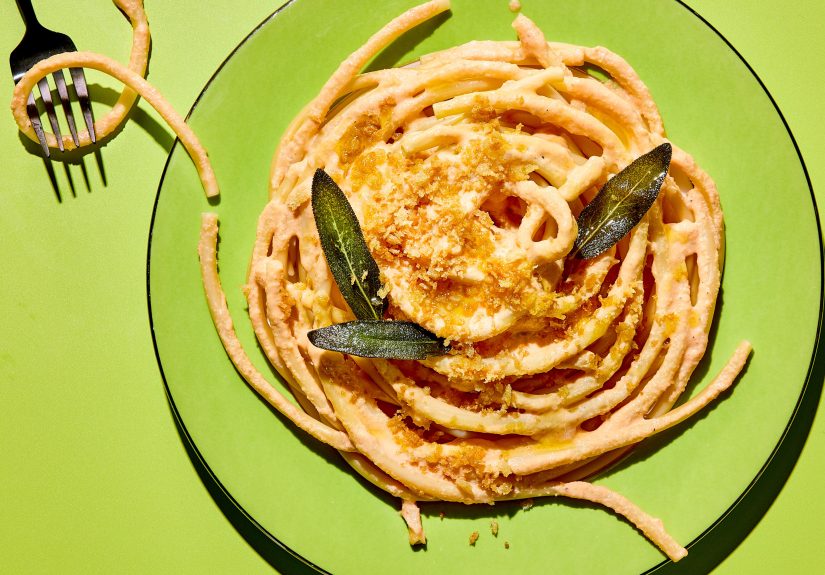
In a small skillet, toast the panko in olive oil or butter until golden. Stir in parsley and sage if using. Sprinkle it over the finished pasta for texture. Creamy pasta plus crisp crumbs is one of life’s least controversial pleasures.
What This Recipe Tastes Like
This creamy carrot and roasted garlic bucatini recipe lands somewhere between cozy and elegant. The carrot gives the sauce a gentle sweetness, but not in a dessert-adjacent way. The roasted garlic adds mellow depth, the Parmesan brings salt and nuttiness, and the cream rounds it all out. Lemon zest keeps the whole thing from feeling flat. The final result is silky, savory, slightly sweet, and deeply comforting.
It is the kind of pasta that makes people pause mid-bite and say, “Wait, what is in this?” That is usually your cue to act modest while fully enjoying your moment.
Pro Tips for the Best Creamy Carrot and Roasted Garlic Pasta
Roast for flavor, not just softness
Do not rush the roasting step. You want the carrots tender, yes, but also lightly caramelized. That roasted flavor is what keeps the sauce from tasting flat or one-note.
Blend longer than you think
A truly creamy sauce needs a thorough blend. Give it an extra 30 seconds after it looks done. This is especially helpful if your blender is not the kind that sounds like a jet engine preparing for takeoff.
Grate the cheese finely
Finely grated Parmesan melts more smoothly into the hot pasta. Large shreds can clump, which is rude and avoidable.
Use the pasta water gradually
Add reserved pasta water in small splashes. Too little and the sauce feels tight. Too much and it turns soupy. You are looking for that sweet spot where the sauce hugs the noodles instead of pooling under them.
Keep the pasta slightly underdone before finishing
Bucatini will continue cooking for a minute or two once it hits the sauce. Pull it at al dente so it stays pleasantly chewy rather than mushy.
Easy Variations and Smart Substitutions
Make it dairy-free
Swap the cream and Parmesan for 1/2 cup soaked cashews and a splash of unsweetened oat milk or almond milk. Blend until smooth. You will still get a creamy sauce with a slightly nuttier finish.
Add protein
Top the pasta with crispy pancetta, Italian sausage, grilled chicken, or white beans. If you want to keep the dish vegetarian, toasted walnuts or chickpeas also work beautifully.
Use another pasta shape
If you cannot find bucatini, spaghetti, rigatoni, fettuccine, or even shells can work. That said, bucatini really is the overachiever here.
Lean into herbs
Fresh thyme, parsley, sage, or a little basil can add another layer of flavor. Sage is especially good if you want the dish to feel extra cozy and vaguely dinner-party capable.
What to Serve with Creamy Carrot and Roasted Garlic Bucatini
This pasta is rich enough to feel satisfying on its own, but it plays very nicely with simple sides. A crisp arugula salad with lemon vinaigrette is a smart choice because the peppery greens cut through the creaminess. Roasted broccoli or broccolini also works, especially if you like a little bitterness with your sweet-savory pasta. And yes, garlic bread is technically excessive when roasted garlic is already in the pasta, but some of us are not here to judge. We are here to thrive.
How to Store and Reheat It
Store leftovers in an airtight container in the refrigerator for up to 3 days. When reheating, add a splash of water, broth, or milk to loosen the sauce before warming it gently on the stove or in the microwave. Pasta sauces thickened with cheese and vegetable puree tend to tighten up in the fridge, so this step matters.
If you know you want leftovers, reserve a little extra sauce and keep it separate if possible. That makes the second-day version taste much closer to the original.
Recipe Card: Creamy Carrot and Roasted Garlic Bucatini
Ingredients
- 12 ounces bucatini
- 1 head garlic
- 1 pound carrots, peeled and sliced
- 1 small yellow onion, chopped
- 2 tablespoons olive oil
- 2 tablespoons butter
- 1/3 cup heavy cream
- 1/2 cup finely grated Parmesan
- 1 teaspoon lemon zest
- 1/2 teaspoon kosher salt
- 1/4 teaspoon black pepper
- 1/4 teaspoon red pepper flakes, optional
- 1/2 to 3/4 cup reserved pasta water
- Optional: toasted breadcrumbs, parsley, or sage for topping
Instructions
- Roast the garlic at 400 degrees Fahrenheit for 40 to 50 minutes until soft.
- Roast the carrots with olive oil, salt, and pepper for 25 to 30 minutes until tender and caramelized.
- Cook bucatini in salted water until al dente, reserving 1 cup pasta water.
- Sauté onion in butter and a little olive oil until soft.
- Blend onion, roasted carrots, roasted garlic, cream, lemon zest, and 1/2 cup pasta water until smooth.
- Return sauce to skillet, add pasta, and toss with Parmesan.
- Loosen with more pasta water as needed.
- Top with toasted breadcrumbs and herbs, then serve hot.
Kitchen Experience: Why This Recipe Feels So Good to Make and Eat
There is something deeply satisfying about making a pasta sauce that starts with carrots. Not because it is trendy, and not because it lets you say the phrase “vegetable-forward” like you are casually judging a cooking show, but because it changes the whole mood of dinner. A tomato sauce is bold. Alfredo is unapologetically rich. But a carrot and roasted garlic sauce feels softer around the edges. It is comforting in a quieter way.
The first good moment is the smell. When the garlic is roasting, the kitchen starts to smell like you absolutely have your life together. It does not matter if there is mail on the counter or if you forgot to fold the laundry. Roasted garlic creates the illusion of order and intention. Then the carrots go into the oven and start picking up those lightly browned edges, and suddenly the whole room smells sweet, savory, and warm.
Then comes the blender moment, which is honestly the turning point. Before blending, the ingredients look practical. After blending, they look like dinner with a personality. The color is gorgeous, somewhere between sunset orange and expensive soup. It is the kind of sauce that makes you want to pretend you invented it from scratch while standing dramatically over the stove.
And then there is the bucatini. Twirling bucatini always feels a little more fun than eating other pasta shapes. It is hearty, slightly chewy, and a little messy in the most charming way. Because the strands are hollow, the sauce does not just coat the outside. It sneaks inside too, which means every bite feels fuller and more satisfying. It is basically the pasta version of getting extra frosting in the middle of the cake.
This dish also has a way of winning over people who claim they are “not really carrot people.” That is because it does not taste like a bowl of steamed vegetables trying to improve your attitude. It tastes layered. Roasting makes the carrots sweet and complex. Garlic makes them savory. Parmesan brings umami. Lemon zest adds just enough lift to keep the sauce from feeling sleepy. Together, the ingredients become something that tastes complete rather than obviously virtuous.
It is also a lovely recipe for sharing. It looks impressive in a big serving bowl, especially with a little parsley or crispy breadcrumb topping scattered over the top. The color alone gets attention. It is not every day you serve a pasta that looks elegant, cozy, and cheerful all at once. It feels special without being fussy, which is a rare and useful quality in a recipe.
Maybe that is the best thing about creamy carrot and roasted garlic bucatini. It feels creative, but not risky. It feels comforting, but not boring. It is the kind of dish you make once because you are curious, then make again because everyone at the table suddenly expects it to return. And honestly, that is the dream. Not every recipe needs fireworks. Some just need to be wildly dependable, deeply delicious, and good enough to make people scrape the pan for the last glossy noodle.
Conclusion
If you want a pasta dinner that is creamy, cozy, and just interesting enough to feel like a small culinary win, this creamy carrot and roasted garlic bucatini recipe is worth making. It turns everyday ingredients into something silky, flavorful, and memorable without demanding restaurant-level effort. Roast the vegetables well, save your pasta water, trust the blender, and let bucatini do what bucatini does best. Dinner will handle the rest.






 Close
Close