
Table of Contents >> Show >> Hide
- The Valuation Gap: What Investors Are Actually Comparing
- Why U.S. Stocks Look Expensive
- Why European Stocks Look Cheap
- Cheap Does Not Always Mean Undervalued
- Expensive Does Not Always Mean Overvalued
- Currency Matters More Than People Think
- Interest Rates and Bonds Change the Valuation Debate
- So, Are European Stocks Cheap or Is the U.S. Expensive?
- What Investors Should Watch Next
- Practical Portfolio Takeaway
- Experience Section: Lessons Investors Learn When Comparing Europe and the U.S.
- Conclusion
Every few years, investors look across the Atlantic and ask the same awkward dinner-table question: are European stocks genuinely cheap, or are U.S. stocks simply wearing designer valuation sunglasses indoors? In 2026, that question feels especially relevant. The U.S. market has been lifted by artificial intelligence, mega-cap technology, strong profit margins, and a belief that American companies can keep turning innovation into earnings at industrial speed. Europe, meanwhile, often trades at lower price-to-earnings ratios, offers higher dividend yields, and still carries the reputation of being the “value aisle” of global equities.
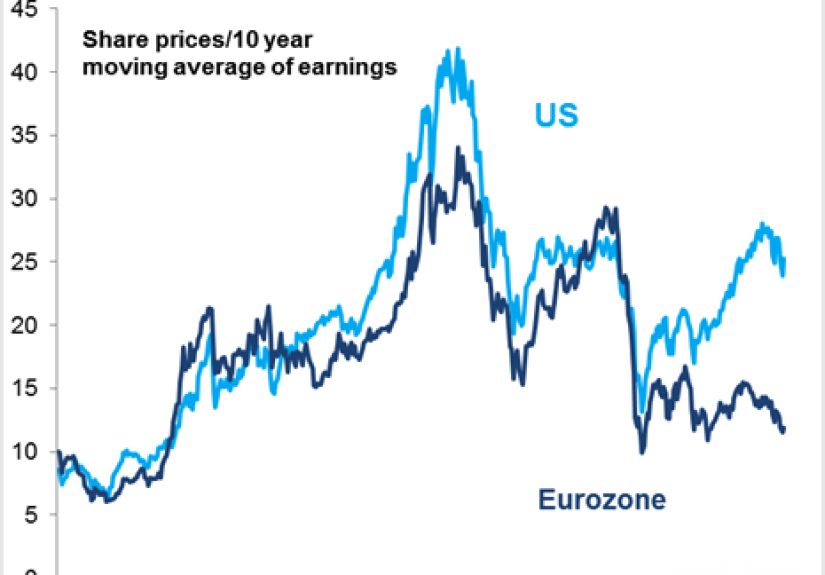
But cheap is not the same thing as attractive. A half-price umbrella is a bargain only if it opens before the rainstorm. Likewise, an expensive market is not automatically doomed if earnings growth is strong enough to justify the price. The real answer is more interesting: European stocks are cheaper on many traditional valuation measures, while U.S. stocks are expensive relative to their own history and global peers. Yet both facts need context, because valuation alone is a compass, not a GPS.
The Valuation Gap: What Investors Are Actually Comparing
When people say European equities are cheap, they usually mean European stock indexes trade at lower multiples than U.S. indexes. The common yardsticks include forward price-to-earnings ratios, price-to-book ratios, dividend yields, cyclically adjusted earnings, and price-to-cash-flow measures. On many of these metrics, Europe looks less demanding than the United States.
The U.S. market, especially the S&P 500, has recently traded at forward P/E multiples above long-term averages. That does not mean the market must fall tomorrow morning before your coffee cools, but it does mean investors are paying a premium for expected earnings. In plain English: Wall Street is not buying today’s profits; it is paying up for tomorrow’s profits, next year’s profits, and perhaps a few profits that are still wearing diapers.
Europe’s broad market, by contrast, has typically traded at a lower multiple. Some of this is sector mix. European indexes have more exposure to banks, energy, industrials, healthcare, luxury goods, and consumer staples. The U.S. has a heavier weighting in high-growth technology and communication services. A market full of software platforms and AI infrastructure companies will usually deserve a higher multiple than a market with more lenders, insurers, oil companies, and manufacturers.
Why U.S. Stocks Look Expensive
1. The AI Premium Is Real
The biggest reason U.S. equities look expensive is simple: investors believe U.S. companies are better positioned to profit from artificial intelligence. Nvidia, Microsoft, Alphabet, Amazon, Meta, Apple, and other mega-cap leaders have turned the U.S. market into a giant AI growth vehicle. Whether that vehicle is a rocket ship or a luxury bus with very expensive maintenance is the debate.
AI optimism has helped justify higher valuations because investors expect stronger revenue growth, higher productivity, and better margins. If AI spending converts into durable earnings, today’s high multiples may look less dramatic in hindsight. However, if AI investment becomes a capital-expenditure treadmill where everyone spends billions just to stay in the same place, then U.S. valuations could become harder to defend.
2. Profit Margins Are Already High
Another reason U.S. stocks look expensive is that profit margins are already near historically strong levels. American companies have benefited from scale, pricing power, asset-light business models, global revenue streams, and shareholder-friendly capital allocation. The challenge is that high margins leave less room for improvement. When expectations are already excellent, “pretty good” can disappoint investors. That is the emotional math of expensive markets.
3. Market Concentration Raises the Stakes
The U.S. market’s strong performance has been concentrated in a relatively small group of giant companies. Concentration is not automatically bad. Great companies can stay great for a long time. But concentration does make the index more sensitive to a few earnings reports, regulatory changes, interest-rate moves, or technology spending cycles. If the biggest names stumble, the broader index may feel it quickly.
Why European Stocks Look Cheap
1. Lower Growth Expectations
European stocks are cheaper partly because investors expect slower economic and earnings growth. Europe has faced structural challenges: lower productivity growth, heavier regulation, fragmented capital markets, energy uncertainty, and slower technology scaling. Investors do not assign premium multiples to markets that look like they are jogging while the U.S. is sprinting with a laptop under one arm.
That said, low expectations can be useful. When expectations are already modest, companies do not need to perform miracles. They only need to perform better than the market assumes. That is where value investors get interested. Europe does not need to become Silicon Valley with cobblestone streets to deliver respectable returns.
2. Higher Dividend Culture
European companies often return more cash through dividends. This matters because dividends can form a meaningful part of total return, especially when valuation expansion is limited. U.S. investors often focus on capital gains, buybacks, and growth. European investors are more accustomed to cash income. For long-term portfolios, that dividend discipline can be helpful, particularly when markets are choppy.
3. Sector Composition Creates a Value Tilt
Europe has many globally competitive companies, but they are not always in the sectors investors currently worship. Think of companies in pharmaceuticals, luxury goods, industrial automation, energy, banking, insurance, aerospace, and consumer staples. These businesses can be highly profitable, but they rarely receive the same valuation excitement as U.S. software and AI infrastructure stocks.
Examples include ASML in semiconductor equipment, SAP in enterprise software, Novo Nordisk in healthcare, LVMH in luxury goods, Nestlé in consumer staples, and Siemens in industrial technology. These are not sleepy companies. They are global champions. The issue is that Europe’s index-level story is less concentrated in the flashy growth themes that dominate U.S. market headlines.
Cheap Does Not Always Mean Undervalued
A low P/E ratio can signal opportunity, but it can also signal danger. Some stocks are cheap because investors are irrationally pessimistic. Others are cheap because the business is shrinking, returns on capital are weak, or the company is trapped in an industry where growth has all the speed of a printer jam.
This is the classic value trap. A stock trading at 9 times earnings may look attractive until earnings fall 30 percent. Then the “cheap” stock suddenly becomes expensive, and the investor learns a valuable lesson, usually while staring silently at a brokerage screen.
For European equities, the key question is whether the valuation discount is too wide relative to the actual difference in fundamentals. If European companies can deliver stable earnings, improve margins, benefit from lower interest rates, and return cash to shareholders, the discount may narrow. If growth remains weak and political risk rises, the discount may persist.
Expensive Does Not Always Mean Overvalued
The U.S. market may look expensive, but expensive assets can still generate strong returns when earnings compound rapidly. A high-quality company with durable competitive advantages, strong pricing power, and long growth runway deserves a premium. The mistake is assuming every expensive stock is a bubble. Sometimes it is simply a great business with a price tag that makes accountants breathe into a paper bag.
The U.S. has earned part of its premium. It offers deeper capital markets, stronger technology leadership, greater entrepreneurial intensity, and more shareholder-friendly corporate behavior. American companies have also shown an ability to scale globally and defend margins. That deserves respect.
The risk is not that the U.S. market is “bad.” The risk is that the market is priced for a very good future. When prices assume excellence, the margin of safety shrinks. Investors are not just betting on strong companies; they are betting that those companies will remain strong enough to justify already-rich expectations.
Currency Matters More Than People Think
For U.S.-based investors, European stock returns are affected by the euro, the British pound, the Swiss franc, and other currencies. A European company can perform well in local terms while a stronger U.S. dollar reduces returns for American investors. The opposite is also true: if the dollar weakens, international stocks can receive a currency tailwind.
This is one reason international diversification can feel frustrating. Investors may be right about the companies but wrong about the currency cycle. Currency does not dominate long-term equity returns forever, but over shorter periods it can make a smart decision look silly, which is one of markets’ favorite hobbies.
Interest Rates and Bonds Change the Valuation Debate
Stock valuations do not exist in isolation. They compete with bonds, cash, and other assets. When bond yields are low, investors are often willing to pay higher multiples for equities. When bond yields rise, future earnings are discounted more heavily. That can pressure high-valuation markets, especially those depending on long-duration growth stories.
This matters more for the U.S. than Europe because a larger share of U.S. index value is tied to companies whose valuations depend on future growth. Europe’s higher dividend yield and value-heavy composition may provide some cushion, though not immunity. No equity market receives a magic umbrella during a global risk-off storm.
So, Are European Stocks Cheap or Is the U.S. Expensive?
The best answer is: both, but not equally everywhere. European stocks are cheaper on broad valuation measures, but some of that discount is justified by slower growth, different sector exposure, and political complexity. U.S. stocks are expensive relative to history, but part of the premium is justified by stronger earnings growth, technology leadership, higher profitability, and deeper capital markets.
The opportunity may not be “buy Europe, sell America.” That is too simple, and markets love punishing simple slogans. A better approach is to ask where expectations are too high and where expectations are too low. In the U.S., some mega-cap growth stocks may still deserve premium valuations, but the index has less room for disappointment. In Europe, broad valuations are lower, but investors should be selective and avoid companies that are cheap for good reasons.
What Investors Should Watch Next
Earnings Growth
If U.S. earnings continue to grow quickly, high valuations may remain manageable. If European earnings improve faster than expected, the valuation gap could narrow. Earnings are the engine; valuation is the paint job.
Profit Margins
U.S. margins are already strong. Europe has more room for improvement in certain sectors, especially banks, industrials, and companies benefiting from restructuring. Margin expansion in Europe could surprise investors.
Currency Trends
A weaker dollar would support U.S. investors holding European equities. A stronger dollar would create a headwind. Currency is not the whole story, but it can change the ending of a one-year performance chart.
Policy and Geopolitics
Europe faces risks from regulation, energy policy, defense spending, fiscal coordination, and geopolitical tension. The U.S. faces risks from deficits, trade policy, inflation, and regulatory pressure on mega-cap technology. Neither market is exactly relaxing in a hammock.
Practical Portfolio Takeaway
For long-term investors, the valuation gap argues for diversification, not dramatic market timing. Owning only U.S. stocks after a decade of U.S. outperformance may feel comfortable, but comfort is not a strategy. Adding international exposure, including European equities, can reduce dependence on one market, one currency, and one growth narrative.
That does not mean investors should abandon the U.S. market. The U.S. remains home to many of the world’s best companies. But it does mean investors should recognize that price matters. Even wonderful businesses can disappoint when bought at heroic valuations. Meanwhile, Europe may offer selective value, income, and recovery potential, especially if earnings momentum improves.
Experience Section: Lessons Investors Learn When Comparing Europe and the U.S.
One practical experience many investors share is that the U.S. market feels easier to love. The stories are cleaner. AI, cloud computing, digital advertising, electric vehicles, semiconductors, and platform businesses are exciting. They sound like the future because, in many cases, they are. Buying the S&P 500 can feel like buying a ticket to innovation itself. The problem is that when everyone loves the same story, the ticket price rises.
European investing often feels different. It can feel slower, more complicated, and less glamorous. Instead of one dominant technology narrative, investors must examine banks, insurers, industrial exporters, pharmaceutical companies, energy firms, luxury brands, and consumer staples. It is less like watching a superhero movie and more like reading a very profitable instruction manual. Not thrilling at first glance, but occasionally full of treasure.
An investor who has spent years comparing both markets usually learns that valuation patience matters. There are long periods when cheap markets stay cheap. Europe has frustrated investors many times because the discount did not close quickly. A stock can remain undervalued longer than expected, especially when global capital keeps chasing U.S. growth. This teaches humility. Buying Europe simply because it is cheaper can become uncomfortable if the U.S. keeps outperforming for another year or two.
Another lesson is that dividends change behavior. European stocks often reward investors through cash payouts. That can make holding them psychologically easier during flat markets. While a U.S. growth investor may depend heavily on price appreciation, a European equity investor may receive a larger portion of return through dividends. This does not make Europe safer, but it can make the journey feel less like waiting for a stock chart to finally stop ignoring your feelings.
Investors also learn that index composition matters more than headlines. Comparing “Europe versus the U.S.” sounds simple, but the indexes are built differently. The U.S. index is more growth-heavy and tech-heavy. Europe is more value-heavy and cyclical. When technology leads, the U.S. often wins. When value, dividends, banks, energy, or industrials lead, Europe can look much better. The winner often depends on the market environment.
A final experience is that diversification rarely feels brilliant in the moment. When the U.S. is outperforming, international stocks feel unnecessary. When international stocks outperform, investors wonder why they did not buy more. Diversification is not designed to make every part of a portfolio look smart every year. It is designed to keep one wrong regional bet from becoming a financial personality crisis.
For many investors, the best lesson is balance. The U.S. may remain the world’s premier equity market, but paying any price for excellence is risky. Europe may be cheaper, but cheapness requires careful selection and patience. A thoughtful portfolio can respect both truths: own U.S. innovation, but do not ignore European value. In investing, the best answer is rarely shouted from one side of the Atlantic. It is usually built quietly, across both.
Conclusion
European stocks are cheaper than U.S. stocks by many traditional valuation measures, but they are not automatically a screaming bargain. The discount reflects real differences in growth, profitability, sector mix, and investor confidence. At the same time, the U.S. market’s premium is not imaginary. American companies have delivered stronger earnings, higher margins, and global technology leadership. The problem is that much of that good news is already reflected in prices.
Investors should avoid turning the debate into a boxing match. This is not Europe versus America with a referee and dramatic entrance music. It is a question of expected return, risk, valuation, and diversification. Europe may offer better value in selective areas, especially for investors seeking dividends and lower expectations. The U.S. may continue to justify premium valuations if AI and productivity gains translate into real earnings growth. The smartest position may be neither blind optimism nor gloomy rejection, but valuation-aware diversification.
In short: European stocks look cheaper, U.S. stocks look expensive, and both statements can be true at the same time. The real opportunity belongs to investors who understand why.







 Close
Close