
Table of Contents >> Show >> Hide
- Why a Boot Tray Matters More Than You Think
- What Makes a Boot Tray “Design-Worthy”?
- How to Style a Boot Tray So It Looks Intentional
- Best Places to Use a Boot Tray
- How to Choose the Right Boot Tray for Your Home
- Common Boot Tray Mistakes
- The Small Luxury of Getting the Entryway Right
- Real-Life Experiences with a Design-Worthy Boot Tray
- Conclusion
There are few household objects more misunderstood than the humble boot tray. In most homes, it gets treated like a reluctant backup singer: useful, ignored, and wheeled out only when winter starts stomping slush across the floor. But a design-worthy boot tray deserves a promotion. When chosen well, it can protect hardwood, tame muddy chaos, and actually make an entryway look more polished. Yes, really. The same object that catches drippy rain boots can also make your front door area feel intentional, organized, and a little bit smug in the best possible way.
That is the magic of a good boot tray. It solves a practical problem without announcing itself like a giant plastic bin from the garage sale aisle. Instead, it becomes part of the visual language of the room. In a mudroom, it supports the hardworking architecture of daily life. In a small apartment, it acts like a tiny command center for shoes, umbrellas, and whatever weather decided to fling at your family that day. In a well-designed entryway, it says, “We are tidy people,” even if someone just dropped a soccer bag in the corner three minutes ago.
If you think a boot tray sounds too minor to deserve design attention, consider how much traffic passes through your doorway. Guests see it first. Kids charge through it. Pets skid across it like they are auditioning for a slapstick movie. Because entryways take such a beating, the elements you place there need to work hard and look good doing it. A boot tray is one of the rare accessories that can genuinely do both.
Why a Boot Tray Matters More Than You Think
The most obvious job of a boot tray is floor protection. Wet boots, salty shoes, muddy clogs, gardening sneakers, and rain-soaked dog paws can do a number on flooring, especially wood, rugs, and anything light-colored enough to betray your lifestyle choices. A tray catches drips, corrals grit, and gives wet footwear a designated landing spot. That one simple boundary changes the rhythm of a home. Instead of mess spreading outward like a crime scene, it stays in one contained area.
But containment is only half the story. The best entryways are not just clean; they are readable. In design terms, that means the eye instantly understands where things belong. A tray creates order by giving shoes a home base. Suddenly the entryway feels less like a dumping ground and more like a planned transition between outdoors and indoors. That distinction matters, especially in smaller homes where the front door opens straight into a living room, hallway, or kitchen.
A boot tray also supports habits. People are more likely to take off wet shoes when there is a clear, convenient, attractive place to put them. If the tray is awkward, ugly, or too far from the door, everyone will ignore it. If it is beautiful and easy to use, it becomes second nature. Good design is often just helpful behavior wearing a nicer outfit.
What Makes a Boot Tray “Design-Worthy”?
A design-worthy boot tray does not have to be expensive, precious, or imported from a mysterious workshop in the Alps. It just needs to satisfy three requirements: it must contain moisture, suit the style of the space, and look intentional where it lives. That means materials, shape, scale, and surrounding decor all matter.
1. Material with Presence
Rubber trays are popular for a reason. They are durable, easy to wipe clean, and excellent at handling mud, melting snow, and everyday abuse. But if you want the tray to read as decor rather than utility, look at finishes like copper, galvanized metal, matte black steel, woven-look composites, enamel, stone-effect resin, or even weather-friendly wood designs with removable liners. The trick is choosing a finish that echoes something else already in the room. A copper tray can play off warm hardware. A black tray can nod to iron hooks or a dark-framed mirror. A natural-toned tray can soften an entryway full of white walls and painted millwork.
2. A Shape That Fits the Space
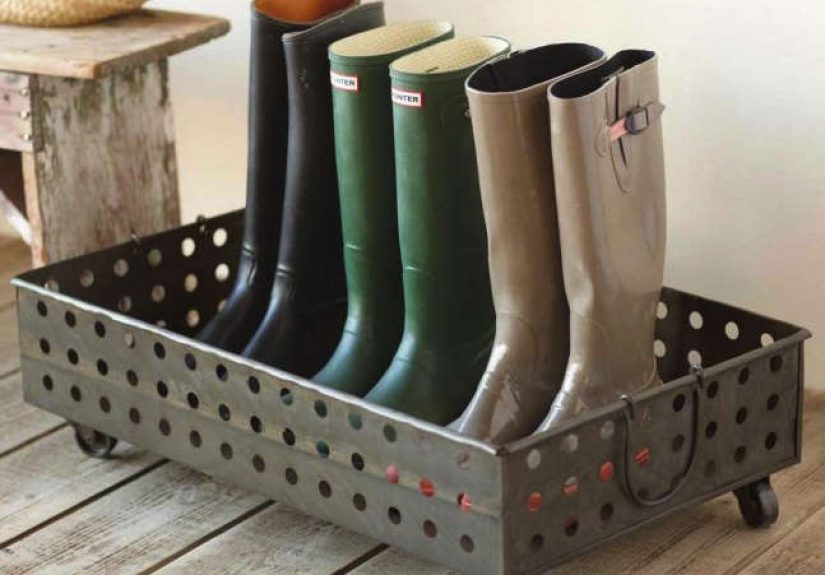
Long rectangular trays are classic because they tuck neatly under a bench, line up along a wall, and handle multiple pairs of shoes without turning the entry into an obstacle course. Round or oval trays can work in smaller corners or under pedestal tables, but they are usually better for one or two pairs of shoes than a family fleet of boots. If your home has a narrow hall, a slim-profile tray is smarter than a deep one. If you have kids, dogs, or weather drama, a tray with a tall rim earns its keep fast.
3. The Right Scale
A tiny tray in a busy family entryway is like bringing one paper towel to a spaghetti spill. It sends the right message but does not solve the problem. Your tray should match your household’s real habits. Two adults who remove shoes at the door may need a compact tray. A household with children, rain boots, winter shoes, and outdoor gear may need a larger tray or even two coordinated trays. The best boot tray is the one that accommodates real life instead of the fantasy version where everyone owns exactly one tidy pair of loafers.
How to Style a Boot Tray So It Looks Intentional
This is where the humble tray graduates into design territory. A boot tray looks most attractive when it is treated as part of a small entryway composition rather than a random afterthought on the floor.
Anchor It with a Bench
A bench above or beside a tray creates a natural station for removing shoes. It also visually frames the tray, making the entire setup feel planned. Under a wood bench, a metal or rubber tray looks structured and practical. Beside an upholstered bench, a sleeker tray can add contrast and keep the softer furnishings from feeling too delicate for real life.
Pair It with Vertical Storage
Hooks, pegs, shelves, or cubbies above a tray help build a functional drop zone. This is especially useful when the tray shares space with umbrellas, tote bags, scarves, and dog leashes. The vertical elements draw the eye upward, while the tray grounds the arrangement below. In design terms, that balance matters. In daily life terms, it means you are less likely to trip over three coats and a rogue rain boot.
Layer Nearby Textures
A tray can feel warmer and more integrated when it sits near natural textures such as a washable runner, woven basket, wood stool, or coir doormat. The goal is not to hide the tray. It is to make it feel like one note in a larger chord. Think of it as the bass line of the entryway: understated, structural, and weirdly essential.
Choose a Color Story
If your entryway is bright and airy, a matte black or dark metal tray creates contrast and a little drama. In a rustic or farmhouse-style space, enamel, aged metal, or weathered finishes feel at home. In a modern setting, keep the shape crisp and the palette restrained. In a cottage-style home, a tray with a softer finish or vintage feel can look charming instead of industrial. The key is cohesion. A tray does not need to disappear, but it should not look like it wandered in from a car wash.
Best Places to Use a Boot Tray
The front entry is the obvious location, but it is hardly the only one. A boot tray can earn its square footage in several hardworking areas of the home.
Mudrooms
This is boot-tray headquarters. In a mudroom, trays help separate clean indoor living from wet outdoor business. They are especially useful beneath hooks, near a utility sink, or under open cubbies where family members stash everyday footwear.
Back Doors and Garage Entries
These entrances often handle the messiest traffic: gardening shoes, sports cleats, rain boots, pet paws, and yard gear. A sturdy tray here protects floors where people are least likely to pause and behave delicately.
Apartment Entryways
No mudroom? No problem. A boot tray can define a mini drop zone in a narrow hall or right inside the front door. Add a mirror, wall hooks, and a compact bench or stool, and suddenly you have a tiny but mighty entry setup.
Laundry Rooms and Utility Areas
If wet shoes tend to migrate toward the laundry room anyway, a tray there can help them dry without dripping everywhere. It is also useful for holding gardening boots, pet bowls, or umbrellas in spaces that see plenty of moisture.
How to Choose the Right Boot Tray for Your Home
Start with climate. If you live somewhere rainy or snowy, prioritize a tray with a raised lip and a surface that is easy to rinse. If your issue is mostly dust, dirt, and the occasional damp sneaker, you may be able to get away with a shallower decorative tray. Then think about who uses the entryway. Tall rain boots need more depth and length than low-profile shoes. Children’s footwear multiplies like rabbits, so give yourself extra space.
Next, think about your tolerance for maintenance. Some homeowners love the patina of metal and do not mind a tray that changes character over time. Others want something that can be vacuumed, hosed off, and forgotten. There is no moral superiority here. Choose the tray you are actually willing to live with. A design feature only works if it is easy enough to maintain that you do not start resenting it by February.
Finally, pay attention to what your entryway already has. If you have warm wood floors and brass accents, choose a tray that complements those tones. If your mudroom is painted a moody blue or green, a black or dark metal tray will look grounded. If your house leans traditional, consider a tray with a classic silhouette. If your style is modern, keep the lines simple and the texture subtle.
Common Boot Tray Mistakes
One mistake is choosing a tray that is too flimsy. Cheap plastic might save money upfront, but it can warp, crack, or look sad almost immediately. Another mistake is ignoring proportion. If shoes spill out around the tray, it stops reading as organized and starts reading as defeated. A third mistake is forgetting the surrounding setup. A tray works best when it is paired with at least one other helpful element, such as a bench, hooks, shelf, or basket.
There is also the mistake of treating the tray like a seasonal object only. Yes, it shines in winter. But it is just as useful in spring for muddy garden clogs, in summer for pool sandals and flip-flops, and in fall for leaf-covered shoes and damp umbrellas. A good boot tray is not a holiday decoration. It is year-round infrastructure with nice manners.
The Small Luxury of Getting the Entryway Right
There is something deeply satisfying about coming home and having the first five feet of your house work beautifully. Not extravagantly. Not performatively. Just beautifully. A design-worthy boot tray does not scream for attention, yet it quietly improves the whole experience of entering and leaving your home. It saves floors. It reduces clutter. It supports better habits. It can even make a cramped corner look more curated.
That is why this tiny accessory matters. It proves that function does not have to be ugly, and style does not have to be impractical. In the best homes, the everyday objects are the ones doing the most impressive work. A boot tray is one of those objects. Give it a little thought, and it will return the favor every muddy, rainy, salty, leaf-strewn day of the year.
Real-Life Experiences with a Design-Worthy Boot Tray
Living with a good boot tray changes more than the floor; it changes the mood of the entryway. That may sound dramatic for an object whose main talent is catching dirty water, but daily experience tends to prove it. In homes with children, a tray often becomes the difference between an organized drop zone and a daily scavenger hunt for wet shoes. Parents stop shouting, “Please do not walk across the rug in those boots,” because the tray gives kids an obvious landing spot the moment they come through the door. It becomes one of those little domestic cues that quietly trains everyone to behave better.
In smaller homes and apartments, the experience is even more noticeable. When there is no dedicated mudroom, the front door has to do several jobs at once. It is the welcome area, the storage zone, and the first thing guests see. In that kind of space, a design-worthy boot tray has a surprisingly calming effect. Instead of the entry looking like the shoe department had a rough day, it feels edited. Even one handsome tray beneath a wall hook and mirror can make a compact hallway feel deliberate. People often discover that once the tray is in place, they naturally add smarter supporting pieces: a basket for gloves, a bench with storage, maybe a sconce or framed print. The tray becomes the start of a better system.
Seasonal living also reveals how valuable a tray can be. During rainy weeks, it keeps slick footprints from wandering into the kitchen. In snowy climates, it collects melting slush that would otherwise drip under furniture and dry into a salty crust. In spring, it handles muddy gardening clogs without complaint. In summer, it can catch pool sandals, flip-flops, or shoes kicked off after yard work. People often buy a boot tray for winter and end up using it all year because it solves so many messy little transitions between indoors and outdoors.
There is also an emotional side to the experience. A tidy entryway sends a reassuring message at the beginning and end of the day. When you come home carrying groceries, juggling a bag, and trying not to step on a damp sneaker, a clean landing area feels like a gift from your more competent self. When guests arrive and immediately understand where to place wet shoes, the whole visit starts more smoothly. Nobody awkwardly hovers on the mat wondering whether the house is shoes-on or shoes-off. The tray answers that question without requiring a speech.
Many homeowners are surprised by how much style matters here too. Swap out a generic tray for one in copper, black metal, enamel, or another finish that suits the room, and the entryway suddenly feels more finished. The tray stops looking like emergency equipment and starts looking like decor with a practical side hustle. That is the real experience of a design-worthy boot tray: less chaos, cleaner floors, better habits, and a front door area that feels thoughtful instead of accidental. Not bad for something that spends its life hanging out with muddy boots.
Conclusion
A design-worthy boot tray is proof that the smallest household details can have an outsized effect. It protects floors, contains mess, improves routines, and elevates the look of an entryway without demanding much space. Whether your home has a full mudroom, a back-door landing strip, or just a sliver of hallway by the front door, the right boot tray can make that area more functional and more attractive. Choose one with the right size, material, and style, pair it with supportive storage, and it stops being a boring necessity. It becomes one of the smartest design moves in the house.






 Close
Close