
Table of Contents >> Show >> Hide
- What the Mackapär Hat And Coat Rack Actually Is
- Why Wall-Mounted Storage Wins in Small Entryways
- How to Use the Mackapär Like You Actually Live There
- Installation and Safety: The Not-Fun Part That Keeps It Fun
- How to Prevent the “Coat Avalanche” Look
- Where the Mackapär Works Besides the Front Door
- Make It a System: Pairing Ideas That Actually Help
- Pros and Cons: A Realistic Take
- FAQ
- Conclusion: A Small Rack That Solves a Big Daily Problem
- Experience Notes: of Real-Life Entryway Moments
The entryway is where your home meets the outside worldand where it immediately gets judged.
Not by fancy people. By your own stuff. Coats. Backpacks. Hats you swear you’ll wear again.
A rogue scarf that’s been “temporarily” living on a doorknob since last winter.
If you’re trying to make a small space behave like a calm, capable adult, the IKEA MACKAPÄR hat and coat rack is a surprisingly
strong candidate. It’s simple, wall-mounted, and made of powder-coated steelaka the “I can handle your daily chaos” material.
In this guide, we’ll break down what it is, why it works, how to install it safely, and how to style it so your hallway looks
intentional instead of “we just moved in… three years ago.”
What the Mackapär Hat And Coat Rack Actually Is
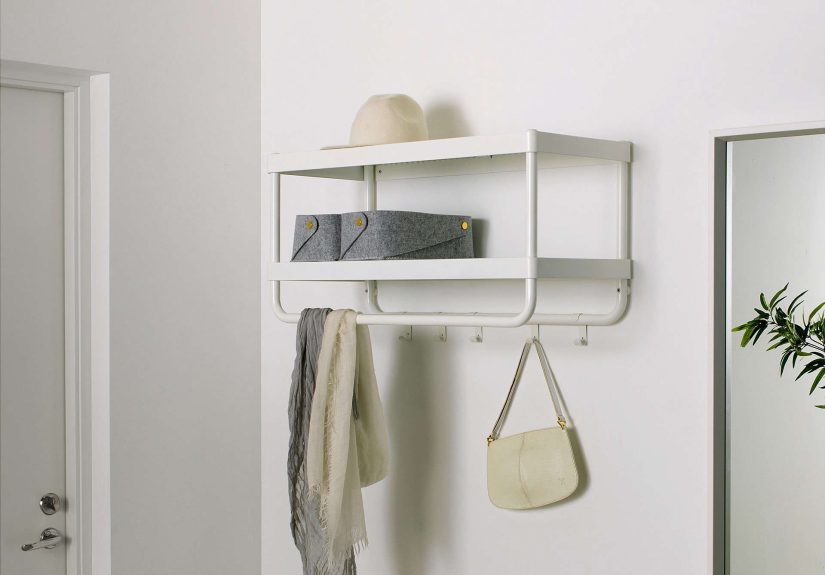
MACKAPÄR (pronounced however you wantyour hallway won’t correct you) is a wall-mounted hat-and-coat rack with a shelf on top,
a hanging bar underneath, and hooks that can be repositioned. Think of it as a compact “landing strip” for the stuff you need
when you’re leaving and the stuff you drop when you return.
Core features (the stuff you’ll use every day)
- Top shelf: for hats, gloves, small baskets, mail corral boxes, or that one item you keep “not losing” by placing it in plain sight.
- Hanging bar: for jackets on hangers, tote bags, or a quick-dry zone for wet scarves.
- Five included hooks: and they can be moved around to match your household’s habits (and height differences).
- Steel with epoxy/polyester powder coating: designed to handle everyday wear without acting precious about it.
Dimensions and why they matter
The rack is about 30 3/4 inches wide, 12 5/8 inches deep, and 14 5/8 inches tall.
Translation: it’s wide enough for multiple hooks and hangers, but shallow enough that it won’t bully a narrow hallway.
It’s the kind of depth that works in real homeswhere doors still need to open and people still need to pass each other without
performing synchronized choreography.
It’s also designed for indoor use and is meant to be mounted to the wall. That last point matters,
and we’ll talk about installation (and safety) a little laterbecause the only thing worse than entryway clutter is entryway clutter
that falls down.
Why Wall-Mounted Storage Wins in Small Entryways
Most entryways don’t fail because you have too much stuff. They fail because the stuff has no job description.
A wall-mounted coat rack is basically a hiring manager for your daily items: coats go here, bag goes there, keys have a home,
and shoes stop multiplying on the floor like they’re in a science experiment.
Vertical space is the cheat code
Organizers and home editors keep returning to the same principle: in an entryway, vertical space is prime real estate.
Hooks and wall-mounted systems reduce floor clutter, keep pathways clear, and make the room feel biggerbecause you can see the floor again.
(It was there the whole time. Under the sneakers.)
A “drop zone” makes mornings faster
A consistent drop zonewhere keys, bags, and outerwear always goremoves friction from daily routines. Instead of hunting for your essentials
like it’s a scavenger hunt designed by a mischievous ghost, you develop muscle memory. And yes, adults also benefit from muscle memory.
It supports the “one-touch rule”
The dream: you walk in, you hang the coat, you place the keys, and you move on with your life. One touch.
The MACKAPÄR rack helps you pull that off by giving you multiple storage modes in one slim footprint: hooks for quick hangs, a bar for hangers,
and a shelf for overflow or containers.
How to Use the Mackapär Like You Actually Live There
The fastest way to make any coat rack fail is to treat it like a magical black hole. You can’t just hang everything and hope the rack will
spontaneously develop organizational boundaries. You need a tiny systemnothing intense, nothing that requires a label maker and a new personality.
Just a few rules that match real life.
Set “zones” based on how you move
- Most-used hooks: place in the easiest reach zone for the people who actually hang things up.
- Kid-level hook: if you have kids, give them at least one hook at their height. Independence is built one backpack at a time.
- Adult outerwear: use the bar for coats that look better on hangers and the hooks for grab-and-go items.
- Top shelf: reserve for light items (hats, gloves) or a basket system so tiny items don’t roam free.
Use baskets so the shelf stays “calm”
The shelf is a blessinguntil it becomes a visible pile of everything. The fix is simple: put a basket or two up top.
One for winter accessories (gloves, beanies), one for “daily grab” items (sunscreen, sunglasses, dog leash).
The rack still looks tidy, and you still get the convenience.
Make it look intentional with one styling move
If you want your entryway to feel designed (even if you mostly designed it while holding a grocery bag), add one visual anchor near the rack:
a mirror, a small framed print, or a narrow wall shelf nearby. Mirrors are especially useful because they bounce light and make tight spaces feel bigger
plus you can check if your hat situation is “cute” or “witness protection program.”
Installation and Safety: The Not-Fun Part That Keeps It Fun
Let’s be blunt: a wall-mounted coat rack only works if it stays on the wall. MACKAPÄR is intended to be mounted, and IKEA’s instructions emphasize
using appropriate wall fasteners for your wall type and the load you plan to hang.
Fasteners aren’t includedand that’s normal
Different walls (drywall, plaster, masonry, studs) need different fasteners. That’s why screws and plugs typically aren’t included:
the “right” hardware depends on what you’re mounting into. If you’re not sure, asking a hardware store associate or a handy friend is cheaper than
repairing a walland much cheaper than replacing everything that fell off the rack.
Studs vs. anchors: what you should aim for
- Best case: hit studs with wood screws. This gives you the strongest hold for heavier loads.
- If studs don’t line up: use heavy-duty wall anchors rated for the weight you expect.
- Don’t guess the load: think about wet winter coats, backpacks, and bags. Wet fabric weighs more and pulls differently.
Plan your placement before drilling
Here’s a practical approach that prevents “oops, that’s too high” regret:
- Stand where you’ll naturally reach to hang a coat.
- Mark that spot lightly with painter’s tape.
- Check door swing clearance (open the door fully).
- Confirm the depth won’t create a shoulder-bump zone in a narrow hallway.
- Only then commit to the final level line and mounting marks.
How to Prevent the “Coat Avalanche” Look
Open storage is convenientbut it can also read as clutter if everything is on display all the time.
The trick isn’t to ban coats from the entryway (people still need coats). The trick is to limit what lives there.
Try a seasonal rotation
Keep the “in season” outerwear on the rack, and move the rest somewhere else. In summer, the rack can handle hats, light layers, and bags.
In winter, it becomes a cold-weather command center. This keeps the system working without looking overloaded.
Create a “guest-ready” hook
Reserve one hook as the designated guest hook. It sounds small, but it’s oddly effective: your family learns not to colonize every available hook,
and your entryway instantly feels less chaotic.
Use hangers strategically
Hangers on the bar look cleaner than bulky coats stacked on hooks. Save hooks for bags, everyday jackets, and quick hangs.
Put “nice coats” and longer items on hangers to reduce visual bulk.
Where the Mackapär Works Besides the Front Door
A good storage piece is a little bit shameless: it doesn’t care where it goes as long as it’s useful.
MACKAPÄR is often used beyond entryways because it’s compact and durable.
Laundry room helper
The hanging bar can act like a mini drying or staging area for clean clothes, while the shelf holds detergent pods, clothespins, or baskets.
This is especially useful if your laundry zone is tight and you need vertical organization.
Bedroom “capsule closet” zone
If you’re building a minimalist closet setup, the rack can hold tomorrow’s outfit, frequently used bags, and accessories.
The shelf becomes a spot for hats, folded scarves, or storage boxes that keep small items contained.
Kids’ backpack station
Move a hook or two lower, assign each kid a hook, and suddenly your morning routine becomes less of a backpack treasure hunt.
Add a labeled basket on the shelf for each child’s small items (gloves, hair ties, whatever they insist on bringing everywhere).
Pet corner (yes, really)
One hook for the leash, one for a harness, one for poop bag holders. Add a small basket for treats on the shelf.
The goal is not luxuryit’s removing the moment where you’re late and can’t find the leash and your dog is doing that hopeful spin-dance.
Make It a System: Pairing Ideas That Actually Help
The rack works best when it’s part of a simple entryway workflow: hang, drop, store, go.
If your space allows, consider pairing it with a shoe solution and a small catchall surface.
Pair it with a shoe plan (not necessarily a shoe cabinet)
- Shoe rack: great for households that rotate footwear often and want visibility.
- Closed shoe storage: better if you want a calmer look or have lots of shoes.
- A “limit basket”: one basket for overflow shoes, with a strict rule: if it doesn’t fit, something leaves.
Add one catchall for the tiny stuff
Keys, wallets, earbuds, mailthese are the small items that cause big morning chaos. A tray, bowl, or small wall shelf nearby keeps them corralled.
If you want to level up without buying more furniture, mount a small hook for keys and add a dish on a nearby surface.
Pros and Cons: A Realistic Take
Pros
- Small-space friendly: shallow depth and wall-mounted design reduce floor clutter.
- Flexible: movable hooks and multiple storage modes (shelf + bar + hooks).
- Durable materials: powder-coated steel is built for daily wear.
- Easy to “systemize”: works well with baskets, boxes, and a shoe solution.
Cons
- Requires wall mounting: renters may need permission or alternative placement plans.
- Hardware not included: you’ll need the right screws/anchors for your wall type.
- Open storage can look busy: without a basket strategy, the shelf may become visual clutter.
FAQ
Can the hooks be moved around?
Yes. That’s one of the biggest practical wins: you can space hooks for bulky coats, cluster hooks for keys and small bags, or create “assigned hooks”
for different household members.
Does it work in narrow hallways?
Often, yesbecause the depth is relatively slim. The bigger question is clearance: make sure doors can swing freely and you’re not creating a bump zone
at shoulder height. A quick tape-and-test before mounting saves a lot of hassle.
Do I need to mount it into studs?
Studs are ideal, especially if you’ll hang heavier items (backpacks, winter coats, loaded tote bags). If studs don’t line up,
use high-quality anchors appropriate for your wall type and the expected load.
Is it only for coats and hats?
Not at all. The shelf-and-bar design makes it useful for laundry rooms, closets, kids’ stations, and anywhere you need vertical organization
without taking up floor space.
Conclusion: A Small Rack That Solves a Big Daily Problem
The Mackapär hat and coat rack is the kind of practical product that doesn’t ask for a lifestyle changejust a better place to put your stuff.
It combines a shelf, a hanging bar, and adjustable hooks in a compact wall-mounted format that’s ideal for small entryways, apartments,
and homes where “mudroom” is a fantasy word you see on Pinterest.
Use it as the anchor of a simple entryway system: hang outerwear, contain small items with baskets, create a drop zone for keys, and pair it with a shoe plan.
Do that, and you’ll get something rare in home organization: a setup that keeps working even when life is busy.
Experience Notes: of Real-Life Entryway Moments
Most entryway makeovers don’t fail on aestheticsthey fail on Tuesday. Tuesday is when everyone is running late, someone can’t find a glove,
and you’re trying to remember if your keys are in your pocket or living their best life somewhere inside the couch. What makes a rack like the
Mackapär feel “worth it” in real homes is how it changes those tiny friction moments.
One common experience: the first week after installing a wall-mounted rack, the floor looks weirdly empty. You notice it immediately because you’re
used to stepping around shoes like you’re dodging obstacles in a low-budget action movie. When coats and bags move up onto hooks, you don’t just gain space
you gain calm. The hallway stops feeling like a storage unit that happens to have a front door.
Another real-life pattern shows up in households with kids (or adults who behave like kids before coffee): height matters. If the hooks are too high,
things won’t get hung up. They’ll get draped. Over a chair. Over a doorknob. Over your soul. But when at least one hook is placed at an easy reach,
you’ll see a surprising improvement in “putting things away” with no nagging required. It becomes the path of least resistance, and people love that path.
Then there’s the shelf experiencethe part that feels small until you live with it. Without a shelf, hats and gloves drift: they end up in random drawers,
pockets, or the mysterious dimension where single socks go. With a shelf, you can create one basket that quietly holds all the tiny seasonal items.
The best part is psychological: you stop spending mental energy tracking where things are. You just know. Basket. Shelf. Done.
People also tend to “discover” the hanging bar as a secret weapon. Hooks are great for quick hangs, but hangers make the entryway look cleaner,
especially for longer coats that can turn hooks into a bulky pile. In day-to-day use, the bar becomes the spot for anything you want to look orderly:
a nicer coat, a work blazer, even a tote bag that stands upright better on a hanger. It’s not glamorous, but it’s the kind of detail that makes a space
feel put-together.
And finally, the funniest experience: after a few weeks, you’ll catch yourself judging other entryways. You’ll walk into a friend’s home and think,
“Wow, their coats are staging a coup.” You won’t say it out loud (probably). But you’ll notice how much smoother it feels when outerwear has a designated home.
That’s the real payoffless clutter, fewer lost items, and an entryway that supports your life instead of silently sabotaging your mornings.







 Close
Close