
Table of Contents >> Show >> Hide
- How We Ranked the Best True Crime Documentaries
- True Crime Documentaries You Should Watch, Ranked
- #1. The Jinx: The Life and Deaths of Robert Durst (HBO)
- #2. Making a Murderer (Netflix)
- #3. The Staircase (Docuseries)
- #4. I’ll Be Gone in the Dark (HBO)
- #5. American Nightmare (Netflix)
- #6. My Father: The BTK Killer (Netflix)
- #7. Unknown Number: The High School Catfish (Netflix)
- #8. Devil in the Family: The Fall of Ruby Franke (Disney+)
- #9. The Yogurt Shop Murders (HBO)
- #10. Madoff: The Monster of Wall Street (Netflix)
- Why We Can’t Stop Watching True Crime
- How to Watch True Crime Responsibly
- Experiences and Takeaways from Watching True Crime Documentaries
If you’ve ever told yourself, “Just one more episode,” and suddenly it’s 3 a.m. and you’re Googling court transcripts, this list is for you.
True crime documentaries have become the binge of choice for people who like their stories a little dark, a little twisty, and uncomfortably real.
From wrongful convictions to jaw-dropping confessions, the best true crime docs don’t just rehash headlinesthey change how we think about justice, memory, and even our own judgment.
Below is a ranked guide to true crime documentaries you should absolutely put on your watchlist.
These films and series span decades, streaming platforms, and types of crime, but they all have one thing in common:
once you start, you will cancel plans.
How We Ranked the Best True Crime Documentaries
To build this ranking, we compared critic roundups, audience favorites, and streaming-platform recommendations from major outlets.
We considered list features and critical praise from sources that regularly highlight top true crime picks, recent must-watch docs, and
all-time great docuseries rankings, then layered in storytelling quality and cultural impact.
Our main criteria:
- Storytelling: Does the doc pull you in and keep you there without feeling exploitative?
- Depth of investigation: Is it more than a recap of the news cycle, with real reporting and context?
- Impact: Did it spark conversations, legal reviews, or major cultural attention?
- Rewatch and binge factor: Will you text friends, “You have to watch this” in all caps?
True Crime Documentaries You Should Watch, Ranked
-
#1. The Jinx: The Life and Deaths of Robert Durst (HBO)
If one documentary could define the modern true crime boom, it’s The Jinx.
Following New York real-estate heir Robert Durst, the series builds slowly through interviews, archival footage, and
strange little detailsuntil it delivers one of the most shocking hot-mic moments in TV history.What makes this doc so powerful isn’t just the twist; it’s the meticulous storytelling.
The filmmakers spent years collecting police files, testimony, and recordings, crafting a story that feels like an investigative thriller
you somehow forgot was real life. With a follow-up season continuing through Durst’s trial and aftermath,
this is top-tier, must-watch, “I need to pause and pace the room” true crime. -
#2. Making a Murderer (Netflix)
Making a Murderer was a cultural earthquake.
Filmed over 13 years, it tracks Steven Avery, a man who served 18 years for a wrongful convictiononly to be accused of another brutal crime.
The series digs into questionable police work, coerced confessions, and a justice system that feels more like a maze than a path to truth.This documentary doesn’t just ask, “Did he do it?” It asks, “Do ordinary people stand a chance when the system decides they’re guilty?”
It sparked petitions, endless internet theories, and debates about bias in both law enforcement and documentary storytelling.
If “obsessively Googling evidence after each episode” is your thing, start here. -
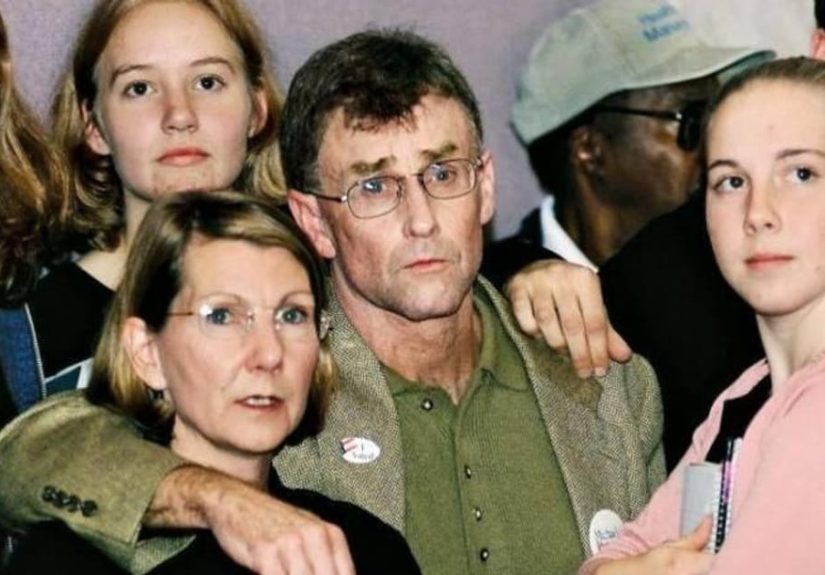
#3. The Staircase (Docuseries)
Before streaming platforms were filled with true crime, The Staircase quietly set the standard.
The series follows the trial of novelist Michael Peterson after his wife, Kathleen, is found dead at the bottom of a staircase in their home.
Was it a tragic accident, a crime of passion, or something far stranger?The brilliance of this doc lies in its intimacy. You’re not just watching a case;
you’re practically sitting at the defense table, in family meetings, and inside a legal strategy that evolves over years.
By the time the “owl theory” enters the chat, you’ll realize just how messy and ambiguous real-life cases can be. -
#4. I’ll Be Gone in the Dark (HBO)
Based on Michelle McNamara’s book, I’ll Be Gone in the Dark is as much about the pursuit of a serial predator
as it is about the woman who devoted her life to finding him.
The docuseries covers the hunt for the Golden State Killer while also exploring true crime fandom, trauma, and obsession.The emotional weight here is different from many other docs:
it’s deeply empathetic toward survivors and sensitive to the toll that true crime work takesespecially on McNamara herself.
If you prefer true crime that centers victims’ voices and investigative work, this one deserves a top spot in your queue. -
#5. American Nightmare (Netflix)
American Nightmare is the kind of documentary that makes you question every glib “that sounds like a movie” comment you’ve ever made.
It follows a couple whose terrifying home invasion and kidnapping story is dismissed by authorities as a hoax.
The result is a chilling look at how quickly victims can be treated as suspects when their story doesn’t fit expectations.The series combines interviews, police perspectives, and media coverage,
making it ideal if you like true crime that exposes how institutions can fail people at their most vulnerable. -
#6. My Father: The BTK Killer (Netflix)
This recent documentary approaches a notorious serial killer from a different angle: through his daughter’s eyes.
My Father: The BTK Killer follows Kerri Rawson as she grapples with the horrifying reality that her loving dad is Dennis Rader,
the BTK killer who terrorized Kansas for years.Rather than glorifying the killer, the film focuses on Rawson’s trauma, the impact on victims’ families, and her journey from shock to advocacy.
It’s an important watch if you’re interested in how true crime can center healing and accountability instead of sensationalism. -
#7. Unknown Number: The High School Catfish (Netflix)
True crime has entered the digital age, and Unknown Number: The High School Catfish shows just how unsettling that can be.
A teenage couple begins receiving creepy, hyper-personal text messages from an anonymous sender,
and what starts as harassment turns into a full-blown nightmare affecting their small town.The documentary is fast-paced and concise, making it perfect for a one-sitting binge.
It also hits on timely themes: online anonymity, cyberbullying, and the emotional fallout of digital abuse.
If you want a break from cold-case murders but still want high-stakes, heart-pounding true crime, this one’s for you. -
#8. Devil in the Family: The Fall of Ruby Franke (Disney+)
Not all monsters lurk in dark alleyssome build cheerful family vlogging channels.
Devil in the Family: The Fall of Ruby Franke follows the collapse of a popular YouTube family brand after a horrifying abuse case comes to light.With access to previously unseen footage and interviews with family members,
the documentary examines how extreme belief systems, influencer culture, and online performance can mask real-world harm.
It’s disturbing, yes, but also a sobering look at how easily we can confuse a curated image with reality. -
#9. The Yogurt Shop Murders (HBO)
This four-part series revisits a 1991 quadruple homicide in an Austin frozen yogurt shopa case that haunted the city for decades.
Two young men were convicted and later released after DNA evidence cast serious doubt on the original investigation.The doc focuses on wrongful convictions, shaky confessions, and the long reach of trauma in a community.
If you’re drawn to stories that revisit old cases with fresh eyes and modern forensics, this one offers a compelling and heartbreaking deep dive. -
#10. Madoff: The Monster of Wall Street (Netflix)
Crimes don’t have to be violent to be devastating.
Madoff: The Monster of Wall Street covers Bernie Madoff’s massive Ponzi schemeone of the biggest financial frauds in history.
The series unpacks how he fooled regulators, charmed investors, and blew up countless lives and retirements.It feels like a financial thriller with real stakes, blending interviews, dramatizations, and archival footage.
If you think “white-collar crime” sounds boring, this doc will change your mind fast.
Why We Can’t Stop Watching True Crime
So why do we, as a society, lean back on the couch with snacks to watch the worst moments of other people’s lives?
Part of it is pure curiositywe want to understand how things went so wrong.
But the best true crime documentaries also reveal systemic issues:
flawed investigations, biases, media narratives, and the messy way justice actually works.
When done well, these docs push us to ask uncomfortable but necessary questions:
How reliable is eyewitness testimony?
What happens when police are under pressure to close a case quickly?
Whose story gets centeredthe victims, the accused, or the most dramatic angle?
And, let’s be honest, part of the appeal is that these stories provide a safe way to experience danger.
You get the adrenaline spike without the actual riskjust you, your couch, and the sudden urge to double-check your door locks.
How to Watch True Crime Responsibly
True crime documentaries are compelling, but they’re not just “content”they’re about real people.
Watching responsibly means keeping a few things in mind:
- Remember the victims: Behind every twist is a real person whose life ended or was forever changed.
- Check your language: Try not to turn tragedies into memes, especially when posting online.
- Be wary of instant hot takes: Editing choices, missing context, and narrative framing can all influence how you see a case.
- Take breaks: If you feel anxious, numb, or overwhelmed, it’s okay to switch to a comedy and reset your brain.
Treat these series as what they are: powerful storytelling tools that can inform, educate, and challenge youif you approach them with empathy and a bit of skepticism.
Experiences and Takeaways from Watching True Crime Documentaries
Ask anyone who binges true crime and they’ll tell you: it changes how you move through the world.
After a few of these documentaries, you might start locking your doors a little earlier,
double-checking unknown phone numbers, or side-eyeing any story that sounds “too neat.”
One common experience is the emotional roller coaster of certainty.
In episode one of a docuseries like Making a Murderer, you might be convinced you know exactly what happened.
By episode three, a new piece of evidence appears and your confidence evaporates.
By the finale, you’re left with an uncomfortable truth: real cases rarely tie up in a tidy bow.
Another shared feeling is the strange intimacy with people you’ve never met.
Viewers often talk about how a series like The Jinx or The Staircase made them feel like they were in the room
in strategy sessions, in family kitchens, in prison visitation areas.
You start to recognize defense attorneys by their body language, or notice the tension in a relative’s voice when they’re trying not to cry on camera.
Many fans also describe developing a new respect for victims’ families and survivors.
Watching I’ll Be Gone in the Dark or My Father: The BTK Killer can be a turning point:
the focus shifts from “whodunit?” to “how do people keep going after something like this?”
You see survivors not as footnotes in someone else’s story, but as central voices whose healing and advocacy shape the narrative.
There’s also the social side of true crime.
Group chats light up when a new doc drops, and suddenly everyone becomes a part-time armchair detective.
Friends compare theories, send screenshots, and argue over details like they’re prepping for a mock trial.
Watching with otherswhether physically or virtuallycan make heavy material more manageable,
because you’re processing it together instead of quietly spiraling alone.
But there can be downsides.
Too much true crime, especially in a short period of time, can make the world feel darker than it is.
It’s easy to start believing that danger lurks on every corner, even though most people go about their daily lives without encountering anything close to what you see on screen.
That’s why seasoned viewers learn to balance their watchlists: a tense docuseries one night, a sitcom or cooking show the next.
Over time, many fans say true crime actually makes them more thoughtful, not more paranoid.
They become more skeptical of snap judgments, more aware of systemic issues in policing and courts, and more empathetic toward people who end up in the headlines.
Instead of just asking, “How could this happen?” they start asking, “What would need to change so this doesn’t happen again?”
Ultimately, the experience of watching these ranked true crime documentaries is a mix of curiosity, discomfort, and reflection.
You’re entertained, yesbut you’re also pushed to look at power, privilege, and vulnerability in a new light.
The best of these docs stay with you long after the credits roll, not because they scared you,
but because they made you think differently about truth, justice, and whose stories get told.
So build your watchlist, grab your blanket, and maybe don’t watch home-invasion stories alone at night.
Start with the top of this ranking, work your way down, and see which documentaries keep you thinking daysor yearslater.






 Close
Close