
Table of Contents >> Show >> Hide
- Before You Stretch: A Quick Reality Check (Safety First)
- Why These Stretches Help Lower Back Pain
- How to Use This List
- The 8 Simple Stretches
- 1) Single Knee-to-Chest Stretch
- 2) Cat-Cow (Gentle Spine Mobility)
- 3) Child’s Pose (Back and Hip Release)
- 4) Figure-4 Stretch (Piriformis/Glutes)
- 5) Supine Hamstring Stretch (With Towel or Strap)
- 6) Half-Kneeling Hip Flexor Stretch
- 7) Sphinx / Prone Press-Up (Gentle Back Extension)
- 8) Side-Lying “Open Book” Rotation
- A Simple 10-Minute Routine (Pick 5–6 Moves)
- Common Mistakes (And Easy Fixes)
- Real-World Experiences: What People Notice When They Start Stretching Consistently
- Conclusion
Lower back pain has a sneaky talent: it shows up when you’re just trying to live your lifetying your shoes, unloading groceries, or daring to sit through one more episode without moving. The good news? For many everyday, non-emergency aches, gentle stretching can help calm cranky muscles, restore motion, and make your back feel less like a rusty door hinge and more like… a normal human spine.
This guide walks you through 8 simple stretches to relieve lower back pain, plus a short routine you can do at home with zero fancy equipment (unless you count a towel as “equipment,” in which case… sure, we’re athletes now). The focus is on easy, repeatable moves that target common “back-pain accomplices” like tight hips, stiff hamstrings, and tense glutes.
Before You Stretch: A Quick Reality Check (Safety First)
Most back pain is not an emergencybut some situations deserve professional help quickly. Get medical care right away if you have new bowel/bladder control issues, numbness in the groin/saddle area, fever with back pain, severe pain after a major injury, or worsening weakness/numbness down the leg. If pain is intense, lasts longer than expected, or keeps returning, checking in with a clinician or physical therapist is a smart move.
For everyone else: aim for gentle. You’re looking for “pleasant stretch” (mild tension), not “I regret my life choices” (sharp pain). Breathe steadily, move slowly, and stop any stretch that causes shooting pain, tingling that worsens, or numbness.
Why These Stretches Help Lower Back Pain
Your lower back rarely acts alone. When your hips are tight (especially hip flexors from sitting), your hamstrings are stiff, or your glutes are underused, your lumbar spine can start doing extra worklike the one coworker who carries the whole team. Stretching can reduce muscle tension, improve mobility, and make movement feel safer and smoother.
Bonus: many of these stretches also support better posture and body mechanics, which can reduce flare-ups over timeespecially when combined with light strengthening and regular movement breaks.
How to Use This List
- Frequency: Try 1–2 times daily during a flare, then a few times per week for maintenance.
- Hold time: Start with 15–30 seconds per stretch (or 5–8 slow breaths), repeat 1–3 times.
- Intensity: Mild tension only. No bouncing.
- Comfort hacks: Use a pillow under your head, a folded towel under knees, or a yoga mat/blanket for cushioning.
The 8 Simple Stretches
1) Single Knee-to-Chest Stretch
Great for: easing tightness in the low back and hips after sitting or sleeping in a weird position. Lie on your back with knees bent. Bring one knee toward your chest and hold behind the thigh or over the shin (whichever feels kinder). Keep the other foot on the floor or extend it if comfortable. Breathe slowly, then switch sides. Tip: Keep your low back heavy against the floorno need to force it.
2) Cat-Cow (Gentle Spine Mobility)
Great for: stiffness and “locked-up” back feelings. Start on hands and knees, hands under shoulders and knees under hips. Inhale as you gently drop your belly and lift your chest (Cow). Exhale as you round your spine and tuck your pelvis (Cat). Move slowly like you’re trying to impress a very calm yoga teacher. Do 6–10 cycles. Keep it small if you’re sore.
3) Child’s Pose (Back and Hip Release)
Great for: decompressing the back and relaxing hip muscles. Kneel and sit back toward your heels, then reach your arms forward and lower your chest toward the floor. If your knees complain, place a pillow between thighs and calves or widen your knees for space. Breathe into your back ribs. Variation: “Thread” your hands to the right and left to feel the stretch along the sides of your back.
4) Figure-4 Stretch (Piriformis/Glutes)
Great for: tight glutes and piriformis tension that can mimic or aggravate sciatic-type discomfort. Lie on your back, knees bent. Cross your right ankle over your left thigh (making a “4”). Gently pull the left thigh toward you until you feel a stretch in the right glute/hip. Keep your head and shoulders relaxed. Switch sides. Don’t force the knee down; let gravity do the negotiating.
5) Supine Hamstring Stretch (With Towel or Strap)
Great for: hamstring tightness that tugs on the pelvis and irritates the low back. Lie on your back and loop a towel around the ball of one foot. Keeping a slight bend in the knee, raise the leg until you feel a stretch along the back of the thigh. Keep the opposite leg bent or straightwhatever keeps your back comfortable. Rule: If your back arches, lower the leg a bit.
6) Half-Kneeling Hip Flexor Stretch
Great for: “desk hips” (tight hip flexors) that can tilt the pelvis and strain the lumbar spine. Kneel on one knee with the other foot in front (like a low lunge). Gently tuck your pelvis under (think: belt buckle toward chin), then shift forward slightly until you feel the stretch in the front of the hip on the kneeling side. Keep ribs stacked over hips (no dramatic backbend). Switch sides.
7) Sphinx / Prone Press-Up (Gentle Back Extension)
Great for: some people feel relief with gentle extension, especially after lots of bending/sitting. Lie on your stomach and prop up on your forearms (Sphinx). Keep hips heavy on the floor and shoulders relaxed away from ears. Hold and breathe. If that feels good, you can press up a little more on your handsstill keeping hips down. Skip or modify if extension increases pain or causes sharp symptoms.
8) Side-Lying “Open Book” Rotation
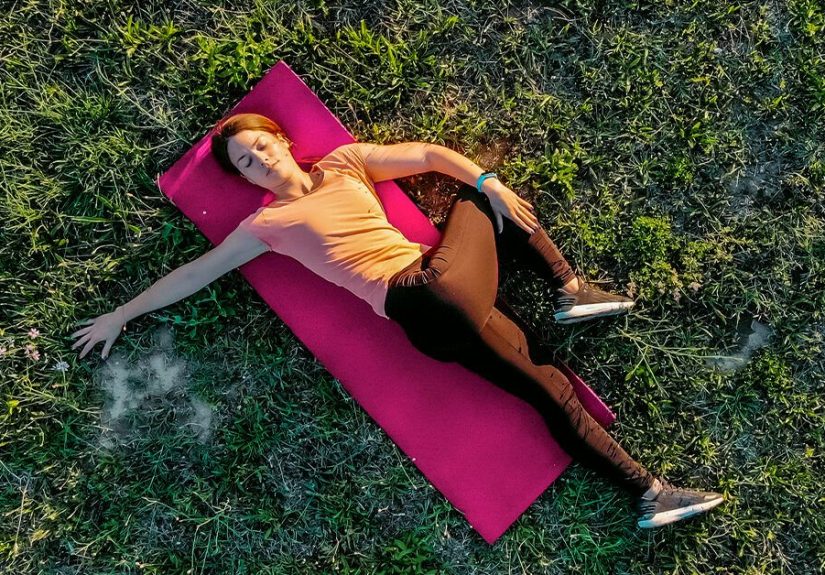
Great for: mid-back and low-back stiffness, especially if twisting feels tight (not painfultight). Lie on your side with knees bent and arms straight in front, palms together. Keeping knees stacked, open your top arm across your body like you’re opening a book, rotating your upper back as your gaze follows your hand. Go only as far as comfortable. Return slowly and repeat 5–8 times, then switch sides.
A Simple 10-Minute Routine (Pick 5–6 Moves)
If you want a no-brainer sequence, try this:
- Cat-Cow (6–10 slow cycles)
- Single Knee-to-Chest (15–30 seconds each side)
- Figure-4 Stretch (15–30 seconds each side)
- Hip Flexor Stretch (20–30 seconds each side)
- Hamstring Stretch (20–30 seconds each side)
- Child’s Pose (5–8 slow breaths) or Open Book (5–8 reps each side)
On “angry back” days, do fewer moves with gentler intensity. On better days, keep the routine and add a short walk afterward. Movement plus stretching is often a happier combo than stretching alone.
Common Mistakes (And Easy Fixes)
- Going too hard: If you’re grimacing, you’re negotiating with the wrong muscles. Back off 10%.
- Holding your breath: Slow exhale = your nervous system gets the memo that it’s safe to relax.
- Stretching cold: A 2–5 minute easy walk around the house can make stretches feel much better.
- Only stretching the back: Hips and hamstrings often deserve the spotlight.
- Ignoring symptoms down the leg: If tingling or numbness worsens, stop and consider professional guidance.
Real-World Experiences: What People Notice When They Start Stretching Consistently
Here’s the part nobody tells you when they hand you a list of stretches: progress is usually quiet. It doesn’t arrive with fireworks. It shows up as tiny, oddly satisfying winslike bending to load the dishwasher without making a sound that scares nearby pets. Many people report that the first week feels less like “instant relief” and more like “my back is cautiously observing these new habits.”
One common experience is learning the difference between stiff and sensitive. Stiff often responds well to gentle motion: Cat-Cow feels like oiling a hinge, and Child’s Pose can feel like your spine finally unclenches its jaw. Sensitive pain, on the other hand, may flare if you push too far or move too fastespecially first thing in the morning or after a long day of sitting. That’s why people who stick with it tend to do better when they keep stretches mild and pair them with short walks.
Another pattern: the tightest spot isn’t always the loudest one. Someone might swear their lower back is “the problem,” but the biggest “aha” moment comes during the hip flexor stretchwhen they realize the front of their hip feels like a guitar string. After a few days, they notice standing taller feels easier, and the low back doesn’t have to overwork just to keep them upright. Similarly, the hamstring stretch often surprises people: “Wait… the back of my legs is involved in my back pain?” (Yes. Your body is one big group project.)
Sleep can also play a role. People often notice their back feels worse after waking up because joints and muscles get stiff overnight. A gentle routineknee-to-chest, Cat-Cow, maybe a short Child’s Posecan become a morning “reset button.” Not a miracle cure, but enough to take the edge off and help them move like themselves again.
For those who get aches after workouts or weekend chores, “Open Book” rotations and the figure-4 stretch frequently feel like damage control (in a good way). The rotation can restore a sense of mobility, while the figure-4 targets the glutesespecially helpful for people who sit a lot and then suddenly do something heroic like reorganize the garage.
The biggest long-term change people describe is confidence. When pain hits, it’s easy to freeze and avoid movement. But as someone learns which stretches feel safeand how to dial intensity up or downthey often feel less “trapped” by flare-ups. The routine becomes a tool: something they can do in two minutes between meetings, after a commute, or before bed. And that sense of control can be just as valuable as the physical relief.
If you want the most realistic takeaway: consistency beats intensity. Doing a few gentle stretches most days tends to help more than doing an aggressive “fix my back” session once a week. Your spine generally prefers calm, regular reassurance over dramatic one-time speeches.
Conclusion
Lower back pain can feel personallike your body is holding a grudge. But in many cases, your back isn’t “broken”; it’s stiff, overworked, or reacting to tight hips and hamstrings, long sitting hours, stress, or uneven movement habits. These 8 simple stretches to relieve lower back pain are designed to help you move more comfortably today and build a routine that supports your back tomorrow. Start gentle, stay consistent, and don’t hesitate to involve a physical therapist if pain persists or keeps returning.






 Close
Close