
Table of Contents >> Show >> Hide
- Jump to a Style
- How to Use This Guide
- 1) Traditional
- 2) Transitional
- 3) Contemporary
- 4) Modern
- 5) Midcentury Modern
- 6) Scandinavian
- 7) Industrial
- 8) Farmhouse
- 9) Coastal
- 10) Bohemian
- 11) Art Deco
- Mixing Styles Without Making a Mess
- Real-Life Experiences: What Living With These Styles Actually Feels Like (and What People Learn)
- Final Thoughts
- SEO Tags
“What’s your style?” sounds like a simple questionuntil you realize your home is currently a midcentury chair arguing with a farmhouse table while a boho rug watches from the corner. The good news: interior design styles aren’t strict rules. They’re shared vocabhelpful shortcuts for describing a look, a mood, and the kinds of choices that make a space feel “right.”
Below are 11 iconic interior design stylesclassic, widely recognized, and endlessly remixable. For each one, you’ll get the defining features, a quick “how to try it at home,” and the most common mistake people make (because every style has a banana-peel moment).
How to Use This Guide
If you’re choosing an interior design style for a whole home, start with three anchors: architectural bones (what the space already “wants” to be), how you live (kids, pets, hosting, working from home), and maintenance reality (white boucle is beautiful, but it is also a lifestyle decision).
If you’re just refreshing a room, pick one primary style and borrow 10–20% from a secondary style. That’s how spaces feel layered instead of themedlike a well-dressed outfit, not a costume.
1) Traditional
Traditional style is the “classic novel” of home decortimeless, familiar, and surprisingly flexible. It favors symmetry, rich wood tones, and elegant details that feel established rather than trendy.
Signature look
- Balanced layouts (matching lamps, pairs of chairs)
- Ornate or refined furniture shapes, often with curved lines
- Layered textiles: drapery, rugs, upholstered seating
Try it at home
Start with a classic rug, warm neutrals, and one “heritage” piece (a traditional sofa, a pedestal table, or a well-made wood dresser). Add polished hardware and framed art for a finished, pulled-together feel.
Common pitfall: Over-formality. If the room looks like nobody’s allowed to sit, it’s time for a softer throw and a lamp with warm light.
2) Transitional
Transitional style is what happens when traditional and modern agree to be nice at dinner. It blends classic comfort with clean lines, creating rooms that feel current without chasing every trend.
Signature look
- Neutral palettes with subtle contrast (cream + charcoal, taupe + black)
- Simple silhouettes paired with classic materials
- Mix of straight lines and gentle curves
Try it at home
Combine a tailored sofa with a more traditional rug, or pair shaker-style cabinetry with modern lighting. Use texturelinen, wool, leatherto keep neutrals from feeling flat.
Common pitfall: Playing it too safe. Transitional still needs personalityart, a statement light, or one bold accent color.
3) Contemporary
Contemporary style is of the moment. Unlike “modern” (a specific design era), contemporary design shifts with current tastesoften clean, airy, and edited, with room to experiment.
Signature look
- Streamlined shapes, open space, and intentional negative space
- Mix of materials (wood + metal + stone) in a refined way
- Comfort-forward minimalism (cozy, not cold)
Try it at home
Keep your palette cohesive and upgrade one or two focal points: a sculptural coffee table, modern art, or a bold pendant. Let the best pieces breathecrowding is the enemy here.
Common pitfall: “Showroom syndrome.” If everything matches perfectly, it can feel impersonal. Add something imperfect: vintage, handmade, or sentimental.
4) Modern
Modern design grew from early-to-mid 20th-century modernism: function first, clutter last. It loves simplicity, strong forms, and materials that feel honest (wood looks like wood; metal looks like metal).
Signature look
- Clean lines and purposeful furniture
- Neutral foundations with occasional bold accents
- Minimal ornament, big emphasis on proportion
Try it at home
Choose a few strong shapes (a low-profile sofa, a simple table) and keep decor intentional. Add warmth through texturewool rug, wood tones, matte ceramicsso it doesn’t feel sterile.
Common pitfall: Confusing “modern” with “empty.” Minimal doesn’t mean unfinishedfinish it with lighting layers and one great piece of art.
5) Midcentury Modern
Midcentury modern is the cool kid that never really left the party. Born in the postwar era, it emphasizes practicality, natural materials, and iconic silhouettes that still look sharp today.
Signature look
- Tapered legs, warm woods (think walnut/teak vibes)
- Geometric shapes and playful, optimistic color
- Statement lighting (sputnik chandeliers, globe pendants)
Try it at home
Add one true midcentury elementlike a credenza, lounge chair, or lightingthen support it with simple modern basics. A graphic rug and a few vintage-inspired accents go a long way.
Common pitfall: Going full “museum set.” Mix in softer textures and contemporary art so it feels lived-in, not staged for a time capsule tour.
7) Industrial
Industrial style draws from warehouses and old factoriesraw materials, sturdy surfaces, and a slightly edgy, utilitarian vibe. It’s the design equivalent of rolling up your sleeves (even if you’re only lifting a latte).
Signature look
- Exposed elements: brick, concrete, pipes, beams
- Metal + reclaimed wood, leather, and darker neutrals
- Open layouts and practical, durable finishes
Try it at home
Introduce industrial through lighting (black metal pendants), a reclaimed wood table, or metal shelving. Balance rough textures with something softcurtains, rugs, or upholstered seatingso it doesn’t feel echo-y.
Common pitfall: Making it too cold. Add warmth with wood, art, and layered lighting. Your space should feel like a loft, not a parking garage.
8) Farmhouse
Farmhouse style is cozy, practical, and a little nostalgicbuilt around comfort and “come on in” energy. Modern farmhouse versions keep the warmth while simplifying the look.
Signature look
- Shiplap or simple wall treatments, rustic woods, vintage finds
- Neutral palette (often white + warm wood) with matte black accents
- Big tables, comfy seating, and welcoming layers
Try it at home
Choose one farmhouse statement: a wood dining table, a deep apron-front sink, or classic lantern-style lighting. Add texture (woven baskets, linen, cotton) and mix in a few vintage pieces for authenticity.
Common pitfall: Overdoing the “farm” part. A room doesn’t need 12 signs telling you to “gather.” Let the materials do the talking.
9) Coastal
Coastal style is breezy, bright, and relaxedmore “barefoot easy” than “theme park beach shop.” The best coastal rooms feel airy and sunlit, with natural textures and a calm palette.
Signature look
- Soft whites, sandy beiges, and ocean-inspired blues/greens
- Natural fibers: rattan, jute, seagrass, light woods
- Casual slipcovers, easy silhouettes, and lots of light
Try it at home
Start with crisp white walls, add texture through rugs and woven pieces, and keep patterns simple (stripes, subtle botanicals). Incorporate glass, light wood, and breathable fabrics like linen.
Common pitfall: Nautical overload. Skip the anchors-and-ropes everything. Coastal is a feeling, not a costume.
10) Bohemian
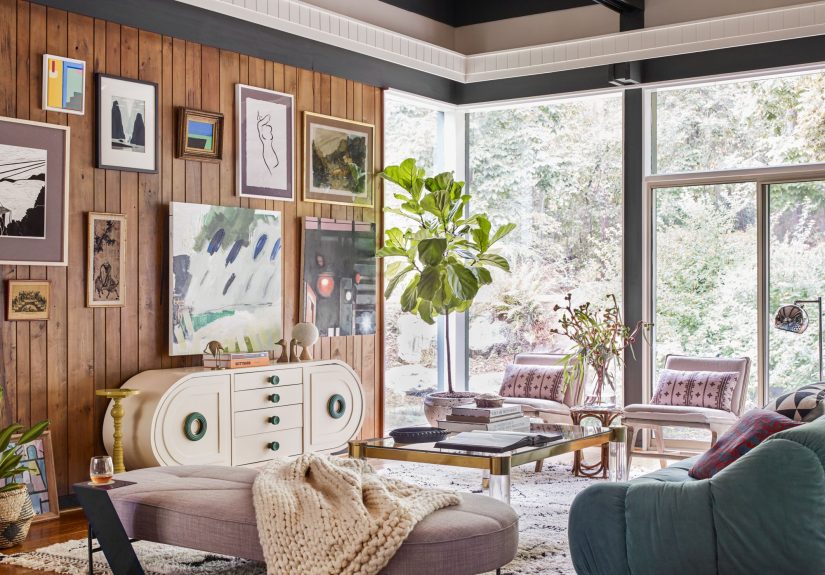
Bohemian (boho) style is expressive, layered, and unapologetically personal. It thrives on collected pieces, global patterns, and a “rules are suggestions” attitudeperfect for people who think one rug is never enough.
Signature look
- Mix-and-match patterns, colors, and textures
- Vintage + handmade decor, plants, and travel-inspired pieces
- Low, relaxed furniture and cozy layering
Try it at home
Anchor the room with a warm, patterned rug, then layer textiles: throws, pillows, and curtains with varied textures. Keep one unifying threadlike a color family or materialto avoid visual chaos.
Common pitfall: Clutter disguised as “eclectic.” Boho works best when it’s curated. If you can’t see your nightstand, edit.
11) Art Deco
Art Deco is glamour with geometry. Originating in the early 20th century, it’s known for bold shapes, symmetry, luxe materials, and a dramatic, polished finish. If your room could wink, Art Deco would be doing it.
Signature look
- Strong geometric patterns (fans, chevrons, sunbursts)
- Lux materials: velvet, marble, lacquer, brass, chrome, mirrored surfaces
- High-contrast palettes and statement lighting
Try it at home
Add Deco with one confident move: a brass-and-glass light, a curved velvet chair, or a geometric wallpaper in a small space (powder room = perfect). Keep the rest relatively streamlined so the glam reads intentional.
Common pitfall: Over-shine. Too many mirrored or metallic surfaces can feel harsh. Balance sparkle with matte textures and warm lighting.
Mixing Styles Without Making a Mess
The easiest way to blend interior design styles is to keep one consistent “backbone” (usually color palette and major furniture silhouettes), then layer in personality through textiles and accessories.
- Modern + Traditional = modern furniture with classic molding, art, or antique accents.
- Scandinavian + Bohemian = light, minimal base with warmer patterns and layered textiles.
- Industrial + Farmhouse = reclaimed wood + black metal, softened by cozy fabrics.
- Coastal + Contemporary = breezy textures with clean-lined furniture and minimal clutter.
A practical test: stand in the doorway and ask, “What’s the main vibe?” If you can’t answer in one sentence, you may be running too many styles at once. (It’s okay. We’ve all impulse-bought a chair that didn’t audition.)
Real-Life Experiences: What Living With These Styles Actually Feels Like (and What People Learn)
Reading about interior design styles is easy; living with them is where the plot twists happen. In real homes, people usually discover that the “perfect look” is less important than how a space supports daily lifemorning routines, movie nights, and the occasional “where did we put the scissors?” moment.
Traditional and transitional homes often feel calming because they’re visually predictablebalanced layouts and familiar shapes reduce “busy” energy. People who gravitate to these styles tend to love the sense of order. The lesson? You can still be classic without being stiff. A traditional room becomes more livable when you add softer textures, flexible seating, and lighting that’s warm rather than spotlight-bright.
With contemporary and modern spaces, the biggest real-world win is mental clarityless visual noise can make a home feel more restful. The challenge is that minimalism magnifies every decision: a too-small rug looks really too small, and clutter shows up like it’s auditioning for a role. People learn to embrace smarter storage and “one-in, one-out” habits (yes, even for throw pillows).
Midcentury modern tends to bring joy because it’s playful and design-forward, but it can also feel a bit “set-like” if every piece is from the same era and the room lacks softness. Many homeowners end up mixing in contemporary upholstery, thicker curtains, or textured rugs to make it cozier without losing the iconic silhouettes they love.
Scandinavian style often surprises people: it’s not just pale neutralsit’s comfort by design. Homes feel better when lighting is layered (ambient + task + accent) and when textures do the heavy lifting. The common “aha” moment is realizing that a warm bulb and a wool throw can change the entire emotional temperature of a room.
Industrial spaces are popular for their edge, but they can sound and feel colder if hard surfaces dominate. People living with industrial style frequently add softness over timerugs, curtains, plants, upholstered chairsbecause echo-y rooms aren’t as fun at 10 p.m. as they look at 10 a.m. on a photo shoot.
With farmhouse and coastal, the best experiences come from the “welcome home” factor. These styles are naturally livable, but they can slide into clichés if every accessory is on theme. Real homes look best when the style is expressed through materials and comfortwood, linen, texturerather than slogans and gimmicks.
Finally, bohemian and Art Deco styles teach opposite lessons. Boho proves that personality is the pointrooms can be vibrant and still feel cohesive if there’s a color thread and intentional editing. Art Deco proves that drama works when it’s controlled: one bold wallpaper, one curved velvet chair, one gleaming light fixturethen let it shine. In both cases, people learn that the “iconic” version of a style isn’t about buying more; it’s about choosing better and placing with intention.
The takeaway from real-life decorating is simple: pick a style that matches your habits, then tailor it to your actual life. A home doesn’t need to look perfectit needs to feel like you live there, happily.
Final Thoughts
The most iconic interior design styles endure because they solve real problems: comfort, function, beauty, and identity. Whether you love the order of traditional, the clean calm of Scandinavian, or the sparkle of Art Deco, your best “style” is the one you can maintain and enjoy without turning every weekend into a furniture-moving marathon.
If you’re stuck, pick one anchor style, choose a small room to test it, and refine from there. Decorating is a processyour home gets better the same way your playlists do: one great addition at a time.







 Close
Close