
Table of Contents >> Show >> Hide
- What Is Craps?
- Key Craps Terms Beginners Should Know
- Way 1: Play the Pass Line
- Way 2: Play the Don’t Pass Line
- Way 3: Play Come Bets and Place Bets
- Craps Bets Beginners Should Treat Carefully
- Basic Craps Table Etiquette
- Bankroll Tips for Playing Craps
- Common Beginner Mistakes
- Experience-Based Tips for Playing Craps
- Conclusion
Craps looks like the casino table had a baby with an airport runway: lines everywhere, chips flying, a stickperson calling numbers like a sports announcer, and a crowd either cheering like they won the Super Bowl or groaning like someone dropped the nachos. But here is the good news: once you understand the basic rhythm, craps is not nearly as scary as it looks.
At its heart, craps is a dice game built around one simple question: will the shooter roll the right number before rolling a 7? That is it. The table may offer dozens of wagers, but beginners do not need to learn every square, stripe, and mysterious corner on day one. In fact, the smartest way to learn how to play craps is to focus on a few clear betting styles and ignore the flashy traps until you know what you are doing.
This beginner-friendly guide explains 3 ways to play craps: the classic Pass Line method, the Don’t Pass approach, and a more active style using Come bets and Place bets. You will learn what each method means, when to use it, what to avoid, and how to walk up to a craps table without looking like you accidentally wandered into a secret dice society.
What Is Craps?
Craps is a casino dice game played with two six-sided dice. One player, called the shooter, rolls the dice, while everyone at the table can place bets on the outcome. Players may bet with the shooter, against the shooter, or on specific numbers and combinations.
A round starts with the come-out roll. If the shooter rolls a 7 or 11, Pass Line bets win immediately. If the shooter rolls a 2, 3, or 12, Pass Line bets lose. If the shooter rolls a 4, 5, 6, 8, 9, or 10, that number becomes the point. From there, the shooter keeps rolling until either the point appears again or a 7 appears. If the point rolls first, Pass Line bets win. If a 7 rolls first, Pass Line bets lose.
This two-phase structure is the engine of craps. Everything else is decoration, strategy, math, and casino theater. And yes, there is a lot of theater. A craps table with a hot shooter can sound like a family reunion, a pep rally, and a financial planning mistake all happening at once.
Key Craps Terms Beginners Should Know
Shooter
The shooter is the person rolling the dice. The dice move clockwise around the table, giving eligible players a chance to shoot.
Come-Out Roll
The first roll of a new round. This roll determines whether Pass Line and Don’t Pass bets win, lose, or move into the point phase.
Point
If the come-out roll is 4, 5, 6, 8, 9, or 10, that number becomes the point. The shooter then tries to roll that number again before rolling a 7.
Seven-Out
A seven-out happens when a 7 rolls before the point is made. The round ends, many right-side bets lose, and the dice move to the next shooter.
Odds Bet
An odds bet is an additional wager placed behind a Pass Line, Don’t Pass, Come, or Don’t Come bet after a point is established. Odds bets are popular because they pay true odds, meaning the casino does not build an extra house advantage into that specific wager.
Way 1: Play the Pass Line
The Pass Line bet is the most common and beginner-friendly way to play craps. It is simple, social, and easy to follow. When you bet the Pass Line, you are rooting for the shooter. If the table cheers, you are probably cheering too. If the table sighs, well, welcome to gambling.
How the Pass Line Bet Works
Place your chips on the Pass Line before the come-out roll. If the shooter rolls 7 or 11, you win even money. If the shooter rolls 2, 3, or 12, you lose. If the shooter rolls 4, 5, 6, 8, 9, or 10, that number becomes the point. Now the shooter must roll the point again before rolling a 7.
Example: You bet $10 on the Pass Line. The shooter rolls an 8 on the come-out roll. The 8 becomes the point. If the shooter rolls another 8 before rolling a 7, your $10 bet wins $10. If a 7 comes first, your bet loses.
Why Beginners Like the Pass Line
The Pass Line is easy to understand and carries one of the lower house edges on the craps table. It also matches the mood of most players because you are betting with the shooter. That makes the game more fun, especially for beginners who want to enjoy the social energy of the table.
The Pass Line also teaches the basic rhythm of craps better than almost any other wager. You learn the come-out roll, the point, and the importance of the number 7 without needing a pocket calculator, a laminated strategy card, or a spiritual advisor.
Adding Odds to the Pass Line
Once a point is established, you may be able to place an odds bet behind your Pass Line wager. This is called “taking odds.” If the point is 4 or 10, odds typically pay 2 to 1. If the point is 5 or 9, odds typically pay 3 to 2. If the point is 6 or 8, odds typically pay 6 to 5.
For example, if you have $10 on the Pass Line and the point is 6, you might place $10 or $12 in odds behind it, depending on table rules and payout convenience. If the 6 rolls before a 7, your Pass Line bet wins even money, and your odds bet pays according to the true odds for that point.
Best Use Case for the Pass Line Method
Use the Pass Line method when you are new to craps, want a simple structure, and prefer low-confusion betting. It is also the best approach when you want to blend in with the table and enjoy the communal excitement. Start small, add odds only when you understand the wager, and resist the urge to spray chips around the layout like confetti at a parade.
Way 2: Play the Don’t Pass Line
The Don’t Pass Line is the darker, quieter cousin of the Pass Line. It is not evil, but it can feel slightly antisocial because you are betting against the shooter. When the table wants the shooter to make the point, you are hoping for a 7. In craps slang, this is sometimes called betting the “wrong” way, but mathematically, it is a perfectly valid approach.
How the Don’t Pass Bet Works
Place your chips on the Don’t Pass area before the come-out roll. If the shooter rolls 2 or 3, you win. If the shooter rolls 7 or 11, you lose. If the shooter rolls 12, the bet usually pushes, meaning you get your money back. If the shooter establishes a point, your goal changes: now you want a 7 to roll before the point repeats.
Example: You place $10 on Don’t Pass. The shooter rolls a 9 on the come-out roll. The 9 becomes the point. If a 7 rolls before another 9, your Don’t Pass bet wins $10. If the 9 rolls first, your bet loses.
Why Some Players Prefer Don’t Pass
The Don’t Pass bet has a slightly lower house edge than the Pass Line because of how the 12 push works. It also gives players a structured way to bet against long shooter rolls. If you prefer a calmer, more mathematical style of play, Don’t Pass can be attractive.
The emotional downside is table atmosphere. Most craps players are cheering for points to be made. When you win on Don’t Pass, the rest of the table may be losing. You do not need to apologize for making a legal bet, but it is smart to keep celebrations modest. A polite nod beats a touchdown dance.
Adding Lay Odds
After a point is established on a Don’t Pass bet, you may be able to add odds by “laying odds.” Instead of betting that the point will roll before a 7, you are betting that a 7 will roll before the point. Because 7 is more likely than any individual point number, you must risk more than you can win on the odds portion.
For example, if the point is 4 or 10, you may need to risk $20 to win $10 on the odds portion. If the point is 5 or 9, you may risk $15 to win $10. If the point is 6 or 8, you may risk $12 to win $10. Actual minimums and increments vary by casino, so ask the dealer if you are unsure.
Best Use Case for the Don’t Pass Method
Use Don’t Pass if you want a disciplined, lower-volatility approach and do not mind betting against the table’s emotional current. It works best for players who care more about structure than social momentum. It is also useful for learning the opposite side of craps strategy because it forces you to understand how the point and 7 interact.
Way 3: Play Come Bets and Place Bets
Once you understand Pass Line and Don’t Pass, you can explore a more active way to play craps: Come bets and Place bets. This style gives you more numbers working at once, which can make the game more exciting. It can also make your bankroll disappear faster if you overdo it, so treat this method like hot sauce: excellent in moderation, regrettable by the gallon.
How Come Bets Work
A Come bet is similar to a Pass Line bet, but it is made after a point has already been established. Place your chips in the Come area. On the next roll, 7 or 11 wins, while 2, 3, or 12 loses. If any other number rolls, that number becomes your personal come point. The dealer moves your bet to that number. You then win if that come point rolls again before a 7.
Example: The table point is 5. You place $10 in the Come area. The next roll is 6, so your Come bet moves to the 6. Now you want a 6 to roll before a 7. If the 6 hits, your Come bet wins even money. You may also be allowed to add odds behind the Come bet after it moves to a number.
Why Come Bets Are Useful
Come bets let you build multiple point-style wagers during a shooter’s hand. Instead of only cheering for the main table point, you may have action on several numbers. This can make long rolls more rewarding and more engaging.
Many players use a simple pattern: Pass Line bet, take odds, then place one or two Come bets with odds. This creates a balanced structure without requiring complicated proposition bets. It is not magic, but it is cleaner than chasing every shiny square in the center of the table.
How Place Bets Work
Place bets are wagers on specific box numbers: 4, 5, 6, 8, 9, or 10. You are betting that your chosen number will roll before a 7. The most popular Place bets for beginners are 6 and 8 because those numbers are rolled more often than 4, 5, 9, or 10.
Example: You place $12 on the 6. If a 6 rolls before a 7, you win, usually $14 on a standard payout. If a 7 rolls first, your Place bet loses. You can usually take Place bets down or adjust them between rolls, which gives players more flexibility than contract bets like the Pass Line.
Best Use Case for Come and Place Bets
Use this method when you already understand the basic flow and want more action. Come bets are great if you like Pass Line logic and want to repeat it during the point phase. Place bets are useful if you want direct control over specific numbers, especially 6 and 8.
The key is restraint. A beginner does not need six numbers working, odds behind everything, and a side bet that only pays if the dice land in alphabetical order. Start with one Come bet or one Place bet. Watch how it resolves. Then build from there.
Craps Bets Beginners Should Treat Carefully
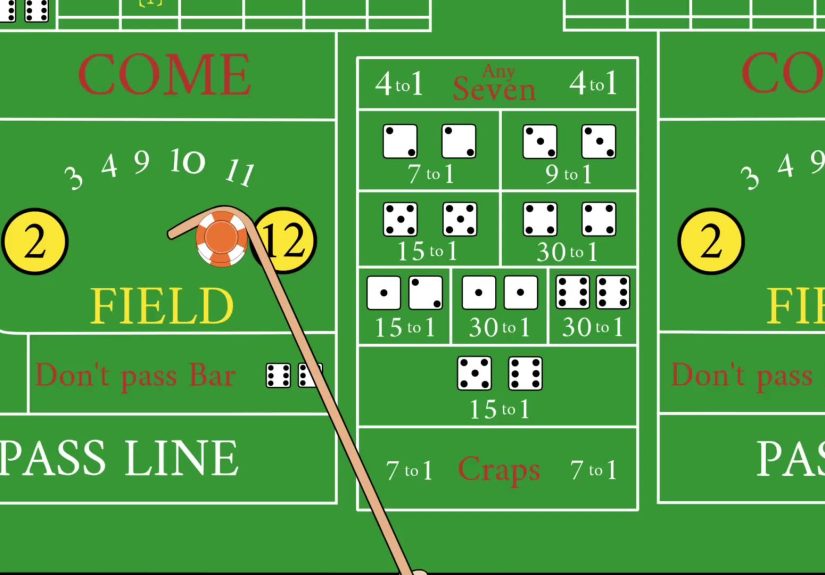
Not all craps bets are created equal. Some bets are fun but expensive over time. Proposition bets, hardways, and one-roll wagers can produce exciting payouts, but they usually come with higher house edges. These bets live in the center of the table and are handled by the stickperson.
A hardway bet, for instance, wins when a number appears as a matching pair before it appears the easy way or before a 7. Hard 8 means 4 and 4. It sounds fun because it is fun, but fun does not automatically mean efficient. One-roll bets like “Any 7” or “Yo 11” can be entertaining, but they are better treated as occasional splashes than core strategy.
For beginners, the cleanest path is simple: focus on Pass Line, Don’t Pass, odds, Come bets, and Place 6 or Place 8. Learn those first. The center bets will still be there later, wearing their flashy little casino tuxedos.
Basic Craps Table Etiquette
Craps has its own etiquette, and following it makes the game smoother for everyone. Buy in between rolls, not while the dice are moving. Place your cash on the table layout and let the dealer convert it into chips. Do not hand money directly to the dealer.
Keep your hands out of the table area when the shooter has the dice. If you are shooting, use only one hand to handle the dice, and try to hit the far wall with your roll. Casinos usually require the dice to bounce off the back wall to keep the game fair.
If you do not know how to place a bet, ask the dealer. Dealers explain basic wagers all the time. A simple “How do I place the 6?” or “Can I take odds on this?” is completely normal. The table may look intense, but most people would rather help you than watch you guess incorrectly.
Bankroll Tips for Playing Craps
Before you play, decide how much money you are willing to spend for entertainment. That number is your session bankroll. Do not treat it like rent money, grocery money, or the sacred emergency fund labeled “do not touch unless the refrigerator becomes self-aware.”
Choose a table limit that fits your bankroll. If the minimum bet is $25 and you brought $100, you only have four minimum bets. That is not a session; that is a sneeze. A lower-limit table gives you more time to learn, more rolls to experience, and less pressure on every decision.
A practical beginner approach is to divide your bankroll into smaller session units. If you bring $200, you might decide to risk only $50 at a time. When that amount is gone, pause. If you double it, consider locking up some profit. Craps moves quickly, and fast games can make money feel less real than it is.
Common Beginner Mistakes
Trying to Learn Every Bet at Once
Craps has many bets, but you do not need all of them. Learn the core wagers first. Complexity can wait.
Ignoring Odds Bets
Odds bets are one of the most player-friendly features in craps. If your bankroll allows it and you understand the wager, odds can improve the overall value of your Pass Line, Don’t Pass, Come, or Don’t Come strategy.
Chasing Losses
Raising your bets because you are frustrated is not a strategy. It is an emotional invoice, and the casino is very happy to collect.
Believing in Hot Dice Too Much
Craps is full of streaks, but each roll is independent. A shooter may be on a long roll, but the dice do not remember the previous result. The next roll has the same mathematical probabilities as always.
Experience-Based Tips for Playing Craps
The best real-world advice for learning craps is to watch a table before jumping in. Stand back for a few minutes and observe the rhythm. Notice when players place Pass Line bets, when the dealer marks the point, how odds are placed, and how payouts are handled. Craps becomes far less intimidating when you see the same pattern repeat several times.
A good beginner experience often starts at a quieter table. A packed, high-energy table can be exciting, but it may also feel overwhelming if you are still learning. Look for a lower-minimum table with friendly dealers and enough space to stand comfortably. If the table is too crowded, you may struggle to reach the layout or hear instructions.
When you first play, keep your betting script simple. For example, start with a Pass Line bet and take single odds after a point is established. Play that way for several rounds without adding anything else. This helps you understand the game’s heartbeat. Once you are comfortable, add one Place bet on the 6 or 8. Later, try a Come bet. Small steps are better than turning your first session into a dice-based science fair.
Another useful experience tip is to speak clearly to the dealer. Craps tables are noisy. Say exactly what you want: “Twelve dollars on the 6,” “Ten-dollar Pass Line,” or “Single odds behind my Pass Line.” The dealer will usually set the chips correctly. If your wording is unclear, they may ask you to repeat it. That is normal, not embarrassing.
Tipping can also improve the social experience. You are not required to tip, but many players place small bets for the dealers when the table is going well. For example, you might say, “Two-way hard 6,” meaning a hard 6 bet for you and one for the dealers. Keep it within your budget. A small, friendly dealer bet can create goodwill, but it should never replace bankroll discipline.
Pay attention to chip organization. Keep your chips stacked neatly by denomination. It sounds minor, but a messy rail makes it harder to know whether you are winning, losing, or simply rearranging colorful circles. Before each new shooter, glance at your stack and decide what you are willing to risk during that hand.
Online craps can be useful for practice because it removes some of the social pressure. Many online games show available bets, payouts, and results clearly on screen. However, online play can also be faster, which means losses can happen quickly. Use demo mode when available, and do not mistake speed for skill.
Finally, remember that craps is entertainment. The best sessions are not always the ones where you win the most. Sometimes the best session is the one where you learn the table, enjoy a few exciting rolls, stay within budget, and leave before your confidence starts writing checks your bankroll cannot cash.
Conclusion
Learning 3 ways to play craps gives beginners a strong foundation without drowning them in every possible wager. The Pass Line method is the easiest and most social way to start. The Don’t Pass method offers a more mathematical approach for players who do not mind betting against the shooter. Come bets and Place bets add variety once you understand the basic flow.
The smartest craps strategy is not about predicting the dice. It is about choosing understandable bets, managing your bankroll, avoiding high-house-edge distractions, and enjoying the game responsibly. Craps may look chaotic, but once you know the rhythm, it becomes one of the most exciting and social table games in the casino.
Note: This guide is for educational and entertainment purposes. Craps is a game of chance, and no betting method can guarantee profit. Always gamble responsibly and only with money you can afford to lose.





 Close
Close