
Table of Contents >> Show >> Hide
- Why Adults Need Play More Than They Think
- 1. Bring Back Playful Movement
- 2. Reconnect With Creativity and Curiosity
- 3. Spend Time With People Who Make You Laugh
- Simple Childhood-Inspired Activities for Busy Adults
- How to Feel Like a Kid Again Without Ignoring Adult Life
- Extra Experiences: Real-Life Ways to Rediscover Your Inner Kid
- Conclusion: Growing Up Should Not Mean Giving Up Wonder
Remember when fun did not need a calendar invite, a budget spreadsheet, or a suspiciously expensive “wellness retreat”? As kids, we could turn a cardboard box into a spaceship, a sprinkler into a water park, and a Saturday afternoon into a legendary quest involving snacks, grass stains, and absolutely no emails. Then adulthood arrived wearing sensible shoes and holding a bill.
The good news: feeling like a kid again does not require quitting your job, moving into a treehouse, or eating cereal for dinner every nightalthough, frankly, cereal dinner has its moments. It means reconnecting with the playful, curious, creative, slightly goofy part of yourself that may have been buried under responsibilities, routines, and the mysterious adult hobby of comparing insurance plans.
Research on well-being consistently points to the value of movement, hobbies, creativity, social connection, laughter, time away from screens, and meaningful activities. In plain English: your inner child is not asking for chaos. It is asking for color, motion, wonder, and a little permission to be delighted by ordinary things again.
Below are three practical ways to feel like a kid againwithout pretending adulthood does not exist. You will still have laundry. But maybe you can fold it while dancing badly. That counts.
Why Adults Need Play More Than They Think
Many adults treat play like dessert: nice, but optional. Something to enjoy after everything “important” is finished. The problem is that the adult to-do list is a magical creature that reproduces overnight. If you wait until your schedule is perfectly clear, you may rediscover play sometime around the year 2098.
Play matters because it supports emotional balance, creativity, stress relief, and connection. It gives your brain a break from constant performance mode. When you play, you are not trying to win productivity points. You are letting yourself experiment, laugh, move, remember, and imagine.
Feeling youthful is not about denying your age. It is about recovering a certain lightness: the ability to notice small joys, try things without needing to be good at them, and spend time with people in ways that are not purely practical. Childhood was not perfect, of course. Nobody is trying to revive awkward school photos or the terror of dodgeball. The goal is to borrow the best parts: curiosity, movement, wonder, friendship, and freedom from overthinking.
1. Bring Back Playful Movement
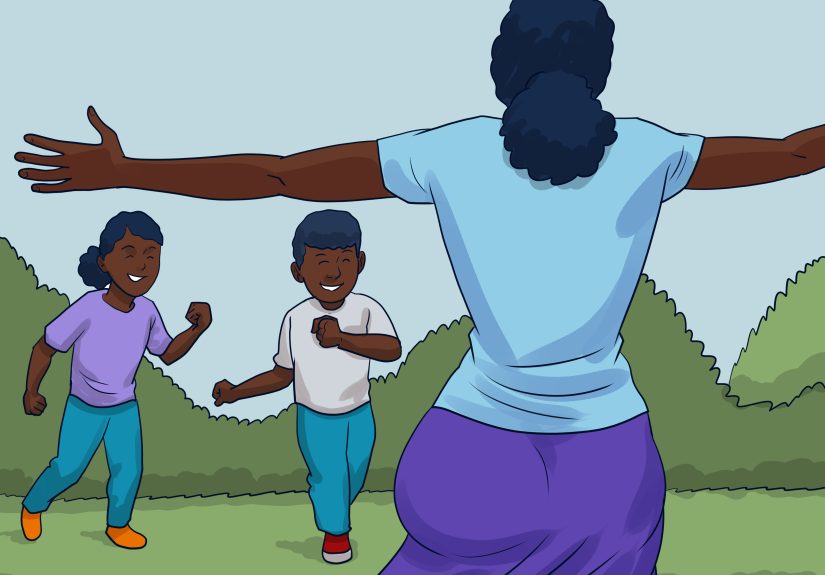
Children rarely say, “I’m going to complete 47 minutes of moderate-intensity cardiovascular activity.” They say, “Race you to the tree!” Then they run like a tiny rocket powered by fruit snacks. Adults can learn from that. Movement feels less like punishment when it feels like play.
Turn Exercise Into Recess
If the word “workout” makes your soul put on noise-canceling headphones, rename it. Call it recess. Call it movement time. Call it “Operation: Stop Becoming Office Furniture.” The name matters less than the feeling. The goal is to move in a way that wakes up your body and improves your mood without making you dread your sneakers.
Try walking through a park, biking around your neighborhood, shooting hoops, tossing a frisbee, jumping rope, roller skating, dancing in your kitchen, swimming, hiking, or playing tag with your dog if your dog agrees to follow the rules. Spoiler: your dog will not follow the rules.
Physical activity is linked with better sleep, reduced anxiety, improved mood, sharper thinking, and better overall health. But you do not have to approach it like a military drill. A playful walk with music, a dance break between chores, or a weekend game with friends can be powerful because it combines movement with joy.
Use Music Like a Time Machine
Few things teleport you back faster than music. One song can bring back a school dance, a summer road trip, a childhood bedroom, or the exact moment you believed you could become a pop star using only a hairbrush microphone.
Create a “kid again” playlist. Add songs from your childhood, theme songs from shows you loved, movie soundtracks, camp songs, or anything that makes you want to move without caring how cool you look. Then do the most scientifically advanced thing possible: dance badly on purpose.
Bad dancing is underrated. It is affordable, portable, and impossible to fail unless you knock over a lamp. Even then, the lamp may have had it coming.
Try Mini Adventures
Kids are masters of turning ordinary places into adventures. A backyard becomes a jungle. A sidewalk crack becomes lava. A grocery store becomes a mission involving cereal diplomacy. Adults can do this too.
Plan mini adventures that require very little money: explore a new walking trail, visit a playground with younger relatives, fly a kite, go stargazing, take a scenic bus route, build a blanket fort, visit a local museum, or have a picnic in your living room if the weather is being dramatic.
The trick is to make the activity feel slightly different from your regular routine. Novelty wakes up curiosity. Curiosity wakes up joy. Joy wakes up that kid inside you who still thinks clouds look like animals and puddles deserve respect.
2. Reconnect With Creativity and Curiosity
Children create without holding a board meeting first. They draw purple cats, build crooked towers, invent songs about sandwiches, and ask questions adults forgot were interesting. “Why is the moon following us?” is honestly a better question than half the emails people send.
To feel like a kid again, make room for creativity without demanding perfection. You do not need to become a professional artist, musician, baker, gardener, writer, photographer, or Lego architect. You simply need to make something for the joy of making it.
Pick a Hobby With No Performance Pressure
Adult hobbies often get hijacked by achievement. You start painting, and five minutes later your brain says, “Should we open an online store?” Absolutely not, brain. Sit down. We are painting a lopsided sunflower for emotional nutrition.
Choose a hobby that feels playful, not pressured. Try sketching, journaling, pottery, knitting, cooking, baking, photography, model building, gardening, puzzles, board games, coloring, calligraphy, origami, or learning a musical instrument badly and bravely. Hobbies are associated with happiness, life satisfaction, and emotional well-being, especially when they give people a sense of purpose and enjoyment.
The best hobby for feeling like a kid again is one that gives you permission to be a beginner. Kids are professional beginners. They fall, laugh, try again, and then ask for a snack. Adults could use more of that strategy.
Ask Better Questions
Curiosity is one of the fastest routes back to a youthful mindset. Children ask questions because the world still feels new. Adults stop asking because we assume we already knowor because we are tired and the dishwasher is making a weird noise.
Try asking one childlike question a day. Why do leaves change color? How do bees decide where to go? What would my neighborhood look like if I explored it like a tourist? What snack would make this afternoon more exciting? Who invented bubble wrap, and did they know they were creating universal joy?
Curiosity does not need to be profound. It just needs to open a door. Read about something random. Watch a documentary. Visit the library. Try a new recipe. Take apart an old gadget safely just to see how it works. Look at bugs, stars, maps, recipes, rocks, or old family photos. Wonder is not childish. It is a form of attention.
Revisit Childhood FavoritesWith Adult Appreciation
One delightful way to feel like a kid again is to revisit what once made you happy. Watch a favorite childhood movie. Read a book you loved. Make the snack your family used to make. Play a classic video game. Visit the neighborhood where you grew up, if it feels good to do so. Call someone who remembers your “interesting haircut era” and has chosen not to weaponize it.
Nostalgia can support a sense of belonging, meaning, and emotional comfort. It reminds you that your life has continuity. You are not a totally different person from the kid you once were. You are that person with more responsibilities, better vocabulary, and possibly a stronger opinion about back support.
Still, nostalgia works best when it is a bridge, not a campsite. The goal is not to live in the past. It is to bring forward the parts of your past that still nourish you: imagination, favorite flavors, old music, family traditions, games, stories, and the feeling that life can surprise you.
3. Spend Time With People Who Make You Laugh
Childhood joy was often social. It happened with siblings, cousins, classmates, neighbors, teammates, or that one friend who always had slightly dangerous ideas involving cardboard ramps. Adults need connection too, even when life gets busy and everyone starts scheduling coffee like they are negotiating international trade.
Prioritize Playful Friendships
Friendships support happiness, belonging, stress relief, confidence, and resilience. Strong social ties can help people cope during difficult seasons and feel more grounded in everyday life. But friendships do not maintain themselves through telepathy, despite what introverts have been hoping.
To feel like a kid again, make your social time more playful. Invite friends for board games, mini golf, karaoke, bowling, a casual sports game, a themed dinner, a craft night, a silly movie marathon, a backyard picnic, or a “bring your weirdest snack” party. Not every hangout needs to be deep, polished, or Instagram-ready. Sometimes the best medicine is laughing until someone snorts.
Reduce Screen Time and Increase Real-Life Moments
Screens are useful. They also have a sneaky way of turning a five-minute break into a 90-minute tour of strangers arguing about kitchen tile. Reducing screen time can free up space for face-to-face connection, outdoor activity, hobbies, better sleep routines, and the kind of boredom that leads to creativity.
Try a simple swap: replace 20 minutes of scrolling with one playful action. Call a friend. Stretch. Make a snack from childhood. Step outside. Sketch something on your desk. Play with a pet. Practice a yo-yo trick. Write a postcard. Blow bubbles. Yes, bubbles. Adults who pretend they are too mature for bubbles are missing important research conducted by every child at every birthday party ever.
Laugh on Purpose
Laughter is not a luxury. It helps release tension, soften stress, and create connection. You do not have to wait for life to become hilarious. You can invite humor in by watching comedy, sharing funny stories, playing charades, keeping a running list of ridiculous things your family says, or spending time with people who make ordinary moments lighter.
Try telling stories from childhood with friends or family. Ask, “What is the funniest thing we believed as kids?” or “What was your most dramatic childhood misunderstanding?” These conversations often unlock laughter, tenderness, and a surprising amount of evidence that children are tiny philosophers with sticky hands.
Simple Childhood-Inspired Activities for Busy Adults
If you are thinking, “This sounds nice, but my schedule is held together with tape and caffeine,” start small. You do not need a full free day. You need little pockets of play.
Five-Minute Ways to Feel Younger
Put on one nostalgic song and dance. Step outside and look for shapes in the clouds. Eat lunch away from your screen. Doodle while your coffee brews. Send a funny memory to an old friend. Toss a ball against a wall. Smell crayons in a store and pretend you are not emotionally moved. Build a tiny paper airplane and see if it can survive your hallway.
Weekend Ideas That Feel Like Recess
Plan a picnic, visit a zoo or aquarium, go to a farmers market, play miniature golf, make homemade pizza, create a scavenger hunt, visit a local park, go camping in the backyard, host a board game night, or spend an afternoon doing something you loved at age ten. Bonus points if snacks are involved. Snacks are the official currency of fun.
How to Feel Like a Kid Again Without Ignoring Adult Life
Feeling like a kid again does not mean abandoning responsibility. It means refusing to let responsibility steal every ounce of joy. You can pay bills and still make pancakes shaped like dinosaurs. You can attend meetings and still keep a kite in your trunk. You can be a capable adult and still laugh at a whoopee cushion. Human beings are complex like that.
One helpful mindset is to schedule play the way you schedule important tasks. That may sound unromantic, but it works. Put “recess” on your calendar. Protect it. Treat it as maintenance for your mood, creativity, relationships, and energy.
Another useful approach is to lower the barrier. Do not wait for the perfect hobby supplies, the perfect weather, or the perfect group of friends. Use what you have. Walk around the block. Make a playlist. Draw with a pen. Call one person. Watch fireflies. Try something small and repeatable.
Most of all, give yourself permission to be a little ridiculous. Seriousness is useful in courtrooms, tax forms, and assembling furniture with 400 screws. It does not need to run your entire personality.
Extra Experiences: Real-Life Ways to Rediscover Your Inner Kid
One of the most powerful experiences related to feeling like a kid again is returning to a place that once felt huge. A childhood park, schoolyard, beach, library, or neighborhood street can shrink when you see it as an adult. The slide that once looked like a mountain may now look like something designed by a cautious committee. But that contrast is part of the magic. You realize that the wonder was never only in the place. It was in the way you saw it.
Try visiting an old favorite place with fresh eyes. Walk slowly. Notice the sounds, colors, smells, and tiny details. Maybe the basketball court still has the same echo. Maybe the library still smells like paper, dust, and possibility. Maybe the ice cream shop is gone, replaced by a dental office, which feels rude but very adult. Let the memories come, but do not force them. Sometimes one small detaila cracked sidewalk, a certain tree, a familiar cornercan bring back the feeling of being young, curious, and fully present.
Another experience worth trying is a “yes day” for simple joys. This does not mean saying yes to expensive, risky, or irresponsible things. It means saying yes to harmless delights you usually dismiss. Yes to pancakes for dinner. Yes to sidewalk chalk. Yes to a cartoon before bed. Yes to a pillow fort. Yes to reading comics. Yes to wearing bright socks. Yes to taking the scenic route. Yes to buying the tiny toy from the vending machine just because it makes you laugh.
You can also recreate a childhood meal. Food carries memory in a way few things do. Make grilled cheese and tomato soup. Bake cookies from an old family recipe. Prepare macaroni and cheese, peanut butter sandwiches, pancakes, cinnamon toast, or whatever dish reminds you of simpler days. Then upgrade it if you want. Use better cheese. Add fresh herbs. Serve it on an actual plate instead of eating over the sink like a tired raccoon. The point is not gourmet perfection. The point is emotional flavor.
Playing with younger family members can also reconnect you with childhood energy. Children are excellent coaches in the art of unnecessary enthusiasm. They can turn a cardboard tube into a telescope, a couch into a pirate ship, and a living room into a wildlife preserve for stuffed animals. Follow their lead. Do not correct the rules too much. In child logic, the floor can be lava, dragons can be friendly, and everyone gets a dramatic backstory. Adults spend too much time making sense. Occasionally, nonsense is restorative.
If you do not have children nearby, borrow the spirit of childlike exploration through solo activities. Go to a toy store just to look. Visit an arcade. Build a model. Try a beginner craft kit. Blow bubbles at a park. Read a children’s book with beautiful illustrations. Watch an animated movie and notice how much artistry went into it. You are allowed to enjoy things that are colorful, gentle, silly, or sweet. Joy does not have an age limit printed on the box.
Finally, create a “kid again box.” Fill it with small items that spark play and memory: crayons, stickers, a jump rope, old photos, a yo-yo, bubbles, a favorite candy, a deck of cards, a puzzle book, a small notebook, or a playlist written on paper. Keep it somewhere visible. When life feels heavy, open the box and choose one thing. Think of it as emergency joy supplies.
These experiences work because they interrupt the adult habit of rushing. They help you pause long enough to notice that delight is still available. It may not look exactly like it did when you were eight, but it is not gone. It has simply been waiting behind the calendar, tapping its foot, holding a juice box, and wondering when you were going to come outside.
Conclusion: Growing Up Should Not Mean Giving Up Wonder
To feel like a kid again, you do not need to reverse time. You need to reintroduce play, curiosity, movement, creativity, and connection into your daily life. Start with playful movement. Add creative hobbies and nostalgic rituals. Spend time with people who make laughter easy. Protect small moments of wonder the way you protect your phone battery at 3%.
Adulthood brings responsibility, but it can also bring the freedom to choose your own fun. You can build a life that includes work, family, goals, and grocery shoppingplus dancing in the kitchen, drawing terrible cats, playing board games, flying kites, and laughing at jokes that would absolutely not impress your taxes.
Your inner child is not asking you to be immature. It is asking you to be alive to the world again. Go play.
Note: This article synthesizes practical wellness ideas from reputable U.S.-based health, psychology, aging, and lifestyle education sources, including public health guidance on physical activity, research-informed discussions of play and nostalgia, and expert resources on hobbies, friendship, humor, creativity, and social connection.





 Close
Close