
Table of Contents >> Show >> Hide
- Quick Map: What’s Included?
- Male Reproductive System Diagram (Text Version)
- How It Works: Anatomy + Function (Step by Step)
- 1) The Testes: The Sperm & Testosterone Factory
- 2) The Epididymis: Where Sperm “Grows Up”
- 3) The Vas Deferens: The Sperm Highway
- 4) Seminal Vesicles: The “Fuel Mixer”
- 5) The Prostate: The Gatekeeper and Pump Helper
- 6) Bulbourethral (Cowper’s) Glands: Small Glands, Big Practicality
- 7) The Urethra and Penis: The Exit Route
- What Is Semen, Exactly?
- Hormones: The Control Panel Behind the Scenes
- Key Functions: More Than Just Reproduction
- Common Conditions (And What They Mean Anatomically)
- When to See a Healthcare Professional
- FAQ: Fast Answers That Actually Help
- Experiences Related to Male Reproductive System Anatomy, Diagram & Function (Real Life, Not Textbook)
- Conclusion
The male reproductive system is basically a well-organized “delivery + production + quality-control” network.
Its job is to make sperm, transport it safely, add supportive fluids, and help deliver semen during ejaculation.
Along the way, it also produces hormones (especially testosterone) that affect puberty, fertility, muscle and bone health,
mood, and more. In short: it’s not just “one organ” it’s a team sport.
Quick Map: What’s Included?
Anatomically, the male reproductive system includes external structures (you can see them)
and internal structures (you mostly can’t). It also shares some real estate with the urinary system,
which is why the same “exit route” (the urethra) is involved in peeing and ejaculation (not at the same time the body has a built-in traffic controller).
External Structures
- Penis (shaft + glans): delivers semen; also routes urine through the urethra.
- Scrotum: skin sac that holds the testes and helps regulate temperature.
- Testes (testicles): produce sperm and testosterone.
Internal Structures
- Epididymis: stores and matures sperm (think “finishing school”).
- Vas deferens: transports sperm from epididymis toward the pelvis.
- Seminal vesicles: produce much of the fluid portion of semen.
- Prostate gland: adds fluid and helps propel semen into the urethra.
- Bulbourethral (Cowper’s) glands: add a small amount of lubricating/neutralizing fluid.
- Ejaculatory ducts: final “merge lane” into the urethra.
- Urethra: the tube carrying urine out of the body; also carries semen during ejaculation.
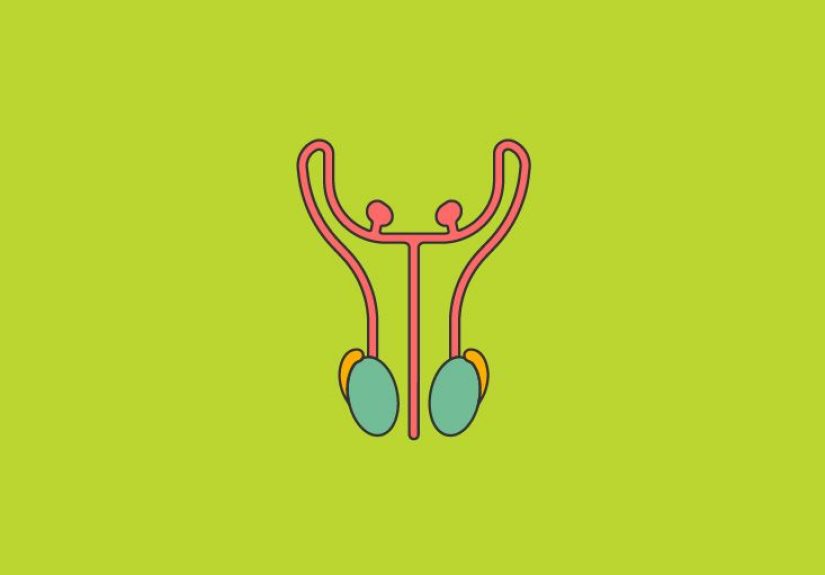
Male Reproductive System Diagram (Text Version)
If you’re looking for a simple male reproductive system diagram you can understand at a glance, here’s a clean “route map”
showing the sperm pathway and where semen fluid gets added.
Note: The bulbourethral glands drain into the urethra as well (near the base of the penis),
adding a small amount of fluid that helps with lubrication and pH.
How It Works: Anatomy + Function (Step by Step)
1) The Testes: The Sperm & Testosterone Factory
The testes contain tiny coiled tubes called seminiferous tubules, where sperm production happens.
This process (spermatogenesis) is continuous after puberty and depends on both temperature and hormones.
The testes also contain Leydig cells, which produce testosterone a hormone that supports sperm production,
sex drive, and many body functions.
The scrotum helps keep the testes slightly cooler than core body temperature. It’s not a fashion statement it’s engineering.
Sperm production works best when things run a little cooler, so the body adjusts scrotal position and airflow to help regulate temperature.
2) The Epididymis: Where Sperm “Grows Up”
Newly made sperm aren’t instantly expert swimmers. The epididymis is a long, coiled tube behind each testis
where sperm mature and are stored. This matters because mature sperm are better at moving and surviving the journey.
If the epididymis gets inflamed (epididymitis), it can cause pain and swelling and should be checked by a clinician.
3) The Vas Deferens: The Sperm Highway
The vas deferens carries sperm from the epididymis into the pelvis. During ejaculation, muscular contractions
move sperm forward. The vas deferens is also the structure targeted in a vasectomy (a procedure that blocks sperm
from entering the semen).
4) Seminal Vesicles: The “Fuel Mixer”
The seminal vesicles contribute a large portion of semen volume. Their fluid contains substances that help sperm
survive and move, including energy sources (often described as sugar-based fuel). This is one reason semen is not “just sperm”
it’s sperm plus a carefully formulated transport medium.
5) The Prostate: The Gatekeeper and Pump Helper
The prostate gland sits below the bladder and surrounds part of the urethra. It adds fluid to semen and,
through muscular action, helps propel semen into the urethra during ejaculation. Because of its location, an enlarged prostate
can affect urination (slower stream, urgency, waking at night to pee).
6) Bulbourethral (Cowper’s) Glands: Small Glands, Big Practicality
These small glands add a small amount of fluid into the urethra. The function is often described as lubrication and helping
neutralize acidity in the urethra. In real life, think of them as part of the system’s “prep work” for a smooth exit route.
7) The Urethra and Penis: The Exit Route
The urethra runs from the bladder through the prostate and through the penis to the outside. It carries urine
during urination and semen during ejaculation. The body prevents cross-traffic by temporarily closing off the bladder outlet during ejaculation.
So no, you’re not supposed to multitask here.
The penis contains spongy erectile tissue that can fill with blood and become firm. From an anatomy standpoint, this helps position
the urethral opening for semen delivery.
What Is Semen, Exactly?
Semen is a mixture of sperm plus fluids from accessory glands (mainly the seminal vesicles and prostate, plus contributions from other glands).
Those fluids provide nutrients, enzymes, and a supportive environment that helps sperm survive and move.
So if sperm are the “passengers,” semen is the “vehicle” with snacks, seatbelts, and a GPS that’s trying its best.
Hormones: The Control Panel Behind the Scenes
Reproductive function is regulated by a hormone feedback system often described as the hypothalamic–pituitary–gonadal axis.
In simplified terms:
- The brain signals the pituitary gland.
- The pituitary releases hormones that tell the testes to produce testosterone and support sperm production.
- Testosterone levels feed back to help maintain balance.
Why it matters: issues like low testosterone, certain medications, significant illness, or stress can affect libido, energy, mood,
and sometimes fertility. If someone is concerned about hormonal symptoms, it’s worth discussing with a healthcare professional rather than guessing.
Key Functions: More Than Just Reproduction
Reproduction & Fertility
- Produce sperm (spermatogenesis).
- Store and mature sperm (epididymis).
- Transport sperm and mix with gland fluids to form semen.
- Deliver semen during ejaculation.
Hormone Production
- Produce testosterone and other androgens.
- Support puberty changes, sexual development, muscle/bone maintenance, and more.
Shared Plumbing With the Urinary System
The male reproductive system shares the urethra with the urinary system, so prostate size and urethral health can influence urinary symptoms.
This overlap is why a clinician may ask about both sexual health and urinary changes in the same visit.
Common Conditions (And What They Mean Anatomically)
1) Epididymitis
Inflammation of the epididymis can cause scrotal pain and swelling. It may be related to infection (including STIs in some cases)
and should be evaluated promptly especially if pain is sudden or severe.
2) Varicocele
A varicocele is an enlargement of veins in the scrotum (often described as feeling like a “bag of worms”).
It can be associated with fertility issues in some people. It’s a circulation-and-temperature problem more than a “sperm factory” problem.
3) Prostatitis and Benign Prostatic Hyperplasia (BPH)
Prostate inflammation (prostatitis) can cause pelvic discomfort and urinary symptoms. BPH is a non-cancerous enlargement of the prostate
that becomes more common with age and can affect urinary flow because the prostate surrounds the urethra.
4) Erectile Dysfunction (ED)
ED can involve blood flow, nerves, hormones, stress, certain medications, or chronic health conditions (like diabetes or cardiovascular disease).
It’s less about “anatomy looking different” and more about the systems that support function.
5) Infertility
Male-factor infertility can involve sperm production, sperm transport, hormone regulation, or lifestyle factors.
A common starting point is a semen analysis, which evaluates sperm count, movement, and shape.
Treatment depends on the cause and the cause is often fixable or manageable.
When to See a Healthcare Professional
- New lump, significant swelling, or persistent pain in the testicles/scrotum.
- Sudden severe scrotal pain (this is urgent).
- Ongoing trouble with urination (weak stream, urgency, frequent nighttime urination).
- Persistent erectile difficulties, especially with other symptoms.
- Concerns about fertility after 6–12 months of trying to conceive (timing may vary by age and situation).
FAQ: Fast Answers That Actually Help
Does semen volume equal fertility?
Not necessarily. Semen volume is mostly gland fluid. Fertility depends more on sperm count, movement, and function.
That’s why a semen analysis is more informative than guessing based on volume.
Can you “run out” of sperm?
The body continuously produces sperm after puberty. However, frequency of ejaculation, illness, heat exposure,
and certain medications can affect sperm parameters temporarily.
Why does testicular temperature matter?
Sperm production works best slightly below core body temperature. The scrotum helps manage that temperature through positioning and airflow.
Experiences Related to Male Reproductive System Anatomy, Diagram & Function (Real Life, Not Textbook)
If you learned male reproductive anatomy in a classroom, there’s a decent chance the experience went something like this:
a diagram on a projector, a teacher pointing with a laser pointer like they’re defusing a bomb, and half the room suddenly discovering
the fascinating complexity of giggling. But outside of school, people often run into this anatomy in practical, everyday ways and that’s where
the “diagram” becomes real.
One common experience is puberty: voices change, hair shows up where it never applied for a job, and the testes begin producing higher levels
of testosterone. For many, it’s confusing because hormones influence energy, mood, and body composition and nobody hands you an owner’s manual.
Understanding that testosterone production is a normal part of development can make the whole process feel less like your body is freelancing.
Sports and physical activity are another real-world teacher. A minor injury to the groin can instantly convince someone that the male reproductive system
is both delicate and very, very important. That’s not drama it’s nerves and anatomy. A supportive athletic cup exists for a reason,
and it’s basically a wearable reminder that “external organs” means “exposed to the world.”
Then there’s the “adulting” chapter: conversations about contraception and family planning. People might hear terms like “vas deferens” for the first time
when researching vasectomy, and suddenly they’re tracing the sperm pathway on a diagram like it’s a subway map.
The idea that a vasectomy blocks the route (without removing the testes or stopping testosterone production) can be reassuring,
but it’s also a great example of why anatomy matters: understanding the plumbing reduces fear and clears up myths.
Fertility workups can also bring anatomy front and center. For couples trying to conceive, a semen analysis may be one of the first tests.
That can feel oddly clinical or emotional it turns a private part of life into numbers on a report: count, motility (movement), morphology (shape).
When clinicians explain how sperm mature in the epididymis and travel through ducts before mixing with gland fluids, the results make more sense.
Instead of “something’s wrong,” it becomes, “Let’s locate the step where the process is getting stuck.”
Another experience people don’t always expect is how the prostate enters the chat with age.
Someone might start waking up at night to pee more often and think it’s just hydration until a clinician mentions prostate enlargement
and explains that the prostate wraps around the urethra like a donut around a straw. That one mental image often makes everything click:
a small change in size can create noticeable urinary symptoms. Understanding the layout turns a frustrating symptom into a solvable problem.
Preventive care is a quieter, healthier kind of experience. Learning how to notice changes (like a new lump, swelling, or ongoing pain)
and getting checked early can make a real difference. Many people only learn the normal “feel” of their anatomy after a clinician encourages awareness,
which is a little ironic but also empowering. Anatomy isn’t just something you memorize; it’s something you live in.
Finally, there’s the most relatable experience of all: trying to decode confusing internet advice.
A clear male reproductive system diagram, with plain-language labels (testes, epididymis, vas deferens, prostate, urethra),
can be the antidote to misinformation. When you understand the system’s job produce sperm, transport it, add supportive fluids, deliver it
it becomes easier to filter myths and focus on real health.
Conclusion
The male reproductive system is a coordinated set of organs and glands that produce sperm, transport it, and combine it with supportive fluids to form semen.
It also produces testosterone and shares anatomy with the urinary system through the urethra which is why reproductive and urinary symptoms can overlap.
With a clear diagram and a step-by-step understanding of function, the system becomes less mysterious and much easier to talk about, whether the topic is
puberty, fertility, contraception, or prostate health.







 Close
Close