
Table of Contents >> Show >> Hide
- Why Small Entryways Need Smarter Design
- 28 Small Entryway Ideas That Make Every Square Inch Count
- Install a slim wall shelf instead of a bulky table
- Choose a mirror with a built-in shelf or hooks
- Use a skinny console table
- Float the console for an airier look
- Add a storage bench that earns its keep
- Install a peg rail or hooks at different heights
- Corral shoes with a tray or boot mat
- Pick a closed shoe cabinet for a calmer look
- Slide baskets under the bench
- Turn the space under the stairs into an entry nook
- Use the back of the door
- Create a wall-mounted mail station
- Use a decorative tray for everyday essentials
- Add a compact umbrella stand
- Layer in a runner or durable rug
- Paint the entry a bold color
- Use wallpaper to add personality without crowding the floor
- Hang art to make the space feel finished
- Try a drop-leaf or demilune table
- Use a stool or ottoman with hidden storage
- Add a shelf above the hooks
- Create individual drop zones for each person
- Design a mini pet station near the door
- Use clear or leggy furniture to lighten the space
- Lean a full-length mirror if wall space is limited
- Work a dresser or chest into the entry if you need serious storage
- Edit seasonally instead of storing everything year-round
- Finish with one beautiful statement piece
- How to Pull These Small Entryway Ideas Together
- Experiences and Lessons From Real Small Entryways
- Conclusion
The entryway is your home’s opening act. It is the first thing guests see, the last thing you stare at while hunting for your keys, and the place where shoes, bags, umbrellas, receipts, and mysterious lint colonies like to gather for a daily meeting. In a large home, the foyer can absorb a little chaos without drama. In a small home, every inch matters, and clutter becomes the unofficial roommate nobody invited.
The good news is that a tiny entryway does not need to feel cramped, messy, or uninspired. With the right layout, a narrow wall can become a drop zone, a forgotten corner can hold hidden storage, and a slim shelf can do the work of a bulky console table without body-checking everyone who walks through the door. The trick is to combine beauty with utility. Your entry should welcome people in, help you get out the door faster, and store the daily essentials without looking like a lost-and-found bin.
Below are 28 smart small entryway ideas that squeeze style and function out of every square inch. Some are decorative, some are practical, and several are the home-design equivalent of finding cash in an old coat pocket.
Why Small Entryways Need Smarter Design
A small entryway works best when it is edited, intentional, and layered vertically instead of horizontally. Floor space is limited, so the wall becomes prime real estate. Furniture needs to multitask. Storage must be easy to use, not so complicated that everyone tosses their stuff on the floor anyway. And because this area sets the tone for the rest of the house, it should feel welcoming instead of looking like a traffic jam in decorative form.
Think of a good entryway as a mini command center. It should answer a few simple questions: Where do shoes go? Where do coats land? Where do keys live? Where does incoming mail stop before it starts breeding on the kitchen counter? Once those questions are solved, the rest is just style and a little strategic charm.
28 Small Entryway Ideas That Make Every Square Inch Count
-
Install a slim wall shelf instead of a bulky table
If your entryway is barely wider than your shoulders, skip the deep console and go with a narrow wall shelf. It gives you a landing spot for keys, sunglasses, and mail without eating up valuable walking space. Bonus points if it has a lip so your wallet does not make a dramatic exit onto the floor.
-
Choose a mirror with a built-in shelf or hooks
A mirror makes a tight entryway feel brighter and visually larger, but a mirror that also includes a ledge or hooks is the real overachiever. It handles last-minute outfit checks while holding keys, dog leashes, or a light jacket. That is what we call excellent wall manners.
-
Use a skinny console table
A narrow console can still deliver style in a compact foyer. Look for one with a shallow profile, open legs, or lower shelving. It creates a polished focal point while still giving you a place for a lamp, tray, or basket without blocking circulation.
-
Float the console for an airier look
Wall-mounted furniture helps a small entryway feel less crowded because you can see more floor underneath it. A floating drawer or shelf unit keeps the space open and modern, and it makes sweeping easier too. Tiny space, meet tiny victory.
-
Add a storage bench that earns its keep
A bench is one of the hardest-working pieces in a small entryway. It gives you a place to sit while pulling on shoes and creates room for hidden storage below the seat or in baskets underneath. One piece of furniture, two problems solved, zero complaints.
-
Install a peg rail or hooks at different heights
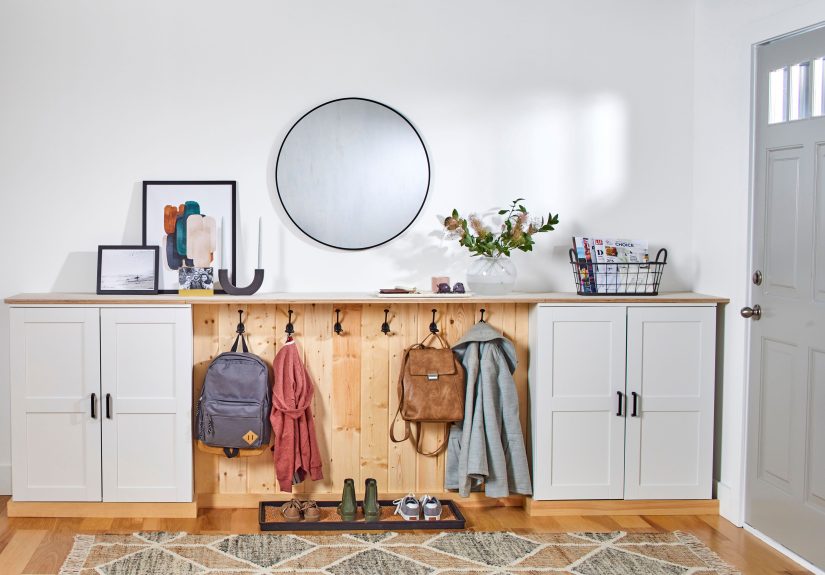
Wall hooks are the MVP of small entryway design. They keep coats and bags off the floor and use vertical space efficiently. Add a mix of heights so adults can hang jackets up high while kids can reach lower hooks on their own. Suddenly, independence looks organized.
-
Corral shoes with a tray or boot mat
Even the prettiest entryway loses its magic when shoes are scattered like confetti. A slim shoe tray or boot mat keeps wet soles, dirt, and everyday footwear contained. It also gives your household a visual cue that says, “Shoes live here, not everywhere.”
-
Pick a closed shoe cabinet for a calmer look
Open shelves are fine, but closed shoe storage creates instant visual peace. A slim flip-down shoe cabinet is especially useful in narrow entryways because it stores multiple pairs without sticking too far into the room. Less visual clutter, more exhale factor.
-
Slide baskets under the bench
If built-in storage is not in the budget, baskets do a great impression of it. Tuck labeled baskets under a bench for gloves, hats, reusable bags, sports gear, or pet supplies. They soften the look of the entry while keeping the mess from becoming the main character.
-
Turn the space under the stairs into an entry nook
If your front door opens near a staircase, do not waste the area underneath it. A compact bench, hooks, cubbies, or even a little cabinet can turn that awkward dead zone into a hardworking drop station. Under-stair storage is basically hidden treasure with better posture.
-
Use the back of the door
The back of the front door is often overlooked, which is funny because it is literally standing there asking for a job. Add an over-the-door organizer, narrow hooks, or a hanging pocket system for hats, umbrellas, and small accessories. Instant storage with zero floor sacrifice.
-
Create a wall-mounted mail station
Paper clutter spreads fast. One coupon becomes nine catalogs and suddenly your entry table looks like an office supply store collapsed. A wall file, mail sorter, or mounted pocket organizer gives incoming paper a designated stop before it migrates to every horizontal surface in the house.
-
Use a decorative tray for everyday essentials
A tray sounds simple because it is simple, and that is exactly why it works. Set one on a shelf or console for keys, earbuds, sunglasses, and loose change. Tiny items create visual mess faster than big ones, so giving them a contained home makes the whole area look sharper.
-
Add a compact umbrella stand
An umbrella stand is one of those small details that makes a home feel pulled together. In a tiny entry, choose a narrow cylinder or corner-friendly stand. It keeps drippy umbrellas upright, protects your floors, and saves guests from awkwardly balancing a wet umbrella against the wall like it is modern sculpture.
-
Layer in a runner or durable rug
A rug defines the entry zone, adds warmth, and protects flooring in a high-traffic area. Choose something durable and easy to clean. In a narrow entry hall, a runner can also visually stretch the space and make the passage feel longer and more intentional.
-
Paint the entry a bold color
Small does not mean boring. A deep blue, earthy green, warm charcoal, or cheerful wallpaper can make a compact entryway feel designed instead of leftover. Bold color turns a tiny pass-through into a destination and helps separate the entry visually from the rest of the home.
-
Use wallpaper to add personality without crowding the floor
If you do not have room for much furniture, let the walls do the decorating. Patterned wallpaper, grasscloth, or a simple accent wall adds visual interest without taking up an inch of floor space. It is a great move when your square footage is tight but your taste is not.
-
Hang art to make the space feel finished
A small entryway still deserves personality. A framed print, mini gallery wall, or a single oversized piece instantly elevates the space. Art distracts from the size of the area and makes it feel curated rather than purely functional, which is always a nicer mood to come home to.
-
Try a drop-leaf or demilune table
Round-front and drop-leaf tables are clever choices for tight spots because they soften corners and take up less visual space. They offer just enough surface area for a lamp and a catchall without sticking out like a furniture-related hazard.
-
Use a stool or ottoman with hidden storage
If a full bench will not fit, a compact stool or storage ottoman can still help. It provides a perch for shoes and a place to stash smaller items inside. It is the kind of sneaky storage solution that makes you feel like you have outsmarted your floor plan.
-
Add a shelf above the hooks
Once hooks are installed, do not stop there. A shelf above them adds another layer of storage for baskets, hats, seasonal accessories, or decor. The combination of top shelf plus lower hooks makes a simple wall feel built-in and thoughtfully organized.
-
Create individual drop zones for each person
Shared entryways get messy fast when everyone uses the same catchall area. Assign each family member a basket, hook, cubby, or section of shelf. It keeps morning routines smoother and makes it easier to tell who keeps leaving a soccer bag in the way. We love accountability with style.
-
Design a mini pet station near the door
If you have a dog, the entryway is already pet headquarters whether you planned for it or not. Add a leash hook, a small bin for waste bags, and maybe a basket for towels or booties. Keeping pet gear by the door prevents frantic scavenger hunts right before walks.
-
Use clear or leggy furniture to lighten the space
Furniture with open legs, glass tops, or visually light frames helps a small entry feel less crowded. Heavy, blocky pieces can make the area feel stuffed. When every inch matters, visual breathing room matters too.
-
Lean a full-length mirror if wall space is limited
If your walls are crowded with hooks or art, a tall leaning mirror can still bring light and function into the space. It bounces light around, makes the entry look bigger, and gives you a useful final check before you head out the door looking like someone who definitely has their life together.
-
Work a dresser or chest into the entry if you need serious storage
In some homes, a small dresser or chest works better than an entry table because it hides far more stuff. If the proportions fit, it can hold gloves, batteries, pet gear, paper clutter, and all the other random life accessories that otherwise float around the house.
-
Edit seasonally instead of storing everything year-round
The best small entryways are not packed with every coat, shoe, and tote you own. Rotate what lives there by season. Keep only the items you use right now within reach. Summer does not need six scarves hanging around for moral support.
-
Finish with one beautiful statement piece
Every practical entryway benefits from one thing that is there purely to charm people. Maybe it is a sculptural mirror, a pretty lamp, a ceramic bowl, or a small plant. Function is essential, but style is what makes the space feel warm, personal, and genuinely welcoming.
How to Pull These Small Entryway Ideas Together
The most successful small entryways usually combine just three or four elements: a place to hang things, a place to hide things, a place to set things down, and something that adds personality. That might look like a mirror with hooks, a slim bench with baskets, and a rug. Or it might be a floating shelf, mail sorter, and bold paint color. You do not need to cram in every trick at once. In fact, restraint is part of the magic.
Before buying anything, stand at your front door and watch how people actually move through the space. Where do bags get dropped? Where do shoes pile up? What do you always reach for on the way out? Design around real habits, not fantasy habits. If your household never hangs coats on hangers, do not install a fussy cabinet and expect a personality transformation. Use hooks. If mail always lands by the door, give it a tray or slot there on purpose.
Small-space design works best when it supports real life, not when it fights it. The goal is not to make the entryway look untouched. The goal is to make it easy to reset in under a minute.
Experiences and Lessons From Real Small Entryways
One of the biggest lessons people learn from living with a small entryway is that clutter is usually not caused by a lack of effort. It is caused by a lack of systems. In tiny apartments, narrow townhouses, older cottages, and busy family homes, the entry becomes chaotic when there is no obvious home for everyday items. The moment a hook appears on the wall, coats stop migrating to dining chairs. The second a tray lands on the shelf, keys stop vanishing into jacket pockets and sofa cushions. Small spaces often improve dramatically with simple, repeatable solutions.
Another common experience is realizing that “pretty” and “practical” cannot be divorced in a hard-working entryway. A delicate table with no storage may look gorgeous in a photo, but in daily life it can become a stage for unopened mail, tangled headphones, and one lonely glove that has lost faith in the system. By contrast, a slim bench with baskets underneath may seem humble, but it works. It invites people to sit, stash, and move on. And once something works, it usually looks better too, because visual calm is a design feature in its own right.
Families with kids often discover that lower hooks and reachable baskets change everything. Adults can talk about organization all day, but if children cannot physically use the storage, the floor wins every time. Households with pets have similar revelations. A leash by the door sounds obvious, yet it removes a surprising amount of stress from everyday routines. So does having a towel nearby for muddy paws or rainy shoes. Tiny details create smoother mornings and less shouting, which is arguably the finest luxury finish of all.
People living in four-season climates also tend to become ruthless editors of their entryway. In winter, the area fills with boots, scarves, heavier coats, and umbrellas. In summer, that same space functions better with lighter bags, sun hats, and maybe sandals. The homes that feel most organized are rarely the ones with the most storage. They are the ones where the storage changes with the season and only current-use items stay visible.
There is also a psychological side to small entryway design that is easy to underestimate. Coming home to a neat, thoughtful entrance can make the whole home feel calmer, even if the rest of the day was chaos. A mirror reflecting light, a rug underfoot, a tiny lamp glowing in the evening, a bowl that always holds your keys, these things sound small because they are small. But together they create a sense of order and welcome that punches far above their square footage.
Perhaps the most relatable experience of all is this: a small entryway teaches you very quickly which belongings deserve front-row access and which do not. That tote bag you swear you use every day but actually touch once a month? It can move. The six pairs of shoes by the door? Unlikely. When every square inch counts, your home becomes a surprisingly honest editor. And honestly, it is usually right.
Conclusion
A small entryway does not need more square footage to work better. It needs better strategy. When you combine vertical storage, slim furnishings, hidden organization, and a few decorative details, even the tiniest front door zone can feel polished and purposeful. The best small entryway ideas are not about stuffing more into the space. They are about choosing smarter pieces, defining what belongs there, and making everyday routines easier from the moment you walk in.
Whether you start with a mirror, a bench, a peg rail, or a simple tray for keys, each thoughtful change makes the space more functional and more inviting. And that is the sweet spot: an entryway that looks good, works hard, and no longer greets you with a pile of shoes that seems to have unionized.






 Close
Close